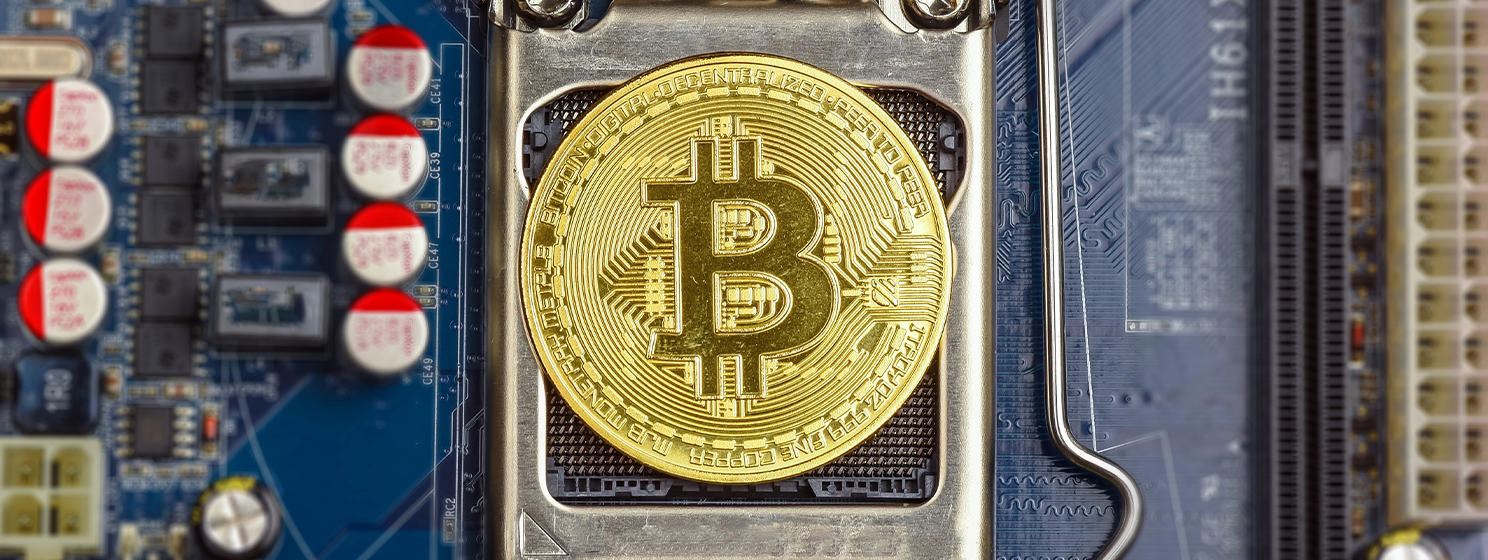
The landscape for the American digital asset industry has undergone a seismic shift following the 2026 midterm elections, where a decisive victory for the Democratic Party has introduced significant uncertainty for Bitcoin mining firms. For months, these companies have aggressively pursued a strategy of pivoting from energy-intensive blockchain validation toward providing infrastructure for high-performance computing (HPC) and artificial intelligence (AI) data centers. However, the emergence of a more regulatory-focused political environment, particularly in major energy hubs like Texas, threatens to stall this transition. With Bitcoin prices struggling to maintain momentum and the cost of production consistently exceeding the market value of the assets generated, the industry finds itself at a precarious financial crossroads.
The economic reality for miners is stark. As of mid-November 2026, the average all-in cost to produce a single Bitcoin hovered above $90,000, while the market price of the asset remained suppressed below the $73,000 threshold. This negative margin, compounded by a mining difficulty rate of 148.4 trillion hashes, has forced many publicly traded mining companies to liquidate their holdings to stay afloat. Data indicates that public mining companies have offloaded approximately $7.5 billion in Bitcoin this year alone, prioritizing capital expenditure for AI infrastructure over the long-term accumulation of the cryptocurrency.
The Political Shift in Energy-Rich States
The "Blue wave" observed in the midterm elections has particularly impacted Texas, a state that had previously positioned itself as the global capital for Bitcoin mining. Under the administration of outgoing Governor Greg Abbott, Texas had rolled out an expansive welcome for energy-intensive firms. However, Governor-elect Gina Hinojosa, who secured a victory on a platform emphasizing grid stability and controlled growth for the technology sector, has pledged to maintain a moratorium on new data center construction.
This policy shift is not isolated to Texas. Incoming administrations in Georgia and New Mexico have similarly signaled an intent to impose stricter oversight on data centers, citing concerns over power grid capacity and water consumption. The broader implication for the industry is a period of prolonged regulatory gridlock. Analysts have begun revising their share price targets downward for companies that have yet to secure final permitting for their data center expansions, as the prospect of "stranded" assets—sites built for mining that cannot be converted to AI hubs—becomes a genuine risk.
Chronology of the Strategic Pivot
The movement toward AI was not an overnight decision but rather a multi-year trend driven by the diminishing returns of the Bitcoin network.
- Early 2025: As mining margins tightened following the previous halving cycle, firms began exploring high-density colocation services.
- Mid-2025: Companies such as Riot Platforms and Core Scientific began signing long-term power purchase agreements (PPAs) with cloud providers and AI research labs.
- September 2026: Bitcoin reached a short-lived peak of $86,000, providing a momentary boost in liquidity, but production costs continued to climb, forcing firms to increase their sale of mined assets.
- November 2026: The midterm election results catalyzed a re-evaluation of the industry’s risk profile, leading to significant stock price volatility for mining-to-AI transition companies.
Corporate Case Studies: Winners and Losers in the Pivot
The financial performance of the major players reflects the uneven nature of this transition. Riot Platforms (RIOT) serves as a prime example of the aggressive pursuit of AI revenue. Despite selling over 20,000 Bitcoin this year to fund its expansion, Riot’s data center revenue has yet to eclipse the cash flow formerly provided by pure-play mining. The company recently entered a 15-year triple-net lease for its Corsicana campus, intended to serve a major frontier AI lab—widely identified as Anthropic. While the deal promises $28 billion in long-term revenue, the immediate reality is a decrease in mining capacity, which Riot expects to begin winding down significantly by the summer of 2027.
Core Scientific (CORZ) has taken an even more drastic approach. With its Bitcoin treasury reduced to a negligible 32 tokens, the company has effectively exited the mining business to focus entirely on high-density colocation. CEO Adam Sullivan has confirmed that the company aims to complete its transition into a pure-play infrastructure provider by the end of 2026. While this eliminates the volatility of mining margins, it leaves the company entirely dependent on the competitive and capital-intensive AI data center market.
In contrast, IREN (formerly Iris Energy) has faced significant market pressure. Despite nearly doubling its AI cloud revenue, the company saw its shares plummet by over 45% in a 30-day window following the midterms. This decline was exacerbated by news that $4 billion in anticipated 2026 revenue had been deferred to 2027, due to a request by Microsoft to reconfigure network infrastructure to support newer, more advanced AI models. This highlights a critical risk for the sector: the pace of AI hardware innovation is accelerating, and infrastructure providers are often subject to the shifting requirements of their deep-pocketed, hyperscale clients.
The Pure-Play Exception: American Bitcoin Corp (ABTC)
While most firms are scrambling to pivot, American Bitcoin Corp (ABTC) remains a notable outlier. As one of the few remaining "pure-play" miners, it has managed to grow its Bitcoin treasury to over 8,400 tokens, even while its peers were liquidating. However, this strategy is not without its own political baggage. Given the company’s historical links to the Trump family and its relationship with the Chinese hardware manufacturer Bitmain, it has become a target for increased scrutiny from incoming Democratic lawmakers. Concerns over national security and supply chain transparency regarding ASIC (Application-Specific Integrated Circuit) hardware have contributed to a 25% drop in ABTC’s share price since the election.
Broader Economic and Grid Implications
The fundamental tension driving this crisis is the conflict between energy supply and demand. AI data centers are significantly more power-hungry than Bitcoin mining operations, requiring consistent, high-uptime electricity to support continuous model training and inference. The "curtailment credits" that miners previously relied upon—being paid to switch off during peak demand—are becoming less relevant as these companies transition to becoming permanent, high-load tenants of the electrical grid.
This transition has put these companies on a collision course with state utility regulators. The influx of AI data centers has created localized spikes in power demand, forcing public utilities to reconsider how they prioritize energy distribution. In states where energy supply is already strained, the "pause" on construction is viewed by local governments as a necessary step to protect residential and industrial consumers from rising utility costs.
Analytical Implications: The Road Ahead
The next 12 to 18 months will be a period of consolidation for the mining industry. Companies that have successfully secured long-term, high-value contracts with major AI players are likely to survive the current regulatory turbulence, though their valuations will remain tied to the capital expenditure cycles of the tech industry rather than the price of Bitcoin.
Conversely, firms that attempted to pivot without the necessary infrastructure or capital backing are likely to face insolvency or acquisition. The expectation that mining will become an "immaterial" part of the business model for the largest industry players is now a baseline forecast rather than a speculative theory. For investors, the takeaway is clear: the era of speculative Bitcoin mining is being superseded by the era of critical AI infrastructure, and the political winners of this cycle will be those who can navigate the increasingly complex web of energy regulation and corporate environmental responsibility.
As the industry moves toward 2027, the focus will likely remain on grid-level negotiations. If mining firms can demonstrate that their data centers provide stability to the grid—rather than acting as a drain on resources—they may find a pathway to overcoming the current legislative pauses. Until then, the industry remains in a state of flux, caught between the declining profitability of legacy blockchain operations and the high-stakes, regulatory-heavy reality of the AI frontier.