
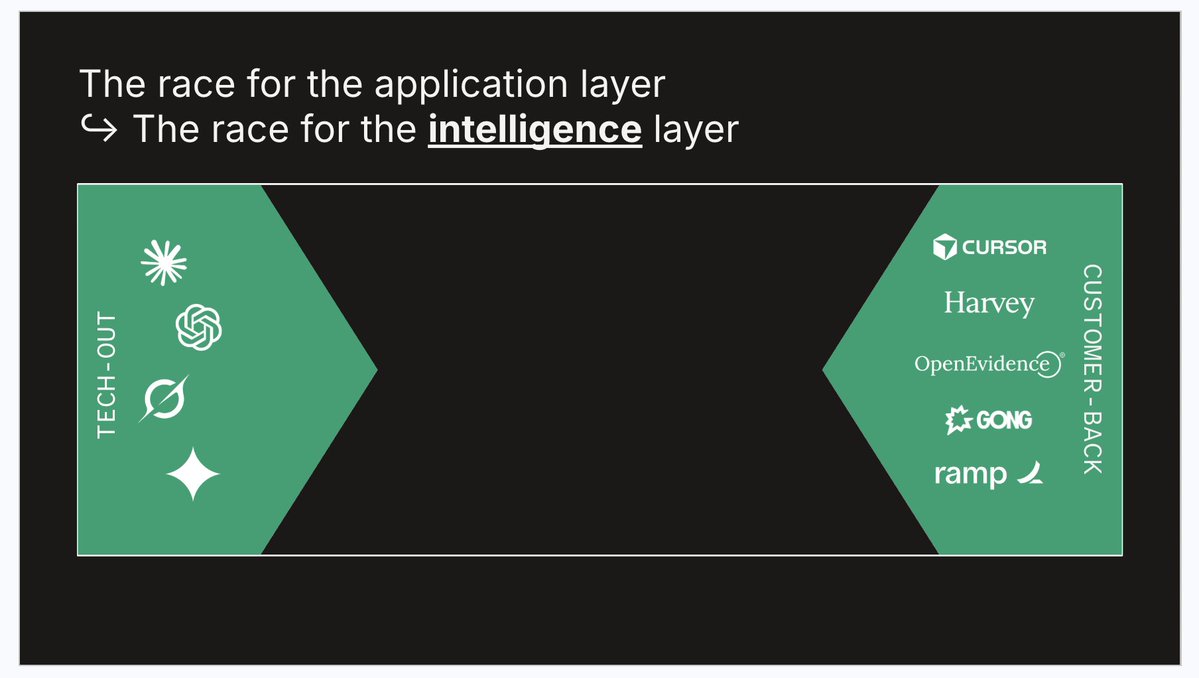
Published August 19, 2026, the modern artificial intelligence landscape has reached a critical strategic inflection point. No longer content with merely renting general-purpose application programming interfaces (APIs) from centralized frontier labs, forward-thinking enterprises and fast-growing startups are increasingly moving to own the core intelligence layer of their technology stack. This paradigm shift was the central theme of a high-profile executive and founder gathering hosted by venture capital firm Sequoia, where industry leaders laid out a definitive blueprint for vertical integration in the post-training era.
The debate surrounding intelligence ownership has accelerated significantly over recent months. Palantir CEO Alex Karp famously urged modern enterprises to "own the means of production," warning against absolute technological dependency. Shortly thereafter, Microsoft CEO Satya Nadella offered a stark cautionary perspective, stating that purchasing intelligence from a third-party frontier lab amounts to paying a double tax: once in monetary capital, and a second time by surrendering the proprietary domain knowledge and data required to make that intelligence useful.

The Macro Context and Chronology of the Shift
To understand the sudden urgency behind this movement, one must look at the structural evolution of the AI market over the past several years. Initially, building custom models or pursuing aggressive post-training was viewed as a treadmill exercise. Organizations would spend months curating data sets and fine-tuning open-source architectures, only to have their performance gains completely wiped out by the release of a subsequent frontier model from major research institutions.
However, by mid-2026, the technological ecosystem has matured dramatically. The open-weight frontier has closed the gap with proprietary systems at an unprecedented pace. High-performance models like Kimi K3 and GLM 5.2 have provided organizations with robust, highly capable starting baselines. Concurrently, an independent post-training infrastructure has emerged, championed by specialized companies such as Mercor, Fireworks, and LangChain. These entities now provide enterprises with the full operational spectrum of a frontier research lab—ranging from advanced synthetic data generation and human-in-the-loop feedback mechanisms to specialized inference pipelines.
This maturation allows companies to bypass the traditional compromise where choosing open-weight models meant sacrificing core performance. Today, tailoring an open-source model through meticulous post-training often yields superior results in specific, domain-heavy applications compared to generalized frontier alternatives.

Strategic Drivers: Cost, Speed, and Data Sovereignty
The decision to transition from a pure API-consumption model to owning segments of the intelligence stack is driven by four fundamental economic and operational pillars:
- Escalating Costs (AI COGS): As artificial intelligence applications scale across global markets, inference expenses scale directly with user engagement. For high-volume applications, relying exclusively on third-party frontier APIs creates margin compression. Owning and optimizing localized, distilled models provides a predictable path to protecting long-term profitability.
- Latency and Operational Speed: In specialized sectors such as automated software development (e.g., real-time tab autocompletion) and high-frequency cybersecurity threat detection, operational latency is a decisive competitive factor. Lightweight, domain-specific custom models frequently outperform massive, generalized language models simply because they execute inference cycles faster.
- Data Protection and Governance: Organizations operating in regulated industries—such as legal, healthcare, and finance—possess proprietary data loops, evaluation criteria, and client interaction histories that represent their primary competitive moat. Keeping these inputs localized prevents the inadvertent exposure of sensitive assets to external third-party servers.
- Strategic Destiny and Market Convergence: The historical boundary separating the application layer and the intelligence layer is actively dissolving. Frontier labs are increasingly pushing upward into finished product offerings, while successful software-as-a-service (SaaS) application companies are moving downward into training loops to govern how their systems reason. Controlling the product increasingly requires controlling the foundational learning loop.
The Emerging Technical Playbook
During the Sequoia-hosted summit, prominent industry builders—including legal tech pioneer Harvey, orchestration leader LangChain, Trajectory, and infrastructure provider Fireworks—outlined a rigorous, four-stage technical framework for organizations embarking on the journey to own their intelligence layer.
1. Establishing Rigorous Evaluations (Evals)
As Gabe Pereyra of Harvey noted during the discussions, the foundational rule of model ownership is simple: without a reliable benchmark, systematic training is impossible. An effective evaluation framework consists of a standardized collection of tasks, complete with specific prompts, relevant contextual data, and automated or expert-driven graders.
For instance, Harvey successfully developed its proprietary Legal Agent Benchmark by translating complex, real-world legal workflows into discrete, testable operations. Their initial iteration encompasses more than 1,200 agent tasks spanning 24 distinct legal practice areas, judged against over 75,000 expert-authored rubric criteria. Experts emphasize that robust evaluations must be established prior to selecting a model, transforming strategic architectural decisions from speculative guesses into data-driven choices.
2. Harness and Context Engineering
Modern AI agents operate via three interdependent components: the foundational model, the contextual inputs, and the harness. The harness controls the operational product logic surrounding the model, including intelligent routing, semantic retrieval, tool utilization, memory management, and execution tracing.
Harrison Chase of LangChain highlighted that the primary function of a sophisticated harness is to deliver the precise context to the model at the exact moment it is required. Off-the-shelf harnesses often falter when applied to highly specialized domain tasks. A well-engineered proprietary harness allows engineering teams to dynamically route workloads to the most efficient model, enforce unified evaluations across multiple architectures, and thoroughly inspect execution traces to diagnose operational bottlenecks.

3. Strategic Post-Training Methodologies
Post-training encompasses a diverse suite of techniques, the selection of which depends entirely on the specific limitation an organization aims to resolve. Industry leader Lin Qiao categorized these interventions systematically:
- Retrieval-Augmented Generation (RAG): Utilized when a model simply lacks access to specific factual information, bypassing the need for heavy model retraining.
- Supervised Fine-Tuning (SFT): Deployed when the model’s output formatting, syntax, or general behavioral posture requires correction.
- Preference Tuning: Applied to refine product taste, style alignment, and nuanced output preferences.
- Reinforcement Learning (RL): Employed when the system must master highly specialized, multi-step problem-solving tasks.
- Distillation: Utilized to compress large, compute-heavy models into smaller, faster variants to reduce latency and infrastructure overhead.
4. Implementing Production Online Learning
A persistent challenge in enterprise artificial intelligence deployment is that even the most advanced models reset conceptually with every new session—analogous to bringing a brilliant theoretical mathematician into an accounting firm on day one without prior industry experience. The missing element is operational experience, which is generated dynamically as agents execute real-world tasks.
Arjun Karanam emphasized the necessity of capturing agent "trajectories"—the complete path of a task, including the contextual inputs evaluated, the tools and sub-agents invoked, the final generated response, and any user modifications or corrections. By integrating tracking tools like LangSmith, failed tasks are automatically converted into new evaluation benchmarks, missing data is routed back into context memory, and erroneous tool interactions are rectified within the harness.

Broader Implications and Industry Outlook
The transition toward intelligence ownership represents a fundamental evolution in how software companies view their competitive advantages. Relying exclusively on the closed-model stack—calling a standardized frontier model, utilizing out-of-the-box harnesses, and applying basic prompt engineering—provides a high operational floor but severely limits an organization’s long-term performance ceiling.
Conversely, embracing stack ownership requires accepting greater systemic complexity. It demands dedicated, de novo engineering teams operating with agility. For example, legal tech leader Harvey demonstrated that groundbreaking domain research can be executed effectively with lean teams numbering as few as seven specialists when partnered with a robust ecosystem of infrastructure providers.
Ultimately, market analysts observe that the AI ecosystem is entering a dual-track future. The major foundational research labs will continue to construct massive, generalized intelligence engines that serve as baseline utilities for the broader economy. In parallel, however, agile product companies will cultivate specialized, domain-obsessed, and highly tuned digital assistants tailored precisely to their unique operational workflows. In this emerging paradigm, taking strategic ownership of the intelligence layer is no longer merely an experimental endeavor—it is becoming a defining prerequisite for sustainable differentiation.