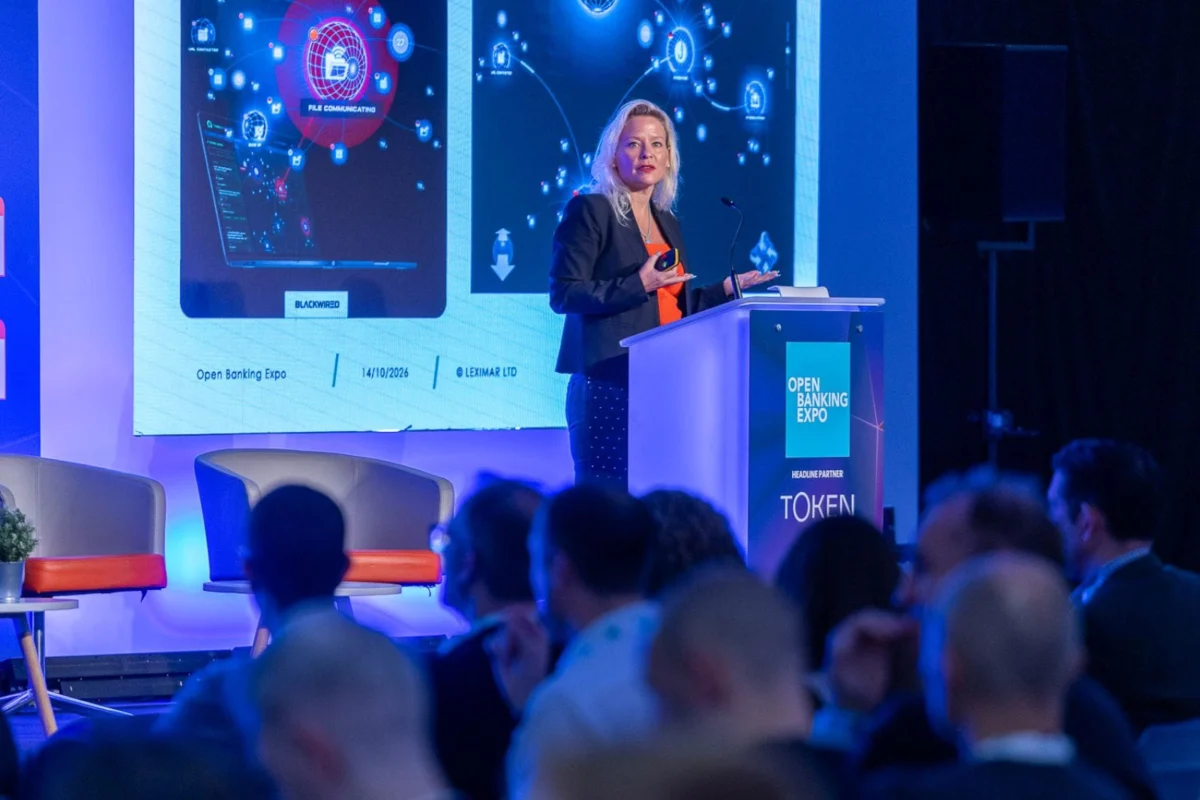
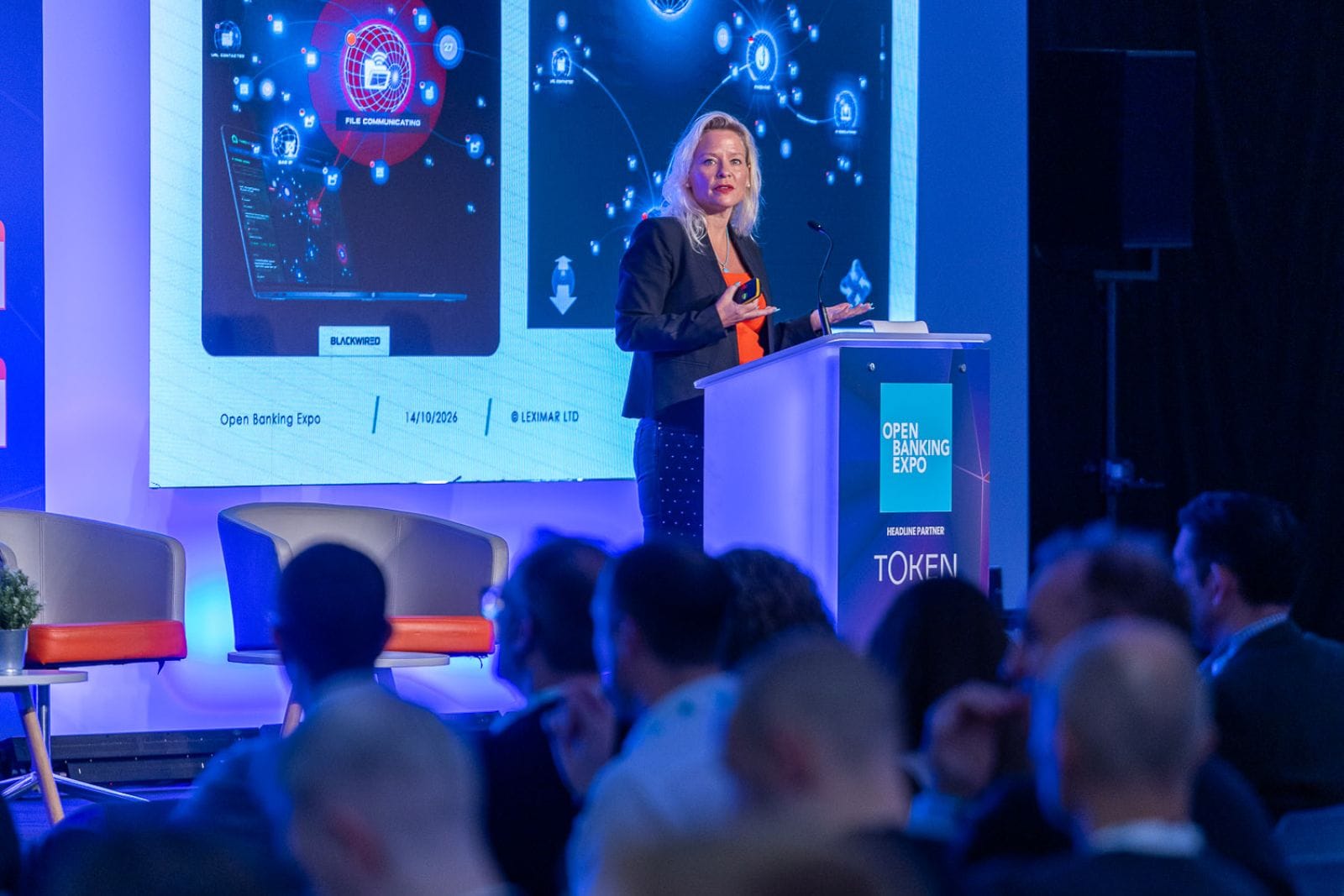
The financial services industry stands on the precipice of a profound structural evolution, one where human-driven banking interfaces could soon take a back seat to autonomous software. Addressing delegates on the second day of the Open Banking Expo UK & Europe 2026 in London, renowned fintech professor and Leximar CEO Dr. Ruth Wandhöfer delivered a stark warning to incumbent institutions and payment providers: the traditional pillars of banking—authentication, fraud prevention, and customer relationship management—are fundamentally misaligned with an economy steered by artificial intelligence.
As AI agents increasingly step into the role of financial decision-makers, capable of independently evaluating purchasing options, selecting payment instruments, and executing transactions without direct user app interaction, the entire architecture of global commerce is poised to shift. According to Wandhöfer, this transition ushers in a "post-payment world" where the act of paying recedes into the background, becoming an invisible utility nested within broader, automated financial orchestrations.
For financial institutions that have spent decades optimizing transaction speeds, building proprietary mobile applications, and fighting for digital screen space, the emergence of agentic AI poses an existential question. As Wandhöfer challenged the audience: “What if the biggest threat to your payments business is not another payments business?”
The Genesis of the Open Banking Expo UK & Europe 2026
The setting for this industry-wide wake-up call was the Open Banking Expo UK & Europe 2026, held at a pivotal moment in the maturity of open financial ecosystems. Over the past decade, regulatory mandates such as the UK’s Open Banking regulations, Europe’s revised Payment Services Directive (PSD2), and the ongoing transition toward a comprehensive Open Finance framework have reshaped how third-party providers access account data.
Yet, as the conference’s 2026 agenda underscored, the regulatory and technological landscape has rapidly outpaced early assumptions about API connectivity and screen scraping. While initial open banking frameworks focused heavily on secure data sharing and consumer-initiated account-to-account payments, the convergence of generative AI, large language models, and autonomous agents has accelerated the timeline toward machine-led commerce. Day 2 of the conference focused squarely on the intersection of artificial intelligence and financial infrastructure, prompting delegates to confront the reality that open banking was merely the foundation for a much more automated future.
Deconstructing the Security Paradigm: Why Biometrics and SCA Fall Short
One of the most immediate disruptions highlighted at the conference centers on authentication and cybersecurity. Modern financial security architectures—most notably Strong Customer Authentication (SCA) mandates enforced under European and UK regulations—are explicitly designed around human behavioral patterns. They rely on multi-factor authentication, physical possession of devices, and human biometric verification such as facial recognition or fingerprint scans.
Autonomous software agents, however, possess none of these human attributes.
“AI agents behave differently; they don’t have human biometrics,” Wandhöfer pointed out during her keynote address. This fundamental incompatibility means that existing legal and technical frameworks for approving transactions will inevitably break down as delegated financial authority becomes commonplace.
Instead of asking a consumer to authorize a single payment via a banking app every time a purchase is made, institutions must develop machine-readable consent policy frameworks. These frameworks must allow humans to set boundaries, parameters, and rules within which an AI agent is legally and technically permitted to act, while granting the software the autonomy to execute transactions within those pre-approved limits.
Furthermore, the introduction of autonomous agents introduces severe vector vulnerabilities. Cybercriminals are expected to target AI systems through advanced prompt injection techniques—manipulating inputs to trick autonomous agents into executing unauthorized transfers, purchasing malicious services, or bypassing spending caps.
To combat this, Wandhöfer emphasized that financial institutions must implement rigorous verification protocols to establish an AI agent’s digital identity, cryptographically confirm its authority to act on behalf of a specific consumer, and maintain an immutable, auditable record of every autonomous decision made. Summarizing the necessity of robust cryptographic proof over blind compliance, she told delegates: “Trust is good. Evidence is better.”
The Battle for the Decision Layer: Shifting Control in the Value Chain
Beyond cybersecurity, the rise of agentic AI threatens to upend traditional competitive dynamics within the financial sector. For decades, retail banks have guarded the "front door" of financial services—the consumer-facing application that serves as the primary touchpoint for checking balances, applying for loans, and managing budgets. This direct interface has allowed banks to capture valuable customer data, cross-sell high-margin products, and maintain powerful brand loyalty.
In an agentic ecosystem, that interface risks becoming irrelevant to the end consumer. If an AI assistant acts as a consumer’s primary financial concierge—analyzing spending habits, proactively switching utility providers, sourcing the best mortgage rates, and executing payments behind the scenes—the consumer may never log into a traditional banking app at all.
This decoupling of the underlying financial service from the customer-facing interface shifts the capture of economic value. Banks risk being relegated to "dumb pipes"—providing backend liquidity, ledger systems, and payment rails—while technology platforms, AI developers, and specialized fintechs own the decision layer where the actual economic choices are made.
“For the Open Banking world, access alone does not guarantee value capture,” Wandhöfer warned. While open banking democratized access to account data, agentic AI will determine who actually wields intelligence over that data. This shift is expected to supercharge the wider adoption of Open Finance, bridging banking, investments, pensions, insurance, and working capital management into a single, cohesive, machine-managed ecosystem.
Industry Implications and the Four-Pillar Financial Architecture
The strategic implications of Wandhöfer’s keynote extend across the entire financial services value chain. Industry analysts and fintech executives are increasingly recognizing that surviving the post-payment era requires a fundamental redesign of institutional strategies.
To navigate this transition, Wandhöfer outlined a new architecture for financial services resting on four interconnected pillars:
- AI Agents: The autonomous software layer responsible for executing consumer intent, making decisions, and orchestrating transactions.
- Digital Money: The evolution of programmable currencies, central bank digital currencies (CBDCs), and stablecoins capable of instant settlement.
- Tokenisation: The conversion of real-world assets and financial instruments into digital tokens that can be natively processed by algorithms.
- Trust and Regulation: The necessary legal, ethical, and cryptographic guardrails that govern accountability, liability, and machine-readable consent.
Despite the rapid pace of technological innovation, industry experts caution that the realization of this four-pillar architecture will face significant headwinds. Legacy IT infrastructure within traditional financial institutions remains notoriously difficult to modernize. Furthermore, fragmented data standards across international borders, evolving regulatory compliance requirements, and valid consumer protection concerns will slow the transition.
Liability represents a particularly thorny regulatory challenge: if an AI agent makes a flawed financial decision or falls victim to a sophisticated cyberattack, determining fault—whether it lies with the consumer, the bank, the software developer, or the AI platform—will require entirely new legal precedents.
Conclusion: Who Will Orchestrate the Future?
As financial institutions look toward the remainder of the decade, the overarching message from the Open Banking Expo UK & Europe 2026 is clear: connectivity was only the first step. Open banking unlocked the silos of legacy banking systems, but the advent of artificial intelligence is redefining what happens within those systems.
Wandhöfer’s concluding questions linger over boardrooms across the banking and fintech sectors: Who will own the decision layer? And who will orchestrate the new financial ecosystem?
For banks, payments providers, and ambitious fintech challengers alike, the mandate for survival is no longer merely about offering faster payment rails or sleeker mobile apps. Success in the post-payment era will belong to those who can master the complex interplay of artificial intelligence, digital trust, and machine-level governance—ensuring they remain essential architects in a world where machines increasingly call the shots.