The landscape of digital defense is undergoing a structural transformation as the rapid evolution of artificial intelligence permanently alters the asymmetric warfare of cyberspace. For decades, cybersecurity has operated as a perpetual cat-and-mouse game between malicious actors and system defenders. However, the advent of agentic artificial intelligence and Mythos-class frontier models has decisively tipped the technological scales in favor of offensive operations. This shift has unlocked an unprecedented era of automated exploitation, triggering an exponential surge in Common Vulnerabilities and Exposures (CVEs) across global digital infrastructure.
As cybersecurity increasingly relies on advanced coding, automated reasoning, and rapid execution, the technological divide between offense and defense has widened into a chasm. While offensive operations demand goal-directed reasoning toward a singular, highly defined objective—such as identifying and exploiting a zero-day vulnerability—defensive security requires continuous, open-ended reasoning. Defenders must perpetually detect subtle anomalies across vast volumes of seemingly normal network activity, a complex cognitive challenge that demands deep, specialized domain expertise.
The Structural Asymmetry of the AI Defense Gap
The core vulnerability in modern enterprise security stems from a fundamental modality mismatch. General-purpose Large Language Models (LLMs) are predominantly trained on vast corpora of human text, academic literature, and standard software code. Conversely, critical defensive data resides within complex, noisy operational logs, security events, network traces, and deep telemetry. Because this specialized modality is largely absent during the pretraining phases of frontier models, defense remains fundamentally out of distribution for general-purpose AI architectures.
Industry benchmarks and controlled red-blue team simulations starkly highlight this vulnerability. In recent evaluations conducted by Corma, an AI security startup, researchers simulated scenarios where an artificial attacker planted a hidden backdoor within a target system, tasking an AI defender with its discovery. The results revealed that the defensive model failed to locate the backdoor in 78 percent of trials—even when the defender was configured as an identical copy of the exact model that planted the malicious code. This empirical evidence demonstrates that when model quality and capability are held constant, attackers maintain an insurmountable structural advantage.
Furthermore, reliance on general-purpose frontier labs to bridge this gap remains an unviable strategy. In the global race toward Artificial General Intelligence (AGI), major AI laboratories are disincentivized from redirecting immense computational resources toward overhauling their training pipelines for defensive cybersecurity use cases. Consequently, enterprises can no longer rely on hope or trickle-down general-purpose AI developments to secure their digital assets.
The Genesis of Corma and the Self-Play Paradigm
Recognizing that the scaling laws governing offensive cyber capabilities must be matched by equally powerful defensive scaling laws, cybersecurity veteran Alon Pluda founded Corma with a generational mission: to solve the foundational defensive AI problem.
The company’s approach draws parallels from historic milestones in artificial intelligence, such as superhuman achievements in complex strategy games like chess and Go. Cybersecurity operates under a nearly identical zero-sum, two-player paradigm characterized by a definitive, binary reward structure—either a network was successfully breached or it remained secure—alongside a virtually infinite supply of operational scenarios.
Leveraging this structural similarity, Corma has engineered a proprietary training pipeline utilizing large-scale reinforcement learning and self-play across simulated enterprise cybersecurity environments. These synthetic ecosystems meticulously replicate the complexity, administrative tools, telemetry streams, and background noise of real-world corporate networks. By training within these environments, Corma’s foundation models achieve superior defensive capabilities while maintaining significantly lower per-token inference costs compared to general-purpose frontier models.
Sovereign AI, Cost Efficiency, and Vertical Integration
In the modern threat landscape, the economics and architecture of artificial intelligence deployment are paramount. Corma’s leadership team emphasizes a "sovereign AI" and vertically integrated model architecture designed to address three critical operational requirements: cost, model ownership, and inference speed.
- Cost Efficiency: Because security monitoring must operate continuously, always-on inference costs can rapidly deplete enterprise budgets. Corma’s specialized models are optimized specifically for defensive workloads, drastically reducing operational overhead.
- Model Ownership: Operating on proprietary, self-owned model weights shields enterprises from the strict usage restrictions and policy limitations imposed by closed-model laboratories regarding cybersecurity-related operations.
- Inference Speed: In active breach scenarios, milliseconds dictate containment. Specialized, streamlined inference pipelines ensure that defensive reactions outpace automated adversary movements.
Real-World Deployment and Agentic Security Workflows
Corma’s foundational technology has transitioned rapidly from research environments into active commercial deployment, functioning as an agentic Security Workforce across Fortune 500 companies and large enterprises. These autonomous agents integrate deeply with existing security tooling to execute roles spanning security operations, identity and access management, cloud infrastructure security, and network defense.
The tangible impact of these deployments is already reshaping incident response timelines. In one documented instance, a Chief Information Security Officer (CISO) received a notification on his smartwatch while walking his dog in the evening, alerting him to a sophisticated, pending network intrusion. With a single authorization tap on his wearable device, the Corma agent independently neutralized and shut down the active threat vector.
In another critical deployment, an autonomous Corma agent successfully identified, contained, and fully remediated an active, persistent attacker campaign within a customer’s corporate network during its very first hour on the job—an advanced intrusion that had eluded human security teams and traditional monitoring tools for 52 consecutive days.
Chronology and Industry Momentum
The rapid ascent of Corma underscores the urgent market demand for specialized defensive AI solutions. The timeline of the company’s development highlights its swift momentum:
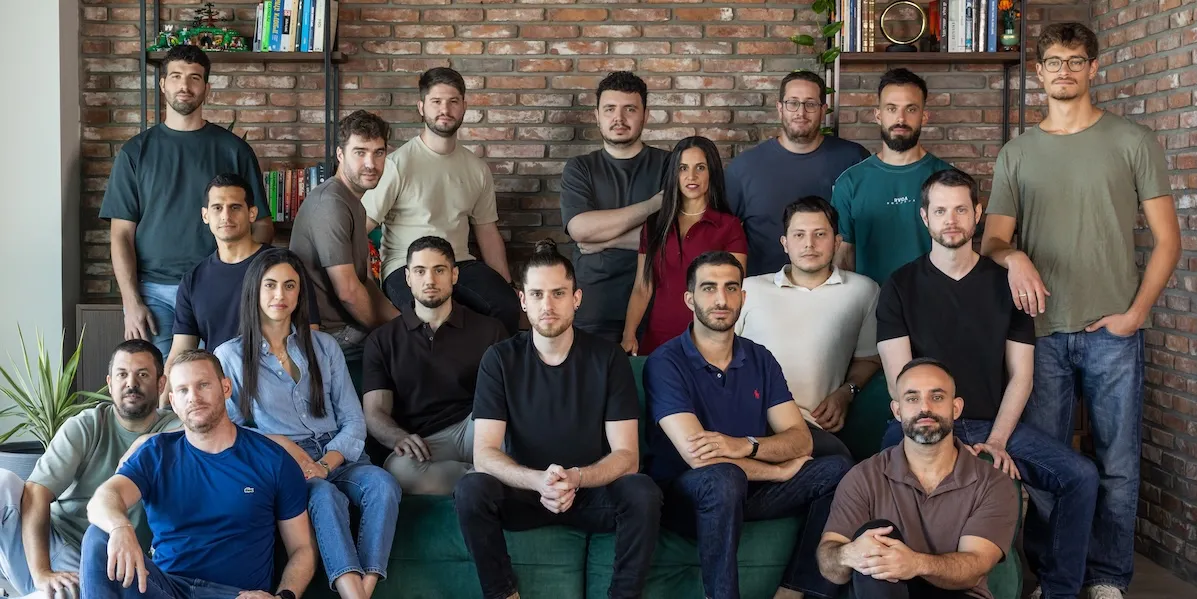
- Founding Phase: Alon Pluda, recognized globally as an elite cybersecurity expert, assembled an interdisciplinary team combining world-class offensive hackers and top-tier artificial intelligence researchers—a rare dual competency in the technology sector.
- Research and Simulation: The team engineered large-scale reinforcement learning environments designed to mirror complex enterprise infrastructures, successfully closing the "defense gap" identified in empirical red-blue simulations.
- Commercialization: Corma deployed its agentic Security Workforce across heavily regulated sectors, including finance, healthcare, retail, and critical infrastructure.
- Venture Backing: Industry confidence culminated in a heavily contested seed funding round led by prominent venture capital partners, positioning Corma for aggressive expansion in the dynamic AI security market.
Broader Implications for Enterprise Security
The emergence of specialized defensive foundation models marks a critical turning point for the cybersecurity industry. As generative and agentic AI tools continue to democratize and accelerate offensive cyber capabilities, the reliance on manual human oversight and reactive, signature-based security tools is no longer viable.
The success of Corma’s reinforcement learning approach suggests that the future of digital defense will be dictated not by general-purpose artificial intelligence, but by domain-specific, sovereign AI models capable of autonomous reasoning, continuous adaptation, and real-time remediation. As enterprises worldwide confront an increasingly hostile digital ecosystem, the transition toward agentic security workforces represents a fundamental evolution in humanity’s ongoing effort to secure the digital frontier.