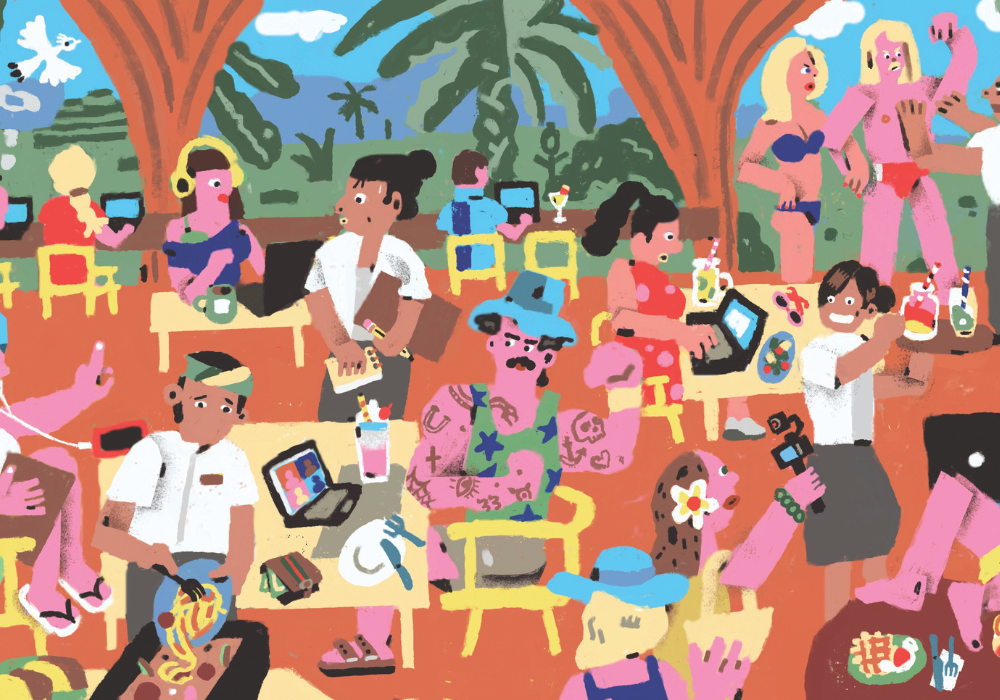
The phenomenon of digital nomadism has transitioned from a niche lifestyle choice for tech-savvy freelancers to a mainstream global movement, fundamentally altering the socioeconomic landscapes of popular destinations from Southeast Asia to Latin America. While the allure of "working from paradise" is heavily marketed through social media imagery of beachside coworking spaces and tropical villas, a growing body of evidence suggests that the influx of millions of remote workers is placing unprecedented strain on local environments, infrastructure, and social cohesion. As approximately 40 million individuals now lead "untethered" professional lives, the tension between immediate economic gain for host nations and the long-term sustainability of these communities has reached a critical tipping point.
The Economic Engine of Remote Work
The surge in digital nomadism has been supercharged by a confluence of global events, primarily the remote-work revolution catalyzed by the COVID-19 pandemic and subsequent cost-of-living crises in Western nations. For many professionals from high-income economies, "geographical arbitrage"—earning a salary in a strong currency like the US dollar or Euro while living in a region with a lower cost of living—has become a strategy for financial freedom.
Governments worldwide have been quick to capitalize on this trend. Currently, more than 50 countries offer specialized digital nomad visas, designed to lure high-spending residents who do not compete for local jobs but contribute significantly to the service economy. In Bali, Indonesia, where tourism accounts for nearly 80% of economic activity, the government has actively partnered with platforms like Airbnb to encourage long-term stays. The financial impact is substantial; in Mexico City, digital nomads accounted for roughly 15% of all tourist spending in 2021, totaling more than $532 million. Similarly, in Medellín, Colombia, data suggests that digital nomads spend nearly $1,000 more per month than the average local resident, providing a significant boost to hospitality, retail, and sales tax revenues.
The Hidden Costs of Paradise: Environmental Degradation
Despite the economic benefits, the environmental footprint of digital nomadism is becoming increasingly difficult to ignore. In tourist hubs like Canggu, Bali—a town of 9,000 that hosts several thousand nomads at any given time—the rapid development of villas and coworking spaces has led to the conversion of essential rice fields into concrete landscapes. This "built environment" expansion often outpaces the development of critical infrastructure, leading to severe ecological consequences.
Visitors frequently report a stark contrast between the "Instagrammable" beach lifestyle and the reality of local waste management. In many nomad enclaves, sewage systems are frequently overwhelmed, and plastic litter chokes local waterways and beaches. The practice of open-air garbage burning remains a common sight, even from the windows of luxury accommodations. Furthermore, the reliance on "visa runs"—short-duration flights to neighboring countries to reset residency permits—significantly inflates the carbon footprint of the average nomad. Given that aviation contributes approximately 2.4% of global carbon emissions, the frequent air travel inherent in a nomadic lifestyle often offsets the environmental benefits of eliminated daily commutes.
Social Displacement and Infrastructure Strain
The social implications of the nomad influx are equally complex. As remote workers with high purchasing power congregate in specific neighborhoods, they drive up the cost of housing and basic services, often pricing out the local population. In cities like Mexico City and Lisbon, this has led to "gentrification on steroids," where traditional residents are displaced to the outskirts of the city to make room for short-term rentals and boutique businesses tailored to Western tastes.
Infrastructure strain extends beyond housing. In many tropical destinations, the high water consumption of villas equipped with private pools and the energy demands of constant air conditioning place a heavy burden on local grids and groundwater reserves. This creates a structural imbalance: the resources are consumed by a transient population that may not stay long enough to witness the long-term depletion of those very resources.
A Chronology of the Digital Nomad Movement
The evolution of digital nomadism can be traced through several distinct phases:
- 2007–2013: The Early Adopters. Following the publication of Timothy Ferriss’s The 4-Hour Workweek, a small group of entrepreneurs and freelancers began leveraging early cloud technology to work from low-cost hubs like Chiang Mai, Thailand.
- 2014–2019: The Infrastructure Build-out. The rise of specialized coworking and coliving brands (such as Selina and Roam) began to professionalize the experience, making it accessible to a broader range of freelancers.
- 2020–2022: The Pandemic Pivot. COVID-19 forced corporations to adopt remote work protocols. This "Great Reshuffle" allowed millions of corporate employees—not just freelancers—to take their jobs abroad.
- 2023–Present: The Era of Regulation. Countries began formalizing digital nomad visas as a post-pandemic economic recovery strategy, while local activist groups in cities like Barcelona and Mexico City began protesting the negative impacts of "over-tourism" and nomad-led gentrification.
Perspectives from the Academic and Policy Sectors
Daniel Schlagwein, a professor at Chulalongkorn University and the University of Sydney, has extensively researched the impact of digital nomads on host communities. According to Schlagwein, governments often view nomads more favorably than "zero baht tourists"—those who arrive on cheap tour packages and contribute little to the local economy. Nomads are seen as a "force for good" because they integrate into the community as high-spending residents who "fade into the background" while working.
However, research published in the Journal of Business Ethics highlights a growing "self-reflective guilt" among nomads. While some use their technical skills to assist local projects—such as developing waste separation strategies in Balinese villages—others acknowledge that their presence is inherently taxing on the environment. The study notes that digital nomads often exist in a "vacuum," disconnected from the mundane realities of the communities they inhabit, such as the logistics of waste disposal or the political struggles of the local population.
The Digital Paradox: AI and Entrepreneurial Waste
An emerging concern in the discussion of sustainability is the nature of the work performed by digital nomads. Many "untethered" entrepreneurs are involved in sectors like cryptocurrency, drop-shipping, and AI-driven ventures. These industries are notoriously energy-intensive. For example, the data centers required to power AI tools like ChatGPT consume vast amounts of electricity and water for cooling.
When a nomad uses energy-sapping AI tools while living in a region with a fragile power grid, they effectively double their waste footprint: once through their physical presence and again through their digital activities. While traditional corporate roles also involve travel and tech usage, the concentration of these "high-waste" industries within the nomad community creates a localized intensification of environmental impact.
Analysis of Implications: Toward a Sustainable Framework
The future of digital nomadism depends on the development of a more ethical and sustainable framework. Some researchers suggest that the "post-material" approach to consumption common among nomads—who often buy fewer furniture items and consumer goods due to their mobility—could be a positive factor if balanced against their travel emissions. Furthermore, the elimination of the daily office commute remains a significant "win" for carbon reduction, provided it is not negated by monthly long-haul flights.
To mitigate the negative impacts, experts suggest several policy and behavioral shifts:
- Infrastructure Investment: Host governments must reinvest the tax and visa revenue generated by nomads into local waste management and water infrastructure.
- Regulatory Gaps: Implementing stricter regulations on short-term rentals to prevent the total displacement of local residents.
- Community Integration: Encouraging nomads to move beyond their "bubbles" and engage with local social and environmental challenges.
- Slow Travel: Shifting the nomad culture away from "visa runs" and toward longer stays (six months to a year) to reduce aviation-related emissions.
Conclusion: The Responsibility of the Global Citizen
As the world becomes increasingly interconnected, the distinction between a tourist and a resident continues to blur. The digital nomad revolution offers a glimpse into a future where work is no longer tied to a specific geography, but this freedom comes with a profound responsibility. The "self-reflective guilt" identified by researchers may be the first step toward a more conscious form of global citizenship.
Nomads can no longer afford to ignore the "flaming garbage piles" or the rising rents in the communities that host them. For the movement to remain a "force for good," it must evolve from a lifestyle of extraction—taking the beauty and low costs of a destination—to one of contribution, ensuring that the paradise they seek remains intact for the people who call it home long after the laptops are closed and the nomads have moved on to the next destination.