In the complex landscape of wealth management, asset location is frequently cited as a near-universal opportunity to enhance investment returns without altering risk levels. This sophisticated strategy, which involves strategically placing different types of investments across various account types—taxable, tax-deferred, and tax-exempt—can unlock significant after-tax gains for investors. While asset allocation dictates the overall mix of assets (like stocks and bonds) based on an investor’s goals and risk tolerance, asset location refines this by optimizing where those assets are held to minimize tax burdens.
The Fundamental Principle of Asset Location
At its core, asset location leverages the distinct tax treatments of different investment vehicles. Taxable accounts are subject to immediate taxation on dividends, interest, and capital gains realized upon sale. Tax-deferred accounts, such as traditional IRAs and 401(k)s, allow investments to grow without annual taxation, with taxes levied only upon withdrawal in retirement. Tax-exempt accounts, like Roth IRAs and Roth 401(k)s, offer the most advantageous tax treatment, with qualified withdrawals being completely tax-free.
The overarching goal of asset location is to place less tax-efficient assets, which tend to generate more taxable income annually (e.g., high-dividend stocks or bonds), into the most tax-favorable accounts. Conversely, more tax-efficient assets, such as those with growth potential and deferred capital gains, are strategically positioned. This ensures that the aggregate portfolio maintains the desired asset allocation while maximizing the net after-tax return.

Navigating the Nuances: From Simple Allocation to Sophisticated Location
Many investors are familiar with the basic concept of contributing to tax-advantaged accounts to defer or reduce taxes on retirement savings. Millions utilize a combination of IRAs and 401(k)s, often supplemented by taxable brokerage accounts once qualified account contribution limits are met. However, a common oversight occurs after funding these accounts: investors often replicate their target asset allocation uniformly across each account. While this ensures the overall portfolio aligns with the desired risk and return profile, it misses the opportunity for tax optimization.
For instance, a target-date fund (TDF), while offering a simple "set it and forget it" approach to asset allocation, is a single, indivisible security. This inherent limitation prevents it from being strategically placed across multiple accounts to harness the benefits of asset location. Investors seeking to maximize their after-tax returns need a more dynamic approach.
Understanding Tax Drag and Tax Efficiency
A critical concept in understanding asset location is "tax drag," which refers to the portion of investment returns lost annually to taxes. Investments that distribute income, such as dividends, are subject to taxes in the year they are received in a taxable account, thus creating this drag. Tax-sheltered accounts mitigate this by deferring taxation.
"Tax efficiency" is closely related, describing assets that generate minimal tax drag. Assets that appreciate in value with minimal annual distributions, and where capital gains are taxed only upon sale (and ideally long-term capital gains, which are taxed at preferential rates), are considered more tax-efficient.
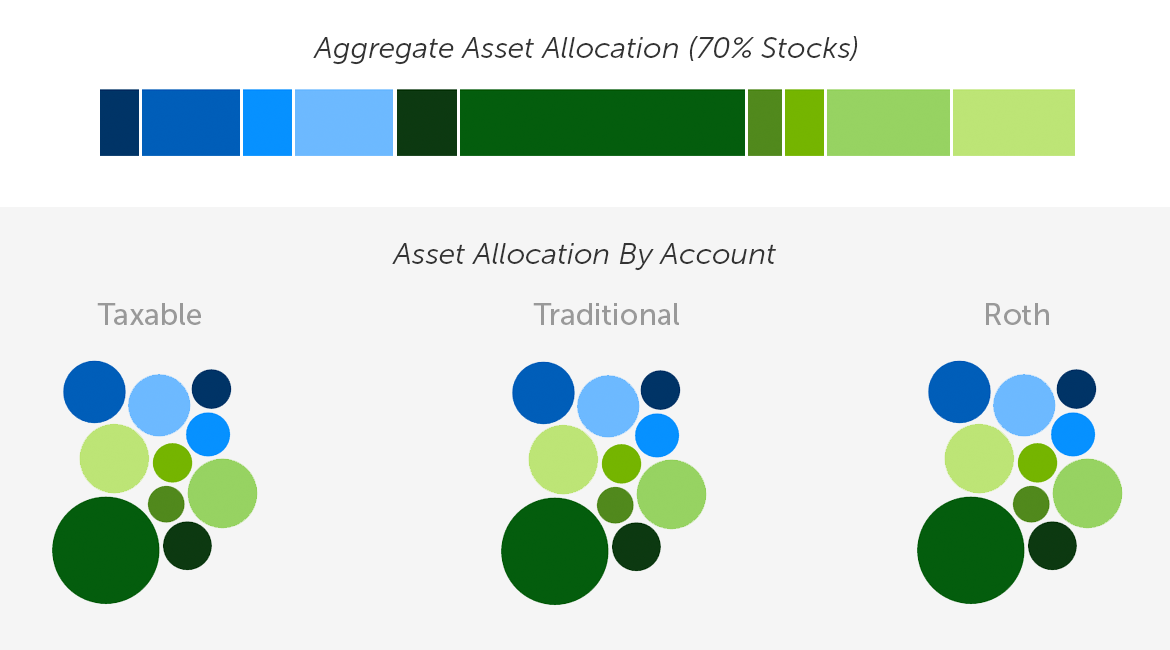
In taxable accounts, investment income is typically categorized into dividends and capital gains. Dividends can be qualified (QDI), taxed at a preferential rate, or ordinary, taxed at the higher ordinary income rate. Capital gains are taxed based on the holding period: short-term capital gains (STCG) on assets held for one year or less are taxed at ordinary income rates, while long-term capital gains (LTCG) on assets held for over a year are taxed at preferential rates. The timing of taxation is also crucial; deferred taxes allow for compounding on a larger principal, enhancing long-term returns.
The Strategic Placement of Assets: A Deep Dive
The optimal placement of assets across different account types hinges on a nuanced understanding of their return profiles and the tax implications within each account.
Taxable Accounts: In these accounts, the tax treatment of dividends and capital gains is paramount. Assets that generate significant annual dividends, particularly those taxed at ordinary rates, contribute heavily to tax drag. Similarly, assets likely to realize short-term capital gains frequently are also less desirable in taxable accounts if the goal is to defer taxation.
Tax-Deferred Accounts (TDAs): These accounts, like traditional IRAs and 401(k)s, offer tax deferral. While all growth is eventually taxed at ordinary income rates upon withdrawal, the deferral period allows for compounding. The benefit here lies in postponing tax liabilities. Placing assets that generate ordinary income (like bond interest or non-QDI dividends) into a TDA can be advantageous, as the tax is deferred until retirement, and the compounding effect can offset the higher eventual tax rate. However, assets primarily generating long-term capital gains, which are already deferred in a taxable account, may not benefit significantly from placement in a TDA, as the higher ordinary income tax rate upon withdrawal could negate the deferral advantage.
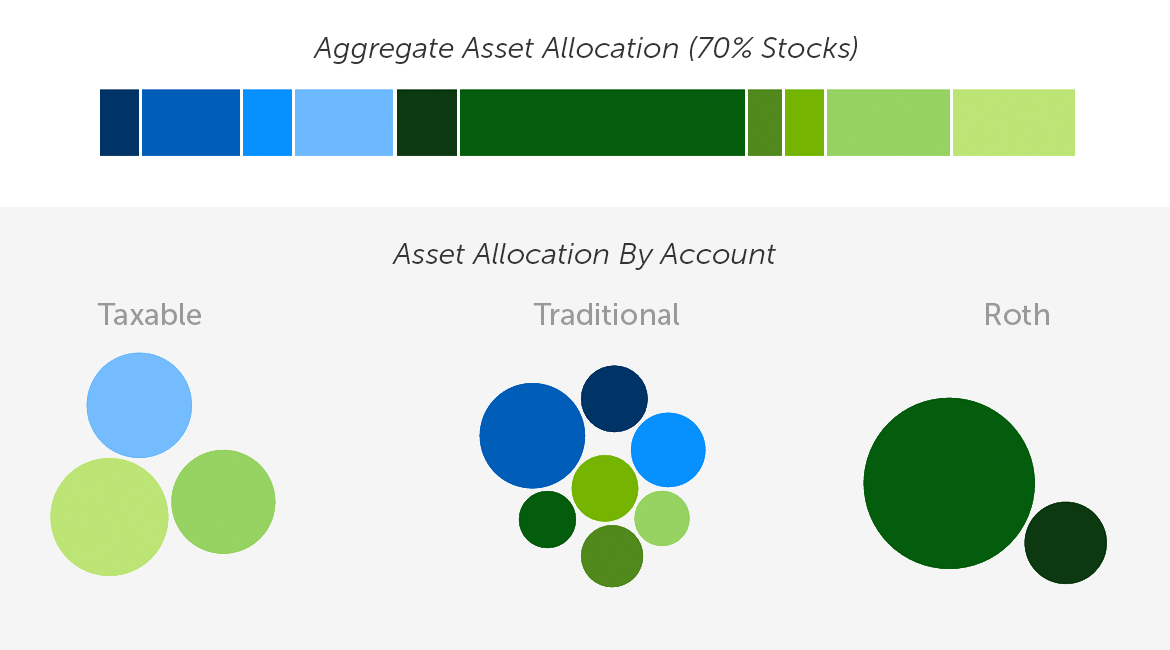
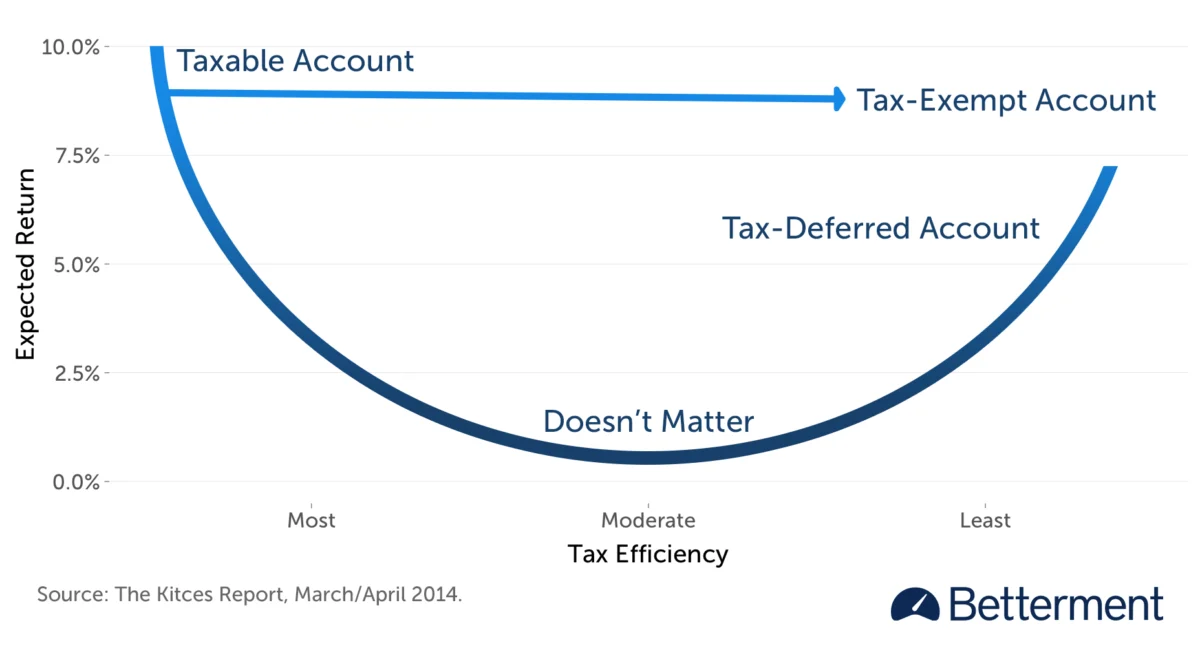
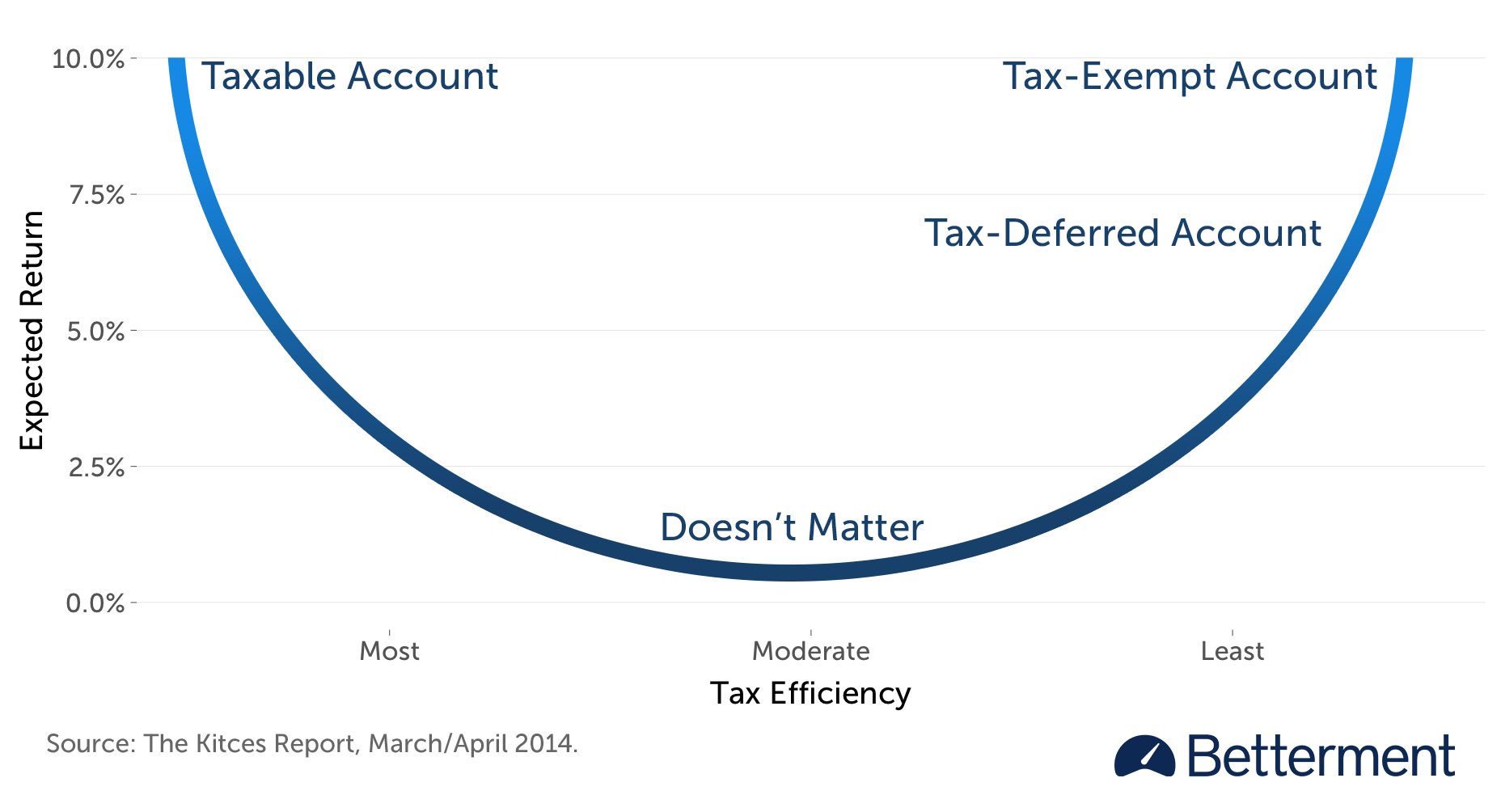
Tax-Exempt Accounts (TEAs): Roth IRAs and Roth 401(k)s are the most powerful tools for maximizing after-tax returns. Since all growth and qualified withdrawals are tax-free, TEAs eliminate tax drag entirely. While conventional wisdom suggests placing the least tax-efficient assets here, a more sophisticated approach considers the asset’s expected return. An asset with a high expected return, even if tax-efficient, might be better placed in a TEA to maximize its tax-free growth, especially if other accounts can absorb the less tax-efficient assets.
Debunking Asset Location Myths
Several common misconceptions surround asset location, hindering its effective implementation:
- Myth 1: Asset location is a one-time event. In reality, optimal asset location is a dynamic process. Changes in account balances, market conditions, dividend yields, and tax laws necessitate periodic adjustments.
- Myth 2: Asset location dictates account funding. Asset location optimizes within existing account balances. Decisions about which accounts to fund should be based on other factors, such as expected future tax rates relative to current rates, not solely on asset location benefits.
- Myth 3: Small account balances render asset location valueless. Even a small tax-exempt account can significantly boost after-tax returns if it holds the highest-returning assets, demonstrating that a disproportionate benefit can arise from even limited optimization.
- Myth 4: Asset location has no value without a taxable account. Even with only tax-deferred and tax-exempt accounts, strategic placement is beneficial. High-growth assets should be prioritized in tax-exempt accounts to maximize tax-free growth and potentially reduce future required minimum distributions (RMDs) from tax-deferred accounts.
- Myth 5: Bonds always belong in IRAs. While often a sensible strategy, this is not universally true. The optimal placement depends on the specific characteristics of the bonds and the investor’s overall account structure. For instance, tax-exempt municipal bonds are highly efficient in taxable accounts.
The Tax-Coordinated Portfolio (TCP) Methodology
Sophisticated platforms employ advanced methodologies to achieve optimal asset location. Betterment’s Tax-Coordinated Portfolio (TCP) feature, for example, utilizes linear optimization to maximize the after-tax value of an investor’s aggregate portfolio. This involves:
- Defining Expected Returns: Estimating forward-looking expected returns for various asset classes, incorporating risk-free rates and excess returns, often using models like Black-Litterman.
- Calculating Account-Specific After-Tax Returns: Determining the after-tax return for each asset in each account type, considering the asset’s specific tax characteristics and the account’s tax treatment over the investor’s time horizon. This transforms each asset into potentially three "virtual" assets, each with a distinct after-tax return profile.
- Formulating an Objective Function: Creating a mathematical model that seeks to maximize the total after-tax value of the portfolio by optimally allocating portions of each asset class across the available accounts.
- Applying Constraints: Ensuring that the total amount of each asset class does not exceed the overall allocation and that the sum of assets within each account does not exceed its balance.
- Linear Optimization: Employing algorithms to find the precise allocation of each asset to each account that maximizes the objective function while adhering to all constraints.
This process ensures that the aggregate portfolio maintains the desired asset allocation while strategically placing assets to minimize taxes. The system continuously re-evaluates and adjusts asset locations as account balances, market conditions, and tax laws evolve.
Rigorous Testing and Proven Results
To validate the effectiveness of such methodologies, rigorous testing is essential. Betterment’s in-house Monte Carlo simulation framework models the behavior of its TCP strategy, simulating individual asset lot performance, dividend reinvestment, rebalancing, and taxation. These simulations compare the TCP strategy against standalone, uncoordinated portfolios across thousands of market scenarios.
The results from such analyses consistently demonstrate that asset location can generate significant "tax alpha"—additional returns attributable to tax optimization. Key findings often include:
- Higher Bond Allocations Yield Greater Alpha: Portfolios with a larger allocation to bonds, which are generally less tax-efficient than stocks, tend to benefit more dramatically from asset location. This is because there is more "low-hanging fruit" in terms of tax drag to be reduced.
- Presence of Roth Accounts Enhances Benefits: The combination of taxable and tax-exempt accounts offers the greatest potential for optimization, creating a wider arbitrage opportunity for TCP.
- Impact of Existing Gains: For investors with existing taxable accounts holding appreciated assets, the immediate benefit of enabling TCP might be tempered by the need to sell those assets. However, future contributions and ongoing optimization will progressively move the portfolio towards its ideal location.
Special Considerations for Optimal Application
While asset location offers broad benefits, certain circumstances require careful consideration:
- Low Tax Bracket Taxpayers: Investors in very low marginal tax brackets may find that the tax advantages of asset location are diminished, as there is less tax to optimize. In such cases, a simplified approach might be more appropriate.
- Accounts with Different Time Horizons: TCP is designed for accounts with similar intended withdrawal timelines (e.g., retirement). Applying it to accounts with materially different time horizons (e.g., a short-term savings goal versus a long-term retirement fund) can lead to suboptimal asset allocation within individual accounts.
- Large Upcoming Transfers or Withdrawals: Significant cash flows can necessitate rebalancing, potentially triggering taxes. It is often advisable to delay enabling tax coordination until after such events, unless the deposit is into a taxable account, in which case enabling TCP beforehand is beneficial.
- Behavioral Challenges: Differentiated asset performance across accounts due to location strategies can appear jarring. Investors must be prepared for this and focus on the overall portfolio’s performance rather than the individual account movements.
- Interaction with Tax-Loss Harvesting: Asset location and tax-loss harvesting (TLH) are complementary strategies. TCP optimizes asset placement, while TLH seeks to realize losses in taxable accounts to offset gains. Their interaction is complex but designed to work in tandem, with TCP setting the stage for TLH within the taxable account.
The ongoing evolution of financial planning tools continues to refine asset location strategies, making them more accessible and effective for a wider range of investors. By understanding the principles and embracing sophisticated methodologies, investors can strategically position their assets to maximize their after-tax returns over the long term.