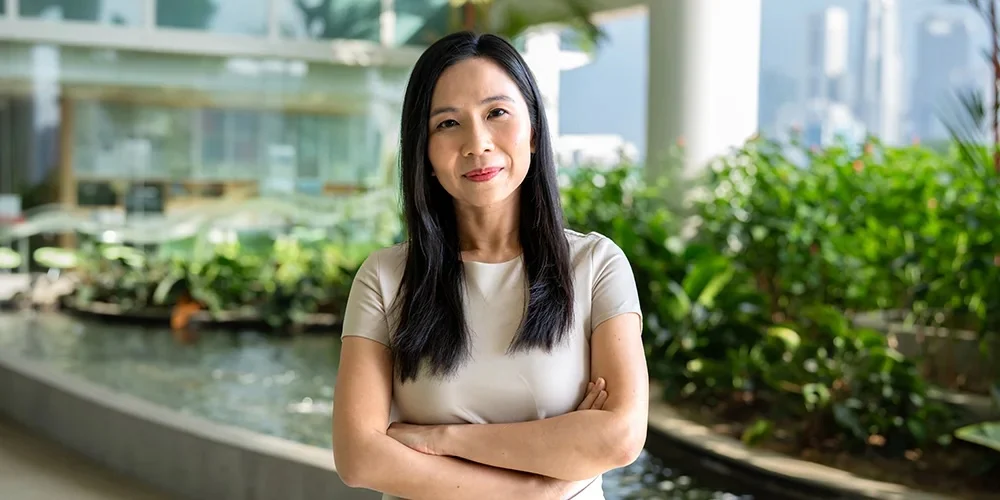
In an era defined by heightened geopolitical volatility and shifting regulatory landscapes, Singapore has emerged as a primary destination for global fund managers and operators seeking stable environments for impact capital. At the center of this migration is Temasek, the US$288 billion (S$389 billion) Singaporean state-owned investment firm, which has increasingly positioned itself as a "generational investor" committed to long-term sustainability. Under the leadership of Eliza Foo, who heads Temasek’s impact investing team, the firm is championing a philosophy that financial returns and global stewardship are inextricably linked. This strategic pivot comes at a time when traditional development funding is facing cutbacks, placing the onus on institutional investors and family offices to bridge the massive financing gap required for climate resilience and inclusive growth.
The Strategic Framework of Temasek’s Impact Portfolio
Temasek’s investment strategy is governed by four primary structural trends: digitization, the future of consumption, longer lifespans, and sustainable living. The firm’s recently released 2024 sustainability report underscores the scale of this commitment, detailing S$49 billion (approximately US$36.5 billion) in investments aligned specifically with the "sustainable living" mandate. This portfolio is not merely a subset of the firm’s activities but a core pillar designed to address net-zero greenhouse gas emissions, nature-positive solutions, and inclusive growth.
The impact investing team, led by Foo, operates with a dual mandate: to deliver market-rate financial returns while achieving positive impact at scale. This approach targets underserved communities across Asia, Africa, and Latin America, focusing on three critical sectors: financial services, healthcare, and climate solutions. By focusing on these regions, Temasek aims to address the needs of populations that are expected to represent the global majority by 2050, turning what was once considered "niche" impact investing into a mainstream financial necessity.
Recent Investment Milestones and Chronology
The timeline of Temasek’s recent activities reflects an accelerating pace of deployment. In mid-2024, the firm participated in a US$31 million Series B financing round for Rize, a climate-tech platform designed to help smallholder rice farmers in Southeast Asia reduce water consumption and methane emissions. This investment is particularly significant given that rice cultivation is a major source of methane, a greenhouse gas significantly more potent than carbon dioxide in the short term. Temasek’s involvement with Rize dates back to 2022, when it co-founded the venture alongside Breakthrough Energy Ventures, illustrating a long-term commitment to nurturing climate solutions from the incubation stage.
Beyond direct venture investments, Temasek has forged high-profile partnerships with some of the world’s largest asset managers. These include collaborations with Leapfrog Investments, a specialist in emerging market financial services; Brookfield Asset Management, focusing on the global energy transition; and BlackRock, through the Decarbonization Partners joint venture. These partnerships allow Temasek to leverage the operational expertise of global giants while providing the patient capital necessary for long-term infrastructure and technology projects.
Other notable additions to the portfolio include:
- Aurora Sustainable Lands: A North Carolina-based manager focused on sustainable timberland management and the generation of high-integrity carbon credits.
- Emerald Technology Ventures: A Zurich-based firm where Temasek supported the second Global Water Fund, addressing the escalating global water crisis.
- Stegra (formerly H2 Green Steel): A Swedish venture building one of Europe’s largest green steel plants, aimed at decarbonizing one of the world’s most carbon-intensive industries.
Pragmatic Ambition: Navigating the Net-Zero Path
A critical component of Temasek’s 2024 sustainability report is the acknowledgment of the complexities involved in the energy transition. While the firm remains steadfast in its commitment to reaching net-zero carbon emissions by 2050, it has revised its outlook on its interim 2030 goal, which aimed to halve portfolio emissions from 2010 levels. Temasek leadership has characterized this shift as "pragmatic ambition."
The firm notes that the path to decarbonization is rarely linear. As Temasek invests in "hard-to-abate" sectors—such as steel, cement, and heavy transport—portfolio emissions may experience short-term increases. This is a deliberate choice to provide the "transition capital" necessary for these industries to implement long-term decarbonization plans. Without such capital, these high-emitting sectors would lack the resources to modernize, potentially stalling global climate goals. Foo emphasizes that the firm must pivot according to the realities of geopolitics and the massive capital requirements of the current AI and technology build-out, all while maintaining its long-term stewardship goals.
The Shift Toward Climate Adaptation
Perhaps the most significant strategic evolution within Temasek is the increasing focus on climate adaptation. Historically, the vast majority of climate finance has flowed toward mitigation—efforts to reduce emissions through renewable energy or electric vehicles. However, with global temperatures already having breached the 1.5 degrees Celsius threshold on several occasions, the need to adapt to an already-changing climate has become urgent.
In a collaborative report with the Boston Consulting Group (BCG), Temasek identified climate adaptation as "one of the defining markets of the future." Foo draws a parallel between the current state of the adaptation market and the renewable energy market of two decades ago: it is currently less crowded, harder to underwrite, but holds immense potential for early movers.
Temasek is actively scouting opportunities in climate-resilient agriculture, water security, and cooling solutions. In many emerging markets, these solutions are becoming increasingly cost-competitive. For instance, sustainable cooling technologies in India are not only environmentally necessary but are becoming more affordable than traditional, energy-inefficient incumbents. This shift represents a transition from viewing adaptation as a philanthropic endeavor to recognizing it as a robust private equity opportunity.
Unlocking Liquidity in Emerging Markets
One of the primary hurdles for impact investing in emerging markets has been the lack of clear exit strategies. To address this, Foo highlights the importance of "DPI" (the ratio of distributions to paid-in capital). For impact investing to scale, Limited Partners (LPs) and institutional allocators must see a path to recouping their investments through secondary sales and public offerings.
The development of a budding "impact secondaries" market is crucial for recycling capital. When capital returns to investors, it can be redeployed into the next generation of entrepreneurs or communities. Foo asserts that the fund managers who can solve the liquidity puzzle in emerging markets will define the next decade of global finance. This focus on financial "plumbing"—the mechanisms of exits and capital recycling—is what separates Temasek’s pragmatic approach from more idealistic forms of impact capital.
Singapore as a Global Impact Hub
Singapore’s rise as an impact hub is not solely due to Temasek. The city-state’s investment ecosystem is anchored by both Temasek and GIC (Singapore’s sovereign wealth fund with over US$700 billion in assets), but it is further enriched by a growing density of family offices and foundations.
The upcoming "At One Impact Week," hosted by the Tsao Family Office and the NO. 17 Foundation, serves as a testament to the region’s burgeoning influence. These family-led organizations are increasingly looking toward Africa and South Asia, expanding the pool of LPs interested in impact strategies. Furthermore, Temasek’s annual Ecosperity Week has become a cornerstone event for global leaders to discuss "intentional innovation."
Foo points to India’s Unified Payments Interface (UPI) as a prime example of intentional innovation. By designing technology with the "last mile" and the informal economy in mind, the UPI has unlocked credit, savings, and insurance for hundreds of millions of people. Without such intent, technology often serves to widen the digital and economic divide. Singapore’s role as a neutral, well-regulated, and trusted hub allows it to facilitate these complex, cross-border innovations.
Conclusion and Broader Implications
As the world looks toward 2050, the demographic and economic weight of the global south cannot be ignored. Temasek’s strategy suggests that the future of global finance lies in the ability to serve the "underserved" majority. By combining patient, generational capital with a rigorous focus on financial returns and liquidity, Temasek is attempting to prove that impact investing is not a "luxury" debate but a fundamental requirement for a stable global economy.
The firm’s willingness to admit to the challenges of the 2030 emissions goals reflects a broader trend toward transparency in ESG reporting. It signals a move away from "greenwashing" toward a more honest assessment of what it takes to decarbonize the global industrial base. For global fund managers, the message from Singapore is clear: the opportunities in climate adaptation and inclusive growth are real, the proof points are accumulating, and the need for capital is immediate. As the ecosystem in Singapore continues to mature, it is likely to remain the primary conduit for capital flowing into the world’s most dynamic and challenging markets.