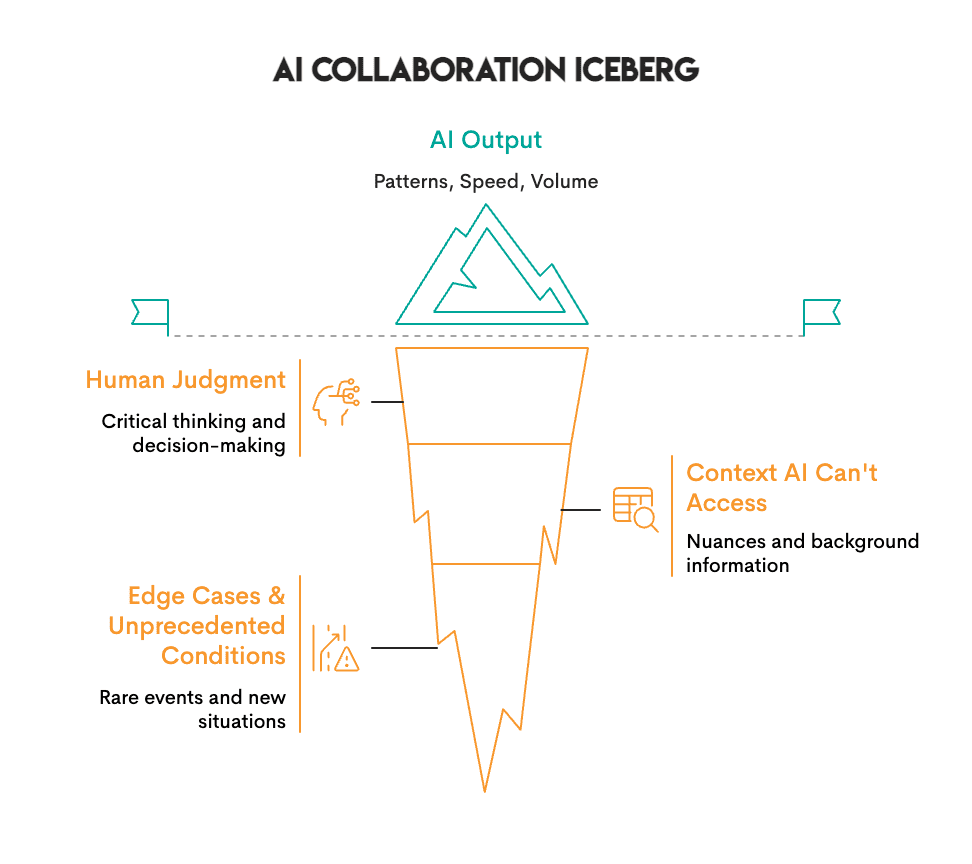
The landscape of artificial intelligence is undergoing a profound transformation, shifting from mere execution of commands to a dynamic partnership between humans and machines. This evolution, marked by the rise of "collaborative AI systems," promises to unlock unprecedented levels of innovation and enhance decision-making across various sectors. Instead of a simple "prompt in, response out" paradigm, the future lies in environments where AI generates options, surfaces patterns, and flags critical areas for human review, while humans provide context, critical judgment, and the ultimate decision. This symbiotic relationship ensures that AI’s capacity for speed and scale is augmented by human expertise in nuanced understanding and strategic foresight.
The Shift from Automation to Augmentation
For years, the prevailing model of AI implementation often resembled a one-way street: users submitted queries, and AI systems delivered answers. This approach, while effective for certain tasks, lacked the depth required for complex problem-solving and strategic planning. As organizations increasingly leverage AI for critical functions, a growing awareness has emerged that true value lies not in replacing human capabilities but in augmenting them. This sentiment is echoed by observations in the field, where pioneering companies are actively cultivating environments where human intelligence and artificial intelligence work in concert, each contributing its unique strengths.
The genesis of this shift can be traced to the growing realization that while AI excels at processing vast datasets, identifying intricate patterns, and performing repetitive tasks with unparalleled speed and accuracy, it often lacks the contextual understanding, ethical considerations, and creative problem-solving abilities that are inherently human. Conversely, human decision-making, while rich in nuance and judgment, can be hindered by cognitive biases, fatigue, and the sheer volume of information that needs to be processed in today’s data-intensive world. Collaborative AI bridges this gap, creating a synergy that amplifies the strengths of both.

Transforming Scientific Discovery and Healthcare
The impact of collaborative AI is already demonstrably significant in fields like scientific research and healthcare, where the stakes are exceptionally high and the potential for breakthroughs is immense.
One of the most compelling examples is AlphaFold, developed by DeepMind. This AI system has revolutionized structural biology by accurately predicting the 3D shapes of proteins from their amino acid sequences. Before AlphaFold, determining protein structures was a laborious and time-consuming process, often taking years of intensive laboratory work. AlphaFold can generate these predictions in a matter of hours. However, the true power of this technology is realized when human scientists step in. While AlphaFold provides the structural blueprints, it is the human researchers who interpret the meaning behind these complex structures, assess their biological significance, and design the next series of experiments to validate and build upon these predictions. This human-AI collaboration has dramatically accelerated the pace of discovery in areas ranging from understanding disease mechanisms to designing novel therapeutics.
The biopharmaceutical industry is another arena where collaborative AI is making waves. Insilico Medicine, a prominent example, has pushed the boundaries of traditional drug development. The conventional timeline for identifying a promising drug candidate can stretch over four to five years, a process fraught with high costs and failure rates. Insilico Medicine has developed an AI platform that can generate and screen thousands of potential drug molecules, predicting their efficacy and safety profiles. This AI-driven initial phase significantly narrows down the vast chemical space. Subsequently, their team of medicinal chemists meticulously reviews the AI-generated candidates, refining their structures, and designing rigorous experiments to validate their therapeutic potential. The results speak for themselves: Insilico Medicine has reported a remarkable reduction in the time required to discover a lead compound, decreasing it by approximately 75% – from an average of four to five years to just 18 months. This accelerated discovery pipeline holds the promise of bringing life-saving treatments to patients much faster.
In the field of pathology, PathAI exemplifies the power of human-AI collaboration in disease diagnosis. PathAI’s AI algorithms analyze tissue samples, identifying microscopic features indicative of diseases such as cancer. These AI-generated insights are then reviewed by human pathologists, who integrate their extensive clinical experience and nuanced understanding of patient histories. A study conducted by Beth Israel Deaconess Medical Center highlighted the efficacy of this approach, reporting a near-perfect cancer detection rate of 99.5% when AI-assisted pathologists reviewed slides, compared to 96% accuracy when pathologists worked independently. Furthermore, the AI’s ability to flag suspicious regions at scale significantly reduced the time pathologists spent on slide review, allowing them to focus on complex cases and patient consultations. The AI effectively acts as a tireless assistant, catching subtle patterns that might be missed due to fatigue or the sheer volume of data, while human pathologists provide the indispensable clinical context for definitive diagnosis.

The overarching lesson from these scientific and healthcare applications is clear: AI excels at identifying patterns within massive datasets and operating at immense speeds. Humans, on the other hand, bring critical judgment, contextual understanding, and the ability to determine the relevance and implications of those patterns. This division of labor, where AI handles the heavy lifting of data analysis and pattern recognition, and humans provide the interpretation and strategic direction, is the cornerstone of effective collaborative AI.
Revolutionizing Business Decisions and Operations
Beyond the realm of scientific discovery, collaborative AI is also profoundly reshaping how businesses operate and make critical decisions. The ability of AI to process and analyze enormous volumes of information at speeds unattainable by humans offers significant advantages in areas such as risk assessment, legal review, and market analysis.
JPMorgan Chase provides a compelling case study in the application of collaborative AI within the financial sector. Historically, the bank’s legal teams spent an estimated 360,000 hours annually manually reviewing contracts. This labor-intensive process was not only costly but also susceptible to human error. To address this challenge, JPMorgan developed COiN (Contract Intelligence), an AI-powered platform utilizing natural language processing (NLP) and machine learning. COiN can rapidly extract key provisions from legal documents, identify unusual clauses, and categorize contract terms within seconds. Crucially, however, the platform does not make final decisions. Instead, it flags critical items for review by human lawyers. This collaborative approach has enabled JPMorgan to process contracts significantly faster, reduce compliance errors by an impressive 80%, and reallocate attorney time towards higher-value activities like negotiation and strategic development. The AI handles the data extraction and initial flagging, while human expertise ensures accuracy and strategic application.
In the world of asset management, BlackRock, the world’s largest asset manager overseeing trillions of dollars, faces the monumental task of analyzing millions of risk scenarios across global markets. This scale of analysis is simply impossible to conduct manually. To tackle this, BlackRock developed Aladdin (Asset, Liability, Debt, and Derivatives Investment Network), an AI-based platform designed to aggregate and process vast amounts of market data, identifying potential risks before they materialize. While Aladdin provides real-time risk analytics, the ultimate allocation decisions are made by BlackRock’s portfolio managers. They leverage Aladdin’s insights, combining them with their own market knowledge and strategic judgment. This hybrid approach has proven superior to both purely human-driven and purely algorithmic investment strategies. The efficiency gained means that risk analysis, which once took days, is now performed in real time, enabling more agile and informed investment decisions. The success of Aladdin is further underscored by the fact that over 200 financial institutions license the platform for their own operations, demonstrating the broad applicability of this collaborative AI model.

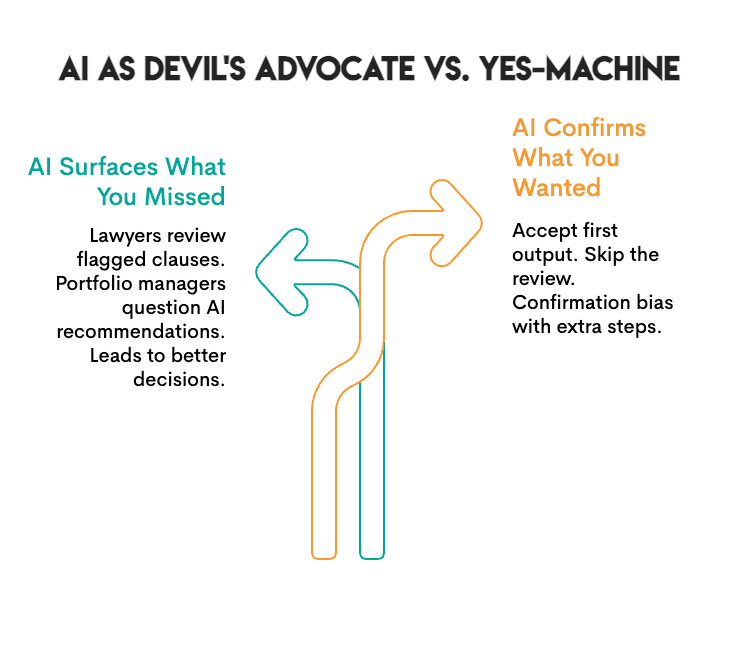
The common thread across these business applications is the AI’s role in surfacing options and information at an unprecedented scale and speed. However, the critical discernment of whether these findings are correct, relevant, or actionable remains a human prerogative. JPMorgan’s legal professionals still scrutinize the AI’s flags, and BlackRock’s portfolio managers retain the ultimate authority over investment decisions. This underscores the principle that AI serves as a powerful analytical engine, but human judgment remains the indispensable steering mechanism for strategic direction and risk mitigation.
Navigating the Landscape of Collaborative AI Tools
The proliferation of AI tools presents both opportunities and challenges for organizations seeking to implement collaborative frameworks. Not all AI tools are designed with collaboration in mind. Some operate as "black boxes," delivering outputs without transparency into their reasoning process, making verification and trust difficult. In contrast, a growing number of tools are being developed with the explicit intention of fostering human-AI partnership.
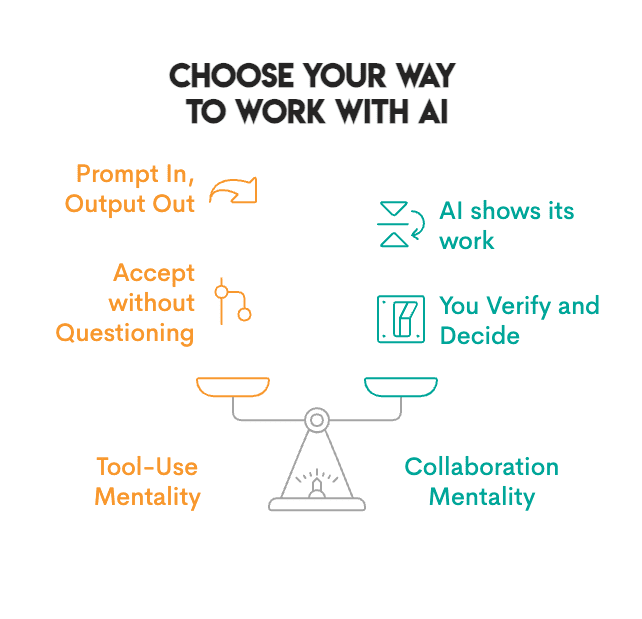
Key characteristics of collaborative AI tools include their ability to "show their work" – providing insights into their reasoning, data sources, and the logic behind their outputs. This transparency is crucial for enabling users to verify findings, build trust, and make informed decisions about whether to accept, modify, or reject the AI’s suggestions. This distinguishes a true collaborator from a mere automated service.
While a comprehensive list of collaborative AI tools is constantly evolving, they generally fall into categories that support various professional workflows:

- General Purpose Assistants: Tools like ChatGPT, Gemini, and Claude can assist with a wide range of tasks, from generating text and answering questions to summarizing information and brainstorming ideas. Their collaborative nature lies in their ability to engage in dialogue, refine responses based on user feedback, and provide explanations for their outputs.
- Research and Analysis Tools: Platforms that leverage AI for market research, competitive analysis, or scientific literature review often provide curated insights, identify trends, and flag relevant information. The collaborative aspect comes into play when users can query these systems for deeper dives, ask for alternative perspectives, or request summaries of complex findings.
- Coding and Development Assistants: Tools such as GitHub Copilot or Amazon CodeWhisperer can suggest code snippets, identify bugs, and even generate entire functions. Their collaborative nature is evident in their ability to integrate into developer workflows, learn from user corrections, and provide explanations for their code suggestions.
- Data Science Workflows: AI tools within data science platforms can automate data cleaning, feature engineering, and model selection. Collaborative aspects arise when these tools allow data scientists to inspect the automated processes, adjust parameters, and interpret the generated models with human oversight.
- Writing and Communication Enhancement: AI-powered writing assistants can help with grammar checking, style suggestions, content generation, and translation. Their collaborative nature is demonstrated by their ability to offer multiple phrasing options, explain grammatical rules, and adapt to the user’s specific writing style.
The distinction between a tool and a collaborator lies in the AI’s willingness and ability to expose its internal processes, allowing for human verification and intervention. This transparency is fundamental to building trust and fostering a genuine partnership.
Measuring the Impact of Human-AI Collaboration
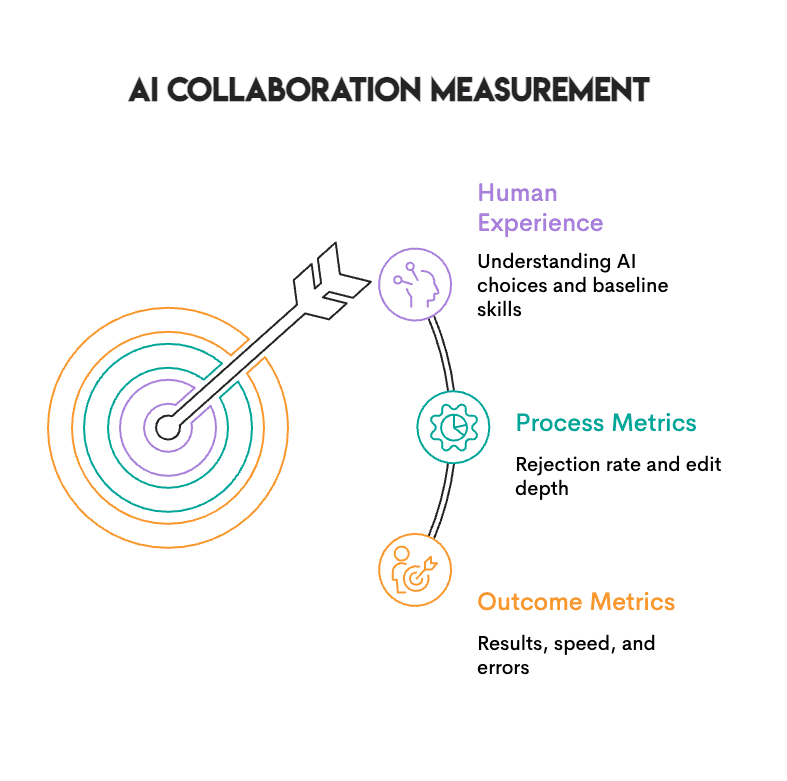
To ascertain the effectiveness of human-AI collaboration, organizations need to employ a suite of metrics that go beyond traditional productivity measures. Three key categories of metrics can help evaluate the success of these partnerships:
- Outcome-Based Metrics: These focus on the tangible results achieved through collaboration. Examples include increased accuracy of decisions, faster time-to-market for new products or services, improved customer satisfaction, or a reduction in errors and rework. For instance, in scientific research, a key outcome metric could be the number of novel discoveries or the acceleration of clinical trial phases. In business, it might be an increase in revenue or a decrease in operational costs.
- Process Efficiency Metrics: These metrics assess how the collaborative process itself enhances efficiency. This can include reduced time spent on specific tasks, streamlined workflows, or a more effective allocation of human resources. For example, in legal contract review, a process efficiency metric would be the reduction in hours spent per contract. In customer service, it might be the faster resolution of customer inquiries.
- Human-AI Synergy Metrics: This category aims to quantify the added value derived from the human-AI interaction that would not be achievable by either party working in isolation. This could involve metrics related to innovation, such as the generation of more diverse or creative solutions, or enhanced problem-solving capabilities. A crucial indicator is the level of human engagement and critical evaluation of AI outputs. If a human user consistently accepts the first AI output without critical review, it suggests a reliance on the AI as a simple tool rather than a collaborator. Conversely, a pattern of critical questioning, modification, and thoughtful integration of AI suggestions points towards successful synergy.
A simple yet effective check for collaboration is to ask whether the human is consistently accepting the AI’s first output. If so, it is likely closer to rubber-stamping than true collaboration. Periodically working without AI can also serve as a valuable benchmark, helping individuals and teams understand their baseline performance and discern the genuine contributions of the AI from their own inherent skills.
Implementing Best Practices for Effective Collaboration
Organizations that successfully integrate collaborative AI into their operations often adhere to a set of common practices. These principles are crucial for maximizing the benefits of AI while mitigating potential risks.

- Define Clear Roles and Responsibilities: It is essential to establish a clear understanding of what tasks are best suited for AI and which require human expertise. This delineation prevents confusion and ensures that each party focuses on its strengths. For example, AI can be responsible for initial data analysis and pattern identification, while humans are tasked with interpretation, strategic decision-making, and ethical oversight.
- Foster a Culture of Continuous Learning and Adaptation: The AI landscape is constantly evolving, and so too must the skills of the workforce. Organizations should invest in training programs that equip employees with the knowledge and abilities to effectively interact with AI systems, understand their limitations, and critically evaluate their outputs. This includes developing skills in prompt engineering, data interpretation, and ethical AI use.
- Prioritize Transparency and Explainability: Collaborative AI thrives on transparency. Tools and processes should be designed to provide clear explanations for AI-generated insights. This allows humans to understand the rationale behind AI recommendations, build trust, and identify potential biases or errors. When AI’s decision-making process is opaque, collaboration becomes difficult, if not impossible.
- Implement Robust Feedback Loops: Regular feedback mechanisms between humans and AI systems are vital for continuous improvement. This allows AI models to learn from human corrections and preferences, and for humans to provide insights that refine the AI’s performance. This iterative process ensures that the AI remains aligned with organizational goals and human judgment.
- Encourage Critical Evaluation and Skepticism: While AI is a powerful tool, it is not infallible. A healthy degree of skepticism and a commitment to critical evaluation are essential. Employees should be empowered to question AI outputs, challenge assumptions, and seek corroborating evidence. This prevents over-reliance and ensures that AI is used to augment, not dictate, human decision-making.
- Integrate AI Thoughtfully into Existing Workflows: Rather than implementing AI as a standalone solution, organizations should focus on seamlessly integrating it into existing workflows. This ensures that AI adoption is organic and supports rather than disrupts established processes. The goal is to make AI an intuitive extension of human capabilities.
The Future of Human-AI Teaming
The emergence of human-AI teaming represents a fundamental paradigm shift in how we interact with technology. We are moving beyond simply issuing commands to engaging in a dynamic exchange of information and insights. This evolution necessitates the development of new skills, including the discernment of when to rely on AI’s analytical prowess and when to critically question its findings. It demands a continuous evaluation of processes to distinguish genuine progress from mere perceived productivity.
Teams that master the art of collaborating with AI are poised to achieve superior outcomes. They are better equipped to identify errors earlier, explore a wider range of innovative solutions, and make more informed strategic decisions. Conversely, teams that fail to adapt risk either underutilizing AI’s vast potential or becoming overly dependent, rendering them vulnerable when the technology is unavailable or unreliable.
Frequently Asked Questions About Collaborative AI
What is the difference between utilizing AI as a tool versus collaborating with it?
Utilizing AI as a tool typically involves providing a command and accepting the output without deep scrutiny. Collaboration, on the other hand, implies a reciprocal relationship where the AI transparently presents its reasoning and data, allowing the human to verify, adjust, or reject the output. Without visibility into how the AI arrived at its conclusion, true collaboration is not possible.
How can I avoid becoming too reliant on AI?
To avoid over-reliance, periodically engage in tasks without AI assistance and consciously document your thought process. If you find yourself routinely accepting the first AI-generated output without critical review, or if your performance significantly declines when working without AI, it is a strong indicator of over-dependence. Maintaining a baseline of independent work is crucial for preserving critical thinking skills.

Are companies evaluating this in interviews?
Yes, the trend in interviews is increasingly focused on how candidates interact with AI. Interviewers are observing whether candidates blindly accept AI suggestions or whether they demonstrate critical judgment by reviewing, questioning, and refining AI outputs. Those who exhibit the latter are demonstrating the valuable trait of sound judgment in a collaborative AI environment.
The journey towards effective human-AI collaboration is ongoing, promising to redefine the boundaries of human capability and unlock new frontiers of innovation and understanding. As this partnership matures, the organizations and individuals who embrace its collaborative spirit will undoubtedly lead the way in shaping the future.