
For many investors, the singular focus on portfolio gains can overshadow a critical, yet often overlooked, factor: their tax bracket. While market returns are subject to the whims of economic forces, an investor’s tax bracket is a variable that can be strategically influenced, unlocking significant potential to retain more of their hard-earned investment profits over the long term. This proactive approach, known as tax arbitrage, involves a sophisticated "swap" of tax liabilities, leveraging the dynamic nature of one’s tax situation throughout their financial journey. The fundamental principle is that tax brackets are not immutable; they evolve with life stages, career progression, and personal financial decisions, creating opportune moments to shift tax burdens to more favorable, lower, or later periods.
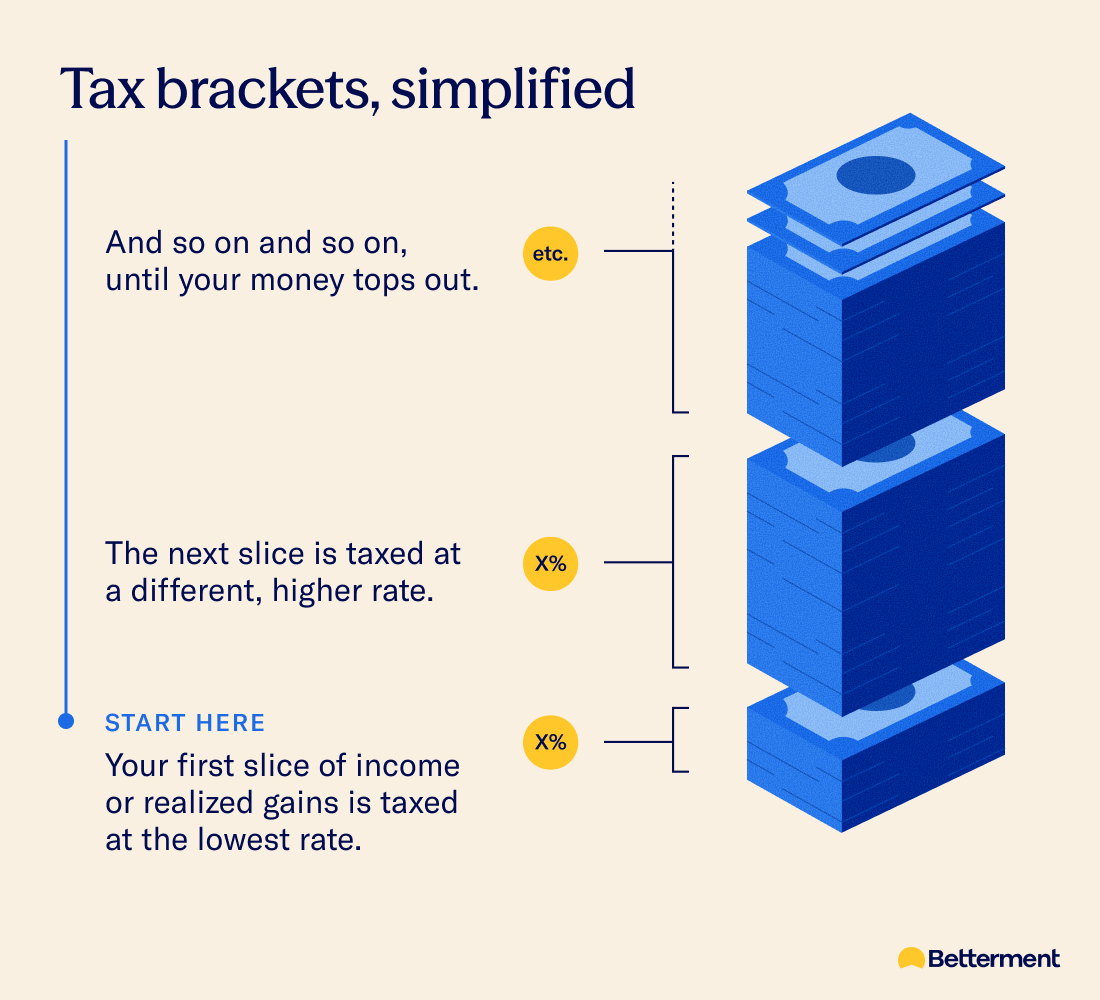
The U.S. tax system is structured progressively, meaning income is taxed in ascending tiers. Each segment of income is subject to a higher tax rate than the preceding one. Consequently, while individuals often refer to a singular "tax bracket," their total income typically spans multiple brackets, each with its own associated tax rate. Tax arbitrage strategies are specifically designed to optimize an investor’s position within their highest tax bracket, thereby reducing the overall tax impact on their investment earnings.
Understanding the Progressive Tax Landscape
To effectively implement tax arbitrage, a foundational understanding of how the U.S. progressive tax system operates is essential. As an individual’s income increases over their lifetime, the final dollars earned may push them into a higher tax bracket. Conversely, periods of reduced income, such as during retirement, career transitions, or extended leaves of absence, can lead to a downward shift in tax brackets. These fluctuations are not merely passive observations; they represent strategic opportunities to reframe tax obligations. For instance, an investor in their peak earning years, potentially situated in a higher tax bracket, might have the chance to defer taxes on certain income until retirement, when their income and thus their tax bracket are expected to be lower. This deferral not only reduces the immediate tax liability but also allows the deferred capital to benefit from the compounding effect of investment growth over an extended period.
Traditional retirement savings vehicles, such as Individual Retirement Arrangements (IRAs) and 401(k) plans, are prime examples of mechanisms facilitating tax deferral. These accounts allow individuals to contribute a substantial portion of their income—often exceeding $30,000 annually—before it is subject to taxation. The tax advantages of traditional IRAs, however, are subject to income limitations, with benefits phasing out at certain income thresholds. Beyond these established retirement accounts, other strategies can further amplify the benefits of tax deferral. These might include strategically utilizing tax-advantaged annuities or employing tax-loss harvesting techniques within taxable investment accounts to offset capital gains.
The Dual Pillars of Tax Arbitrage: Deferral and Acceleration

Tax arbitrage can be broadly categorized into two primary strategies: tax deferral and the strategic acceleration of taxes into lower-income years.
Tax Deferral: Delaying the Taxable Event
Tax deferral is the more commonly recognized strategy. It involves reducing taxable income in the present and allowing investments more time to grow through compounding before taxes are ultimately paid. A hypothetical scenario illustrates this principle: an individual currently in the 22% federal income tax bracket who anticipates being in the 12% bracket during their retirement years. By deferring income or investment gains, every dollar that is shifted to a lower tax bracket effectively faces a significantly reduced tax rate, potentially nearly half the original rate, though individual outcomes will vary based on specific tax circumstances and other income sources.
Beyond the direct tax savings, the freed-up capital can be reinvested, benefiting from decades of potential compound growth. This is the foundational advantage of tax-advantaged retirement accounts. For instance, a traditional IRA allows individuals to invest pre-tax dollars, deferring taxation on both contributions and earnings until withdrawal in retirement. Similarly, 401(k) plans offer similar pre-tax contribution benefits, often with employer matching contributions that further accelerate savings.
While traditional retirement accounts are powerful tools, maximizing their effectiveness involves thoughtful planning. For those with higher incomes, understanding the phase-out limits for IRA deductions is crucial. Beyond these, advanced strategies can enhance tax deferral benefits. These might include investing in tax-deferred annuities, which offer growth potential with taxes paid upon withdrawal, or employing systematic withdrawal strategies from taxable accounts in lower-income years to manage the tax impact of capital gains.
Filling Up Low Brackets: Seizing Opportunities in Reduced Income Periods
In contrast to deferral, the second major tax arbitrage strategy involves strategically accelerating tax liabilities into periods of lower income. This approach is particularly advantageous during times when an individual’s income dips below its typical trajectory, such as early in their career, during a sabbatical, between jobs, or in early retirement. The objective is to "fill up" these lower tax brackets by realizing taxable income or capital gains when the associated tax rates are minimal, or even zero.
This strategy necessitates meticulous advance planning. Consulting with both a financial advisor and a tax professional is highly recommended to navigate the complexities and ensure compliance with tax regulations. Several avenues exist for strategically pulling taxes forward:
- Roth Conversions: This involves converting traditional IRA or 401(k) funds into a Roth IRA. While the converted amount is taxed in the year of conversion, future qualified withdrawals from the Roth IRA are tax-free. This is most beneficial when an individual’s current tax bracket is lower than it is projected to be in the future. For example, an individual in their early career might have a lower marginal tax rate than they anticipate in their prime earning years. Converting a portion of their traditional retirement savings during this period could result in paying taxes at a lower rate than they would otherwise face later.
- Realizing Long-Term Capital Gains: Profits from selling investments held for more than one year are classified as long-term capital gains. These are taxed at preferential rates, which are significantly lower than ordinary income tax rates. In years with low overall income, investors may be able to realize substantial capital gains with little to no tax liability. For the tax year 2026, the long-term capital gains tax rates are structured as follows:
- 0% Tax Rate: Applies to single filers with taxable income up to $49,450 and married couples filing jointly with taxable income up to $98,900.
- 15% Tax Rate: Applies to single filers with taxable income between $49,451 and $545,500, and married couples filing jointly between $98,901 and $613,700.
- 20% Tax Rate: Applies to single filers with taxable income exceeding $545,501 and married couples filing jointly exceeding $613,701.
These rates, combined with the standard deduction, allow many investors to generate tens of thousands of dollars in tax-free profits from their taxable investment accounts annually.
- Accelerating Income: In certain limited circumstances, it may be advantageous to accelerate income into a low-income year. This could involve taking a bonus early, exercising stock options, or receiving deferred compensation, all while understanding the tax implications of bringing that income forward into a lower tax bracket.
The Role of Technology in Optimizing Tax Strategies
While the principles of tax arbitrage are conceptually straightforward, their practical implementation can be intricate and time-consuming. Accurately assessing current tax brackets, projecting future tax liabilities, prioritizing account types, and continually adjusting strategies as life circumstances change requires significant effort and expertise. This is where financial technology platforms are beginning to play a pivotal role.
Robo-advisors and sophisticated financial planning tools can automate much of the complex analysis involved. By inputting basic financial information, such as household pre-tax income and tax filing status, these platforms can provide personalized recommendations on the optimal allocation of assets between taxable, tax-deferred, and tax-free accounts. For instance, a platform might suggest leaning more heavily into tax-deferred accounts if an individual’s current income suggests a significantly higher future tax bracket.
For more nuanced and personalized guidance, advanced services often offer access to human financial advisors. These professionals can assist with complex strategies like the timing of Roth conversions, evaluate the impact of various tax-saving tactics, and help integrate these strategies into a comprehensive financial plan. Collaboration with a dedicated tax advisor remains essential to ensure that all tax-related decisions are compliant and optimized from a tax filing perspective.
A Strategic Advantage Hiding in Plain Sight
Tax swaps are not about circumventing the tax system but rather about utilizing its inherent structures strategically and patiently. The complexity often associated with these strategies leads many investors to overlook this potent opportunity. However, by understanding the dynamics of tax brackets and employing well-defined strategies, investors can significantly enhance their long-term investment outcomes. Whether initiating a journey into tax-smart investing or seeking to refine an existing retirement strategy, leveraging the capabilities of advanced financial tools and professional guidance can unlock substantial advantages. The ability to strategically manage one’s tax liability is a powerful, yet often underutilized, component of a robust investment plan, proving that a savvy trade can indeed be hiding in plain sight, waiting to be discovered and acted upon. The proactive management of tax implications, alongside investment performance, is a testament to a sophisticated approach to wealth building, ensuring that more of the fruits of labor and investment are retained for future financial security and goals.