The transition from traditional business models to digital-first strategies has left many modern enterprises facing a fundamental identity crisis regarding their product offerings. While an entrepreneur opening a physical establishment—such as a fine-dining restaurant, a coffee shop, or a catering service—operates within well-defined industry parameters, digital businesses often struggle to categorize their own value propositions. This lack of clarity frequently results in "analysis paralysis," a state where organizations possess significant technical capabilities but lack the strategic alignment necessary to convert those assets into sustainable revenue streams. To address this gap, industry leaders are increasingly turning toward structured frameworks that treat Application Programming Interfaces (APIs) not merely as technical connectors, but as foundational business products capable of driving significant economic value.
The Evolution of the API Economy and the Challenge of Choice
The concept of the API economy has evolved rapidly over the last decade. Initially viewed as a back-end necessity for internal system integration, APIs have moved to the forefront of corporate strategy. According to the 2023 Connectivity Benchmark Report, the average enterprise now uses nearly 1,000 different applications, yet only about 29% of them are integrated. This fragmentation has created a massive demand for standardized, monetizable digital products. However, the path to monetization is rarely linear.
Enterprises often find themselves trapped between two extremes: having a surplus of technical capabilities without a clear market entry point, or possessing numerous product concepts without the internal alignment to execute them. This struggle points to a profound deficiency in business context. Without a common frame of reference, digital product teams cannot effectively communicate the value of their offerings to stakeholders or customers. To solve this, experts suggest the practice of "cross-pollination"—a strategy where organizations look outside their immediate market context to find successful business models that can be adapted to their specific industry. Historical precedents, such as the Wright brothers applying bicycle manufacturing techniques to aeronautics, illustrate how looking across disciplines can break the deadlock of innovation.
Mapping the Business Context: The Two Dimensions of Digital Strategy
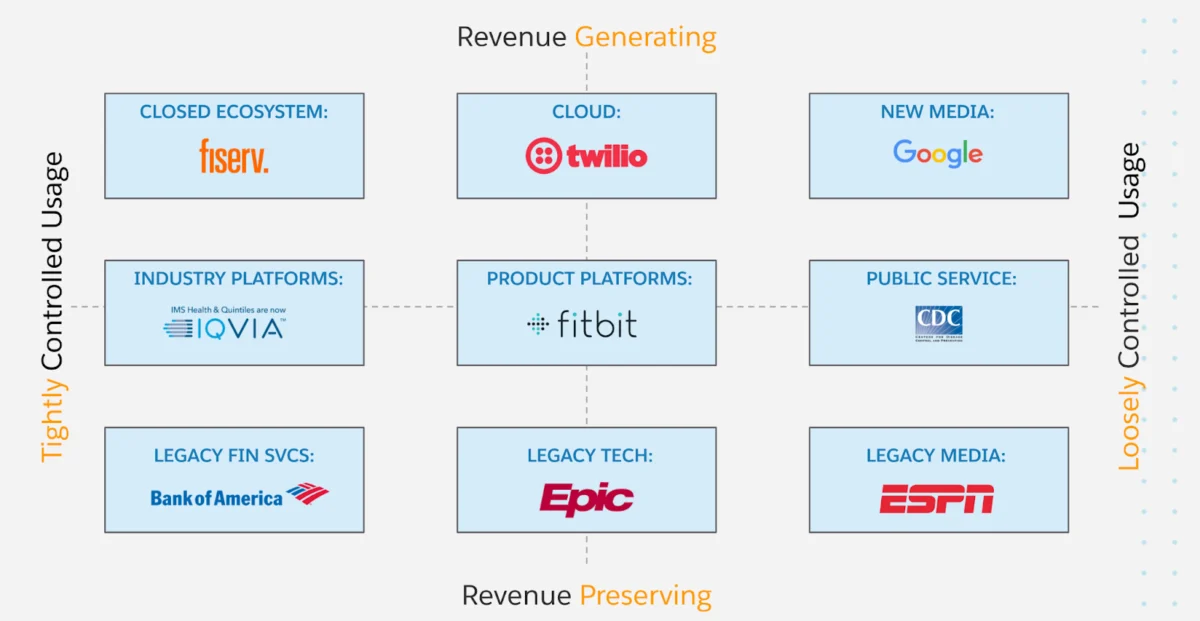
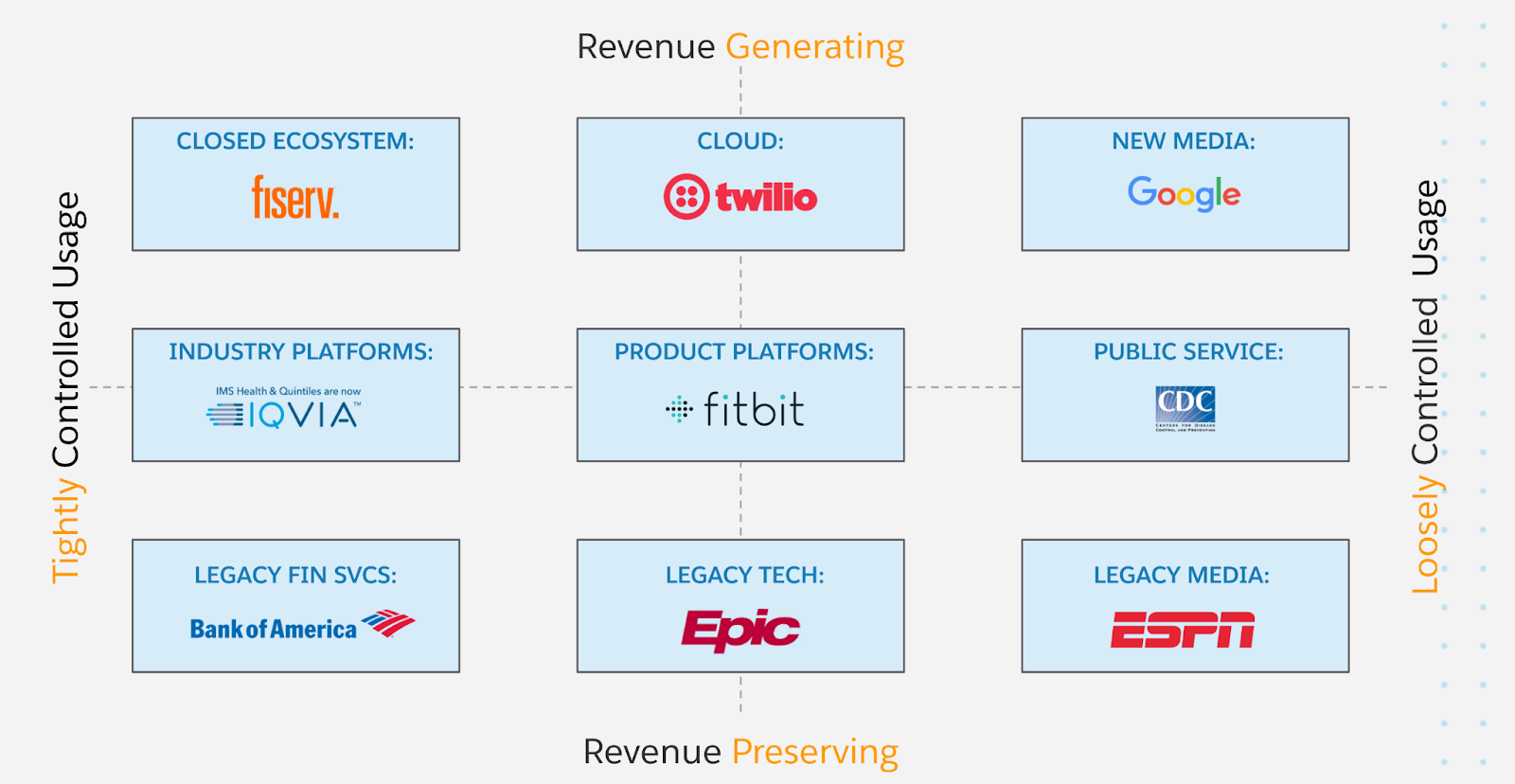
To help organizations navigate these complexities, a foundational framework has been developed to map API monetization across two critical dimensions: revenue intent and levels of control. This "Business Context Map" allows CIOs and digital strategists to plot their offerings based on whether they are designed to generate net-new revenue or preserve existing streams, and whether they require high or low control over how customers access those products.
By analyzing these dimensions, nine distinct contextual segments emerge. These segments provide a blueprint for how an enterprise can position its digital products to achieve maximum market impact.
High-Revenue, High-Control Models: Walled Gardens and Cloud-Based Widgets
At the top tier of the monetization spectrum are models designed for maximum scalability and revenue generation. The "Walled Garden" approach involves platforms that have become ubiquitous within specific sectors. These entities, such as Fiserv in the financial sector or Cox Automotive in the retail space, achieve a "critical mass" of features and users. By creating a network effect, they ensure that their APIs are indispensable to nearly every transaction within their ecosystem. In this context, access is tightly controlled, ensuring that the platform remains the primary arbiter of value.
Adjacent to the Walled Garden is the "Cloud-Based Widget" model. This is the domain of digital-native giants like Amazon Web Services (AWS), Stripe, and Twilio. These organizations take complex, high-friction problems—such as global payments or telecommunications infrastructure—and simplify them into packaged API offerings. These products are marketed directly to developers, allowing other businesses to build their own value on top of these foundational "widgets." The success of this model relies on a mastery of software resiliency and a deep understanding of the B2B developer community.
The Advertising and Engagement Model: New Media Platforms
In the top-right quadrant of the strategic map lies the "New Media Platform" context. Unlike Walled Gardens, these platforms, including Facebook, Google, and X (formerly Twitter), often allow broader access to their ecosystems but maintain rigorous control over the content itself to ensure it remains uniquely valuable. Revenue in this segment is primarily driven by advertising rather than direct API access fees.
For an API strategy to succeed here, the content must be dynamic and difficult to duplicate. If data can be easily "scraped" or mirrored elsewhere, the monetization potential vanishes. Companies in this space must invest heavily in monitoring capabilities to prevent illicit use and ensure that their embeddable widgets—like Google Maps—continue to drive traffic back to their core revenue engines.
Revenue Preservation and the Growth of Platform Stickiness
The middle row of the context map represents organizations that use APIs to enhance "platform stickiness." These entities may not yet have a standalone API revenue stream, but their digital products are essential for maintaining market share and increasing the overall value of their primary offerings.
Industry and Product-Centric Platforms
"Industry Platforms" target specific B2B audiences, providing essential features that keep clients within their ecosystem. However, because these sectors are often crowded with competitors, these organizations must be more deliberate in how they market their APIs to avoid commoditization.
"Product-Centric Platforms" take a different approach by tying their APIs to a physical product or a primary software application. Examples include the Salesforce CRM, Fitbit wearables, and Roku streaming devices. In these cases, the API is not the product being sold; rather, it is a tool used to build an ecosystem of third-party developers who add value to the original purchase. A Fitbit is more valuable to a consumer because its API allows third-party health apps to sync data, thereby deepening user engagement and brand loyalty.
The Purpose-Driven Model: Public Service APIs
In some instances, the goal of an API is not profit but the fulfillment of a mission. "Public Service" organizations, such as the Centers for Disease Control and Prevention (CDC) or National Public Radio (NPR), offer APIs that are generally free and open to the public. While this model aligns with social mandates, it presents a unique challenge: sustaining the technical infrastructure and support for a product that does not generate direct income. For these organizations, the "revenue" is measured in public impact and the proliferation of accurate information.
Navigating the Risks of the Legacy Quadrants
The bottom tier of the framework identifies the "Legacy" segments, where organizations often find themselves in a defensive posture, using APIs primarily to prevent the loss of existing revenue.
Legacy Tech and Services: The Fight Against Disruption
Companies in the "Legacy Services" zone often offer highly mature, commoditized products. In this environment, price competition is fierce, and APIs are typically bundled into existing contracts for free to prevent customers from switching to more agile disruptors. Similarly, "Legacy Tech" firms—those that have not fully transitioned to Software-as-a-Service (SaaS) models—often use APIs as a defensive maneuver to prevent "unbundling." Their goal is to maintain vendor lock-in through integration capabilities, but they risk cannibalizing their own revenue if they do not carefully price these services.
The Cautionary Tale of Legacy Media
Perhaps the most difficult position on the map is "Legacy Media." Organizations in this quadrant often possess valuable data but lack the technical or strategic control to monetize it effectively through APIs. Notable historical examples include ESPN and Edmunds, both of which launched ambitious API programs only to shut them down when they failed to generate sustainable returns or protect their unique content. For these companies, the path forward often requires a diagonal move across the map—leveraging unique data sets to transform into a product-centric platform or an affiliate-based model.
Market Analysis and Strategic Implications
The data surrounding API adoption suggests that the stakes for choosing the right business context have never been higher. Market research firms project that the global API management market will grow from approximately $4.5 billion in 2022 to over $13.7 billion by 2027, representing a compound annual growth rate (CAGR) of 25.1%. This growth is driven by the increasing adoption of microservices and the urgent need for digital transformation across traditional industries.
However, the "State of API Integration" reports indicate that nearly 40% of organizations cite a "lack of skills and experience" as a top challenge in API monetization. This framework addresses that gap by providing a structured language for IT and business leaders to align their goals.
The broader implication for the global economy is clear: the most successful enterprises of the next decade will be those that view their digital capabilities as a portfolio of distinct business models. By identifying whether they are a "Walled Garden," a "Cloud-Based Widget," or a "Product-Centric Platform," companies can move away from the stagnation of analysis paralysis and toward a focused, execution-oriented strategy.
Conclusion: The Path Forward for Digital Leaders
The journey toward effective API monetization is rarely about the technology itself; it is about the clarity of the business model. As organizations continue to navigate the complexities of the digital landscape, the ability to categorize and prioritize digital offerings will be the primary differentiator between market leaders and those left behind in the legacy quadrants.
For CIOs and product managers, the immediate task is to ground their teams in the "who do we want to be" conversation. By using the Business Context Map to survey the landscape and apply the principles of cross-pollination, enterprises can identify high-value opportunities that align with their core strengths. Whether starting small with a niche API or aiming for the network effects of a global platform, the transition from a technical service provider to a digital product powerhouse requires a strategic roadmap that is as robust as the code it supports. As the digital economy matures, the companies that thrive will be those that treat their APIs not as an afterthought, but as the very engine of their economic future.