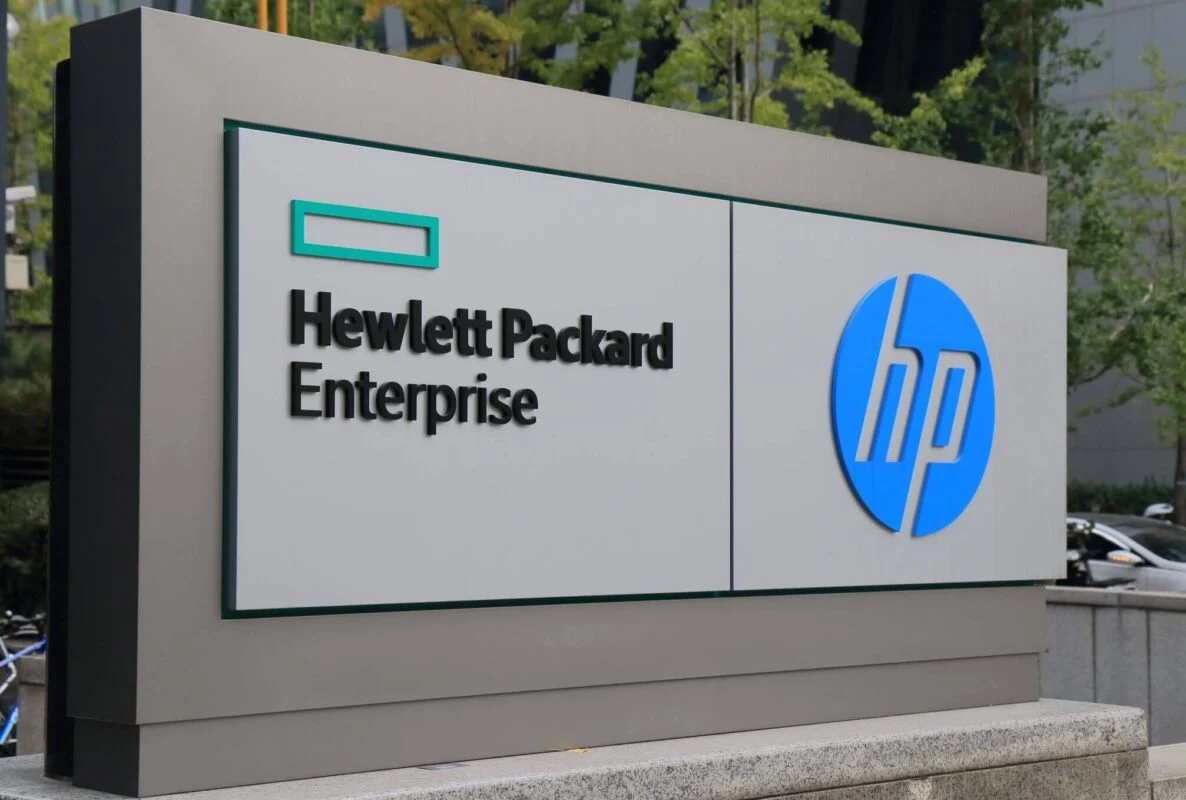
Hewlett Packard Enterprise Company (NYSE: HPE) has experienced a significant boost in market valuation following the announcement of a massive $1.2 billion enterprise agreement with cloud provider Vultr. Under the terms of the agreement, HPE will deploy its state-of-the-art AMD Helios AI Rack systems across Vultr’s expanding network of United States-based data centers. This monumental transaction underscores the accelerating corporate demand for specialized, large-scale computing solutions capable of handling intensive artificial intelligence workloads, model training, and complex inference tasks.
Following the public disclosure of the multi-billion-dollar partnership, HPE shares demonstrated strong upward momentum on the trading floor. The stock climbed to $64.65, marking a robust 5.14% daily gain. This surge occurred after the equity successfully broke above a crucial $61.49 support zone, pushing shares toward the $65 resistance level, where they continued to hover near session highs as investors reacted enthusiastically to the commercial validation of HPE’s next-generation infrastructure portfolio.
Anatomy of the $1.2 Billion Vultr and HPE Agreement
The landmark procurement deal represents a watershed moment for both technology providers, serving as the commercial debut for the joint AMD Helios system. This comprehensive turnkey solution merges HPE’s advanced enterprise networking architecture with cutting-edge AMD high-performance computing hardware. Designed specifically to alleviate the bottlenecks associated with modern machine learning operations, the platform integrates high-density computing, advanced power management, sophisticated cooling technologies, and proprietary enterprise software into a unified rack architecture.
Inside each AMD Helios AI Rack deployed by HPE, operations will be propelled by high-powered AMD Instinct MI455X GPUs working in tandem with AMD EPYC Venice CPUs. To ensure seamless data transfer and minimal latency across vast computational clusters, the infrastructure incorporates AMD Pensando Vulcano AI Network Interface Cards (NICs) alongside the AMD ROCm software ecosystem.
Furthermore, the networking backbone of the deployment relies heavily on HPE Juniper Networking technology. By embedding HPE Juniper Networking QFX5252 switch trays directly into each rack, the system establishes a high-bandwidth, low-latency fabric capable of connecting thousands of GPUs simultaneously. This structural design enables cloud customers to execute massive model training sessions and rapid, high-volume inference tasks without experiencing the network congestion typically associated with legacy data center architectures.
Chronology and Strategic Evolution of the Partnership
The realization of this $1.2 billion contract is the culmination of years of strategic positioning, technological development, and corporate consolidation within the enterprise computing sector.
The groundwork for the networking integration was laid years prior through an existing operational relationship between Vultr and Juniper Networks, a partnership that spanned nearly three years. When Hewlett Packard Enterprise completed its strategic acquisition of Juniper Networks, it inherited not only a world-class portfolio of networking assets but also established enterprise relationships with cloud innovators like Vultr. HPE systematically integrated Juniper’s scale-up Ethernet technology into its broader enterprise infrastructure offerings, creating an end-to-end ecosystem capable of supporting next-generation cloud workloads.
Concurrently, HPE developed its AI Data Center Solutions portfolio to cater to organizations grappling with the exponential scaling requirements of generative artificial intelligence and large language model development. By collaborating closely with Advanced Micro Devices (AMD), HPE positioned itself to offer an open, highly efficient alternative to proprietary closed ecosystems that currently dominate the artificial intelligence hardware market. The Vultr deployment signals the transition of these developmental concepts into fully commercialized, revenue-generating enterprise deployments.
Industry Context and Surging Data Center Demand
The massive financial commitment by Vultr reflects a broader, industry-wide race among cloud infrastructure providers to secure reliable, high-performance hardware capable of sustaining the explosive growth of artificial intelligence applications. As enterprises globally transition from exploratory AI testing to full-scale enterprise deployment, the demand for dedicated, liquid-cooled, and high-density data center capacity has outpaced traditional supply chains.
Independent market analysts note that cloud service providers are under immense pressure to differentiate their offerings by providing superior computational throughput and energy efficiency. By adopting the AMD Helios AI Rack by HPE, Vultr aims to fortify its competitive standing in the cloud services market, offering its enterprise clientele the computational horsepower required to build, train, and deploy sophisticated AI models swiftly and securely.
The partnership also highlights AMD’s aggressive and successful penetration into the enterprise computing and artificial intelligence accelerator markets. Historically dominated by a single hardware manufacturer, the AI chip and infrastructure landscape is experiencing a structural diversification. Through strategic alliances with tier-one system integrators like HPE, AMD has solidified its credibility as a primary provider of enterprise-grade GPUs, CPUs, and specialized networking fabrics.
Global Deployment Support and Technical Execution
Deploying $1.2 billion worth of advanced artificial intelligence infrastructure is a logistically complex undertaking that requires specialized engineering expertise, particularly regarding thermal management and power distribution. Modern AI racks generate unprecedented levels of heat, making conventional air-cooling systems insufficient for sustained high-load operations.
To mitigate these challenges, HPE will leverage its extensive global services network to manage the installation, integration, and operational optimization of the hardware. HPE’s professional services teams bring specialized expertise in advanced data center architecture, including the implementation of complex liquid-cooling systems and precision power infrastructure. This comprehensive support framework ensures that Vultr can bring its new data center capacity online rapidly while maintaining optimal operational efficiency, reliability, and uptime.
The inclusion of HPE’s global deployment and management services provides enterprise customers with a reliable pathway to adopt complex computing environments without bearing the entirety of the integration burden internally.
Broader Market Implications and Future Outlook
The market reaction to HPE’s partnership with Vultr demonstrates that Wall Street is keenly focused on tangible, large-scale commercial wins within the artificial intelligence infrastructure sector. While initial market enthusiasm for AI was frequently driven by announcements of smaller pilot programs or speculative software developments, investors are now rewarding companies that secure multi-billion-dollar hardware deployment contracts backed by real-world cloud service providers.
For Hewlett Packard Enterprise, the agreement diversifies its revenue streams and validates its strategic pivot toward high-margin, high-growth hybrid cloud and AI solutions. By combining its newly expanded networking capabilities—bolstered by the Juniper integration—with world-class server and cooling technologies, HPE has established itself as an indispensable partner for cloud service providers and large enterprises alike.
As the global race for artificial intelligence supremacy continues unabated, the success of the HPE and Vultr deployment will likely serve as a benchmark for future enterprise collaborations. The ability to deliver integrated, open, and scalable infrastructure solutions will remain the primary differentiator for technology vendors navigating the next phase of the digital economy.