The European venture capital landscape has witnessed a seismic shift with Helsing, a prominent defense technology firm, securing a monumental $1.8 billion Series E funding round. This historic achievement not only solidifies Helsing’s position as a leader in the rapidly evolving defense sector but also marks the largest private funding round for a defense technology company in European history. The investment propels the Munich-based company to an impressive $18 billion valuation, bringing its total funding to an astounding $3.3 billion. This development signals a significant recalibration of investor sentiment towards defense technology, a sector that was, until recently, largely overlooked by many European venture capitalists due to ESG constraints, LP restrictions, and a prevailing cultural aversion to associating with the defense industry.
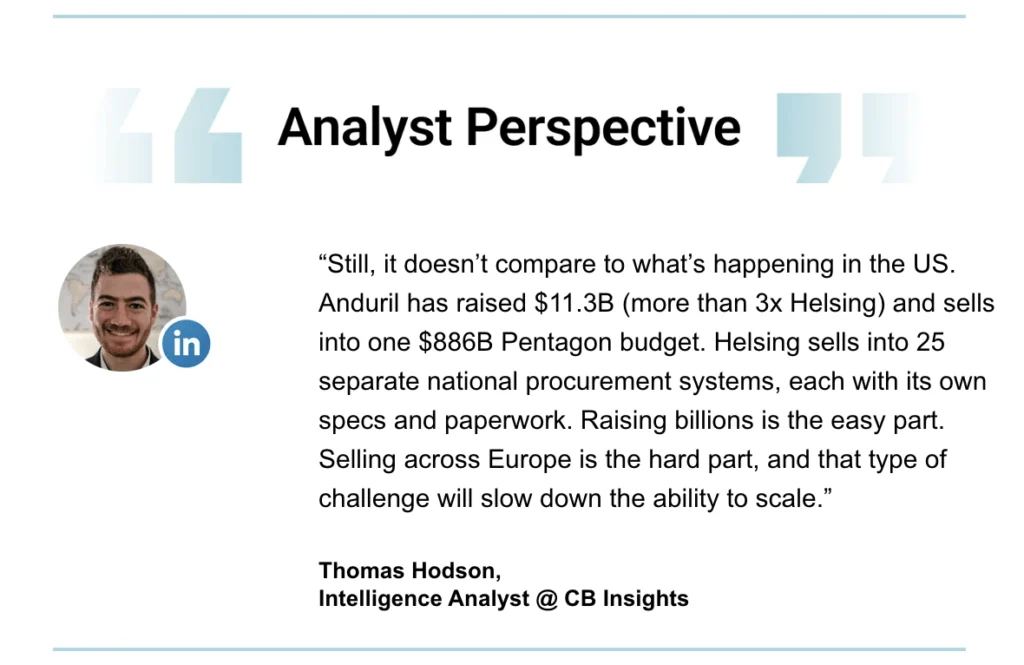
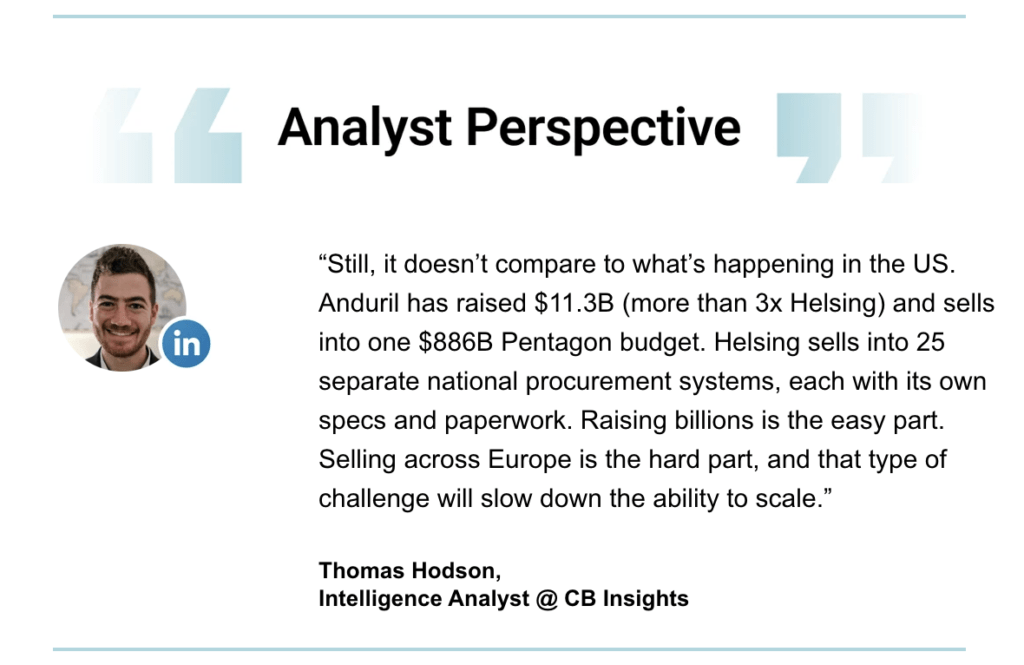
The magnitude of Helsing’s funding round is underscored by its strategic importance. While the capital infusion itself is substantial, the company’s leadership has emphasized that the true value lies not just in the financial backing but in the strategic advantage gained by navigating and integrating with complex defense procurement systems across multiple nations. This approach, according to industry analysts, represents a more sustainable and impactful growth strategy than simply accumulating capital.
A Shifting European Defense Landscape
Just five years ago, a funding round of this magnitude for a European defense tech firm would have been virtually unimaginable. The prevailing sentiment among many European venture capitalists was one of caution, if not outright avoidance, of the defense sector. Concerns over environmental, social, and governance (ESG) factors, coupled with limitations imposed by limited partners (LPs) and a deeply ingrained cultural reluctance to be associated with what were perceived as high-risk or ethically ambiguous investments, kept significant capital on the sidelines. The proximity to weapons systems was often viewed as a reputational liability, deterring investment.
However, the geopolitical realities of the past few years have dramatically altered this calculus. Increased global instability, coupled with a renewed emphasis on national security and collective defense within Europe, has spurred a surge of interest and investment in companies developing cutting-edge defense technologies. This has created a fertile ground for innovation and growth in the sector.
The data supports this transformation. In 2025 alone, European defense technology startups collectively raised $3.2 billion, representing a remarkable 37% year-over-year increase. This figure is approximately three times the investment level seen just five years prior. Furthermore, the number of unique investors participating in European defense rounds has nearly tripled since 2020, indicating a broadening and deepening of the investor base. This influx of capital and investor interest highlights a fundamental shift in perception and strategy within the European venture capital community.
Helsing’s Strategic Vision: Beyond Capital
While the $1.8 billion Series E is a headline-grabbing achievement, Helsing’s founders and investors have articulated a vision that extends far beyond the financial infusion. The company’s core strategy revolves around the intricate and often challenging process of integrating its advanced technology into the procurement pipelines of multiple national defense ministries. This involves navigating the labyrinthine processes, bureaucratic hurdles, and diverse technical requirements of at least 25 different procurement systems across various European nations.
"Securing this significant funding is a testament to our team’s innovation and the critical need for advanced defense capabilities in today’s world," stated a spokesperson for Helsing. "However, our primary focus remains on our mission to provide sovereign, secure, and intelligent defense solutions. The real battleground is not just in securing capital, but in successfully deploying our technology within the complex ecosystems of our partner nations. This involves deep collaboration and understanding of their unique operational needs and procurement pathways."
This strategic imperative means that the success of Helsing is intrinsically linked to its ability to demonstrate tangible value and adaptability within these demanding governmental frameworks. The company’s technology, which is understood to focus on artificial intelligence (AI) and data fusion for enhanced situational awareness and decision-making in military operations, is designed to be modular and adaptable. This adaptability is crucial for meeting the diverse specifications and interoperability requirements inherent in dealing with multiple national defense agencies.
The Role of AI in Modern Defense
Helsing’s success is emblematic of the broader trend of artificial intelligence rapidly becoming a cornerstone of modern military strategy. AI-powered systems offer the potential to process vast amounts of data at speeds far exceeding human capabilities, providing real-time intelligence, predictive analysis, and automated threat detection. This can significantly enhance the effectiveness and efficiency of military operations, reduce the risk to human personnel, and optimize resource allocation.
The European AI, Aerospace, and Defense startup landscape is rich with innovation. A recent market map by CB Insights identified over 100 promising companies in this sector across Europe, highlighting a vibrant ecosystem of talent and technological advancement. Companies like Helsing are at the forefront of this wave, developing solutions that leverage AI for applications ranging from unmanned aerial vehicle (UAV) autonomy and cyber defense to advanced sensor processing and logistics optimization.
Q2 2026 Funding Trends: A Tale of Concentration
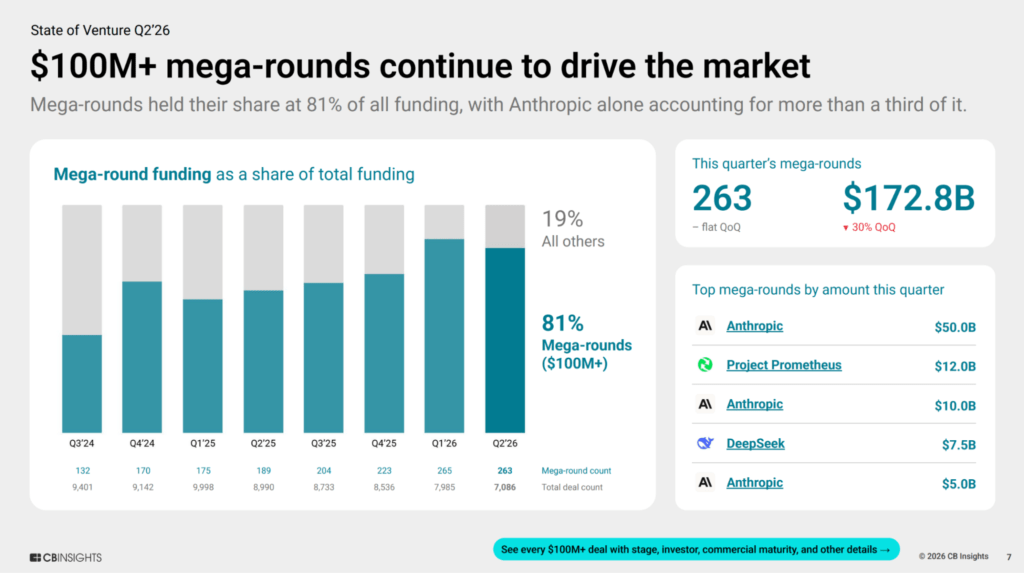
The broader venture capital market in Q2 2026 presented a mixed picture, with mega-rounds driving overall funding figures to impressive heights, yet masking underlying trends of concentration. Total venture funding reached $212.9 billion, marking the second-highest quarter on record. However, a significant portion of this capital was attributable to a few exceptionally large deals.
Anthropic, a leading AI safety and research company, alone accounted for over a third of all mega-round dollars, raising a staggering $65 billion at a valuation of $965 billion. This single investment heavily skewed the quarterly figures. Mega-rounds, defined as funding rounds exceeding $100 million, captured 81% of total funding, nearly matching the record set in the previous quarter. It is worth noting that the prior quarter’s record was driven by the combined impact of Anthropic and OpenAI’s substantial funding rounds. In contrast, Q2’s record was disproportionately influenced by Anthropic’s singular massive investment.
This concentration is a key takeaway from the Q2 2026 venture trends. While the headline numbers suggest a booming market, the reality for most startups is more challenging. The remaining 19% of the funding pie was distributed among a multitude of smaller rounds, indicating that a significant portion of capital is flowing to a select few, highly-valued companies. The deal count for venture rounds hit a decade low, and exits also declined for the second consecutive quarter, suggesting a tightening market for early-stage and mid-stage companies.
This environment of capital concentration, where a few large players absorb a substantial portion of available funding, makes the achievement of companies like Helsing even more remarkable. Their ability to attract such a significant investment in a competitive and increasingly concentrated market underscores the perceived strategic importance and growth potential of their defense technology solutions.
Implications and Future Outlook
Helsing’s record-breaking funding round has several significant implications:
- Validation of Defense Tech as a Growth Sector: The investment serves as a powerful validation for the defense technology sector in Europe. It signals to other investors that the perceived risks associated with this industry are being outweighed by the potential for substantial returns and strategic impact, especially in light of evolving geopolitical landscapes.
- Catalyst for Further Investment: This success is likely to encourage more venture capital firms to explore and invest in European defense tech startups. The creation of a more robust and accessible funding ecosystem could accelerate innovation and the development of new defense capabilities across the continent.
- Emphasis on Strategic Deployment: Helsing’s focus on navigating procurement systems highlights a critical differentiator in the defense tech market. Companies that can successfully integrate their technologies into existing governmental structures, rather than simply raising capital, are poised for long-term success. This approach requires a deep understanding of government contracting, bureaucratic processes, and intergovernmental cooperation.
- Contribution to European Sovereignty: By strengthening a European defense technology leader, this funding round contributes to the broader goal of enhancing European strategic autonomy and reducing reliance on external defense suppliers. The ability to develop and deploy advanced defense capabilities domestically is increasingly seen as a vital component of national and continental security.
- Potential for Global Impact: While the initial focus is on European procurement systems, the technologies developed by Helsing have the potential for global application. As defense needs evolve worldwide, companies with proven expertise in AI-driven defense solutions could find significant international market opportunities.
The journey ahead for Helsing will undoubtedly involve continued challenges in scaling its operations and navigating the complexities of international defense markets. However, this landmark funding round provides a strong foundation and significant momentum. It not only bolsters Helsing’s capabilities but also signals a transformative moment for the European defense technology sector, paving the way for a new era of innovation and investment in critical national security technologies. The strategic imperative of integrating advanced solutions across diverse governmental procurement frameworks, rather than simply amassing capital, positions Helsing as a key player in shaping the future of European defense.