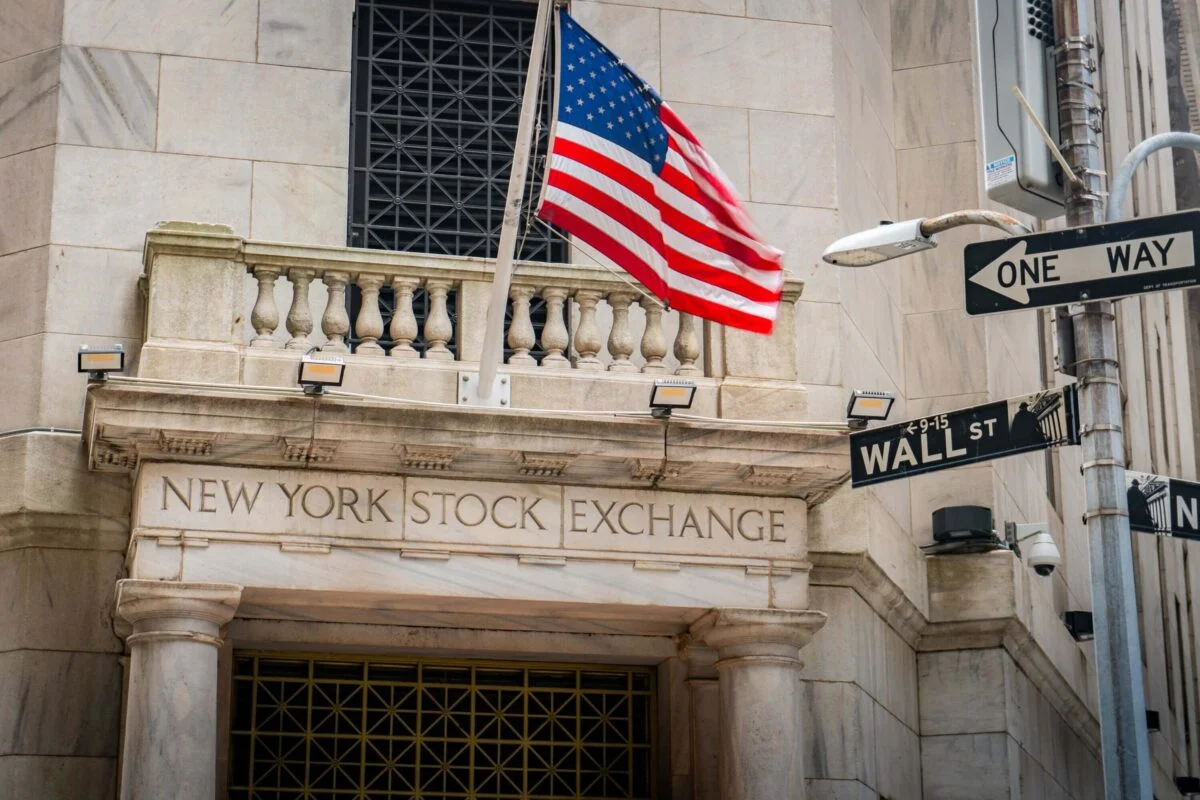
Global financial markets experienced significant turbulence on Thursday morning as investors grappled with a potent combination of underwhelming quarterly results from two of the world’s most influential technology companies and a sharp escalation of geopolitical tensions in the Middle East. US equity index futures tumbled across the board, signaling a challenging open for Wall Street, while surging energy prices ignited fresh concerns about inflation and its potential impact on central bank monetary policy. The dual pressures underscored a fragile market environment, where company-specific performance and broader geopolitical stability are inextricably linked.
The downturn in futures contracts reflected a widespread cautious sentiment. S&P 500 futures, a key barometer for the broader market, declined approximately 0.4% to 0.5%. Contracts tied to the technology-heavy Nasdaq 100, which is particularly sensitive to growth stock performance, registered a more pronounced fall, dropping as much as 0.7%. Meanwhile, Dow Jones Industrial Average futures retreated roughly 0.4% to 0.6%, indicating that the negative sentiment was not confined to a single sector but rather permeated across various segments of the economy. This weakness extended the uneven trading session observed on Wednesday, which had already seen technology shares facing significant selling pressure as investors began to digest preliminary earnings indicators and macroeconomic uncertainties. The collective decline pointed to a market adjusting its expectations downward, grappling with both microeconomic disappointments and macro-level risks.
Tech Titans Face Investor Scrutiny: Alphabet and Tesla Deliver Subpar Results
The primary catalyst for the equity market’s pre-market slump was the release of second-quarter financial results from tech behemoths Alphabet and Tesla, both of which fell short of investor and analyst expectations in critical areas. These companies, representing significant weights in major indices and bellwethers for innovation and consumer trends, often dictate the broader market’s direction.
Alphabet, the parent company of Google, unveiled its second-quarter financial performance, which included an adjusted earnings per share (EPS) that missed Wall Street’s consensus estimates. While the search and cloud computing giant managed to surpass revenue projections, the focus quickly shifted to its significantly elevated capital expenditure (capex) outlook for 2026. Alphabet announced an additional $15 billion in projected spending, establishing a new range of $195 billion to $205 billion. Company executives attributed this substantial spending boost primarily to robust demand for artificial intelligence (AI) capabilities and the necessary expansion of its cloud computing infrastructure. Google Cloud, a key growth driver, indeed saw its revenue expansion surpass analyst projections during the quarter, indicating strong demand for its services.
However, a critical point of concern for investors was Alphabet’s unprecedented reporting of negative free cash flow for the first time since the company went public. Free cash flow, a measure of the cash a company generates after accounting for cash outflows to support operations and maintain its capital assets, is a vital indicator of financial health and operational efficiency. This development profoundly rattled shareholders, who are already anxious about the mounting AI-related capital requirements observed throughout the technology sector. The immense investment needed for cutting-edge AI research, development, and deployment, including specialized chips, data centers, and talent acquisition, is raising questions about the short-term profitability trade-offs. Following the announcement, Alphabet’s stock price declined approximately 2.4% during extended trading Wednesday evening, reflecting immediate investor dissatisfaction.
Tesla, the electric vehicle (EV) pioneer and clean energy company, similarly underwhelmed investors with its second-quarter results. The automaker failed to meet profit forecasts for the April-June period and also reported negative cash flow, mirroring Alphabet’s struggle in this metric. While Tesla’s primary electric vehicle revenue showed sequential improvement during the quarter, indicating continued demand for its core products, intensified spending on ambitious artificial intelligence initiatives, robotics development, and data center expansion compressed overall profitability. This strategic spending also squeezed automotive segment margins, a closely watched metric for the company’s core business.
Chief Executive Elon Musk underscored the company’s aggressive investment strategy, indicating that 2026 would represent a "massive capex year." He emphasized significant investments in the Optimus humanoid robots project, the development of autonomous taxi services, and the crucial expansion of computing infrastructure necessary for advanced AI and self-driving capabilities. While these investments are seen as vital for Tesla’s long-term growth and competitive edge in future technologies, they are clearly impacting near-term financial performance. Tesla’s shares dropped nearly 4% in after-hours trading, reflecting investor apprehension about the immediate impact on earnings and cash flow, even as the company pursues transformative technological advancements. The performance of both Alphabet and Tesla highlighted a growing paradox in the tech sector: the imperative to invest heavily in AI for future relevance is creating significant near-term financial headwinds, challenging traditional valuation metrics.
Escalating Middle East Crisis Propels Crude Prices Higher
Compounding the equity market’s woes, energy prices surged significantly on Thursday morning, driven by an alarming escalation of geopolitical tensions in the Middle East. This development introduced a fresh layer of inflationary concern into the global economic outlook, directly impacting bond markets and central bank policy expectations.
Brent crude futures, the international benchmark for oil prices, advanced sharply to $97 per barrel on Thursday, approaching the psychologically significant $100 threshold. West Texas Intermediate (WTI), the US crude benchmark, climbed to $89 per barrel. This rally followed a series of Iranian-aligned Houthi assaults on commercial tankers navigating the Red Sea, a vital global shipping lane connecting the Suez Canal to the Indian Ocean. These attacks have disrupted maritime trade, forcing many shipping companies to re-route vessels around the Cape of Good Hope, adding significant time and cost to global supply chains.
The situation was further inflamed by President Donald Trump’s issuance of threats to target civilian infrastructure within Iran, intensifying the US-Iran confrontation. This rhetoric signals a potential broadening of the conflict beyond proxy actions, raising fears of direct military engagement that could severely impact oil production and transit in the region. The Strait of Hormuz, a narrow waterway between the Persian Gulf and the Gulf of Oman, through which a significant portion of the world’s seaborne oil passes, becomes a focal point of concern whenever tensions escalate between the US and Iran. Any disruption to this critical chokepoint could send oil prices soaring well beyond current levels, triggering a global energy crisis.
The immediate consequence of these elevated energy costs was a noticeable upward push in US government bond yields, which climbed to their highest points since May. Both the benchmark 10-year Treasury yield and the longer-dated 30-year yield rose as investors priced in renewed inflationary pressures. Higher oil prices translate directly into increased costs for transportation, manufacturing, and consumer goods, potentially reigniting broad-based inflation. This development directly undermined market expectations that the Federal Reserve could potentially reduce interest rates during the current calendar year. The narrative of an imminent pivot to rate cuts, which had gained traction in recent months, is now being seriously challenged by the specter of persistent inflation fueled by geopolitical instability. Should energy prices remain elevated, the Federal Reserve might be compelled to maintain a restrictive monetary policy for longer than anticipated, or even consider further rate hikes, to bring inflation back to its target.
Broader Economic and Market Implications
The confluence of disappointing tech earnings and soaring energy prices presents a complex challenge for the global economy and financial markets. On one hand, the earnings reports from Alphabet and Tesla highlight the significant capital intensity of the AI revolution, suggesting that while AI promises long-term growth, it will demand substantial investment and potentially compress margins in the near to medium term. This could lead to a re-evaluation of growth stock valuations and a shift in investor focus towards companies that can demonstrate both innovation and robust free cash flow generation. The struggles of tech giants could signal a broader slowdown in corporate profitability, impacting employment and investment decisions across the sector.
On the other hand, the escalating Middle East crisis carries the risk of a global supply shock, reminiscent of historical oil crises. Beyond the direct impact on fuel prices, higher energy costs can ripple through the economy, increasing production costs for businesses, reducing consumer purchasing power, and potentially leading to a period of stagflation – high inflation coupled with stagnant economic growth. The disruption to global shipping routes, particularly through the Red Sea, adds further pressure to supply chains that have only recently begun to recover from the disruptions of the pandemic. This situation demands careful monitoring by central banks worldwide, as they navigate the difficult balance between controlling inflation and supporting economic growth.
Looking Ahead: Key Reports and Data on the Horizon
Market participants are now keenly awaiting a fresh slate of corporate reports and economic data to gain further clarity on the market’s trajectory. Intel, the semiconductor giant, is scheduled to release its quarterly results Thursday afternoon. Wall Street forecasts anticipate year-over-year profit improvement for Intel, supported by expanding demand for artificial intelligence processors. While Intel has historically trailed some competitors in the bleeding-edge AI chip development, analysts anticipate the company will strategically close this performance gap through 2026, making its earnings call a crucial indicator of its progress in this high-growth sector.
In addition to Intel, several other significant companies are slated to publish their financial statements. Aerospace and defense manufacturers RTX (formerly Raytheon Technologies) and Lockheed Martin will provide insights into the defense sector, which often sees increased investor interest during times of geopolitical instability. Mining companies Freeport-McMoRan and Newmont will also publish their results, offering a glimpse into the health of the commodities sector and global industrial demand.
Beyond corporate earnings, market participants are additionally monitoring the 8:30 a.m. ET publication of weekly unemployment claims figures. This economic indicator provides a timely snapshot of the US labor market’s health, a critical factor influencing the Federal Reserve’s monetary policy decisions. A significant deviation from expectations could further sway market sentiment, adding another layer of complexity to an already tumultuous trading day.
In conclusion, the global financial landscape on Thursday morning is characterized by significant uncertainty. The dual shocks of disappointing tech earnings, highlighting the costly nature of the AI race, and escalating geopolitical tensions in the Middle East, driving energy prices higher and reigniting inflation fears, have created a potent cocktail of headwinds. Investors are navigating a period where both microeconomic performance and macroeconomic stability are under severe pressure, necessitating a cautious and adaptive approach to portfolio management. The coming days will be critical in determining whether these pressures represent temporary volatility or signal a more fundamental shift in market dynamics and the broader economic outlook.