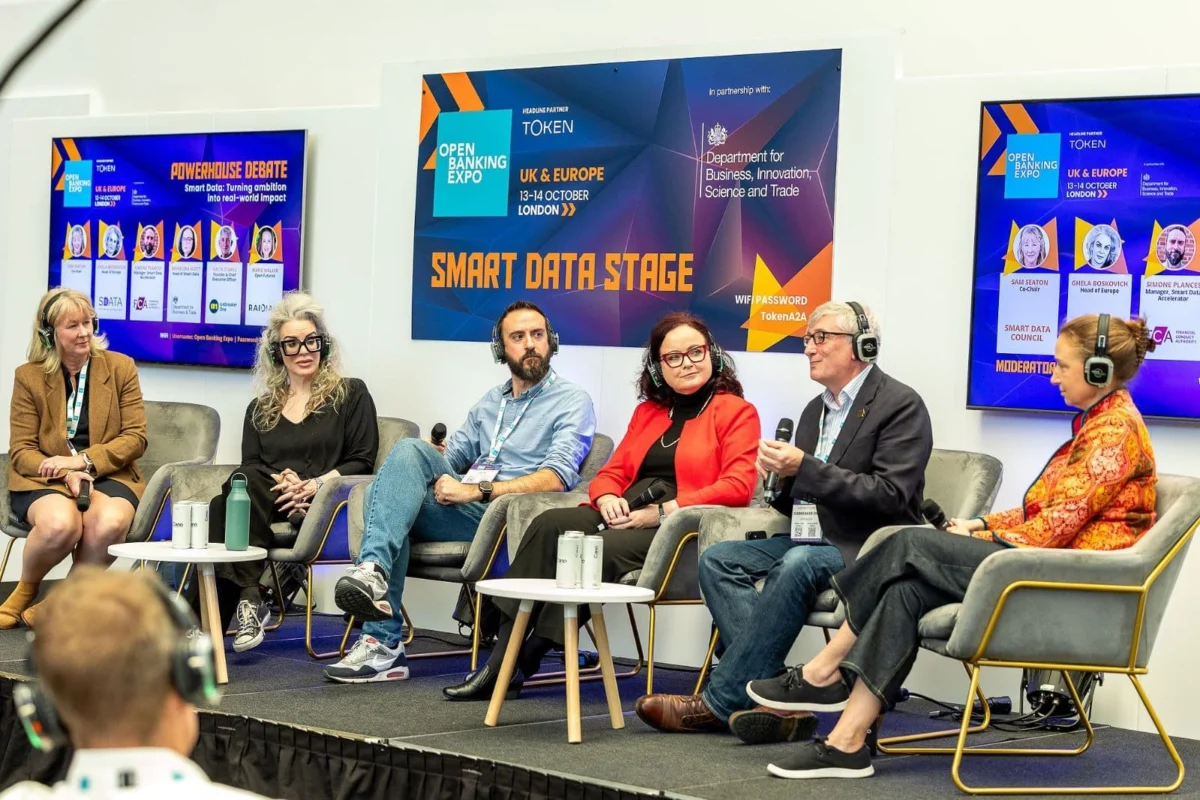
The Financial Conduct Authority (FCA) has announced a major strategic shift toward practical implementation, confirming plans to test centralised, decentralised, and hybrid infrastructure models for Open Finance. This critical initiative aims to reshape how financial data is shared across the United Kingdom, navigating a landscape increasingly influenced by autonomous technologies. The announcement was made during the Open Banking Expo UK & Europe 2026, where policymakers, regulators, and industry leaders gathered to debate the future of data mobility.
As the UK government advances its broader vision to integrate Smart Data frameworks across multiple sectors of the economy, the financial sector finds itself at a crossroads. While regulators are laying down the technical foundations for next-generation data sharing, fintech pioneers and industry experts have voiced urgent warnings. Stakeholders stress that without cohesive governance, universal consumer rights, and a focus on real-world utility, the UK risks trading streamlined innovation for a fragmented web of incompatible systems.
Navigating Infrastructure Models and Agentic AI Complexity
Speaking to industry delegates at the 2026 conference, Simone Plances, manager of the FCA’s Smart Data Accelerator, detailed the regulator’s transition into a hands-on testing phase. Following a series of rigorous technology and policy sprints alongside the Prism Taskforce—which successfully mapped out the technical, commercial, and regulatory hurdles of Open Finance—the FCA is now turning its attention to physical architecture.
“We will be doing testing on different models of infrastructure for open finance. Specifically, what works for the UK?” Plances told attendees. “What can be kept central? What can be decentralised, and why? And what roles and responsibilities come with that sort of design?”
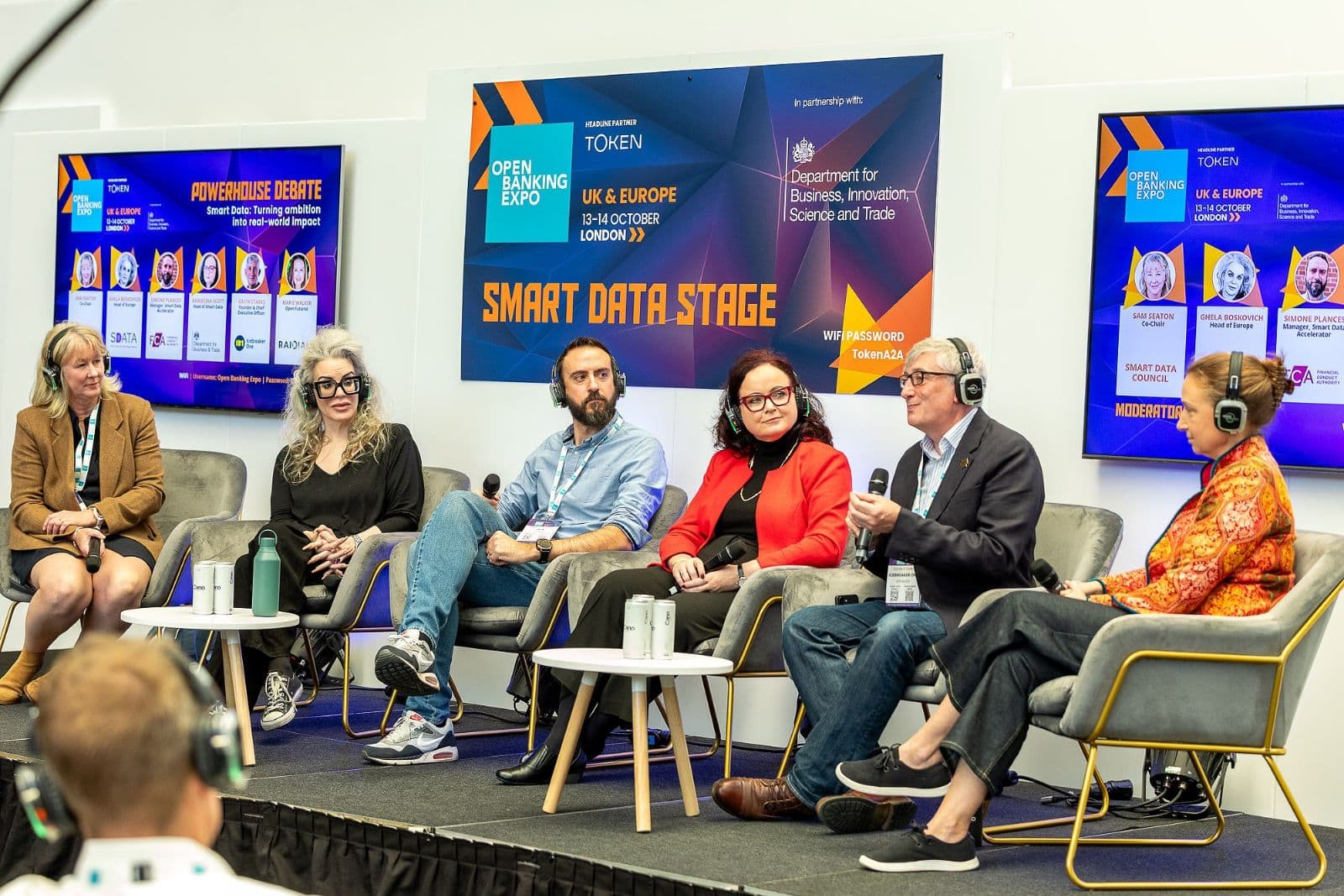
This empirical testing phase is designed to establish clear blueprints for the architecture underwriting Open Finance. Crucially, it will determine how operational responsibilities, liabilities, and security requirements are distributed among legacy institutions, third-party providers, and data holders.
Adding an unprecedented layer of complexity to these trials is the rapid rise of agentic AI. Plances highlighted that the FCA is actively investigating how autonomous artificial intelligence agents will fundamentally alter data consumption and transmission. Traditional financial data ecosystems rely on clear interactions between human consumers, regulated firms, and institutional data holders. The introduction of autonomous agents—software capable of executing complex, multi-step financial tasks on behalf of users without constant human intervention—demands a radical rethink of current regulatory paradigms.
“We really want to understand what happens when it’s not just consumers and firms and incumbents and data holders,” Plances noted, pointing to the necessity of building fully agentic data journeys that can withstand rigorous scrutiny while maintaining consumer trust.
The Broader Vision: Government Smart Data Ambitions
The FCA’s exploratory framework operates in tandem with wider national objectives spearheaded by the Department for Business, Innovation, Science and Trade (DBIST). Agnieszka Scott, head of Smart Data at DBIST, used the conference to outline the government’s ambitious roadmap for the decade.
The UK government has set a target to establish five fully operational Smart Data schemes by 2030, scaling this number to more than 20 distinct sector-wide frameworks by 2035. These schemes aim to unlock consumer and business data across diverse industries—ranging from energy and telecommunications to property and retail—allowing individuals to securely share their data with authorised third parties to secure better deals and services.

However, Scott candidly acknowledged the profound structural challenges inherent in this vision. Building interoperable data-sharing bridges across industries characterized by vastly different legacy systems, commercial incentives, regulatory mandates, and privacy standards represents an extraordinary engineering and governance feat. Ensuring that a consumer can seamlessly port data from a retail energy supplier to a financial institution, or from a property registry to a wealth management platform, requires unprecedented cross-sector cooperation.
Industry Warnings: Avoiding a "Critical Mess"
Despite the regulatory enthusiasm, industry leaders at Open Banking Expo issued stark warnings to policymakers, urging them not to repeat the structural and adoption friction that characterized the early days of Open Banking.
Gavin Starks, founder and chief executive officer of Icebreaker One, delivered a sharp critique of current policy trajectories. Starks cautioned that unless regulators and lawmakers maintain strict discipline, the UK Smart Data initiative risks deteriorating into a fragmented landscape. He questioned whether the nation was moving toward a “critical mass” of interoperable, high-utility services or stumbling into a “critical mess” of siloed, incompatible architectures that drive up compliance costs and consumer confusion.
According to Starks, enterprises across the UK economy are not yet adequately prepared for the realities of cross-sector data sharing. He argued that policymakers are placing too much emphasis on generic technical frameworks rather than anchoring development in tangible user demand.
“Pick an actual business problem or user need, and deliver it,” Starks urged, advocating for a demand-driven approach that proves commercial value early in the lifecycle of each scheme.

Echoing these concerns, Marie Walker, open futurist at Raidiam, drew upon empirical insights gathered from recent collaborative initiatives, including an exploratory Open Property sandbox. Walker explained that the sandbox environment exposed severe foundational gaps across the market, including widespread deficiencies in data readiness, lack of API standardisation, and inconsistent data availability.
Walker emphasized that these structural flaws demonstrate why Smart Data schemes must be designed from the ground up to solve real-world problems. Furthermore, she called for a unified, cross-sectoral approach to foundational requirements such as data privacy, consent management, and liability allocation. Developing bespoke, siloed solutions for every individual economic sector, she argued, would lead to regulatory overlap and administrative gridlock.
The Case for Universal Consumer Data Rights
To bridge the gap between market fragmentation and cohesive delivery, panellists argued that structural mandates may be necessary. Ghela Boskovich, head of Europe at the Smart Data & Technology Alliance, made a passionate case for the establishment of a universal consumer data right.
Boskovich argued that voluntary adoption or sector-by-sector guidelines would inevitably lead to uneven market readiness and weak commercial incentives for smaller or less digitally mature organisations. By legally mandating data portability across all consumer-facing sectors, the UK could create a level playing field that justifies heavy capital expenditure in secure infrastructure and governance protocols.
Crucially, Boskovich also asserted that large technology gatekeepers and dominant platform ecosystems must be brought under the exact same regulatory obligations as traditional financial institutions. Allowing Big Tech to operate under separate rules or exempt itself from universal data portability standards, she warned, would severely distort market competition and undermine consumer protection.

“There needs to be a push. There needs to be a mandate,” Boskovich asserted during the panel debate.
At the same time, the panel maintained a pragmatic view informed by international precedents. Several speakers pointed to Australia’s Consumer Data Right (CDR) as a cautionary tale. While Australia’s framework was pioneering in its cross-sector ambition, its implementation suffered from extreme complexity, heavy compliance burdens, and slow consumer adoption rates—pitfalls that the UK must actively sidestep as it builds out its own Smart Data economy.
Strategic Implications and the Road Ahead
The convergence of discussions at Open Banking Expo UK & Europe 2026 highlights a pivotal moment for the UK’s data economy. The transition from theoretical Smart Data strategies to practical, scalable delivery is now officially underway, anchored by the FCA’s infrastructure testing and the government’s 2030–2035 sectoral rollout targets.
However, the path forward is fraught with operational hurdles. The integration of agentic AI into financial services introduces revolutionary capabilities alongside profound regulatory uncertainties regarding accountability, algorithmic bias, and cyber resilience. Simultaneously, industry stakeholders have made it clear that technical architecture alone cannot guarantee success.
For the UK’s Smart Data and Open Finance ambitions to reach their full potential, policymakers must balance top-down mandates—such as universal data rights and harmonised consent frameworks—with bottom-up commercial incentives. By prioritizing real-world use cases, enforcing cross-sector interoperability, and holding all market participants to rigorous standards, the UK has an opportunity to cement its status as a global leader in secure, consumer-centric data mobility. Yet, as industry veterans have warned, the margin for error is narrow, and meticulous execution over the coming years will dictate whether the nation achieves a thriving digital economy or a fragmented regulatory maze.