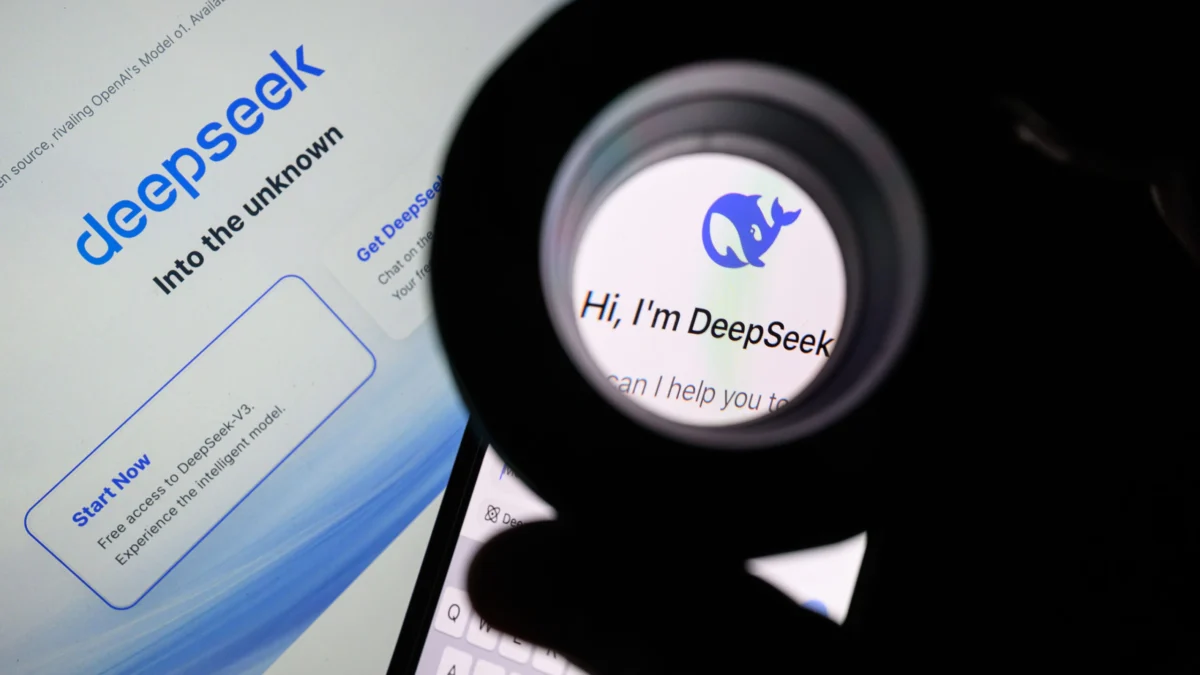
On Friday, Chinese artificial intelligence powerhouse DeepSeek unveiled a preview of V4, its eagerly anticipated flagship model, marking a significant leap forward for the company and potentially reshaping the dynamics of the open-source AI sector. This latest iteration boasts a dramatically enhanced capacity to process extensive prompts, a feat achieved through an innovative architectural design that optimizes the handling of voluminous text data. True to DeepSeek’s ethos, V4 is being released as open-source, granting unrestricted access for download, utilization, and modification by the global developer community.
This release represents DeepSeek’s most substantial contribution to the AI frontier since its groundbreaking reasoning model, R1, launched in January 2025. At the time of its debut, R1, developed with constrained computing resources, sent ripples through the international AI industry, impressing with its formidable performance and remarkable efficiency. This success propelled DeepSeek from a relatively obscure research collective to China’s preeminent AI company almost overnight, concurrently catalyzing a surge of open-weight model releases from other Chinese AI firms.
Following the R1 triumph, DeepSeek had maintained a lower public profile. However, earlier this month, subtle hints of V4’s impending arrival emerged when the company integrated "expert" and "flash" modes into the online iteration of its existing model, fueling speculation about an imminent, more significant release.
While DeepSeek has become a potent symbol of China’s burgeoning AI ambitions, its strategic re-emergence with a cutting-edge frontier model occurs amidst a period of intense scrutiny. This has included significant personnel departures, reported delays in previous model launches, and increasing oversight from both U.S. and Chinese governmental bodies. Despite these challenges, the company is pushing forward with V4, aiming to recapture the industry’s attention.
The question on many minds is whether V4 will replicate the disruptive impact of R1. While a direct parallel might be unlikely, the release of V4 carries substantial weight for several critical reasons, underscoring its importance in the evolving AI landscape.
Breaking New Ground for Open-Source Models
Similar to the precedent set by R1, DeepSeek asserts that V4’s performance benchmarks rival those of leading proprietary models, yet at a significantly reduced cost. This proposition holds immense appeal for developers and organizations leveraging AI technologies, offering access to state-of-the-art capabilities on their own terms and mitigating concerns about escalating expenses.
V4 is available in two distinct versions, both accessible via DeepSeek’s website, its mobile application, and through an open API for developers. V4-Pro, the more robust model, is engineered for complex coding tasks and sophisticated agentic operations. Complementing it is V4-Flash, a more streamlined version designed for enhanced speed and cost-efficiency in deployment. Both iterations incorporate "reasoning modes," enabling the model to meticulously dissect user prompts and delineate each step of its problem-solving process.
In terms of pricing, DeepSeek has set V4-Pro at $1.74 per million input tokens and $3.48 per million output tokens. These rates represent a fraction of the costs associated with comparable models from industry giants like OpenAI and Anthropic. V4-Flash is even more accessible, priced at approximately $0.14 per million input tokens and $0.28 per million output tokens, positioning it as one of the most economically viable top-tier models available. This cost-effectiveness makes V4 an exceptionally attractive platform for building a wide array of AI applications.
Performance-wise, V4 represents a substantial advancement over R1 and positions itself as a formidable contender against the latest generation of large AI models. According to performance data shared by DeepSeek, V4-Pro consistently ranks among the top performers on major benchmarks, demonstrating capabilities on par with industry leaders such as Anthropic’s Claude-Opus-4.6, OpenAI’s GPT-5.4, and Google’s Gemini-3.1. When compared to other prominent open-source models, including Alibaba’s Qwen-3.5 and Z.ai’s GLM-5.1, DeepSeek V4 reportedly surpasses them across a spectrum of coding, mathematics, and STEM-related challenges, establishing it as one of the most potent open-source models released to date.
DeepSeek further claims that V4-Pro excels in agentic coding tasks, ranking among the leading open-source models in benchmarks designed to assess the ability to execute multi-step problems. The model also demonstrates leading capabilities in writing proficiency and world knowledge, according to the company’s shared benchmarking results. A technical report accompanying the model’s release included findings from an internal survey of 85 experienced developers, with over 90% identifying V4-Pro as a top choice for coding tasks. DeepSeek has also specifically optimized V4 for integration with popular agent frameworks, including Claude Code, OpenClaw, and CodeBuddy.
A New Paradigm in Memory Efficiency
A cornerstone innovation of V4 is its expanded context window, the measure of text a model can process concurrently. Both versions of V4 are capable of handling an astounding 1 million tokens, a capacity sufficient to encompass the entirety of J.R.R. Tolkien’s "The Lord of the Rings" trilogy and "The Hobbit" combined. DeepSeek has announced that this substantial context window size will now be the default across all its services, aligning with the capabilities offered by cutting-edge models from Gemini and Claude.
However, the significance of this leap lies not merely in the increased capacity but in the underlying methodology. V4 incorporates substantial architectural modifications to DeepSeek’s previous models, particularly within the attention mechanism. This component is crucial for AI models to understand the interrelationships between different parts of a prompt. As prompt length increases, the computational demands of these comparisons escalate, making attention a primary bottleneck for models operating with extensive context windows.
DeepSeek’s breakthrough lies in its refined approach to attention, making the model more selective about the information it prioritizes. Instead of assigning equal weight to all preceding text, V4 intelligently compresses older information, focusing its computational resources on elements most relevant to the current task. Crucially, it maintains nearby text in full fidelity, ensuring that no critical details are overlooked.
The company reports that this innovation dramatically reduces the computational cost associated with long context utilization. For a 1-million-token context, V4-Pro consumes merely 27% of the computing power and 10% of the memory required by its predecessor, V3.2. The reduction in V4-Flash is even more pronounced, utilizing only 10% of the computing power and 7% of the memory. In practical terms, this translates to a more cost-effective development environment for applications requiring the processing of vast datasets. Examples include AI coding assistants capable of analyzing entire codebases or research agents that can systematically process extensive document archives without succumbing to information degradation.
DeepSeek’s focus on long context windows is not a recent development. Over the past eighteen months, the company has quietly published a series of research papers detailing its explorations into how AI models "remember" information. These efforts have involved experimenting with compression techniques and advanced mathematical methodologies to expand the practical limits of AI’s information processing capabilities.
Navigating the Path Away from Nvidia’s Dominance
V4 represents DeepSeek’s initial foray into optimizing models for domestic Chinese hardware, specifically chips like Huawei’s Ascend. This strategic pivot positions the launch as a critical test case for the viability of China’s indigenous AI industry in reducing its reliance on U.S. chip giant Nvidia.
This development was anticipated, following a report from The Information earlier this month indicating that DeepSeek withheld early access to V4 from American chip manufacturers such as Nvidia and AMD. Typically, such pre-release access is granted to enable chipmakers to optimize support for new models. Instead, DeepSeek reportedly provided early access exclusively to Chinese chip manufacturers.
On Friday, Huawei confirmed that its Ascend supernode products, built on the Ascend 950 series, will support DeepSeek V4. This announcement signifies that companies and individuals opting to run their own customized versions of DeepSeek V4 will be able to seamlessly integrate Huawei’s hardware.
Reuters had previously reported that Chinese government officials had encouraged DeepSeek to incorporate Huawei chips into its training processes. This aligns with a broader trend in China’s industrial policy, where strategic sectors are frequently encouraged, and sometimes implicitly mandated, to align with national self-reliance objectives. The urgency surrounding AI is particularly acute. Since 2022, U.S. export controls have restricted Chinese firms’ access to Nvidia’s most advanced chips, and subsequent regulations have also limited access to downgraded versions tailored for the Chinese market. Beijing’s response has been to accelerate the development of a comprehensive domestic AI ecosystem, encompassing hardware, software frameworks, and data center infrastructure.
Chinese authorities have reportedly been promoting the use of domestic chips within data centers and public computing projects. This push has manifested in reported bans on foreign-made AI chips for state-funded data centers, the implementation of sourcing quotas, and mandates requiring the pairing of Nvidia chips with Chinese alternatives from companies like Huawei and Cambricon.
However, supplanting Nvidia’s market position is a complex undertaking. Nvidia’s advantage extends beyond its silicon to encompass a mature software ecosystem that developers have cultivated over years. Transitioning to Huawei’s Ascend chips necessitates adapting model code, rebuilding development tools, and rigorously validating the stability of systems built upon this new hardware for production-level use.
It is important to note that DeepSeek has not entirely divested from Nvidia. The company’s technical report indicates that it is utilizing Chinese chips for inference – the process of running the model to complete tasks. However, Liu Zhiyuan, a computer science professor at Tsinghua University, informed MIT Technology Review that DeepSeek appears to have adapted only a portion of V4’s training process for Chinese chips. The report does not specify whether key long-context features were adapted for domestic hardware, leading to the possibility that V4’s training may still have been predominantly conducted on Nvidia chips. Multiple sources, speaking anonymously due to the political sensitivity of the matter, informed MIT Technology Review that while Chinese chips may not yet match Nvidia’s performance in training, they are increasingly suitable for inference tasks.
DeepSeek is also linking the future operational costs of V4 to this hardware transition. The company projects that V4-Pro prices could decrease significantly once Huawei’s Ascend 950 supernodes achieve large-scale production and availability in the latter half of this year.
If this strategy proves successful, V4 could serve as an early indicator of China’s progress in establishing a parallel, self-sufficient AI infrastructure. This development, if realized, would have profound implications for the global AI landscape, potentially decentralizing power and fostering a more diverse and competitive ecosystem.