The modern corporate landscape is defined by an inescapable paradox: while virtually every large enterprise has mandated the aggressive adoption of artificial intelligence, very few possess the technical visibility required to understand what occurs when an autonomous software agent is granted unrestricted access to corporate infrastructure and proprietary databases. As organizations race to integrate AI into their daily workflows, chief information security officers are confronting a terrifying blind spot. Questions regarding the exact perimeters of an agent’s reach, combined with the difficulty of auditing real-time algorithmic actions, have quietly paralyzed corporate innovation. Model quality, computing costs, and engineering talent are no longer the primary bottlenecks holding back enterprise artificial intelligence; rather, the fundamental constraint is security, accountability, and governance.
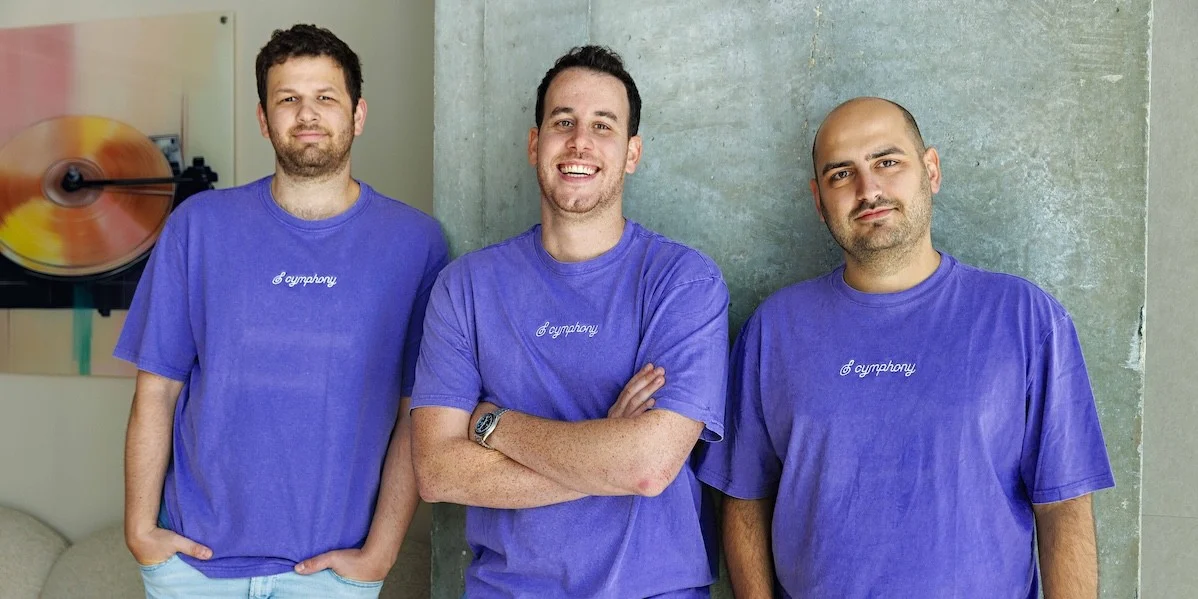
Enter Cymphony, an emerging cybersecurity enterprise founded by industry veterans Shy Dekel, Idan Berkovits, and Edi Gotlieb. The startup has officially closed a major funding milestone, securing a Series A investment round co-led by Sequoia Capital, following a successful seed round. The capital injection is earmarked to accelerate product development and scale operations as the company addresses what market analysts have identified as the single largest impediment to corporate AI deployment: the unprecedented security challenges introduced by autonomous digital workers.
The Emergence of the AI Agent Governance Crisis
To understand the urgency driving Cymphony’s technology, one must examine the fundamental shift in how modern work is executed. Historically, corporate software tools were passive. Employees actively retrieved files, queried databases, and drafted documents. The security apparatus of the enterprise was built around a rigid, binary framework consisting of data security—which monitored files, inboxes, and static databases for unauthorized exfiltration—and identity management, which authenticated human users.
Artificial intelligence agents have systematically shattered this structural paradigm. Unlike human employees, who undergo weeks of vetting, onboarding, and continuous managerial supervision, AI agents can be provisioned, deployed, and scaled in a matter of minutes. They operate continuously, processing vast streams of unstructured data across disparate systems at speeds that defy human oversight. More importantly, these agents routinely cross traditional organizational boundaries, pulling capabilities from multiple software applications simultaneously.
While these properties make AI agents extraordinarily valuable for productivity, they simultaneously trigger alarms within corporate risk and compliance departments. According to recent market research from Gartner, approximately 40 percent of enterprises are expected to intentionally demote, restrict, or entirely decommission autonomous AI agents by next year due to mounting governance and security concerns. This statistic does not reflect a failure of underlying artificial intelligence models to perform tasks effectively. Instead, it highlights a profound operational failure: enterprises are pulling the plug on working technology because they cannot reliably observe, audit, or control what their agents are accessing in real time.
The Technical Complexity of Agentic Access
The core technical challenge facing modern Chief Information Security Officers is the complete collapse of the separation between identity and data security. In legacy enterprise architectures, knowing that a specific human employee holds an active login credential, combined with knowing that a specific folder contains sensitive intellectual property, was sufficient to enforce compliance policies.
When autonomous agents enter the equation, this model breaks down completely. Identity security tools can confirm that an agent exists within a network, and data security tools can flag a document as confidential. However, neither tool can dynamically determine whether a specific agent—acting autonomously on behalf of a specific employee under a specific set of operational prompts—possesses the contextual capability to reach, modify, or transmit that file at any given millisecond.
Cymphony was engineered from the ground up to solve this intricate engineering dilemma. The platform continuously maps both human employees and autonomous agents across the entire enterprise ecosystem. It constructs a dynamic, real-time graph that explicitly charts who, and what, can reach specific enterprise systems, databases, and unstructured information repositories.
Building this capability required overcoming monumental technical hurdles. In a typical multinational corporation, a single human employee routinely maintains a dozen different user accounts scattered across legacy and modern software systems that were never architected to communicate with one another. Furthermore, AI agents dynamically inherit permissions, tokens, and privileges from the humans who prompt them and the applications that spawned them. Simply aggregating security alerts into a centralized dashboard is fundamentally insufficient to address this chaos. Cymphony provides a unified, accurate picture of cross-system data exposure.
Founding Team and Military-Grade Pedigree
The conceptual foundation of Cymphony is deeply rooted in the rigorous technical backgrounds of its co-founders: Shy Dekel, Idan Berkovits, and Edi Gotlieb. All three alumni of Israel’s elite Talpiot program—a highly selective military academic track known for producing top-tier technological innovators—the founders brought decades of specialized expertise to a sector historically plagued by fragmented solutions.
Shy Dekel previously led the cyber department for Unit 8200, the cyber intelligence agency of the Israel Defense Forces. Idan Berkovits managed an advanced research group within the Office of the Prime Minister, earning the prestigious Israel Defense Prize for his contributions to national security infrastructure. Edi Gotlieb honed his hardware and systems engineering expertise at Apple and within the research and development directorate of the Israeli Ministry of Defense.
The trio was initially introduced to Sequoia Capital through its extensive Israeli technology network. Investors noted that while many entrepreneurs chase fleeting software trends, Dekel, Berkovits, and Gotlieb deliberately chose to focus on unglamorous, deeply structural security problems that most founders actively avoid.
Workflow-Centric Remediation Versus Alert Fatigue
A major differentiator for Cymphony in the crowded cybersecurity marketplace is its deliberate philosophical shift away from traditional alert fatigue. For decades, enterprise security software has focused heavily on detection, inundating security analysts with thousands of automated alerts daily and leaving them to manually decipher remediation protocols.
Cymphony approaches security through the lens of operational workflow. Instead of stopping at the detection phase, the platform actively recommends, and in many cases automates, specific remediation steps. It coordinates directly with the relevant human stakeholders across the enterprise who possess the authority to alter permissions, revoke agent access tokens, or modify data governance policies.
This pragmatic approach has rapidly translated into commercial validation. Major global enterprises—including agricultural science giant Syngenta, financial services firm KKR, Cass Information Systems, and corporate governance platform Athennian—have integrated Cymphony into their security stacks to manage their expanding fleets of AI agents.
The Broader Economic and Infrastructure Implications
Every major epoch in enterprise software history has been defined by a fundamental transition in the underlying unit of corporate work, forcing the security industry to completely reinvent itself.
When cloud computing emerged, it fundamentally altered where software code ran, prompting the security sector to rebuild around cloud-native perimeters. When mobile computing revolutionized the corporate workplace, it changed the definition of a network endpoint, and security adapted accordingly. In each historical instance, the startups that successfully provided comprehensive visibility and deterministic control over the new technological frontier eventually evolved into foundational infrastructure that modern enterprises take for granted.
Artificial intelligence represents the first technological shift where the new unit of work is not merely a passive tool or a remote server, but an autonomous actor capable of independent execution and decision-making. Industry observers note that the company capable of enabling enterprises to safely say "yes" to autonomous AI agents—confidently, at global scale, and with an immutable audit trail of every action taken—will not merely constitute a feature within the broader artificial intelligence software stack. Rather, it will serve as the indispensable precondition for the entire ecosystem’s continued survival and expansion. With its recent funding and proven enterprise traction, Cymphony is positioning itself to anchor that foundational layer.