The global transition toward a sustainable, net-zero economy is no longer a distant theoretical horizon; it is an urgent industrial and social transformation currently being shaped in boardrooms, university laboratories, indigenous territories, and grassroots communities across Canada. As climate change accelerates and geopolitical landscapes shift, a new cohort of young visionaries, scientists, entrepreneurs, and advocates has emerged to take the helm. Recognizing this pivotal generational shift, the latest annual roster of Canada’s top young sustainability leaders highlights individuals under 30 who are actively redesigning the nation’s economic, ecological, and social frameworks.

These changemakers are not merely preparing for the future; they are actively engineering it. From pioneering industrial carbon mineralization and youth-led impact investment funds to litigating corporate greenwashing and advancing Indigenous-led conservation, this group exemplifies the multidisciplinary approach required to combat the climate crisis.
The Evolution of Youth Climate Leadership in Canada
For decades, youth involvement in environmentalism was largely characterized by protest, public mobilization, and policy petitions. While advocacy remains a vital component of climate action, the contemporary landscape of Canadian youth leadership has shifted decisively toward direct intervention, systemic entrepreneurship, and institutional accountability.

The 2026 cohort demonstrates a profound understanding that sustainability cannot be cordoned off into a single environmental sector. Instead, these young leaders are embedding ecological principles directly into complex systems, including corporate finance, industrial engineering, healthcare, municipal planning, and constitutional law. This maturation of youth climate action reflects a broader global recognition: achieving net-zero emissions requires restructuring the foundational mechanics of modern society.

Pioneering Clean Technology and Industrial Decarbonization
At the cutting edge of industrial science, young Canadian innovators are developing scalable technologies designed to neutralize emissions and transform industrial processes from the ground up.

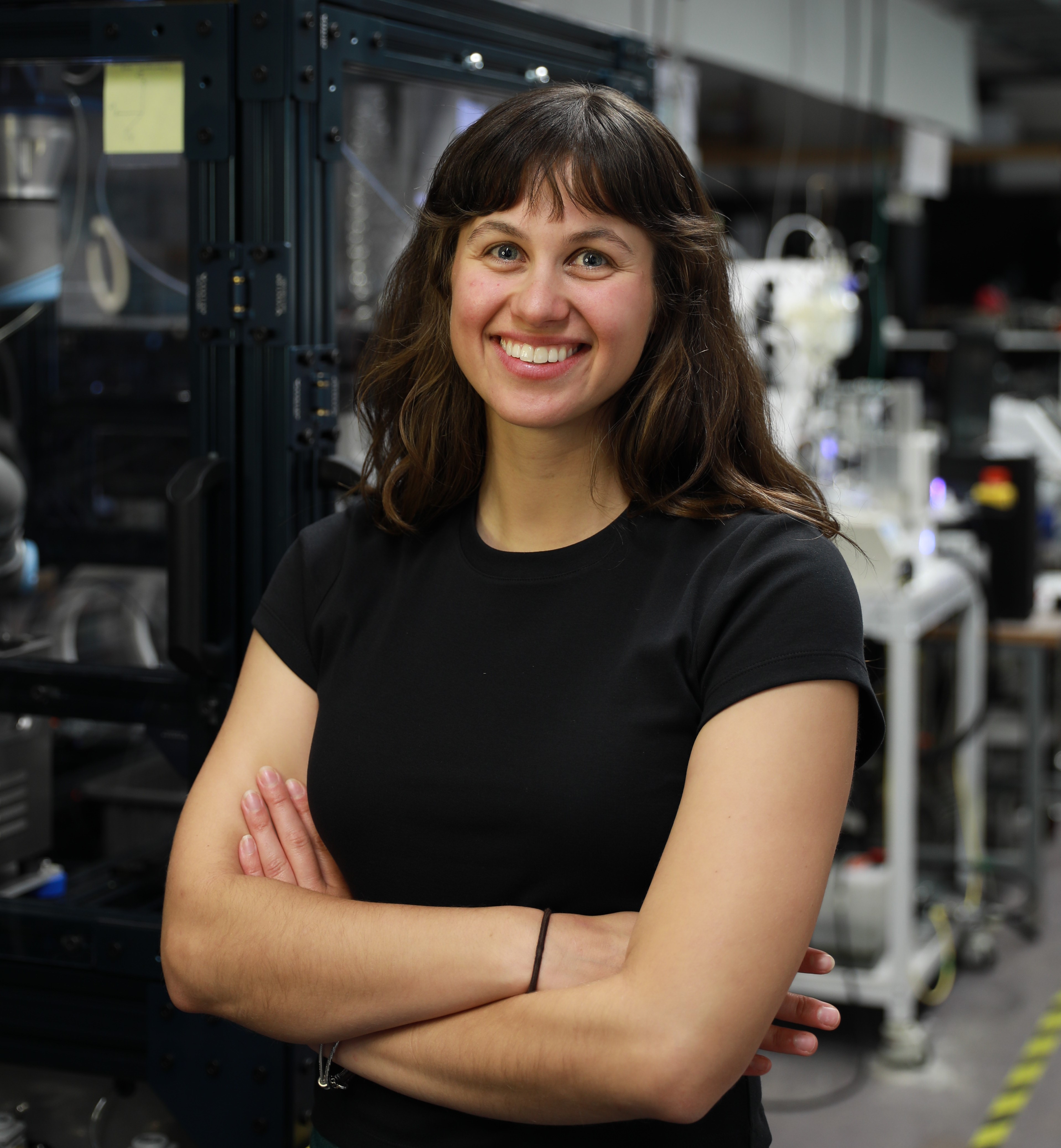
In Vancouver, Mia Stankovic, 28, is serving as the co-founder and head of operations at Carbonyx. Stankovic’s work directly addresses hard-to-abate industrial sectors by mineralizing atmospheric carbon dioxide into stable rock while simultaneously converting industrial waste streams into commercially viable materials such as silica and carbonates. Having secured more than $2.1 million in industry-funded research partnerships with major entities like Suncor and Braskem, Stankovic’s trajectory exemplifies the commercialization of rigorous academic research. As the first author on three peer-reviewed papers in high-impact journals—including the Journal of the American Chemical Society and Energy & Environmental Science—she bridges the gap between laboratory breakthroughs and industrial application.
"Sustainability has always been about building systems that last, whether it’s for the environment or industry," Stankovic notes. "The challenge of our generation is to find solutions that support both."

Similarly, in Calgary, Darshan Kalra, 25, is scaling clean energy through Nova Renewables. As co-founder and chief operating officer, Kalra has propelled the company to $10 million in first-year sales, with projections hitting $25 million. Under his leadership, Nova has deployed 674 clean-energy systems, avoiding an estimated 1,900 tonnes of carbon dioxide emissions annually. Kalra credits this rapid growth to a decentralized corporate philosophy: "We’ve built our business to empower internal entrepreneurs. Giving sharp leaders real ownership and autonomy is the only way to build the speed needed to hit net-zero."

In Vancouver’s biotechnology sector, 26-year-old Jaiya Varshney is co-founding Tydra Labs, a venture emerging from the University of British Columbia’s Creative Destruction Lab. Tydra is developing high-performance fibrillated chitin designed to replace toxic chemical additives in manufacturing without compromising cost or performance. Varshney successfully oversubscribed the company’s initial financing round to $1.2 million, building on a decade-long activism career that began at age 10 with plastic-reduction campaigns.

Transforming Finance and Corporate Governance
Capital allocation remains one of the most powerful levers in the transition to a low-carbon economy. Young financial strategists are deploying innovative mechanisms to ensure that money flows into high-integrity, regenerative projects.

In Toronto, Keshiv Kaushal, 26, serves as the chief investment officer of Propel Impact Capital, where he oversees Canada’s first youth-lens impact fund and the NextGen Impact Fund. Kaushal’s work directs capital toward clean technology, agricultural technology, sustainable biomaterials, and regenerative food systems. Furthermore, his leadership in training over 600 young people through the Propel Impact Investing Fellowship and co-teaching impact investing at the University of Victoria demonstrates a commitment to institutionalizing sustainable finance education.

Complementing this financial push, Mallika Gupte, 29, works as an investment consultant at GloRes Securities Inc., helping early- and growth-stage cleantech ventures navigate the notoriously difficult "valley of death" between technological prototype and commercial investability. Gupte secures vital grant funding for pilot projects while actively engaging Ontario’s innovation community through the Ontario Clean Technology Industry Association.

"I think about 2050 by asking which companies today will still matter then, and what they need to get there," Gupte explains. "Short-term, that means solving specific problems: a go-to-market plan, a pitch that lands, a partnership that sticks. Long-term, it means making sure climate solutions don’t stall before they reach the people and industries that need them."

Indigenous Leadership and Reconciliation in Climate Action
The integration of Indigenous knowledge systems, rights, and economic sovereignty is central to Canada’s sustainable future. Several young leaders are ensuring that environmental stewardship and economic reconciliation advance in tandem.

Hunter Michael, 28, a member of Beardy’s and Okemasis Cree Nation and senior manager of reconciliation and strategy at the Royal Bank of Canada (RBC), has co-led the bank’s Reconciliation Action Plan and Indigenous private equity strategy. Michael’s work has facilitated more than $340 million in financing for Indigenous joint-venture housing projects and deployed over $5 million in capital to Indigenous-led enterprises, all while serving on the board of Spirit North.

Similarly, Benjamin Cooper-Janvier, 29, a Denesųłiné member of Cold Lake First Nations and senior manager at MNP, advises Indigenous communities on equity investments and major resource projects. Cooper-Janvier chairs the finance committee of The Circle on Philanthropy and actively recruits and mentors Indigenous professionals in corporate finance.

In Northern and rural Ontario, cousins Ramon Mahegkan Kataquapit (24) and Jeronimo Kataquapit (22) of the Attawapiskat First Nation are leading frontline resistance against environmental degradation. Ramon, a Mushkego Cree and Taíno youth leader, founded the Okiniwak Youth-Led Movement to oppose legislative rollbacks on First Nations rights. Jeronimo, a Cree filmmaker and land protector, founded Here We Stand to safeguard ecosystems south of Hudson Bay. Together, they have galvanized opposition against policy initiatives such as Ontario’s Bill C-5, emphasizing that ecological preservation is inseparable from Indigenous self-determination.

Grassroots Mobilization, Mental Health, and Community Resilience
While macroeconomic shifts and industrial innovations are crucial, the human dimension of the climate crisis—specifically eco-anxiety, community health, and public education—remains a core focus for many young leaders.

Abhay Singh Sachal, 25, founder of the Break The Divide Foundation in Regina, Saskatchewan, has transformed a high school climate club into a national organization. Sachal is a prominent voice on youth mental health and eco-anxiety, developing evidence-informed frameworks delivered across 14 Canadian high schools. His advocacy extends to municipal policy, where he campaigns for free public youth transit to reduce car dependency and fights against high-emission infrastructure projects.

In Calgary, Muskaan Muse Laroyia, 25, co-leads the Brain Climate Equity Collaborative, Canada’s first national initiative connecting neurological health with climate justice. Laroyia’s research investigates the direct impacts of wildfire smoke and extreme climate events on cognitive health and neurodegeneration, pushing for institutional policy changes at the federal level.

In Toronto, Olivia Deschênes, 26, applies a legal lens to systemic accountability. Deschênes authored a comprehensive legal guide on environmental claims for the Quebec Business Council on the Environment, which was downloaded nearly 3,700 times to combat greenwashing. Her research is currently being expanded into a 300-page LexisNexis text, Le droit des représentations environnementales, establishing a rigorous legal framework for environmental truthfulness in Canada.

Collaborative Ecosystems and the Road to 2050
The collective impact of this 2026 cohort demonstrates that effective climate action relies on interdisciplinary cooperation. Whether it is Brian Chang managing SolarShare—North America’s largest renewable-energy cooperative—to generate community-owned clean electricity; Ria Perrault accelerating the adoption of sustainable building technologies through MaRS; or 16-year-old Max Wang redistributing over 100,000 pounds of surplus food via the Feeding It Forwards Foundation, these changemakers are rewriting the parameters of what is possible.

As these leaders continue to challenge institutional inertia, secure vital capital, and champion marginalized communities, their collective body of work provides a clear roadmap. The transition to a resilient, net-zero Canada by 2050 will not be achieved through isolated technological fixes, but through the sustained, intersectional, and courageous efforts of a generation determined to author a viable future.