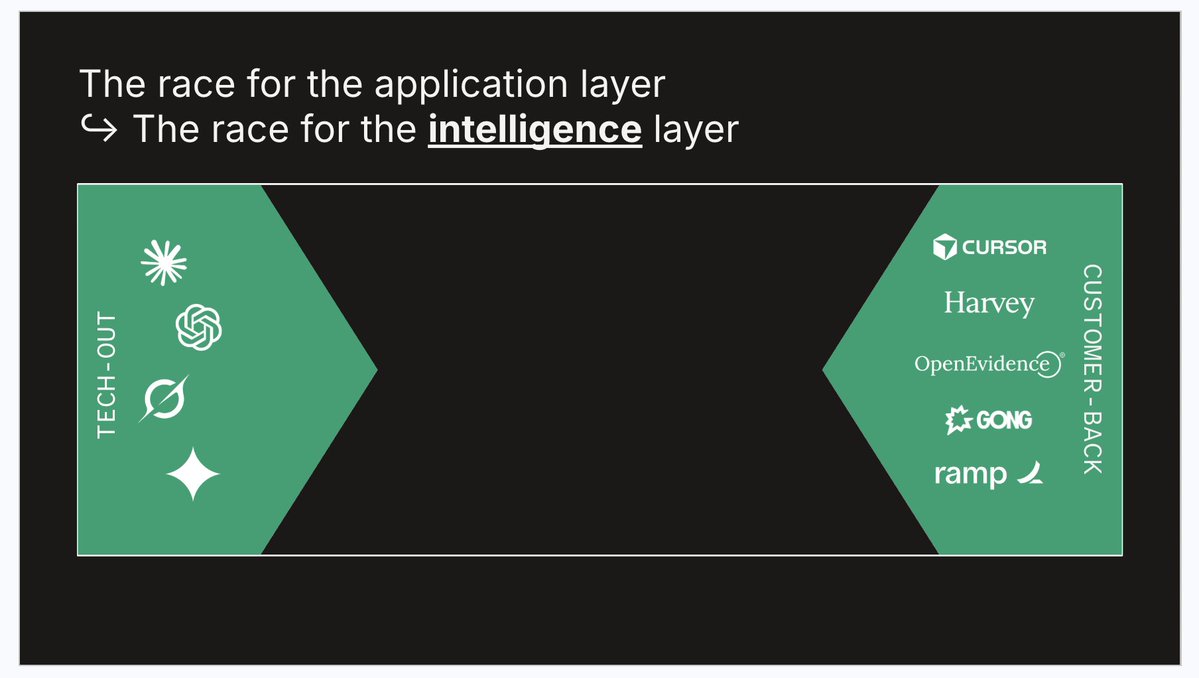
The modern artificial intelligence gold rush has evolved far beyond simple user interfaces, streamlined workflows, and go-to-market strategies. As the industry matures into late 2026, tech leaders, enterprise executives, and venture capitalists are recognizing that the ultimate battleground is not the application layer, but the core intelligence layer itself. This shift marks a pivotal departure from the early days of generative AI, when businesses relied almost exclusively on renting generic frontier models through third-party application programming interfaces (APIs). Today, a growing coalition of tech companies is pushing to internalize model weights, build bespoke training loops, and fundamentally control how their software thinks.
The momentum behind this transition has been galvanized by stark warnings from industry heavyweights. Palantir CEO Alex Karp recently issued a call for enterprises to "own the means of production," urging organizations to avoid becoming digital tenant farmers dependent on external AI providers. Shortly thereafter, Microsoft CEO Satya Nadella publicly observed that purchasing intelligence from a frontier lab carries a hidden, compounding toll: organizations pay once in monetary terms and a second time by surrendering the proprietary domain knowledge required to make those general-purpose models useful.

These warnings encapsulate a growing enterprise anxiety. While frontier APIs remain valuable for broad, generalized workloads, relying entirely on rented intelligence increasingly introduces vulnerabilities in cost, speed, data privacy, and strategic autonomy. Consequently, a new paradigm is taking shape across the technology sector, compelling companies to vertically integrate and take charge of their own AI stacks.
The Catalyst: Maturation of the Open-Weight Ecosystem
The pivot toward proprietary intelligence ownership is not merely a philosophical preference; it has been made technically and economically feasible by rapid advancements in the open-weight ecosystem. Historically, attempting to fine-tune open-source models was a frustrating treadmill. Research teams would spend months curating datasets and adjusting weights, only to have their progress instantly nullified by the launch of a superior foundational model from a major lab.
By mid-2026, however, the landscape has fundamentally shifted. High-performing open-weight releases—such as Kimi K3 and GLM 5.2—have dramatically narrowed the gap between open-source baselines and proprietary frontier models. Concurrently, an independent post-training infrastructure has matured. Ecosystem providers like Mercor and Fireworks now offer the complete technical apparatus previously exclusive to elite research facilities, spanning automated data synthesis, specialized training pipelines, advanced evaluation frameworks, and high-performance inference engines.

This maturation enables modern enterprises to leverage rigorous evaluation harnesses and post-training techniques to develop domain-specific models that routinely outperform generalized frontier architectures in targeted verticals. What was once a compromise—opting for open weights to save money at the expense of quality—has transformed into an existential strategic imperative.
The Breaking Point: Why Companies Are Bringing AI In-House
The decision to transition from renting intelligence to owning it is driven by four primary pressures confronting high-growth technology companies:
- Economic Scaling and COGS: As AI-native products achieve widespread market adoption, inference costs scale directly with user engagement. For successful applications, renting intelligence from third-party labs creates a heavy cost-of-goods-sold (COGS) burden that can erode profit margins. Owning the underlying model provides a predictable path toward margin protection and cost optimization.
- Latency and Operational Speed: In time-sensitive domains such as automated code generation—including real-time tab-completion—or cybersecurity threat detection, milliseconds matter. Large, generalized frontier models often introduce unacceptable latency. Distilled, custom-built models optimized for specific workflows can execute tasks significantly faster than their larger counterparts.
- Data Sovereignty and Security: Enterprises operating in regulated sectors—such as legal, financial, and healthcare—are increasingly reluctant to route sensitive customer interactions, proprietary feedback loops, and internal evaluations through external APIs. Retaining control over data ensures compliance and prevents the leakage of enterprise IP.
- Strategic Control and the Learning Loop: The boundary between the application layer and the intelligence layer is rapidly dissolving. Major AI labs are steadily moving upward into user-facing software, while agile application companies are pushing downward into the training loops that shape model behavior. To maintain long-term defensibility, companies must control the learning feedback loop that continuously refines their product’s intelligence.
Inside the Sequoia AI Builders Forum: The Ownership Playbook
To dissect these emerging trends, venture capital firm Sequoia recently convened a gathering of prominent AI founders, researchers, and engineers to establish a definitive framework for owning the enterprise AI stack. Presentations from legal tech leader Harvey, along with infrastructure and engineering firms like Mercor, LangChain, Trajectory, and Fireworks, highlighted a cohesive, four-step technical playbook for organizations seeking to build their own intelligence layers.
1. Establishing Rigorous Evaluations (Evals)
A central thesis emerging from the forum is that effective model training is impossible without robust, domain-specific evaluation metrics. As Harvey’s Gabe Pereyra noted, "If you don’t have a good benchmark, you can’t train models."
Effective evals translate subjective human judgment—often referred to as "vibe checks"—into repeatable, automated testing suites. Harvey, for instance, constructed its proprietary Legal Agent Benchmark by translating real-world legal workflows into more than 1,200 discrete agent tasks across 24 distinct practice areas, validated by over 75,000 expert rubric criteria. Industry experts stress that establishing a comprehensive eval framework must precede any decision to train or fine-tune, transforming model selection from an educated guess into a measurable science.
2. Mastering the Harness and Context Engineering
Modern AI agents consist of three fundamental components: the underlying model, the operational context, and the software harness. Harrison Chase, founder of LangChain, emphasizes that the primary function of the harness is to deliver the correct context to the model at precisely the right moment in a workflow.

A sophisticated harness governs product logic, tool integration, memory management, fallback protocols, and trace logging. When tasks fall outside a model’s distribution, off-the-shelf harnesses often fail. A custom-built harness allows companies to dynamically route tasks to the most efficient model, audit system execution traces, and maintain uniform evaluation standards across multiple underlying architectures.
3. Strategic Post-Training
Post-training encompasses a spectrum of techniques designed to align a model with specific operational requirements. Industry leaders advocate for applying the lightest possible intervention to achieve desired performance gains:
- Retrieval-Augmented Generation (RAG): Deployed when a model simply lacks factual knowledge.
- Supervised Fine-Tuning (SFT): Utilized to correct output formats or systemic behavioral patterns.
- Preference Tuning: Applied to refine product tone and stylistic preferences.
- Reinforcement Learning (RL): Deployed when models must master complex, specialized reasoning tasks.
- Distillation: Used to compress large models into faster, more cost-effective architectures without sacrificing domain accuracy.
4. Implementing Continuous Online Learning
A persistent challenge in enterprise AI is that foundational models, regardless of their general intelligence, lack contextual experience when deployed into specialized environments. As Arjun Karanam of the AI engineering community noted, placing a world-class theoretical mathematician into an accounting firm does not instantly make them an expert accountant; what is missing is accumulated domain experience.

Leading tech companies are solving this by capturing "trajectories"—the complete audit trail of prompts, context retrievals, tool invocations, and user corrections generated during production use. Tools like LangChain’s LangSmith allow engineering teams to channel failed task trajectories directly back into the evaluation pipeline, transforming operational friction into continuous model improvement.
Implications and Future Outlook
The concerted push toward owning enterprise intelligence represents a fundamental maturation of the artificial intelligence market. Building an in-house intelligence stack undeniably increases organizational complexity and introduces execution risks, effectively lowering the floor for teams that mismanage the transition. However, it simultaneously raises the ceiling, allowing companies to escape the commoditized constraints of generic API wrappers.
Industry analysts suggest that the future of enterprise software will not be characterized by a winner-take-all monopoly of massive frontier models, but rather by a vibrant ecosystem. In this projected landscape, foundational labs will continue to construct massive general-purpose "brains," while agile, domain-obsessed product companies cultivate specialized, fast, and highly tuned intellectual assets tailored to their exact operational needs. By taking ownership of their intelligence layers, modern enterprises are ensuring that individuality, proprietary expertise, and strategic autonomy remain the defining traits of the next generation of software.