The intricate landscape of America’s digital asset regulation is poised for significant movement, as legislative efforts like the CLARITY Act push for a vote in the Senate while grappling with contentious ethics provisions, particularly those concerning potential crypto profiteering by elected officials. Simultaneously, stablecoin regulation under the GENIUS Act faces implementation hurdles, even as public distrust in the crypto industry remains high, underscoring the urgent need for comprehensive and robust frameworks.
The CLARITY Act: A High-Stakes Legislative Push
The push to establish a definitive regulatory framework for digital assets in the United States, primarily through the CLARITY Act (Digital Asset Market Structure Bill), has reached a critical phase. Senate Majority Leader John Thune (R-SD) affirmed on July 14 that, despite not being able to provide an exact date, he is resolute in bringing the bill to the Senate floor for a vote before the chamber adjourns for its traditional summer recess on August 7. This commitment signals a heightened urgency within the Republican leadership to address the burgeoning digital asset sector, which has long operated under a patchwork of existing laws ill-suited to its unique characteristics.
The CLARITY Act, a bipartisan effort in its initial conception, aims to delineate the roles of various regulatory bodies—specifically the Securities and Exchange Commission (SEC) and the Commodity Futures Trading Commission (CFTC)—in overseeing digital assets. It seeks to provide much-needed legal certainty by defining which digital assets are securities and which are commodities, thereby establishing clearer jurisdictional boundaries and reducing the regulatory ambiguity that has plagued the industry. Proponents argue that this clarity is essential for fostering innovation, attracting investment, and ensuring consumer protection by providing a predictable operating environment for crypto businesses. Without such a framework, many fear that the U.S. risks falling behind other jurisdictions, such as the European Union, which have already implemented comprehensive crypto regulations.
However, the path to passage for CLARITY is fraught with challenges. The bill requires a supermajority of 60 votes in the Senate, meaning all 53 Republican senators (effectively 52, considering Senator Mitch McConnell’s ongoing hospitalization) would need to support it, alongside a significant number of Democratic votes. This numerical reality necessitates genuine bipartisan compromise, which has proven elusive thus far, largely due to a deeply entrenched disagreement over ethical safeguards.
Senator Thune has expressed "hope" for Democratic support for a revised version of CLARITY but has also indicated a willingness to bring the bill to the floor even without it, a move that could lead to its failure. The Republican strategy may hinge on the expectation that enough Democrats, wary of political repercussions from well-funded crypto political action committees (PACs) in upcoming midterm campaigns, might cross the aisle. These PACs, representing various segments of the crypto industry, have demonstrated increasing financial clout, contributing millions to electoral campaigns and making their influence felt across Capitol Hill. Their advocacy often centers on promoting legislation that they believe fosters growth and innovation in the digital asset space, making them a formidable force in legislative debates.
The Ethics Conundrum: Trump’s Crypto Holdings and Political Impasse
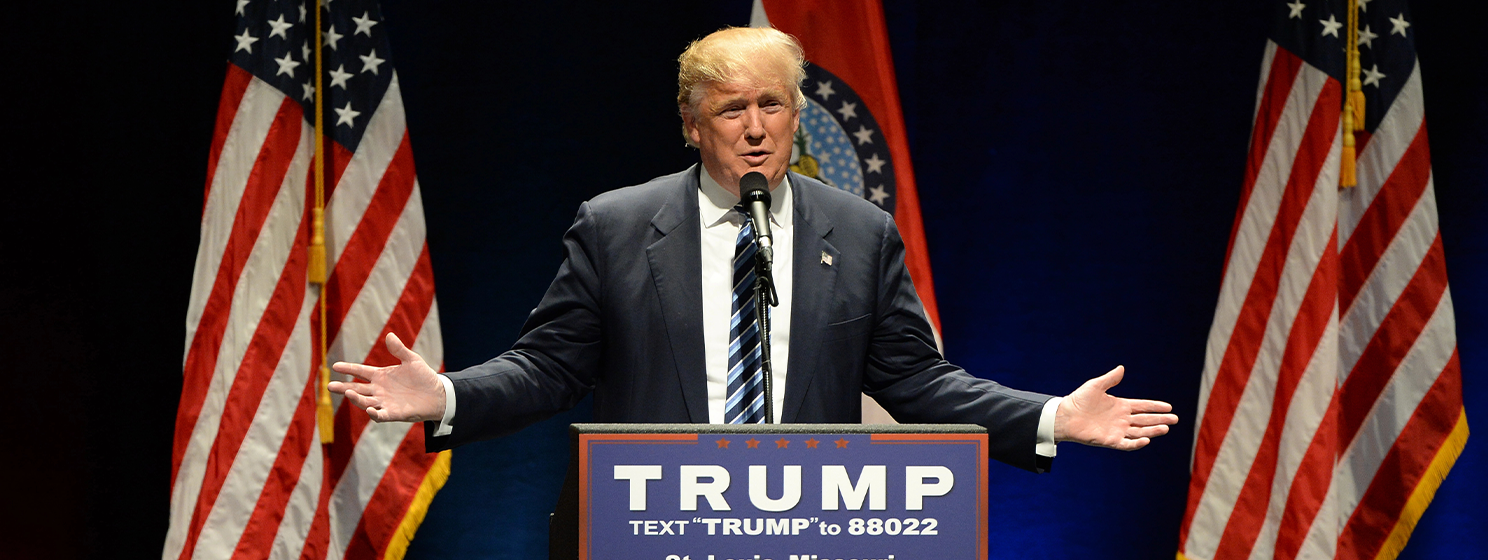
The primary sticking point for Democrats, and indeed for many watchdog groups, revolves around the "ethics issue." Specifically, the CLARITY Act, in its earlier drafts, lacked robust language to limit or prohibit elected officials and their immediate families from profiting from crypto businesses. This concern intensified dramatically following former President Trump’s financial disclosure documents, which reportedly revealed him earning well over $1 billion from various crypto ventures in the past year. Such substantial earnings by a prominent political figure, especially one who could potentially influence the regulatory environment for these very businesses, raised alarm bells about potential conflicts of interest and the appearance of impropriety.
The argument from Democrats is straightforward: elected officials, by virtue of their positions, possess the power to shape laws and regulations that directly impact the profitability and operational landscape of industries. Allowing them to hold significant financial stakes in such industries, particularly one as nascent and rapidly evolving as crypto, creates an inherent conflict. Critics argue that this could incentivize officials to weaken regulatory oversight or create loopholes that benefit their personal financial interests, rather than prioritizing the public good or market integrity.
In an attempt to bridge this divide, two prominent Republican senators and ardent crypto supporters, Ohio’s Bernie Moreno and Wyoming’s Cynthia Lummis, met with former President Trump at the White House. The meeting, which included key White House staff such as Chief of Staff Susie Wiles, counsel David Warrington, Acting Attorney General Todd Blanche, and crypto advisor Patrick Witt, was focused on negotiating potential ethics language that could be palatable to the former president while satisfying Democratic demands. Senator Thom Tillis (R-NC) voiced optimism ahead of the meeting, emphasizing the critical timing for reaching an agreement before the August recess.
However, conflicting reports emerged regarding the outcome of this high-stakes negotiation. Politico quoted Ruben Gallego (D-AZ) expressing profound dismay at the lack of Democratic involvement in the White House discussions, asserting that the "very weak" ethics text presented to Trump would grant him "a lot of latitude to continue doing his grift." Gallego’s unequivocal warning—"at the end of the day, we don’t have strong ethics. I don’t care what the president says. You’re not going to have the Democratic votes"—underscored the depth of the partisan chasm.
Further complicating matters, initial reports from The Block, citing sources, suggested that the meeting concluded with "no agreement on what, if any provisions Trump can get behind." These sources indicated that the GOP senators "couldn’t get him to agree to anything," with Trump reportedly fearing future prosecutions based on his past crypto activities and seeking retroactive immunity. Such a demand would be highly controversial and almost certainly a non-starter for Democrats, as it would effectively shield him from accountability for actions taken while in office or during his public life.
Conversely, journalist Eleanor Terrett and Punchbowl News’s Brendan Petersen later reported a breakthrough, with Terrett tweeting that "the White House has agreed on an ethics package for the Clarity Act and sent the language to certain Senate Republicans." Petersen corroborated this, citing "three sources familiar" but cautioning that details remained "elusive, and Democrats have not seen text." The discrepancy highlights the intense and often opaque nature of these last-minute legislative negotiations, where information is tightly controlled and often strategically leaked. The central question remains whether any ethics language Trump would endorse could genuinely meet the threshold of robustness required by Democrats to ensure public trust and prevent perceived conflicts of interest.
The gravity of the ethics debate was further amplified by a press conference held by four influential Democratic senators—Chris Murphy (CT), Chris Van Hollen (MD), Jeff Merkley (OR), and Elizabeth Warren (MA)—joined by actor and vocal crypto critic Ben McKenzie, and representatives from Americans for Financial Reform. Senator Murphy articulated a stark view, claiming that "the bill is, in and of itself, a fundamental corruption if it gives Trump’s corruption the protection of law." Senator Van Hollen went further, dropping the qualifying "if" and simply labeling CLARITY a "corrupt piece of legislation that will do a lot of harm." These strong condemnations underscore the Democratic Caucus’s unwavering stance that a market structure bill devoid of stringent ethics provisions is not merely imperfect but fundamentally flawed and unacceptable.
Senator Mark Warner (D-VA) also weighed in, urging Republicans to "learn how to say ‘no’ to crypto operators." He claimed that Democrats and Republicans had reached "virtual agreement" on most issues in earlier drafts, only for "industry [to get] freaked out" and Republicans to "backpedal." This suggests a narrative of powerful industry lobbying influencing legislative outcomes, further fueling Democratic skepticism about the bill’s integrity.
Illicit Finance: A Lingering Shadow on DeFi
Beyond the ethics debate, the CLARITY Act also faces significant opposition over its "illicit finance" language, particularly concerning decentralized finance (DeFi) platforms. The bill proposes granting developers of non-custodial DeFi platforms a degree of legal immunity when these platforms are used for criminal purposes. This provision has ignited fierce debate, with law enforcement agencies and prosecutors arguing that it could severely hamper their ability to combat money laundering, terrorist financing, and other illicit activities conducted using digital assets.
DeFi platforms, by their very nature, are designed to operate without central intermediaries, making them attractive to those seeking to move funds anonymously and outside traditional financial controls. Critics argue that providing immunity to developers, even if they claim no direct control over illicit transactions, creates a dangerous loophole. It could allow bad actors to exploit these platforms with reduced risk of accountability for those who build and maintain the underlying infrastructure.
Kristin Smith, CEO of the Solana Policy Institute and former CEO of the Blockchain Association (BA)—both organizations advocating for DeFi platforms—acknowledged the ethics issue as "the big elephant in the room" during the Injective Summit. However, she emphasized that "for my members and what we are advocating for on the Hill… whatever you decide on ethics, that’s really not our concern. That is politics… But please don’t let it kill all the hard work that we put in the rest of the bill." This statement reflects the industry’s desire for regulatory clarity above all else, even if it means compartmentalizing the ethics debate. Smith further credited Trump on Fox Business for "entertaining this concept," reiterating that it’s "not the crypto industry’s place to decide what that deal is," while stressing the need for "something workable for the president." This position highlights the industry’s pragmatic approach, prioritizing the passage of any market structure bill over specific ethical provisions.
While CLARITY supporters have touted recent "reversals" by some law enforcement groups regarding their initial opposition to the illicit finance text, the Department of Justice (DoJ) appears to be holding firm. Punchbowl News reported that the DoJ’s Criminal Division reiterated its concerns, stating that the proposed language would "impose a higher burden of proof for prosecutions" involving money laundering charges. This position signals a continued hard line from federal prosecutors who believe the bill could weaken their investigative and prosecutorial capabilities in the rapidly evolving landscape of crypto crime.
However, Amanda Tuminelli, CEO of the DeFi Education Fund, challenged Punchbowl’s report, claiming it "gets DOJ’s position wrong" and pointing to "recent, directly-on-point, publicly reported DOJ statements from June 23 saying the exact opposite." This dispute underscores the complex and often contradictory information flowing from various stakeholders, making it difficult to ascertain the true consensus among law enforcement agencies.
Adding another layer to this debate, the Federal Law Enforcement Officers Association (FLEOA) offered conditional support for CLARITY, coupled with "targeted recommendations to strengthen the legislation and preserve essential federal law enforcement authorities." FLEOA’s recommendations include demanding "greater clarity regarding accountability within decentralized financial systems, prevent regulatory circumvention through artificial decentralization, revise the ‘specific intent’ language to the already existing knowledge standard, preserve existing criminal liability standards under federal law, and explicitly reaffirm that nothing in the legislation limits established federal investigative authorities or compliance with lawful judicial process." These are significant caveats, suggesting that while FLEOA is open to a framework, they insist on robust safeguards that prevent the bill from becoming a shield for criminal activity.
Conversely, the National Sheriffs’ Association (NSA) remains vehemently opposed, releasing a video where sheriffs unequivocally labeled crypto "the cartel currency of choice" and demanded that Congress "fix" the bill "before it’s too late." This stark language reflects a segment of law enforcement that views digital assets primarily as tools for criminals, rather than legitimate financial innovations, highlighting the deep philosophical divide that exists. Summer Mersinger, current CEO of the Blockchain Association, was quick to celebrate FLEOA’s announcement, attempting to frame it as a broader law enforcement endorsement, but the NSA’s strong counter-narrative indicates that consensus is far from achieved.
The GENIUS Act and Stablecoin Regulation: A Race Against Time
Amidst the CLARITY Act’s struggles, another critical piece of crypto legislation, the stablecoin-focused GENIUS Act (Guiding and Establishing National Innovation for US Stablecoins Act), is facing its own implementation challenges. July 18 marked the first anniversary of President Trump signing the GENIUS Act into law, yet the regulatory bodies tasked with crafting its final rules—including the Federal Deposit Insurance Corporation (FDIC), the Treasury Department’s Office of the Comptroller of the Currency (OCC), and others—missed their mandated 12-month deadline for issuing these rules. While proposals have been released, a cohesive and definitive set of final regulations has yet to emerge.
Despite this regulatory delay, the GENIUS Act rules are still slated to officially take effect on July 18, 2028, as originally planned. This means a two-year countdown has begun for stablecoin issuers, particularly for the market-leading Tether (USDT), which will be required to formally withdraw access to U.S. customers unless it fully complies with the new framework. The GENIUS Act aims to bring stablecoins, which are designed to maintain a stable value by being pegged to a fiat currency or other assets, under a strict regulatory umbrella. The core requirement is that stablecoin asset reserves must be held exclusively in cash and similarly redeemable vehicles, such as U.S. Treasury Bills, ensuring full liquidity and transparency.
Tether CEO Paolo Ardoino has previously stated that Tether will ensure USDT meets GENIUS requirements. However, USDT’s most recent reserve "attestation" (not a full audit) revealed that the token is still backed by nearly $50 billion worth of non-compliant assets. These include the BTC token, physical gold bricks, and highly controversial "secured" loans, which do not meet the strict cash or T-bill criteria of the GENIUS Act. This discrepancy presents a significant hurdle for Tether, requiring a substantial restructuring of its reserve holdings if it wishes for USDT to remain accessible to U.S. users post-2028.
In anticipation of these regulations, Tether launched a new U.S.-focused stablecoin, USAT, in January, explicitly claiming it would be compliant with the new rules. This strategy aims to allow USDT to focus on non-U.S. markets while offering a regulated alternative for American users. However, USAT adoption has been notably slow, with a market capitalization of approximately $185 million—a mere fraction, almost a rounding error, compared to USDT’s colossal $184 billion market cap. While Ardoino claimed a recent surge in USAT’s cap (from below $50 million in April) represented "regulated digital dollar adoption accelerating at exactly the moment U.S. policy is beginning to catch up with market demand," its overall market presence remains marginal.
The challenges faced by Tether in the U.S. are mirrored by its recent struggles in the European Union. Time has already run out for USDT in the EU following the July 1 deadline for compliance with the continent’s Markets in Crypto Assets (MiCA) regulations. MiCA, a comprehensive and pioneering regulatory framework for crypto assets, includes stringent requirements for stablecoins, effectively mandating that only fully compliant stablecoins can be offered to EU customers. As a result, digital asset exchanges that had not already restricted EU customers’ access to USDT rapidly began cutting those ties. For instance, OKX recently offered 8% deposit bonuses to EU customers seeking a "one-way" path to convert their USDT to USDC, the MiCA-compliant stablecoin issued by Circle (NASDAQ: CRCL). This demonstrates a tangible shift in the global stablecoin market, with regulatory mandates forcing a clear differentiation between compliant and non-compliant offerings.
Public Perception and the Crypto Watchdog Survey
The ongoing debates surrounding legislative and regulatory frameworks are taking place against a backdrop of deeply ingrained public skepticism towards the cryptocurrency industry. A recent survey released by Crypto Watchdog, a non-profit dedicated to "educating consumers about the extreme risks involved in the cryptocurrency industry, which favors wealthy insiders, enables fraud and threatens national security and Americans’ financial stability," delivered a stark assessment of public sentiment. While the group’s mission statement might suggest a biased perspective, its executive director Chapin Fay stated that Crypto Watchdog is "not anti-crypto. We are pro-innovation. But part of innovation is accountability." The group’s advisory board includes figures like former New York City Police Department intelligence analyst Mitch Silber and Jack St. Martin, chief of staff for the Nevada Republican Assembly Caucus, lending a veneer of diverse expertise.
The survey, conducted by Basswood Research polling 1,000 registered voters, revealed overwhelming distrust. A significant 65% of respondents expressed a "high level of distrust" in crypto, with an even higher 68% stating they are "not open to owning" digital tokens. When asked to associate words with crypto after "Bitcoin," the most common responses were unequivocally negative: "criminals," "scammers," and "fraud." This paints a grim picture for an industry striving for mainstream acceptance.
The survey further highlighted a widespread belief that the crypto ecosystem is rigged against ordinary investors. A striking 70% of respondents believe crypto is "designed to benefit insiders and scammers rather than helping ordinary people achieve investment success." Even more damning, 81% believe crypto is "easily controlled and manipulated by a small number of powerful insiders." These perceptions are likely fueled by numerous high-profile scandals, market crashes, and allegations of pump-and-dump schemes that have plagued the industry in recent years, eroding consumer confidence.
The inherent volatility and opaque nature of digital asset markets also registered strongly with the public. A staggering 81% of respondents agreed with the statement that "it’s nearly impossible to know why crypto values rise and fall because the industry lacks basic transparency." This lack of understanding and perceived control translates directly into a demand for intervention: 72% of respondents believe "there should be more regulation of the cryptocurrency industry." Crucially, this sentiment extends even to existing crypto owners, with 68% agreeing that "more oversight is necessary to protect consumers." This indicates that even those who have invested in digital assets recognize the systemic risks and the need for stronger governmental safeguards.
The survey results serve as a powerful reminder to lawmakers that while the crypto industry aggressively lobbies for favorable regulation, a significant portion of the American public remains deeply skeptical and actively desires greater governmental oversight. This public sentiment provides a strong political mandate for regulators and legislators pushing for stricter rules, potentially strengthening their hand in the ongoing debates over the CLARITY Act and other crypto-related legislation.
Conclusion: A Defining Moment for US Crypto Regulation
The current legislative and regulatory climate marks a defining moment for the digital asset landscape in the United States. The CLARITY Act’s struggle to pass the Senate, bogged down by critical ethics concerns and disagreements over illicit finance provisions, underscores the immense political and ideological hurdles to comprehensive crypto regulation. The former president’s reported crypto earnings and subsequent demands for retroactive immunity have injected a layer of unprecedented political complexity, further dividing an already polarized Congress.
Concurrently, the missed rulemaking deadline for the GENIUS Act highlights the operational complexities faced by federal agencies in adapting traditional financial regulations to novel digital assets. The ticking clock for Tether’s USDT in the U.S. and its forced withdrawal from the EU market under MiCA illustrate the tangible impacts of regulatory frameworks, shaping market dynamics and forcing industry players to adapt or withdraw.
Finally, the stark findings of the Crypto Watchdog survey present a compelling counter-narrative to the industry’s bullish outlook, revealing deep public distrust and an overwhelming demand for greater regulation. This public sentiment cannot be ignored by lawmakers, especially as elections loom. The interplay of political will, ethical considerations, law enforcement concerns, industry advocacy, and public perception will ultimately determine whether the U.S. can establish a clear, fair, and robust regulatory environment for digital assets, or if it will continue to grapple with fragmentation and uncertainty, potentially ceding leadership in this rapidly evolving financial frontier. The coming weeks, leading up to the August recess, will be crucial in revealing the immediate trajectory of America’s crypto market structure rules.