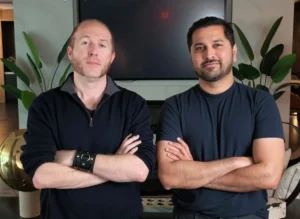
In the dynamic landscape of venture capital, a quiet but profound evolution is underway, reshaping how high-growth American companies are funded and nurtured. At the forefront of this transformation is Jared Carmel, a principal at Manhattan Venture Partners (MVP), a firm that has dedicated over a decade to building the institutional infrastructure for the burgeoning secondaries market. This market, once considered a niche corner of venture finance, is now emerging as a critical pillar, enabling the sustained growth of companies tackling complex, long-horizon challenges.
Reading the Market’s Cycles: From Dot-Com Bust to Secondary Sophistication
Jared Carmel’s entry into the professional world coincided with a turbulent period in the late 2000s, emerging from the ashes of the dot-com bubble and just weeks before the seismic events of September 11th. This challenging environment, he reflects, offered a potent early lesson: understanding market cycles and the cyclical nature of investment trends. He observed firsthand how sectors like SPACs, telecommunications infrastructure, and clean technology, once dismissed, inevitably found their way back into favor years later.
A pivotal moment arrived in late 2009. A friend, preparing to leave Facebook, sought to sell a portion of his early-stage shares. Carmel acquired these shares at a nominal price, a transaction that, while not yielding a significant personal windfall in hindsight, illuminated a nascent opportunity. "This was before the secondary markets were even a market. Before people knew it existed," Carmel recalls, underscoring the pioneering nature of his early endeavors.
This initial foray into providing liquidity for early employees at burgeoning tech giants like Facebook, Twitter, and Palantir eventually led him to G Squared. In 2014, a conviction solidified: the secondaries market, then largely informal and often ad hoc, required institutionalization. Co-founding Manhattan Venture Partners, Carmel aimed to imbue the secondary transaction process with the same rigor, diligence, and underwriting standards expected of any established primary venture capital firm. This commitment to institutionalizing secondary markets has since become a widely embraced principle across the industry.
The Evolving Venture Ecosystem: Supporting Twenty-Year Journeys
The American venture capital industry has quietly adapted to a new reality: the companies founders are building today often require significantly longer development timelines. Many of the largest private companies now operate as private entities for two decades or more. Carmel posits that this extended maturation period is not a symptom of distress, but rather a testament to the increasing complexity of the challenges being addressed. Founders are tackling "harder things," and the venture ecosystem has evolved to provide the necessary patient capital.
"The IPO window is not closed because the markets are bad. The markets are great. It is closed because companies don’t need to go public to keep building," Carmel asserts. This shift signifies a departure from the traditional model where an IPO was often the primary exit strategy or funding mechanism. Instead, a more sophisticated and flexible capital stack has emerged, comprising secondary markets, growth equity, and a diverse array of late-stage investors. This integrated approach offers the long-horizon capital essential for companies embarking on twenty-year trajectories. The growing presence of secondary capital within IPOs themselves further illustrates this evolving dynamic, signaling a fundamental change in how public listings are leveraged.
The Strategic Importance of Secondaries for the Innovation Economy
Historically, secondaries were relegated to the periphery of venture capital discussions. However, Carmel was among the earliest proponents of their central role in supporting American innovation. His foresight has proven accurate, as secondaries are now recognized as a foundational element of the venture ecosystem.
"Secondaries are not just supporting the venture ecosystem. They are becoming a key pillar of venture ecosystem," Carmel emphasizes. The rationale is straightforward: for companies building for the long term, each additional year of private operational runway translates into compounding capability and strategic advantage. A robust secondary market provides this crucial time. It allows early employees and investors to realize liquidity without compelling the company to pursue a premature public offering. This process helps maintain healthy cap tables, attracts new long-horizon investors seeking to inject fresh capital and conviction, and crucially, allows founders to remain focused on achieving category-defining outcomes that have long been a hallmark of the U.S. venture industry.
Fueling American Competitiveness: Investments in Critical Sectors
The impact of these long-horizon companies extends beyond mere technological advancement; many are directly addressing issues of national security and economic competitiveness. MVP strategically focuses on sectors such as artificial intelligence, defense, space, supply chain resilience, and frontier compute. These are not businesses designed for three- or even ten-year horizons; they represent twenty-year endeavors with profound implications for the nation’s future.
"The companies are going to need to build longer because they have more to build," Carmel states. His conviction on this point was significantly shaped by the COVID-19 pandemic’s supply chain disruptions, which exposed the nation’s vulnerability in reliably sourcing critical goods like medications and personal protective equipment. This event crystallized a trend he had observed for years: the quiet outsourcing of strategic capabilities that the U.S. could not afford to lose. The companies now emerging to rebuild this domestic capacity share a common profile: they require substantial capital, specialized technical talent, and a strategic mindset that prioritizes decades over quarterly reports.
The venture industry’s ability to adapt to this demand for long-term commitment is paramount. "Being helpful isn’t pushing a transaction. It’s being the person the founder calls before they decide whether they need one," Carmel explains, highlighting a shift from transactional engagement to deep, advisory partnerships. For Carmel, this translates into facilitating board introductions with expertise in critical sectors like defense and national security, connecting companies with operating leaders capable of scaling nascent enterprises, and demonstrating a commitment to remain invested through the challenging "long middle" of a company’s journey – the period when progress is incremental and external validation is distant.
A Foundation for Future Growth and Optimism
When asked what sustains his dedication to this demanding field, Carmel offers a dual perspective. On a personal level, he finds immense satisfaction in dedicating his career to deeply understanding a dozen companies annually and learning from the visionary individuals building them. On a broader level, his optimism is rooted in the nation’s technological trajectory.
"Technology is being built by more people than at any other moment in my career. Our job is to keep capital flowing in a way that matches that reality," he asserts. This statement encapsulates the core thesis for the enduring relevance of the U.S. venture industry, articulated by an individual who has navigated its cyclical booms and inevitable corrections. The companies American founders are now creating demand a more patient and capital-intensive approach than those of previous generations. The venture industry’s adaptation to this reality, by providing sustained capital through every phase of development, is the critical work that underpins future innovation and national strength.
Manhattan Venture Partners’ commitment to institutionalizing the secondaries market and supporting these long-horizon companies underscores a significant evolution in venture capital, moving beyond rapid exits to fostering enduring American technological and economic leadership.