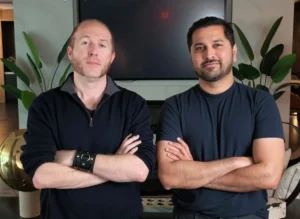
In the dynamic landscape of venture capital, where innovation meets investment, Lorenzo Thione stands out as a seasoned veteran with a unique perspective. An AI founder turned investor and a dedicated advocate for inclusivity, Thione has spent two decades navigating the intricacies of the venture industry. As General Partner of Gaingels, one of the nation’s most active investment syndicates, he is actively shaping a venture ecosystem that prioritizes representation in capital, governance, and talent. His core thesis is elegantly simple yet profoundly impactful: a more open venture ecosystem is an inherently more valuable one.
A Career Forged Across the Venture Spectrum
Thione’s journey through the venture industry is a testament to his multifaceted approach, spanning roles as an operator, advocate, and investor. This arc, as he describes it, began with his foundational experience as an operator. His early career as a research scientist in artificial intelligence, a field he notes was not as prominent as it is today, laid the groundwork for his entrepreneurial endeavors. This path led him to co-found Powerset, a natural-language search startup that was acquired by Microsoft in 2008. The technology developed by Powerset was instrumental in the early iterations of Bing, pushing search capabilities toward the intuitive, conversational interfaces that are now becoming commonplace. Thione reflects on this period, stating, "We were talking about these ideas 25 years ago," highlighting the foresight and foundational work that characterized his early ventures.
Following the successful exit of Powerset, Thione transitioned to gain a comprehensive understanding of the investment side of the industry. He began making angel investments, taking on board seats, and actively participating in the broader ecosystem. This period of engagement fueled his commitment to advocacy, leading him to co-found StartOut, a nonprofit organization dedicated to supporting LGBTQ+ entrepreneurs. Now in its eighteenth year, StartOut has become a significant force in fostering entrepreneurship within the LGBTQ+ community. His involvement in building Gaingels further cemented his dedication to creating a more equitable venture landscape. What began as a modest LGBTQ+ angel group has evolved into one of the world’s most active venture syndicates, bringing together thousands of investors to back promising companies alongside leading venture capital firms. The foundational principle of Gaingels, and one that continues to guide its operations, is the deliberate inclusion of individuals and communities historically underserved by traditional venture networks.
The Nuance of Timing: Predicting Innovation, Mastering Inflection
Thione’s extensive background in AI research from the early 2000s provides him with a unique vantage point on the current technological revolution. He distinguishes between the predictability of technological advancement and the inherent difficulty in pinpointing its optimal timing for market success. "Anticipating the future as to whether something is going to happen is much less difficult than one imagines. What’s really hard to see is when," he observes.
He often uses the analogy of science fiction to illustrate this point. Technologies envisioned in works like Star Trek—communicators evolving into smartphones, PADDs transforming into tablets, and voice assistants becoming a reality—were conceptually predictable. However, the exact timeline for their widespread adoption and market viability was far less certain. In the realm of venture capital, Thione argues, timing is the critical determinant of value creation or loss.
"A lot of what venture capital is, is as much a bet on people as it is a bet on timing. We were right 25 years ago. We were wrong, though, on the timing," he explains. His experience with Powerset serves as a prime example. The company’s directional vision was sound, but it was chronologically ahead of its time. The necessary data infrastructure was nascent, computing power was prohibitively expensive, and crucial algorithmic breakthroughs had not yet occurred. This gap between intuitive foresight and market inflection is, in his view, what experienced investors learn to keenly sense over the course of their careers.
Integrating Diverse Roles: Operator, Advocate, and Investor
Thione’s career trajectory demonstrates a fluid integration of his roles as an operator, advocate, and investor, rather than a strict sequential progression. Running Gaingels, with its vast network of investor members and substantial deal volume, bears a striking resemblance to operating a startup itself, rather than managing a traditional venture capital firm. He continues to apply operational metrics such as cost of acquisition and burn rate, mirroring the daily concerns of founders.
"The through line is feeling like I can wake up going to work with people I like, doing work that matters to someone, and being creatively and intellectually challenged on an ongoing basis," he articulates, underscoring his commitment to purposeful and engaging work.
Advocacy remains a constant thread throughout his professional life. His ongoing involvement with StartOut after 18 years highlights his enduring commitment to the organization’s mission. Gaingels was established with the explicit goal of broadening participation in venture capital, a mission that has only become more refined and impactful over time. This encompasses not only the inclusion of investors and capital providers from historically marginalized communities but also the support of founders and C-suite leaders dedicated to building more representative companies, and the cultivation of board members who are instrumental in shaping corporate governance. Even his work in the theater, where he is a Tony Award-winning Broadway producer, is viewed as a form of advocacy—gravitating towards narratives that offer audiences new perspectives and windows into unfamiliar lives.
"We are stronger, broadly and intellectually, when we are more open to views of the world and life experiences that are not the ones we’ve lived," he asserts, emphasizing the intellectual and societal benefits of diverse viewpoints. He also notes a surprising benefit of the current AI boom: investors who were once hands-on coders but may have lost touch with the craft are finding themselves re-engaged with the builder identity. "Keeping your mind and your options open is a great thing," he advises.
Companies as Productions: A Parallel in Creativity
Lorenzo Thione’s involvement as a Tony Award-winning Broadway producer, notably with the musical "Indigo," offers a fascinating parallel to his venture capital philosophy. He views the act of building a company as inherently creative, akin to bringing a theatrical production to life. "Effectively creating something that did not exist, willing it into existence against all odds," he describes, is a concept that resonates deeply within the venture capital ethos. This framing echoes the insights of Bill Davidow, an Intel veteran and co-founder of Mohr Davidow Ventures, who, in his 1992 book "The Virtual Corporation," posited that adaptive companies of the future would operate more like creative productions, assembling specialized talent around specific projects. The modern venture-backed companies, with their complex cap tables stitched together across syndicates and a flexible network of operators-turned-investors, appear to be realizing this vision.
"When you’re raising money, hiring someone, convincing anyone to join forces with you, you want them to believe a certain story and connect at an emotional level. It is an emotional decision," Thione explains, highlighting the crucial role of narrative and emotional resonance in securing investment and talent.
The Economic Imperative of an Open Venture Ecosystem
When asked about the evolution of the venture industry toward greater representation, Thione offers a poised and strategic response. He explains that Gaingels was designed to empower individuals who are already motivated to participate—investors and founders who recognize the value of inclusivity but may lack the necessary networks or established playbooks. "We’re less likely to say, ‘You should do this, you should change the way you do business.’ We exist to make it easier for people who already want to," he clarifies.
His argument for a more inclusive venture landscape is fundamentally economic. A more open, accessible, and democratized venture ecosystem, he contends, generates greater overall value. This occurs because the wealth created is distributed across a wider range of communities, which in turn fuels more entrepreneurs, surfaces a greater diversity of ideas, and ultimately serves broader audiences and markets that the industry has historically overlooked.
"If I could make a wish, I would love for any VC or fund that doesn’t know us to come learn about us, ask around about the experience of working with Gaingels, and make room for us in their next rounds. We’re not quotas or hard constraints. We just want to help the ecosystem work better," he states, advocating for collaboration rather than obligation.
This conviction is tangible in Gaingels’ approach to supporting its portfolio companies. Beyond providing capital, the firm actively assists companies in refining their leadership composition, diversifying their cap tables, and strengthening their talent pipelines. "We exist to help founders build the most representative and inclusive companies they can, at the levels of governance, capital, and talent," Thione emphasizes.
A Foundation for Optimism: The Power of Persistence
Thione’s optimism is deeply rooted in the enduring spirit of the individuals who consistently contribute to the growth and innovation within the venture capital world. "This world of high-growth, high-risk, entrepreneurial endeavor attracts the most interesting, brilliant, motivated, high-agency people in the world," he observes.
He challenges the common misconception that entrepreneurs are exclusively young individuals. Instead, he points to the rise of experienced, serial entrepreneurs who are now building companies with significantly greater capital efficiency than was possible just a few years ago. As access to venture capital broadens, enabling more communities to participate and fostering greater representation on cap tables, many of these successful founders naturally transition into becoming the investors of the future.
"It’s a little bit of a circle of life. It’s a great renewal cycle: people who take a bet, and then go on to take a bet on the next generation of entrepreneurs," he concludes. This cyclical dynamic, in Thione’s view, represents a familiar and powerful flywheel within venture capital: the movement from operator to advocate to investor, and back again. It signifies the flow of capital and conviction into new communities, fueled by compelling narratives that inspire others to join the endeavor.