
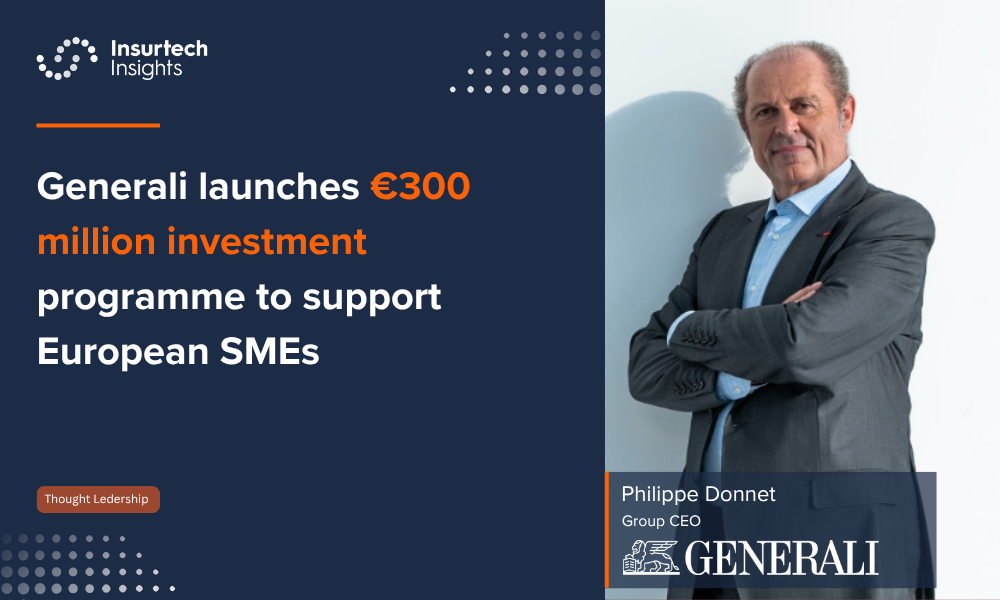
Generali, one of the world’s leading insurance and asset management providers, has officially announced the commencement of its €300 million European Sovereignty Program, a strategic investment initiative designed to catalyze the growth of small and medium-sized enterprises (SMEs) and fortify Europe’s critical infrastructure. This program, structured as a sophisticated fund of funds, represents a significant move by the Italian insurance giant to align its investment capabilities with the broader geopolitical and economic objectives of the European Union, specifically focusing on sectors that are deemed vital for the continent’s future competitiveness and self-reliance.
The launch of the European Sovereignty Program comes at a pivotal moment for the European economy. As the global landscape becomes increasingly fragmented, the European Union has placed a renewed emphasis on "strategic autonomy"—the ability for Europe to act autonomously in key sectors such as technology, energy, and defense. Generali’s new initiative is explicitly designed to address the persistent financing gaps that hinder the scaling of European businesses in these high-stakes areas, while also providing the long-term capital necessary for large-scale infrastructure projects that support digitalization and the green transition.
Strategic Objectives and Targeted Industrial Sectors
The European Sovereignty Program is not merely a financial vehicle but a targeted instrument of economic policy. By deploying €300 million into a diverse range of assets, Generali aims to stimulate innovation and resilience across the European industrial base. The program identifies several priority sectors that are essential for maintaining Europe’s edge in the global market. These include artificial intelligence (AI), cybersecurity, energy transition, and comprehensive digitalization.
In the realm of artificial intelligence and cybersecurity, the program seeks to fund companies that are developing homegrown solutions to protect European data and infrastructure. As the European Union implements the AI Act and the NIS2 Directive, the demand for compliant and secure technological solutions has never been higher. Generali’s investment is intended to ensure that European firms have the capital necessary to compete with global tech giants from the United States and Asia.
Furthermore, the focus on the energy transition aligns with the European Green Deal’s objectives of achieving climate neutrality by 2050. The program will target infrastructure projects that facilitate the decarbonization of the economy, including renewable energy generation, smart grid development, and the expansion of electric vehicle charging networks. By bridging the gap between innovative startups and institutional-scale funding, Generali is positioning itself as a cornerstone investor in the continent’s sustainable future.
Institutional Management and Geographic Focus
The management of the European Sovereignty Program is distributed across Generali’s specialized asset management arms to ensure expert oversight of different asset classes. Generali Investments Holding (GIH) serves as the primary administrative umbrella for the program. Within this structure, Generali AM is tasked with overseeing private equity, infrastructure equity, and direct lending strategies. These "private market" investments are crucial for providing patient capital to companies that are not yet ready for public listing but require substantial funding to scale their operations.
On the public side of the ledger, Sycomore AM—a firm known for its expertise in sustainable and mission-driven investing—will manage listed equity investments. This dual approach allows the program to support the entire lifecycle of a company, from its growth stages in the private market to its maturity on public exchanges.
Geographically, the program will concentrate its efforts on continental Europe. While the mandate covers the entire European Union, Generali has signaled a particular emphasis on the "Big Three" economies: Italy, France, and Germany. These nations form the industrial heart of Europe and are home to a vast network of SMEs that serve as the backbone of the regional economy. By focusing on these markets, Generali intends to create a ripple effect that strengthens the interconnected supply chains across the European single market.
Addressing the Growing SME Financing Gap
The initiative arrives against a backdrop of tightening credit conditions and economic uncertainty. Small and medium-sized enterprises, which account for more than 90% of all businesses in Europe and a significant portion of employment, have found it increasingly difficult to secure long-term financing. The European Investment Bank’s (EIB) Investment Survey provides a stark illustration of this trend: the proportion of financially constrained SMEs in the European Union rose from 4.7% in 2021 to 7.6% in 2024.
This widening gap is attributed to several factors, including rising interest rates, more stringent bank lending standards, and a general de-risking by traditional financial institutions. Generali’s program is designed to complement public funding initiatives, such as those provided by the EIB and the European Commission, by mobilizing private capital. This "crowding in" of private investment is seen as essential for meeting the massive capital requirements of the modern European economy.
Contextualizing the Program within the Draghi and Letta Reports
The timing and scope of the European Sovereignty Program are closely linked to high-level policy recommendations published in 2024. Former Italian Prime Minister Mario Draghi and former Italian Prime Minister Enrico Letta both released landmark reports on the future of European competitiveness and the single market.
The Draghi report, in particular, sent shockwaves through European policy circles by estimating that the European Union requires between €750 billion and €800 billion in additional annual investment to meet its ambitious targets for decarbonization, digitalization, and economic growth. Draghi’s analysis emphasized that Europe is falling behind the United States and China in productivity growth and technological innovation due to a lack of coordinated investment.
Generali’s initiative serves as a direct private-sector response to these warnings. By creating a vehicle specifically dedicated to "sovereignty" and "resilience," the insurer is demonstrating how institutional investors can align their fiduciary duties with the broader needs of the European project. The program reflects a shift in the role of insurance companies from passive holders of government bonds to active participants in industrial policy.
Historical Chronology: From Fenice 190 to European Sovereignty
The launch of this new program is the latest step in Generali’s long-term strategy to support European recovery and growth. To understand the significance of the European Sovereignty Program, one must look back at the "Fenice 190" initiative.
Launched in 2021 to mark Generali’s 190th anniversary, Fenice 190 was a massive €3.5 billion investment plan aimed at supporting Europe’s post-pandemic economic recovery. That program focused heavily on sustainable infrastructure, support for SMEs, and social housing. The success of Fenice 190 provided the blueprint for the current European Sovereignty Program, proving that Generali could effectively deploy large-scale capital into complex, multi-jurisdictional projects while maintaining robust returns for its stakeholders.
While Fenice 190 was a response to a global health crisis, the European Sovereignty Program is a response to a global geopolitical shift. The transition from "recovery" to "sovereignty" illustrates the evolving priorities of the European business community in an era of heightened global competition.
Executive Perspectives on Long-Term Resilience
Leadership at Generali has been vocal about the necessity of this program. Philippe Donnet, Group Chief Executive Officer of Generali, underscored the insurer’s responsibility as a major institutional player. "In our role as a responsible insurer and investor, Generali can mobilize long-term capital in support of projects that concretely contribute to Europe’s resilience, competitiveness and autonomy," Donnet stated. His comments reflect a growing trend among European CEOs who argue that corporate success is inextricably linked to the stability and strength of the European Union.
Luca Cetrano, Group Chief Investment Officer of Generali, echoed these sentiments, highlighting the practical application of the funds. Cetrano noted that the program is intended to improve access to long-term financing for companies and infrastructure projects operating in strategically important sectors. By utilizing both equity and debt instruments, Generali can tailor its support to the specific needs of different businesses, whether they require the risk-sharing of equity or the steady support of long-term debt.
Broader Implications for the Insurance and Investment Industry
The launch of the €300 million program is likely to have broader implications for the European insurance sector. Traditionally, insurance companies have been conservative investors, heavily weighted toward sovereign debt. However, recent regulatory changes, including the ongoing reforms to the Solvency II framework, are designed to encourage insurers to invest more in long-term, illiquid assets like infrastructure and private equity.
Generali’s move could serve as a catalyst for other major insurers to launch similar "sovereignty" or "autonomy" funds. If the industry as a whole begins to pivot toward these strategic sectors, the cumulative impact on European innovation could be transformative. This would effectively turn the European insurance industry—which manages trillions of euros in assets—into a primary engine for the continent’s industrial renewal.
Generali’s Market Position and Financial Standing
As of 2025, Generali remains a formidable force in the global financial landscape. The company reported a total premium income of €98.1 billion and manages approximately €900 billion in total assets. With a customer base of 75 million people across Europe, Asia, and the Americas, the group’s investment decisions carry significant weight in global markets.
The European Sovereignty Program is a testament to Generali’s ability to leverage its massive balance sheet for strategic purposes. By focusing on Italy, France, and Germany, Generali is reinforcing its position in its core markets while simultaneously contributing to the stability of the Eurozone.
In conclusion, the €300 million European Sovereignty Program represents a sophisticated fusion of private investment and public policy. By targeting the SME financing gap and focusing on the technologies of the future, Generali is positioning itself as a key architect of European economic autonomy. As the continent grapples with the challenges of the 21st century, the mobilization of institutional capital through initiatives like this will be critical in determining whether Europe can maintain its status as a global economic powerhouse.