As Canada stands on the precipice of a significant transformation in its financial services landscape, the dual advancement of Consumer-Driven Banking and real-time payments has positioned digital identity as the indispensable foundation for the next generation of economic activity. The transition toward a more open, transparent, and instantaneous financial ecosystem requires a fundamental rethinking of how individuals prove who they are in a digital-first world. At the recent Open Banking Expo Canada, industry leaders and technology experts gathered to dissect the evolving role of identity frameworks, arguing that the success of Canada’s financial modernization depends entirely on the strength and interoperability of its digital ID infrastructure.
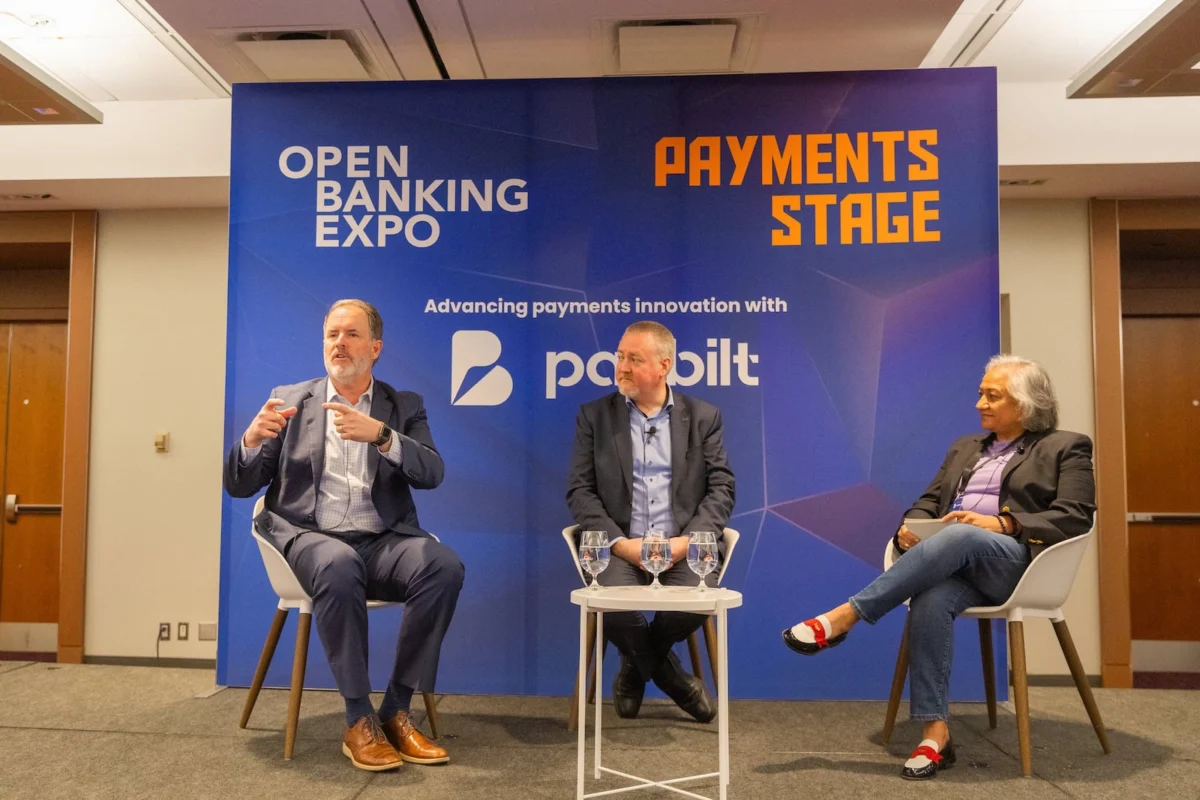
The discourse, featured during a high-profile Fireside Chat, brought together prominent voices from the global identity and security sectors, including representatives from Daon and Giesecke+Devrient. The consensus among the participants was clear: identity is no longer a peripheral security feature but the central nervous system of a secure data-sharing economy. As Canada moves toward a regulated Consumer-Driven Banking framework, the ability to verify users across multiple platforms, initiate secure payments, and maintain privacy will dictate the pace of innovation and consumer adoption.
The Strategic Shift Toward Consumer-Driven Banking
The Canadian federal government has recently accelerated its efforts to catch up with global peers in the realm of Open Banking, officially termed "Consumer-Driven Banking" (CDB) within the domestic regulatory context. Following the 2024 Federal Budget and the introduction of legislation aimed at establishing a formal framework, the Department of Finance has signaled that the era of "screen scraping"—a practice where third-party apps use consumer login credentials to access data—must come to an end.
Moderator Daksa Mody, Senior Vice President of Central Operations at President’s Choice Bank, set the stage for the discussion by highlighting the gravity of this transition. Mody noted that as the "economy is taking shape" around real-time payments and data mobility, digital identity has emerged as the "cornerstone of a secure and seamless interaction in the financial ecosystem." This shift represents a move away from static, one-time verification events toward a more fluid and continuous model of authentication.
Historically, identity verification was a hurdle to be cleared during the initial onboarding process—a "Know Your Customer" (KYC) check that rarely evolved once the account was opened. However, in an Open Banking environment where data is constantly being shared between banks, fintechs, and other service providers, identity must become a dynamic process. This "continuous identity" model ensures that every transaction and every data request is verified in real-time, adapting to the level of risk associated with the specific action.
The Rising Threat of AI-Enabled Fraud
One of the primary drivers necessitating a more robust identity framework is the rapid sophistication of cyber threats. Bob Long, President of the Americas at Daon, emphasized the growing impact of artificial intelligence on the fraud landscape. The rise of deepfakes—highly realistic AI-generated video and audio—along with sophisticated social engineering scams, has rendered traditional security measures increasingly obsolete.
In Canada, fraud remains a multi-billion-dollar problem. According to the Canadian Anti-Fraud Centre (CAFC), reported losses to fraud reached a record $567 million in 2023, though the actual figure is estimated to be much higher as many incidents go unreported. The introduction of real-time payments, facilitated by the upcoming Real-Time Rail (RTR) payment system, adds a layer of urgency. Because real-time payments are irrevocable, the window for detecting and stopping fraudulent transfers is narrowed to milliseconds.
Long pointed out that financial institutions are under immense pressure to strengthen their defenses without alienating customers through excessive friction. "A strong identity verification capability has to matter, particularly as we evolve into an Open Banking environment," Long stated. He urged organizations to look beyond basic standards and consider the underlying algorithms, measurement processes, and foundational components that constitute a truly resilient identity system.
Moving Beyond the Password
The session at the Open Banking Expo also addressed the systemic failures of traditional authentication methods. For decades, the password has been the primary gatekeeper of digital life, yet it is widely recognized as the weakest link in the security chain. Passwords are easily stolen through phishing, reused across multiple sites, and frequently forgotten by users.
As Canada prepares to implement new regulations that will discourage or outright ban screen scraping, the industry is pivoting toward more secure alternatives. Biometric authentication—utilizing unique physical characteristics such as fingerprints or facial recognition—and "passkeys" based on FIDO2 standards are becoming the new benchmarks for security. These methods offer a dual benefit: they are significantly harder for hackers to bypass and much easier for consumers to use, as they eliminate the need to memorize complex strings of characters.
The challenge, however, remains the balance between security and convenience. If an identity verification process is too cumbersome, consumers will abandon the service. Conversely, if it is too lax, the system becomes vulnerable to exploitation. The industry’s goal is to create "invisible" security—where sophisticated checks occur in the background, allowing the user to navigate the financial ecosystem with minimal interruption.
A Timeline of Canada’s Financial Modernization
The push for a robust digital identity framework is inextricably linked to Canada’s broader financial modernization timeline. To understand the current momentum, it is necessary to look at the milestones that have led to this point:
- 2018-2021: The Advisory Committee on Open Banking conducts extensive consultations, concluding that an Open Banking framework is necessary to maintain Canada’s competitiveness.
- August 2021: The final report from the Advisory Committee is released, recommending a phased implementation and the appointment of an Open Banking Lead.
- 2023: Payments Canada continues work on the Real-Time Rail (RTR), the infrastructure that will allow for near-instantaneous clearing and settlement of payments.
- Budget 2024: The federal government commits to introducing legislation to implement a Consumer-Driven Banking Framework, designating the Financial Consumer Agency of Canada (FCAC) as the primary regulator.
- June 2024: Bill C-69 receives Royal Assent, enshrining the first stage of the CDB framework into law and setting the stage for technical standards.
- 2025-2026: Expected full implementation of the first phase of Open Banking, focusing on data sharing for bank accounts, credit cards, and investment accounts.
As these deadlines approach, the integration of digital identity into the technical standards of the CDB framework is a top priority for the Department of Finance and the FCAC.
The Vision of a Portable Digital Identity Ecosystem
Beyond the immediate requirements of banking, the experts at the Expo envisioned a future where digital identity is "portable" and cross-sectoral. Andrew Johnston, Business Development Executive at Giesecke+Devrient, suggested that the true potential of Open Banking will be realized when identity can be verified consistently across different platforms and institutions.
"We’ve seen the beginnings of some of the value proposition of Open Banking already," Johnston said. "But once there are clear rules and the government has said, ‘this is how this is going to work’, I think an entire ecosystem is going to crop up."
A portable digital identity would allow a Canadian citizen to use a single, verified digital credential to open a bank account, apply for a government benefit, rent an apartment, or even verify their age at a retail outlet. This ecosystem approach reduces the need for consumers to repeatedly provide sensitive documents like passports or utility bills to different entities, thereby reducing the "attack surface" for identity theft.
Johnston emphasized that as this ecosystem grows, security and privacy must remain "top of mind." The use of decentralized identity models, such as digital wallets that store encrypted credentials on a user’s device rather than in a central database, is being explored as a way to give consumers more control over their personal information.
Economic Implications and the Path Forward
The economic impact of a fully realized digital identity and Open Banking framework in Canada could be profound. A report by the McKinsey Global Institute suggests that countries that implement broad digital ID systems could see an increase in GDP of between 3% and 13% by 2030. For Canada, this translates to improved financial inclusion for underbanked populations, reduced operational costs for financial institutions, and a more competitive environment for fintech startups.
Furthermore, the transition to real-time payments will unlock liquidity for small and medium-sized enterprises (SMEs), allowing them to manage cash flow more effectively. However, none of these benefits can be secured without the public’s trust. High-profile data breaches and the specter of "surveillance capitalism" have made many Canadians wary of digital identity initiatives.
To address these concerns, the speakers at the Open Banking Expo stressed the importance of transparency and consumer consent. Under the proposed Consumer-Driven Banking framework, consumers must have the right to grant, manage, and revoke access to their data at any time. Digital identity systems must be designed with "privacy by design" principles, ensuring that only the minimum amount of data necessary for a transaction is shared.
As Canada moves toward 2026, the focus will shift from high-level policy discussions to the technical implementation of these systems. The collaboration between legacy banks, agile fintechs, and global security providers like Daon and Giesecke+Devrient will be critical. The "phenomenal" variety and value predicted for the Open Banking ecosystem are within reach, but they depend on a foundation of identity that is as secure as it is seamless.
In conclusion, digital identity is no longer just a technical requirement; it is a socio-economic imperative. As Canada modernizes its financial rails and embraces data mobility, the strength of its identity framework will be the ultimate determinant of its success in the global digital economy. The path forward requires a commitment to innovation, a rigorous approach to security, and a relentless focus on the consumer experience.