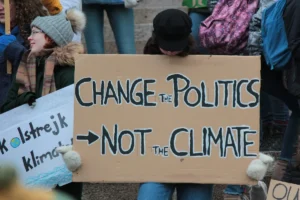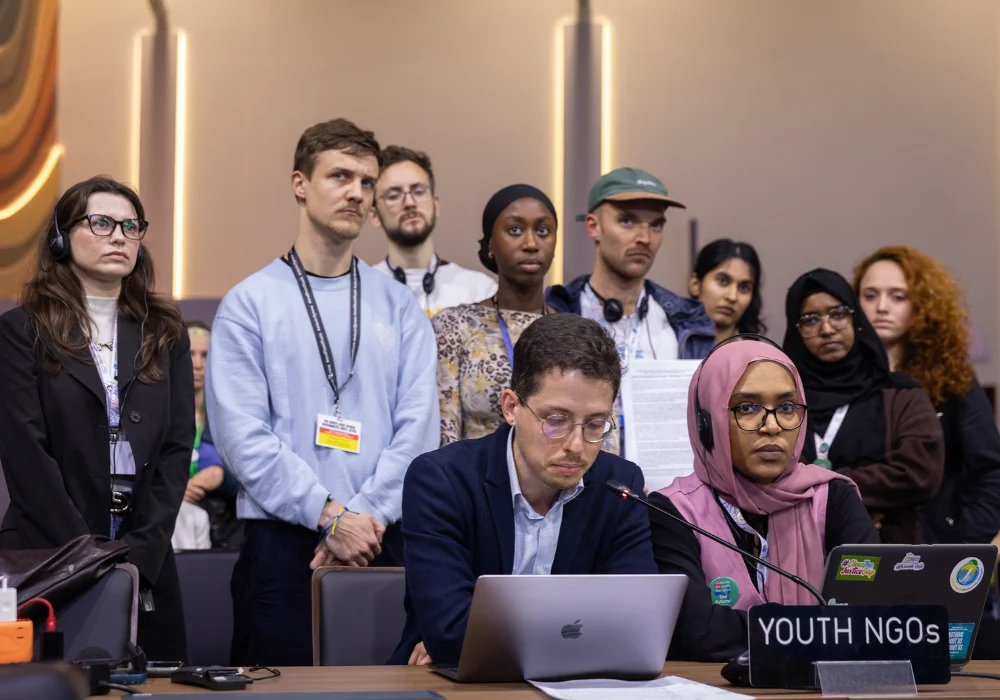
The global fight against climate change continues to exist in a complex state of paradox, characterized by simultaneous breakthroughs in green technology and a persistent failure to curb emissions at the speed required to avert ecological disaster. This dichotomy was on full display at the United Nations Framework Convention on Climate Change (UNFCCC) COP31 summit held in Antalya, Turkey. While official negotiations hit a familiar impasse with member states failing to reach a consensus on a binding final text, those looking beyond the traditional diplomatic headlines found a rapidly shifting global economy deeply committed to decarbonization.
The Groundswell of Global Transition: Insights from Antalya
To understand the trajectory of modern climate action, observers must look past the bureaucratic stalemates of COP plenaries and examine the tangible industrial transformations taking place worldwide. Discussions with international climate delegations at Antalya revealed sweeping national plans that signal a definitive turning point for clean energy deployment.
A prime example of this momentum is South Korea’s ambitious climate initiative, known as K-GX (the Korea-Green Transformation). Backed by a staggering $750-billion financial commitment, this comprehensive energy transition framework aims to integrate 100 gigawatts of new renewable energy capacity into the national grid by 2030. Furthermore, the policy dictates that over 70 percent of all new vehicle sales in South Korea must be powered by electricity or hydrogen by 2035. Crucially, the K-GX framework also establishes innovative regulatory and financial mechanisms to decarbonize notoriously hard-to-abate heavy industries, including steel manufacturing, cement production, and semiconductor fabrication.
South Korea’s strategy is emblematic of a broader international movement toward system-wide electrification. At COP31, this trend crystallized around the newly unveiled "35-by-35" global pledge, an initiative designed to increase electricity’s share of total final energy consumption to 35 percent by the year 2035. This aggressive electrification target received formal backing from more than 90 nations, including Canada, reflecting a growing consensus that the electrification of transport, home heating, and industrial processes is the most viable near-term pathway to emissions reduction.
Macro Trends: Plateauing Emissions and Shifting Geopolitics
Parallel to the proceedings in Antalya, a flurry of scientific analyses published during the summit highlighted significant shifts in global greenhouse gas trajectories. Comprehensive data indicates that global fossil-fuel carbon dioxide emissions have officially plateaued. This stabilization was reinforced by unforeseen geopolitical disruptions—specifically, the oil market volatility triggered by the 2025 conflict involving Iran, which inadvertently nudged global fossil fuel emissions down by just under half a percentage point as energy costs spiked and consumption patterns shifted.
More structurally significant is the trajectory of emissions within the People’s Republic of China. As both the world’s largest aggregate emitter and the undisputed pacesetter in renewable energy manufacturing and deployment, China’s domestic emissions have finally begun a sustained downward trend. Recent quarterly data reveals a three percent drop in Chinese CO2 emissions, marking the most significant decline since the economic disruptions of the COVID-19 pandemic and demonstrating that clean energy scale can eventually outpace industrial growth.
The Looming Threat of Climate Overshoot
Despite these monumental economic shifts, the international scientific community continues to sound urgent alarms regarding the inadequacy of current aggregate NDCs (Nationally Determined Contributions).
In a landmark report released concurrently with the COP31 talks, the United Nations Environment Programme (UNEP) issued a stark warning. The collective sum of all current national climate pledges places the planet on a dangerous trajectory toward nearly 3 degrees Celsius of warming by the end of the 21st century. Furthermore, the report confirms that temporarily exceeding the critical 1.5-degree Celsius threshold—the boundary established by the Paris Agreement to prevent the most catastrophic impacts of global heating—is now virtually inevitable in the short term.
For vulnerable ecosystems and human societies worldwide, a three-degree warmer world represents an existential threat characterized by irreversible sea-level rise, collapsing agricultural yields, and exponentially more frequent extreme weather events. The physical reality of greenhouse gases compounds this crisis: carbon dioxide emitted today remains in the atmosphere for centuries, meaning every avoided tonne pays compounding dividends, while every delayed action exponentially increases both human suffering and economic adaptation costs.
Canada’s Domestic Policy Gap: High Ambition in Rhetoric, Lagging Reality in Execution
Domestically, the federal government under Prime Minister Mark Carney has earned a reputation for sweeping policy ambitions. Canadians have grown accustomed to an intense cadence of major national announcements aimed at reshaping the country’s economic and social landscape. These include aggressive targets to double non-U.S. export volumes, elevate national defense spending to 5 percent of Gross Domestic Product, and completely eradicate chronic homelessness—all slated for achievement by the 2035 horizon.
However, policy analysts argue that this formidable work ethic and strategic ambition have yet to be fully translated into the realm of domestic climate governance. While the Carney administration readily signs onto ambitious international compacts—such as the COP31 35-by-35 electrification pledge—critics point to a noticeable deficit in the foundational regulatory and financial mechanisms required to turn these promises into reality.
A suite of new tracking indicators recently launched by the Canadian Climate Institute illustrates this implementation gap. The data reveals that several key climate metrics, including those explicitly prioritized by the federal government, are failing to progress at the necessary velocity. Most notably, Canada’s current state of domestic electrification hovers at approximately 25 percent of final energy demand—a metric that has actually experienced a slight decline over the past year. Aligning Canada’s domestic energy infrastructure with its international commitments under the 35-by-35 framework will demand an unprecedented, coordinated national effort spanning federal, provincial, and municipal jurisdictions.
The Path Forward: Translating Scale into Speed
The juxtaposition of global progress and localized stagnation underscores a critical historical moment for climate policy. Through institutional mechanisms such as the Major Projects Office and newly secured trade agreements stretching from Brussels to Manila, the current federal administration has repeatedly demonstrated its capacity to execute large-scale infrastructural and economic transformations.
As climate experts and institutional leaders return from the negotiation tables of Antalya, the central takeaway is clear. The economic transition away from fossil fuels is no longer a speculative hypothesis; it is an irreversible global reality moving at unprecedented speed. For Canada and other industrialized nations, the challenge of this decade is no longer about proving the viability of green technology, but about matching the velocity of the global economic transition with equally relentless domestic execution. The window to secure a stable climate future is narrowing, requiring governments to bring the same urgency and scale to environmental policy that they apply to national security and macroeconomic growth.