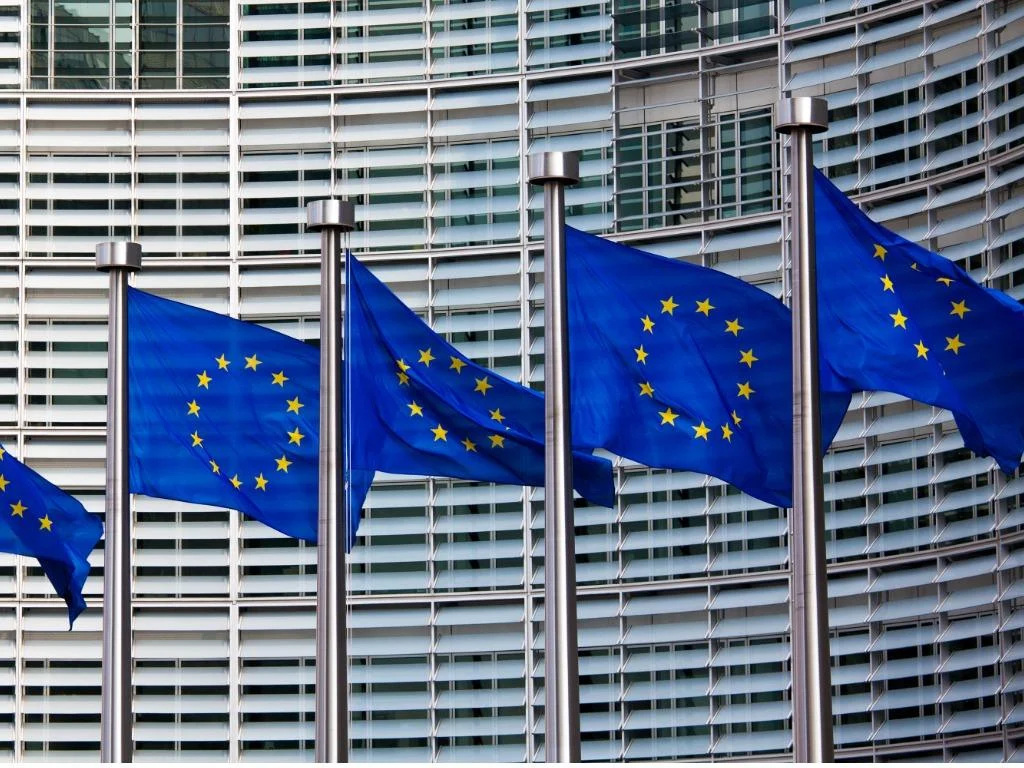
The European Commission has officially withdrawn the Green Claims Directive, a landmark legislative proposal that sought to harmonize environmental marketing standards across the European Union. The decision, formalized within the Commission’s 2027 work programme released on Wednesday, marks a significant retreat from one of the bloc’s most ambitious attempts to combat corporate greenwashing. The move signals a broader shift in the Brussels policy landscape, where concerns regarding administrative burdens on businesses have begun to outweigh the urgency of consumer protection mandates.
The Rise and Fall of the Green Claims Directive: A Chronology
The trajectory of the Green Claims Directive reflects the escalating tension between environmental regulation and the EU’s "competitiveness agenda." Introduced in March 2023, the directive was designed to establish a unified framework for environmental claims. It aimed to mandate that any voluntary environmental claim made by a company—such as "carbon neutral," "eco-friendly," or "biodegradable"—be backed by rigorous, independent scientific evidence.
The initiative was part of a larger legislative tapestry intended to empower the "Green Transition." This included the Ecodesign for Sustainable Products Regulation (ESPR) and the Directive on Empowering Consumers for the Green Transition (ECGT). While the ECGT moved forward, the Green Claims Directive became ensnared in a complex political deadlock.
By June 2025, the proposal had hit a critical impasse. Following two rounds of intense trilogue negotiations—the high-stakes meetings between the European Commission, the European Parliament, and the Council of the EU—the European People’s Party (EPP), the largest political group in the European Parliament, publicly demanded the withdrawal of the file. The EPP argued that the proposed compliance costs would disproportionately punish Small and Medium-sized Enterprises (SMEs), which are the backbone of the European economy.
Although a Commission spokesperson briefly suggested in 2025 that the withdrawal might be averted if microenterprises were exempted, the negotiations failed to yield a consensus. The Council of the EU’s inability to reach a negotiating mandate by mid-2024 served as the final death knell for the proposal. In the 2027 work programme, the Commission conceded that the file had reached a terminal state, stating it was "unlikely to secure support" within any reasonable timeframe.
Understanding the Policy Intent: Why the Directive Was Necessary
To understand the scale of the failure, one must look at the data that necessitated the proposal in the first place. Before the introduction of the directive, the European Commission’s own market research revealed a landscape plagued by systemic deception.
A comprehensive study conducted by the Commission found that more than 50% of environmental claims made by companies operating within the EU were either vague, misleading, or entirely unfounded. Furthermore, approximately 40% of these claims lacked any substantiation whatsoever. The directive was intended to address this by imposing strict requirements:
- Independent Verification: Claims would have required pre-approval from an independent, accredited verifier.
- Scientific Substantiation: Companies would have been obligated to use life-cycle assessments (LCAs) to prove the validity of their claims.
- Label Standardization: The directive sought to limit the proliferation of private environmental labels, allowing only those that met stringent, EU-approved transparency and environmental ambition thresholds.
By creating these hurdles, the Commission hoped to provide consumers with the tools to make genuinely sustainable choices while preventing "first-mover" companies from being undercut by competitors using deceptive marketing tactics.
The Economic Argument: Administrative Burdens and Regulatory Fatigue
The core of the opposition, led by the EPP and echoed by various industry lobby groups, centered on the concept of "regulatory burden." Critics argued that the directive’s requirement for life-cycle assessments would be prohibitively expensive for smaller firms. In a climate where European industry is facing increased energy costs and stiff competition from non-EU markets, the EPP maintained that the administrative overhead required to "prove" the environmental credentials of every product would stall innovation rather than promote it.

Proponents of the directive, including several environmental NGOs and consumer rights groups, criticized this reasoning. They pointed out that many of the concerns regarding SMEs had already been addressed during the drafting process, with specific provisions included to exclude microenterprises from the most onerous reporting requirements. These advocates argue that by withdrawing the directive, the EU has essentially allowed "greenwashing" to continue unchecked, creating a "race to the bottom" for corporate environmental transparency.
The Broader Impact on EU ESG Strategy
The withdrawal of the Green Claims Directive has profound implications for the future of ESG (Environmental, Social, and Governance) regulation in Europe. It represents a potential turning point in the European Commission’s approach to the Green Deal. For years, the Commission operated under a philosophy of "maximalist" regulation—introducing comprehensive laws to cover every aspect of the transition. The recent withdrawal suggests a shift toward a more cautious, "competitiveness-first" policy cycle.
Investors and companies that had already begun retooling their marketing and reporting departments to align with the proposed directive now find themselves in a regulatory vacuum. While the Directive on Empowering Consumers for the Green Transition (ECGT) remains in force, it lacks the technical specificity of the defunct Green Claims Directive. The ECGT provides a high-level ban on generic, misleading claims, but it does not mandate the same level of granular, life-cycle-based proof that the Green Claims Directive would have required.
Future Outlook and Market Consequences
Without a harmonized EU-wide standard, the market is likely to see a continuation of the "fragmented regulation" scenario. Individual member states may move to implement their own national anti-greenwashing laws to fill the void. For multinational companies, this is arguably a worse outcome than the original directive, as it creates a patchwork of compliance requirements across different jurisdictions, increasing operational costs rather than reducing them.
Furthermore, the lack of a standardized framework for environmental claims may weaken consumer trust in sustainable products. When labels cannot be verified through a common, robust standard, consumers are less likely to pay a premium for greener goods, potentially disincentivizing companies from investing in sustainable supply chains.

The European Commission’s decision is likely to be viewed as a victory by industry associations that lobbied against the "red tape" of the proposal. However, for those monitoring the integrity of the European Single Market, the withdrawal leaves a significant gap in the consumer protection framework.
As of late 2026, the legislative focus in Brussels has clearly shifted toward industrial productivity. Whether this sacrifice of environmental rigor in favor of reduced administrative complexity will yield the promised economic growth remains a subject of intense debate. For now, the "Green Claims" file is officially closed, ending a three-year attempt to institutionalize honesty in the European sustainability market. Companies must now navigate a landscape where, despite the lack of a specific directive, the broader principles of consumer protection and transparency continue to evolve under existing competition and consumer law.