When the International Energy Agency (IEA) published its influential World Energy Outlook in late 2025, it served as a stark reality check for international climate policy. The report laid bare an uncomfortable truth: global progress on the energy transition had visibly slipped. None of the modeled scenarios kept global warming within the critical 1.5-degree Celsius threshold by 2050, as stipulated by the landmark 2015 Paris Agreement, and projections for peak oil and gas consumption were pushed further into the future. For fossil fuel advocates, the outlook offered a brief reassurance that hydrocarbons would remain indispensable for decades.
Yet, the speed of modern energy markets has rendered long-range predictions volatile. Within a remarkably short window following the IEA report, the global energy landscape underwent a dramatic acceleration. The electrification of road transportation—spanning passenger cars, electric bicycles, and two-wheelers—surged past expectations. Concurrently, solar power achieved a historic milestone across the European Union, generating more electricity on the regional grid than any other individual energy source. Globally, renewable energy sources began contributing more to total energy-supply growth than oil, gas, or coal individually, marking a structural turning point in how the world powers its economies.
This pivot away from fossil-fuel dependence has manifested most visibly in China, historically the world’s largest and most voracious importer of crude. In 2024, China recorded its first annual decline in oil demand in two decades, driven largely by rapid electric vehicle (EV) adoption and structural economic shifts. Analysts now project that China’s peak oil demand will arrive well before 2030, fundamentally altering the calculus for exporters worldwide.
Despite these cooling demand trajectories, heavy capital investments in traditional infrastructure persist. The global market is currently on track to add an unprecedented 300 billion cubic metres of liquefied natural gas (LNG) export capacity by 2030, representing a staggering 50-percent increase in global supply. According to calculations utilizing the U.S. Environmental Protection Agency’s Greenhouse Gas Equivalencies Calculator, this expansion will introduce more than 560 million metric tons of carbon dioxide equivalent into the atmosphere annually—an emissions impact comparable to adding roughly 130 million new gas-powered internal combustion vehicles to the roads.
This looming LNG glut carries profound economic implications, particularly for energy-exporting nations like Canada. As Ottawa and provincial governments double down on pipeline proposals and upstream production increases to deliver more oil and gas to an increasingly crowded international market, a fundamental strategic question emerges: Does this expansion reflect the rapidly changing economic realities of an electrifying global energy architecture, or is it a costly bet against the future?
Cooling Demand and the Rise of Manufacturing-Based Energy Systems
To understand the friction between infrastructure planning and market realities, one must examine the broader deceleration of fossil fuel consumption. Globally, the rate of primary energy demand growth slowed to 1.3 percent, hovering just below the trailing decade’s average. Low-emission technologies—comprising solar, wind, nuclear, hydropower, and advanced renewables—accounted for nearly 60 percent of that incremental growth. In the European Union, wind and solar photovoltaic systems supplied 30 percent of the grid’s power, outpacing fossil fuels for the first time in history.
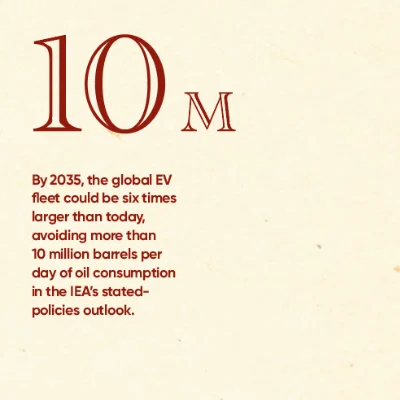
Road transport is serving as the primary catalyst for declining oil use. In 2025 alone, vehicle electrification and efficiency gains displaced roughly 3.2 million barrels per day of liquid road fuel. According to the IEA’s Stated Policies Scenario (STEPS)—which models enacted policies alongside officially declared targets—global demand for coal and oil is projected to peak around 2030, with natural gas demand cresting by 2035. Even under assumptions where gas demand trickles upward into the 2030s, the model indicates that additional LNG output will trigger a massive 65-billion-cubic-metre market surplus.
The electrification wave is similarly rewriting Asia’s economic trajectory. A 2026 economic analysis published by TD Bank economists forecasts that total oil consumption across Asia will eventually flatten, driven by aggressive EV penetration and systemic shifts toward domestic, clean-power generation. For global crude markets, this receding demand signals the steady erosion of what has been the primary engine of fossil-fuel growth for the past twenty years.

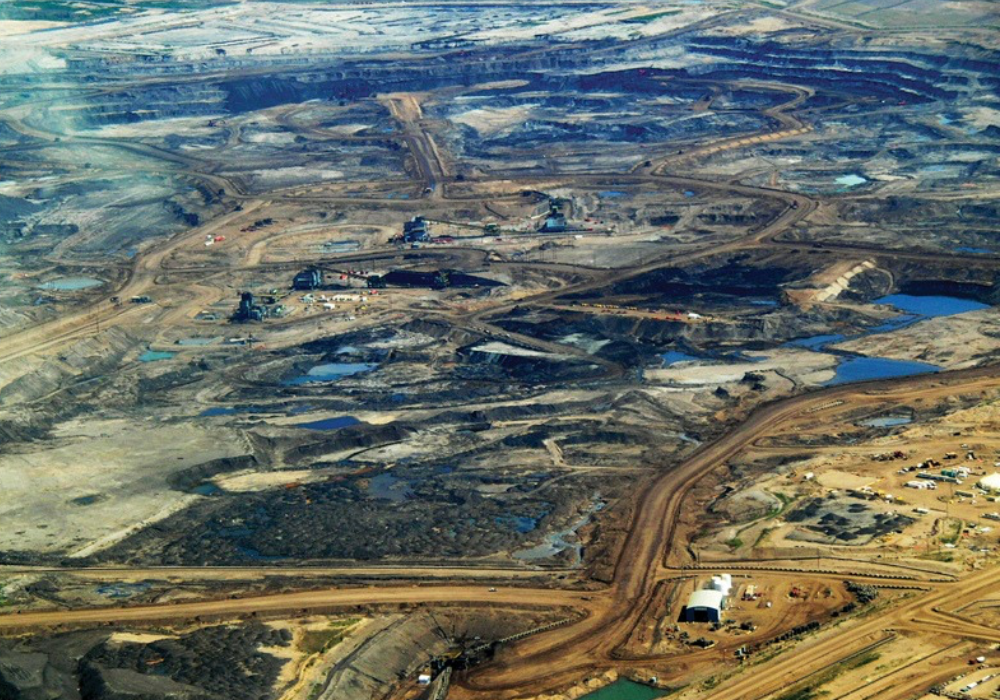
This shift presents distinct vulnerabilities for Canada, particularly for Alberta’s oil-sands sector. The province’s output consists heavily of bitumen, a heavy crude that requires highly specialized upgrading and refining infrastructure. While petrochemical applications and hard-to-electrify heavy industries will sustain baseline oil consumption, the market for refined transport fuels like gasoline and diesel is projected to contract precisely as Canadian producers scale up extraction.
The Pacific Link Pipeline Debate: Output Versus Market Reality
Against this backdrop of shifting demand, public and private stakeholders remain deeply divided over the necessity of major new export corridors. Central to this debate is the proposed Pacific Link pipeline, a massive infrastructure undertaking spanning 1,200 to 1,250 kilometers. Designated as a project of national interest, the pipeline is designed to transport up to one million barrels of crude oil daily from the Western Canada Sedimentary Basin—northeast of Edmonton—to the Roberts Bank Terminal on the coast of British Columbia, south of Vancouver.
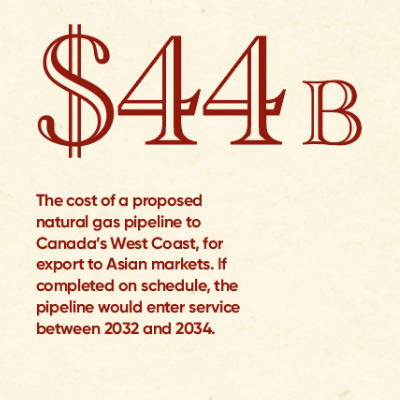
If constructed according to its proposed schedule, the pipeline would enter service between 2032 and 2034, operating for four to five decades. Its entire commercial viability rests on the assumption of sustained, robust demand for heavy Canadian crude well into the middle of the 21st century. Proponents, including Alberta Premier Danielle Smith, have championed the project as a critical vehicle for doubling the province’s oil production and securing direct access to growing Asian markets.
However, independent financial analysts warn that this financial calculation relies on outdated assumptions. In a comprehensive report by the Institute for Energy Economics and Financial Analysis (IEEFA), energy finance specialists Mark Kalegha and Will Scargill argue that because China is electrifying its transport sector significantly faster than the rest of the world, Canadian oil exporters are running headfirst into a closing window of opportunity.
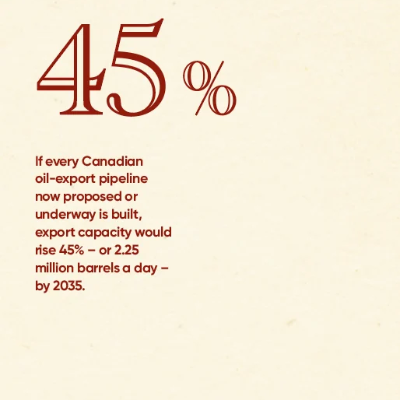
Furthermore, Reuters calculations indicate that if all currently proposed and active pipeline projects to the United States and Pacific export terminals are completed by 2035, Canadian export capacity will expand by 45 percent—adding 2.25 million barrels per day. Maximizing that expanded capacity would require domestic oil supply to surge by more than a third by 2034, demanding capital investments in major new oil-sands projects at a scale unseen in over a decade. Kalegha notes that even under an improbably high demand scenario, existing brownfield expansions within Canada offer sufficient logistical capacity to transport anticipated production without the need for entirely new greenfield megaprojects.
The Case for Spare Capacity and Energy Security
Despite these cautionary findings, proponents of pipeline expansion argue that infrastructure is about more than matching average daily production to average daily consumption—it is about managing systemic risk. Kevin Birn, chief analyst for Canadian oil markets at S&P Global, contends that spare pipeline capacity is a vital economic buffer.

"Western Canada will produce over five million barrels a day this year, and that is a staggering amount of oil," Birn noted in co-authoring a 2026 report titled Here We Are Again: Canada Needs More Pipeline Capacity alongside Celina Hwang. "When you have a system as large and complex as this, you introduce fragility. Any disruption in that system can cause the system to back up."
According to S&P Global data, Western Canada averaged 4.6 million barrels of exportable crude per day, with the vast majority flowing southward into the United States. As the U.S. market grows increasingly saturated with heavy Canadian crude, producers are actively seeking alternatives in Asia, where refiners possess the specialized tech required to process heavy bitumen. S&P forecasts that Western Canadian export supply could exceed 5.2 million barrels per day by 2030.
While critics point out that regional storage tanks can temporarily absorb supply gluts when pipelines reach capacity, Birn and Hwang caution that storage is merely a short-term bandage. Persistent surpluses inevitably fill storage facilities, widening the differential and forcing producers to sell Canadian crude at heavily discounted prices.

Public Capital, Private Hesitancy, and the Changing Nature of Global Energy
A notable aspect of the Pacific Link proposal is the conspicuous absence of private sector investment during its early planning stages. Despite federal assurances that private capital would anchor the development—and formal commitments outlined in a late-2025 federal-provincial memorandum of understanding—the project’s advancement has leaned heavily on public entities. The initiative is currently led by the federally owned Trans Mountain Corporation in partnership with the Alberta Petroleum Marketing Commission, with Calgary-based Pembina Pipeline holding a minor, non-binding 10 percent stake.
Industry analysts attribute this private-sector tepidness to lingering regulatory friction and shifting market fundamentals. S&P’s Birn suggests that private investors remain "skittish" regarding Canada’s regulatory environment and demand absolute commercial certainty, effectively forcing governments to underwrite high-risk capital projects.
Conversely, clean-energy think tanks like the Pembina Institute argue that private capital’s reluctance is a rational response to market signals. With total project cost estimates for the Pacific Link soaring as high as $44 billion, critics argue that if seasoned energy corporations view the venture as too financially precarious, taxpayers should not be left holding the financial risk. If pipeline tolls exceed the premium prices producers might secure overseas, the infrastructure could ultimately leave domestic extractors economically worse off.

This domestic debate unfolds against a backdrop of profound international realignment. Recent geopolitical shocks—such as conflicts in the Middle East and the periodic vulnerability of critical shipping bottlenecks like the Strait of Hormuz, which handles roughly 20 percent of global oil and gas supplies—have permanently altered how nations view energy security. Nations no longer view security purely through the lens of diversifying hydrocarbon suppliers; rather, dependence on traditional commodities is increasingly recognized as a strategic and economic vulnerability.
As international energy think tanks like Ember have observed, the global energy system is undergoing a foundational transition: shifting away from an extraction-based commodity model toward a manufacturing-led paradigm dominated by solar arrays, high-efficiency electric motors, and advanced battery production lines. Asia, leading the world in rapid electrification rates, is positioning itself at the vanguard of this new industrial economy.
For Canada, the coming decades will require disciplined capital allocation in an energy market defined by rising domestic electricity demand, the growing dominance of renewables, and tightening competition in fossil-fuel export markets. As the window of peak profitability for long-lived fossil fuel infrastructure begins to narrow, policymakers face the complex task of balancing immediate industry demands with the long-term economic realities of a rapidly decarbonizing global economy.