The landscape of modern finance has long been defined by an invisible wall. On one side sit institutional giants, hedge fund managers, and seasoned market veterans equipped with advanced algorithmic infrastructure, complex derivatives, and multi-venue routing capabilities. On the other side stands the everyday retail investor, traditionally relegated to buying basic equities or index funds through consumer-facing brokerages, often forced to watch sophisticated investment theses remain entirely out of reach due to technical complexity and execution barriers.
Published on October 8, 2026, a significant shift in retail financial technology is underway, spearheaded by a new platform called Catalyst. Co-founded by prodigies Dylan Iskandar and Justin Zheng, Catalyst aims to eradicate this disparity by deploying autonomous artificial intelligence agents designed to translate plain-language investment ideas into sophisticated, executable, and risk-managed trades. By shifting the paradigm from manual trade execution to intent-based investing, the platform represents a fundamental leap forward in how everyday individuals interact with global financial markets.
The Everyday Investment Paradox and the Complexity Gap
To understand the core problem Catalyst solves, one must look at the disconnect between how people form economic insights and how they execute them. Consider a typical consumer observing real-world phenomena: noticing that the price of a morning coffee is steadily climbing, reading global agricultural reports indicating a severe dry season in Brazil, and deducing that coffee futures or related equities are poised for long-term appreciation.
For an elite market participant like Warren Buffett, translating this thesis into an actionable trade is second nature. A veteran investor knows precisely which asset classes and derivative instruments to deploy, how to leverage positions cost-effectively, and what precise triggers should initiate a trade—whether that trigger is an official crop yield estimate or a specific millimeter threshold of rainfall in the Minas Gerais region. Furthermore, institutions possess the backend infrastructure to programmatically execute these complex, multi-legged strategies across disparate global exchanges.
For the average retail investor, however, attempting to operationalize the exact same thesis is an exercise in frustration. Navigating online brokerages rarely yields the necessary derivatives or leverage tools required for commodity hedging. Even if the instruments are available, the execution mechanics—such as setting up conditional orders based on meteorological data or managing risk parameters—are daunting. Consequently, retail traders are usually left with two sub-optimal choices: pay steep fees to a professional wealth manager or purchase standard shares in a major coffee conglomerate and hope for the best.
Catalyst seeks to eliminate this friction entirely. By allowing users to articulate their financial thesis in natural, conversational language, the platform’s underlying AI agents take over the heavy lifting. These agents gather real-time market signals, identify optimal execution pathways across various financial venues, and assist users in backtesting and deploying their strategies. Crucially, the system builds in clear limits and safety controls, enabling users to begin with pure intent rather than getting bogged down in the complex plumbing of modern financial markets.
The Genesis of Catalyst: Bridging AI Capability and Financial Literacy
The realization that retail investing had stagnated prompted Dylan Iskandar and Justin Zheng to join forces. While consumer financial technology had evolved rapidly over the past two decades—migrating first from the telephone to desktop web browsers, and finally to mobile applications—these milestones largely focused on user interface improvements rather than expanding analytical power. Expanded access to basic trading apps did little to help ordinary users trade richer, multi-faceted investment ideas with institutional-grade confidence.
This divergence became glaringly apparent as artificial intelligence achieved unprecedented milestones in other sectors. Modern AI models are now capable of writing complex software applications from scratch, solving advanced mathematical theorems, and powering high-frequency algorithmic trading desks. Yet, for the vast majority of the population, personal finance remained a manual, do-it-yourself endeavor plagued by steep learning curves and cognitive overload.
Building a solution to this problem required bridging two radically different worlds: advanced trading systems engineering and consumer-facing financial education. Iskandar and Zheng recognized that an AI-driven trading platform could not simply act as a "black box" that executes trades without user comprehension. For Catalyst to succeed, it needed to act as an intelligent financial partner—asking clarifying questions, providing transparent feedback, and systematically building user trust at every stage of the investment lifecycle.

An Exceptional Pedigree: The Team Behind Catalyst
The complexity of orchestrating multi-venue trades while ensuring regulatory compliance, safety, and user comprehension demanded a uniquely talented founding team. Iskandar and Zheng assembled a roster of high achievers whose backgrounds span elite quantitative trading firms, deep-tech research institutions, and cybersecurity operations.
Dylan Iskandar’s background reads like a technological odyssey. Recognized globally as a classical pianist by the age of four, he spent his high school years conducting sophisticated cybersecurity research for the United States Department of Defense. He later arrived at Stanford University as a prestigious Jane Street scholar before ultimately leaving his studies to build Catalyst.
Co-founder Justin Zheng boasts an equally impressive trajectory. He successfully raised his first venture capital seed round at just 16 years old, earned a Pioneer grant for groundbreaking work in biometrics and cryptographic synthesis, and made history as the youngest-ever two-time fellow at the IDEO CoLab.
Surrounding the co-founders is a deeply talent-dense team featuring engineering alumni and technical leads from elite quantitative trading and tech powerhouses, including Citadel, Citadel Securities, Hudson River Trading, Jump Trading, Palantir, and Scale AI. This concentration of institutional trading and machine learning expertise ensures that Catalyst’s infrastructure is built to withstand the rigorous demands of global financial markets while maintaining a steadfast commitment to responsible financial innovation.
Chronology and Early Market Reception
The official public launch of Catalyst on October 8, 2026, marked the culmination of intensive development, testing, and infrastructure scaling. Following the public introduction of its AI agents, early industry response has been overwhelmingly positive.
Early adopters and beta testers have praised the platform for fundamentally changing how they approach portfolio management. Industry observers and retail users alike have described the interface as "unparalleled" and noted that the user experience bridges the gap between institutional sophistication and consumer accessibility.
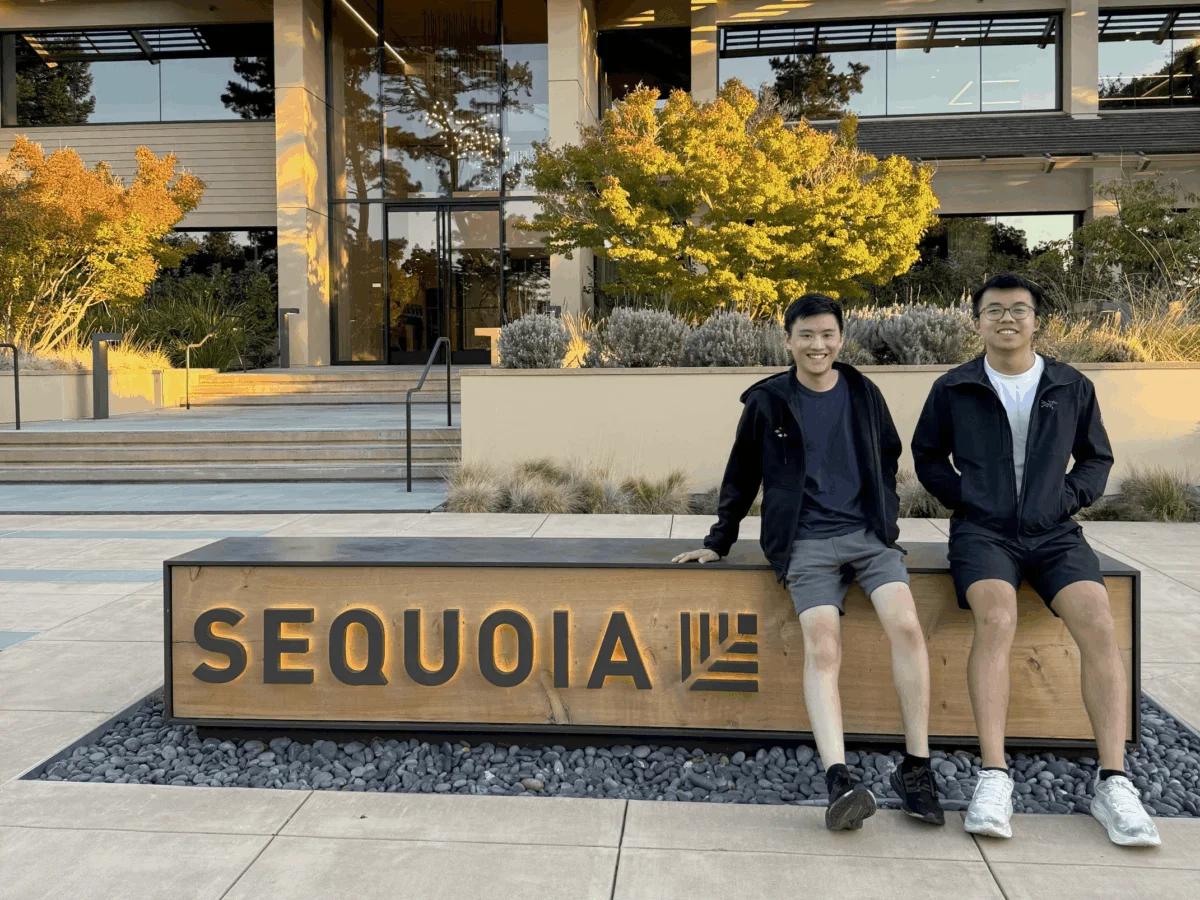
Recognizing the immense potential of the platform, venture capital partners moved swiftly to secure an early stake. Industry leaders led Catalyst’s seed round, positioning themselves alongside a founding team determined to redefine the boundaries of consumer fintech.
Broader Implications and the Future of Agentic Finance
As the broader financial services industry works to catch up with the rapid proliferation of autonomous agents, the ambitions of Catalyst extend far beyond simple trade execution. Iskandar and Zheng are setting their sights on building the universal orchestration layer for turning financial ideas into reality.
The implications of this shift are profound. In a traditional financial ecosystem, democratization has often been conflated with the removal of trading commissions or the simplification of mobile app interfaces. However, true democratization requires democratizing sophistication. By empowering retail investors to deploy complex, data-driven strategies via natural language processing, AI-driven platforms like Catalyst are breaking down the historical barriers that separated Main Street from Wall Street.
As autonomous agents become more deeply integrated into daily financial decision-making, regulatory frameworks, risk management protocols, and consumer expectations will inevitably evolve. While challenges remain regarding oversight, systemic risk, and algorithmic transparency, the launch of Catalyst signals the dawn of a new era—one where financial markets are driven less by the technical barriers of execution and more by the creativity and intent of the individual investor.