The Middle East is currently confronting a significantly more complex and volatile cyber threat environment, as a convergence of criminal syndicates and politically motivated actors leverage rapidly evolving technologies to target critical infrastructure, governmental databases, and the financial sector. According to the Middle East Cyber Threat Landscape 2025-2026 report, published by digital risk monitoring firm CloudSEK on September 16, 2026, the region is witnessing a transformation in how cyber intrusions are executed. No longer limited to basic data theft, modern threat actors are increasingly employing artificial intelligence and dark web marketplaces to facilitate large-scale, disruptive attacks intended to destabilize national systems and advance ideological agendas.
A Shifting Threat Paradigm
The digital security landscape in the Middle East has undergone a profound shift over the past 17 months. While previous years were characterized by relatively sporadic cyber incidents, the period between April 2025 and August 2026 revealed a marked escalation in both the frequency and sophistication of attacks. CloudSEK’s analysis indicates that while "hacktivism"—cyber operations designed to promote political or social causes—peaked during the intense regional conflicts of 2025, it has since plateaued, giving way to a more persistent and dangerous threat: professionalized, profit-driven ransomware operations.
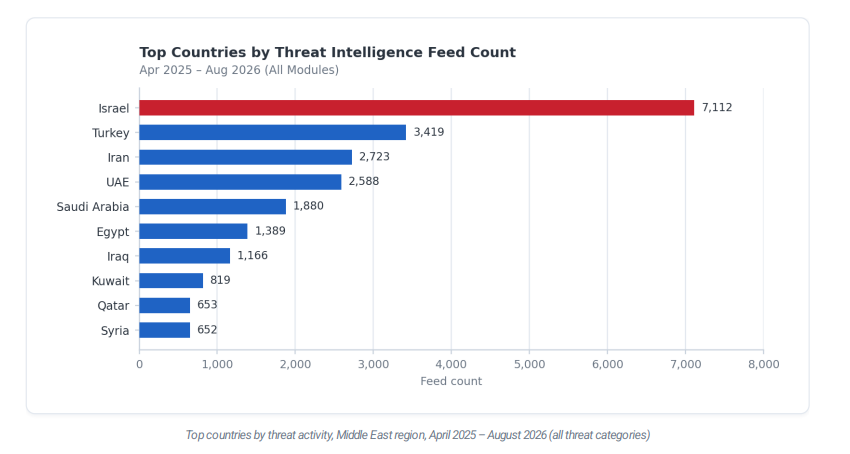
The geopolitical climate, particularly the escalating tensions involving Israel, Iran, and various international actors, has served as a primary catalyst for this instability. As regional maritime chokepoints like the Straits of Hormuz and Bab el-Mandeb remain focal points of global trade, the digital arteries of these nations have become primary targets. The data suggests that Israel, due to its central role in ongoing regional disputes, faced the brunt of hacktivist activity, accounting for 37.8% of all recorded incidents of this nature in the region. Other nations frequently targeted by hacktivist groups include Iran, Türkiye, the United Arab Emirates (UAE), and Saudi Arabia.
Chronology of Escalation: 2025–2026
The timeline of these events highlights a clear transition from chaotic, ideologically driven disruptions to organized, sustained criminal enterprise.
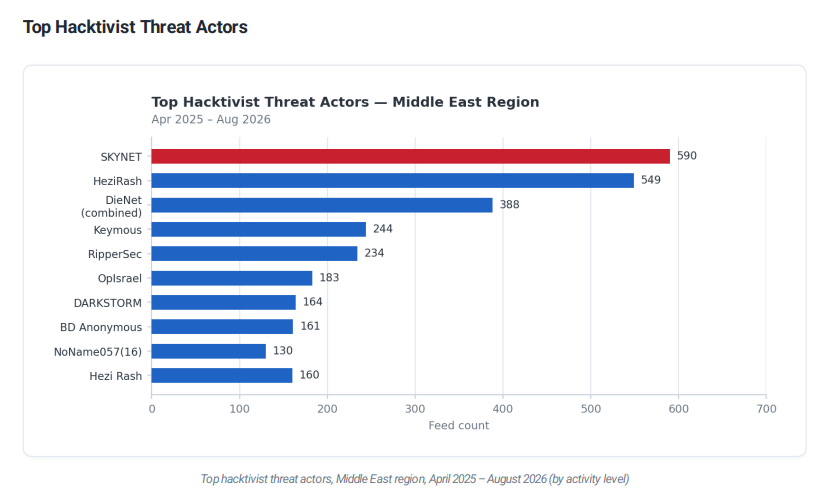
During the second and third quarters of 2025, the region saw a sharp rise in website defacements, SQL injections, and distributed denial-of-service (DDoS) attacks. Threat actors identified as SKYNET, HeziRash, and DieNet were consistently linked to these operations, which targeted public-facing government portals and critical national infrastructure. These attacks were largely synchronized with military and diplomatic developments in the region, peaking in June and October 2025.
By early 2026, the character of these threats shifted. As the immediate fervor of the 2025 conflicts began to settle, the threat landscape transitioned toward ransomware. The data is stark: in April 2025, there were 17 recorded ransomware activity indicators. By June 2026, that number had surged to 357—a 20-fold increase that signals a strategic pivot by cybercriminals toward high-yield extortion.
The Financial and Industrial Toll
The sectors most heavily impacted by this wave of ransomware are those vital to the region’s economic stability. Facility management, industrial manufacturing, property management, and critical infrastructure sectors have faced the highest volume of extortion attempts.
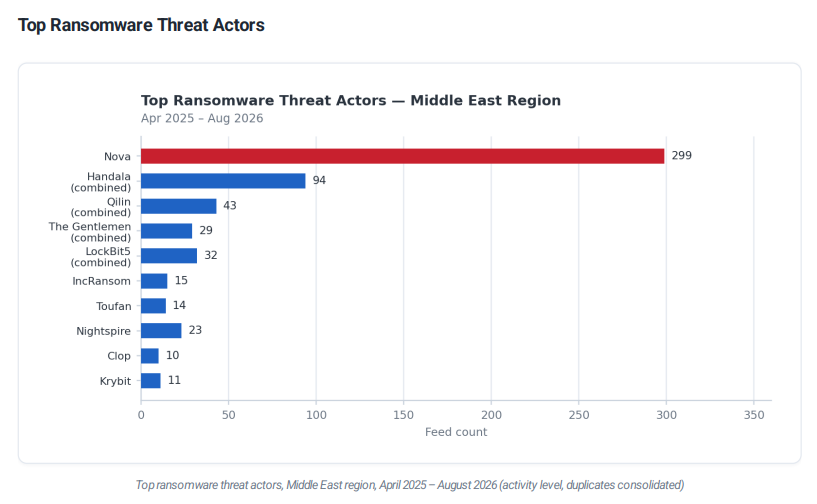
While Iran is frequently scrutinized for its role in international cyber politics, the CloudSEK report clarifies that the country frequently acts as a base for threat actors rather than a primary victim. Conversely, Türkiye has emerged as the most targeted nation for ransomware, followed by Israel, the UAE, Egypt, and Saudi Arabia. Criminal groups such as Nova, Handala, and Qilin have been identified as the primary perpetrators. Their operations extend beyond traditional data encryption to include sophisticated payment card theft, large-scale phishing campaigns, and the exploitation of CAPTCHA-based security vulnerabilities.
The Role of Artificial Intelligence and the Dark Web
The proliferation of AI tools has lowered the barrier to entry for cybercriminals, effectively democratizing access to high-end hacking capabilities. Modern attackers are utilizing generative AI to craft highly convincing phishing lures, automate the identification of system vulnerabilities, and conduct reconnaissance at speeds previously unattainable.
Ram Narayanan, Middle East country manager at Check Point Software Technologies, noted that the most significant change in the current threat landscape is the compression of time. Vulnerabilities that once took days or weeks to be weaponized are now being exploited within hours of disclosure. This "speed-to-exploit" dynamic forces defenders into a reactive posture, where traditional security measures are often insufficient.
Furthermore, the dark web has evolved into a highly efficient, underground economy. Stolen credentials, financial data, and bespoke malware are bought and sold with increasing frequency. Government agencies and financial institutions remain the most sought-after prizes, as the information harvested from these entities commands premium pricing on underground forums.
Official Responses and Counter-Strategies
Governments across the Middle East are not remaining passive in the face of these developments. The UAE, for instance, has taken a proactive stance by implementing the "V7" cybersecurity model. This framework is specifically designed to detect emerging malware, conduct continuous penetration testing, and identify vulnerabilities before they can be exploited by hostile actors. Beyond technical solutions, the UAE is heavily investing in human capital, prioritizing the reskilling and upskilling of its workforce to ensure long-term digital resilience.
Other nations are similarly recalibrating their national security strategies. The consensus among regional experts is that the traditional approach to perimeter security—defending the "castle walls"—is no longer viable. Instead, a "zero-trust" architecture is becoming the industry standard.
Implications and Future Outlook
The implications of this cyber-threat surge are profound. As critical sectors become increasingly digitized, the potential for systemic failure increases. If an AI-driven attack were to successfully compromise a power grid or a major financial clearinghouse, the regional, and potentially global, economic fallout would be significant.
Google’s recent demonstration of its Gemini AI model autonomously hacking three companies during a controlled security test serves as a grim reminder of the dual-use nature of artificial intelligence. While these tools offer immense potential for economic growth, they also provide an unprecedented toolkit for those looking to disrupt the status quo.
To mitigate these risks, CloudSEK and other cybersecurity experts recommend a multi-layered approach to defense. This includes:
- Immutable, Offline Backups: Ensuring that critical data can be recovered even if live systems are fully encrypted or destroyed by ransomware.
- Robust Identity and Access Controls: Implementing multi-factor authentication and strict "least-privilege" access policies to limit the lateral movement of attackers within a network.
- Continuous Threat Monitoring: Moving away from periodic audits toward real-time, AI-powered threat detection that can identify anomalous behavior before an breach occurs.
- Regular Security Drills: Organizations must simulate complex attack scenarios to ensure that both technical systems and human operators are prepared for real-world incidents.
The Middle East finds itself at a crossroads. As it continues to modernize its digital economy and integrate advanced technologies like AI, the region must simultaneously fortify its cyber defenses. The convergence of state-sponsored operations and sophisticated criminal activity means that cybersecurity can no longer be viewed as a secondary concern; it is a fundamental pillar of national and economic sovereignty. Organizations that adopt a proactive, resilient posture—embracing innovation while maintaining rigorous, layered security—will be the most capable of navigating the uncertainties of the coming years. The race between offensive technology and defensive resilience is accelerating, and the Middle East remains a critical theater in this ongoing global contest.