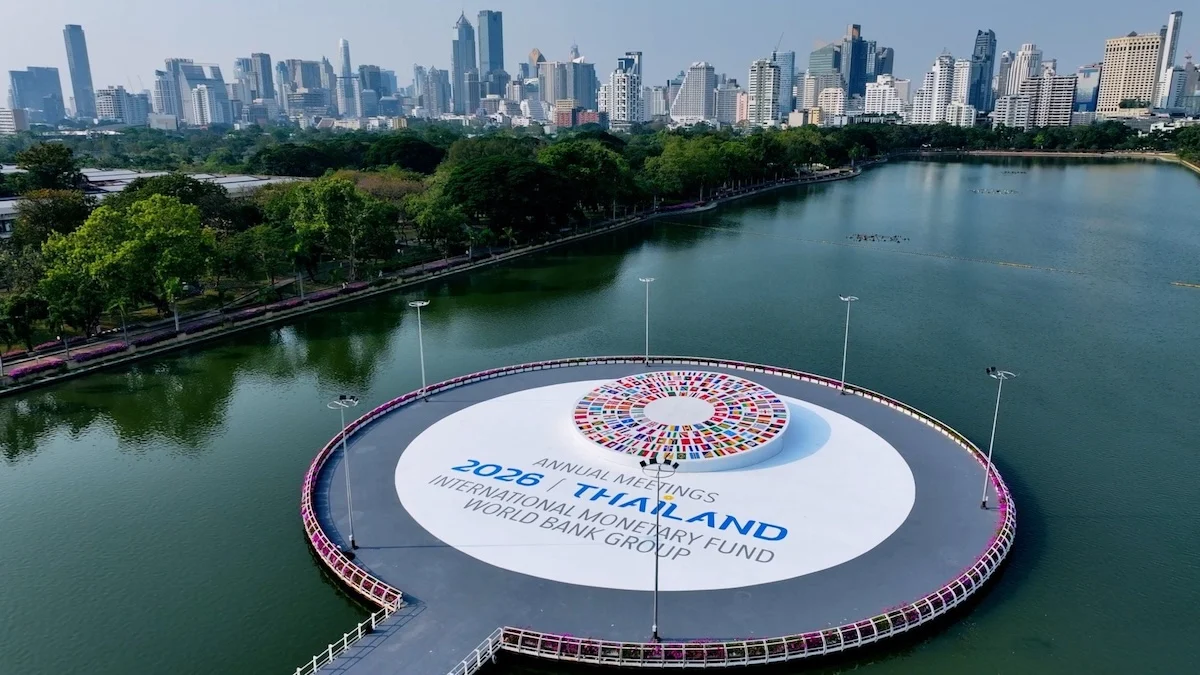
The annual gathering of the World Bank Group and the International Monetary Fund (IMF), held last week in Bangkok, Thailand, served as a stark reminder of the accelerating climate crisis as delegates navigated a host city actively recovering from major urban flooding. This tangible backdrop set a distinctly urgent tone for the proceedings, departing markedly from the atmosphere of the traditional spring meetings held in Washington, D.C. Against a landscape defined by tightening fiscal constraints, geopolitical fragmentation, and mounting climate vulnerabilities, leaders across the global financial architecture convened to recalibrate their strategies. The central mandate of the week was clear: multilateral development banks (MDBs) and development finance institutions (DFIs) must urgently mobilize private capital at an unprecedented scale to finance climate resilience and sustainable infrastructure in the Global South.
The Evolving Landscape of Development Finance: Main Facts and Context
The past several years have presented severe headwinds for international development finance. Across major donor nations, domestic budget cuts and a pivot toward insular national priorities have strained multilateral cooperation. Traditional development agendas have frequently taken a backseat to domestic economic pressures and geopolitical rivalries. Yet, the Bangkok meetings revealed a surprising undercurrent of renewed optimism and strategic clarity among DFI and MDB leadership. Rather than retreating in the face of fiscal scarcity, the international development community has begun deploying concrete, highly collaborative models designed to withstand a more volatile geopolitical and economic environment.
This new strategic direction is anchored in mutual reliance, resource pooling, and the replication of successful financial innovations. Rather than operating in isolated silos, DFIs are forging tighter alliances with both regional financial institutions and local market participants. The overarching objective is to construct robust financial platforms that can systematically absorb risks and channel capital into critical sectors across emerging markets.
Chronology of Recent Collaborative Milestones
The momentum observed in Bangkok is not theoretical; it builds upon a series of significant financial transactions and partnerships forged over the past year.
Earlier this year, British International Investment (BII) anchored the $1 billion Allianz ACE fund, marking a major step forward in crowding-in institutional capital. BII also played a foundational role in launching the Financing Asia’s Transition Partnership (FAST-P) blended finance initiative based in Singapore, which carries an ambitious mandate to mobilize $5 billion in private capital for Southeast Asian economies.
Concurrently, European development finance institutions have expanded their geographic reach. Proparco, the private sector financing arm of Agence Française de Développement, recently signed a landmark €200 million financing agreement with the West African Development Bank (BOAD). This instrument is structured as an innovative cross-currency transaction bridging the euro and the CFA franc, mitigating foreign exchange risks that frequently deter foreign investment in the region.
In Latin America, a coalition comprising Proparco, DEG of Germany, and FMO of the Netherlands finalized a $300 million syndicated senior unsecured loan facility for Guatemala’s Banco Industrial. This facility is specifically earmarked for local corporate lending toward renewable energy generation, green building development, and sustainable transport infrastructure. Furthermore, European DFIs were instrumental in establishing a $3 billion trade finance partnership with pan-African banking group Ecobank, designed to maintain liquidity and supply chain resilience across the continent.
Demonstrating that this collaborative momentum extends directly into institutional operations, FMO and BII signed a formal Memorandum of Understanding (MoU) during the Bangkok meetings. The agreement commits both institutions to deepening cooperation across responsible investing frameworks, environmental and social governance (ESG) standards, legal workflows, and targeted sectoral investments. By sharing specialized expertise and implementing proportionate, risk-based methodologies, these institutions aim to reduce transaction bottlenecks and streamline co-financing pathways for emerging market economies.
Leveraging Technological Innovation: The Rise of Small AI
Beyond traditional balance sheet restructuring and syndication, the Bangkok meetings placed significant emphasis on the transformative potential of emerging technologies. Paschal Donohoe, the World Bank’s chief knowledge officer, addressed the dual-edged sword of artificial intelligence during panel discussions, cautioning against the systemic risks associated with unchecked digital expansion while championing the targeted application of "small AI" in developing economies.
While contemporary technological discourse frequently focuses on massive large language models (LLMs) and sprawling data centers demanding hundreds of billions of dollars in capital expenditure, Donohoe highlighted a different paradigm for the Global South. Small AI encompasses scalable, affordable applications tailored for localized utility—such as a mobile application utilized by a smallholder farmer in Zambia to optimize crop yields and manage water resources efficiently. These tools require minimal digital infrastructure, operate under constrained connectivity conditions, and function seamlessly in local dialects.
From a DFI perspective, these insights necessitate a strategic pivot in digital infrastructure investment. To fully capitalize on the AI revolution, development banks must redouble their commitments to reliable energy grids and broadband connectivity in developing regions. Observers note that if traditional economic development has historically been measured in incremental, decades-long gains, the integration of targeted, AI-powered solutions has the potential to compress development timelines into years.
Simplifying Frameworks to Unlock Institutional Capital
The dominant theme echoing through every formal session and corridor conversation in Bangkok was the absolute necessity of mobilizing private capital at an unprecedented velocity. VCs, global insurance underwriters, massive pension funds, and sovereign wealth funds are increasingly sitting at the same negotiating tables as public development bankers. However, these institutional investors share a uniform set of demands regarding public-private partnerships.
Institutional asset managers have called upon DFIs to radically simplify their notoriously complex investment frameworks. Prospective investors are pressing for aligned impact measurement metrics, standardized deal structures, harmonized compliance policies, and larger transaction sizes that can meaningfully absorb institutional liquidity. Industry leaders have acknowledged that the DFI community can no longer afford to spend up to two years negotiating the minute details of individual bespoke deal structures.
To meet this challenge, six major multilateral development banks announced collaborative efforts in Bangkok to standardize and package investment assets specifically for institutional buyers like pension funds and insurance companies. The strategic goal is twofold: to generate a reliable supply of standardized, investable assets, and to improve portfolio liquidity. By expanding secondary markets for development finance assets, MDBs can effectively recycle their existing balance sheets, freeing up vital capital for new origination without requiring immediate capitalization increases from sovereign shareholders.
Crucially, DFIs are being urged to maximize their risk-mitigation instruments—particularly guarantees and risk-transfer mechanisms. By absorbing first-loss tranches and political risks, development banks can create secure pathways for fiduciary-bound institutional investors to allocate capital into emerging markets that they were previously unable to enter. Furthermore, discussions centered on the aggregation of smaller, fragmented regional projects into diversified, investable portfolios, thereby reducing transaction costs and accelerating execution timelines.
Broader Impact and Implications for the Global Economy
The 2024 World Bank Annual Meetings in Bangkok underscored a fundamental evolution in how the international community approaches economic development and climate finance. As Leslie Maasdorp, CEO of BII, observed following the conclusion of the summit, the world of development finance is operating at an accelerated pace, forcing institutions to adapt or risk obsolescence.
The implications of the Bangkok agreements extend far beyond bureaucratic realignment. By prioritizing standardization, cross-institutional cooperation, and technological integration, development finance institutions are attempting to bridge an investment gap that currently runs into the trillions of dollars annually. If successful, the collaborative frameworks established between European, African, Asian, and Latin American financial institutions could permanently alter the risk profile of emerging markets, transforming climate-vulnerable regions into attractive destinations for global private capital. However, the ultimate success of these initiatives will depend entirely on the speed with which MDBs and DFIs can dismantle internal redundancies, harmonize their regulatory standards, and deliver concrete financial instruments capable of meeting the urgency of the climate crisis.