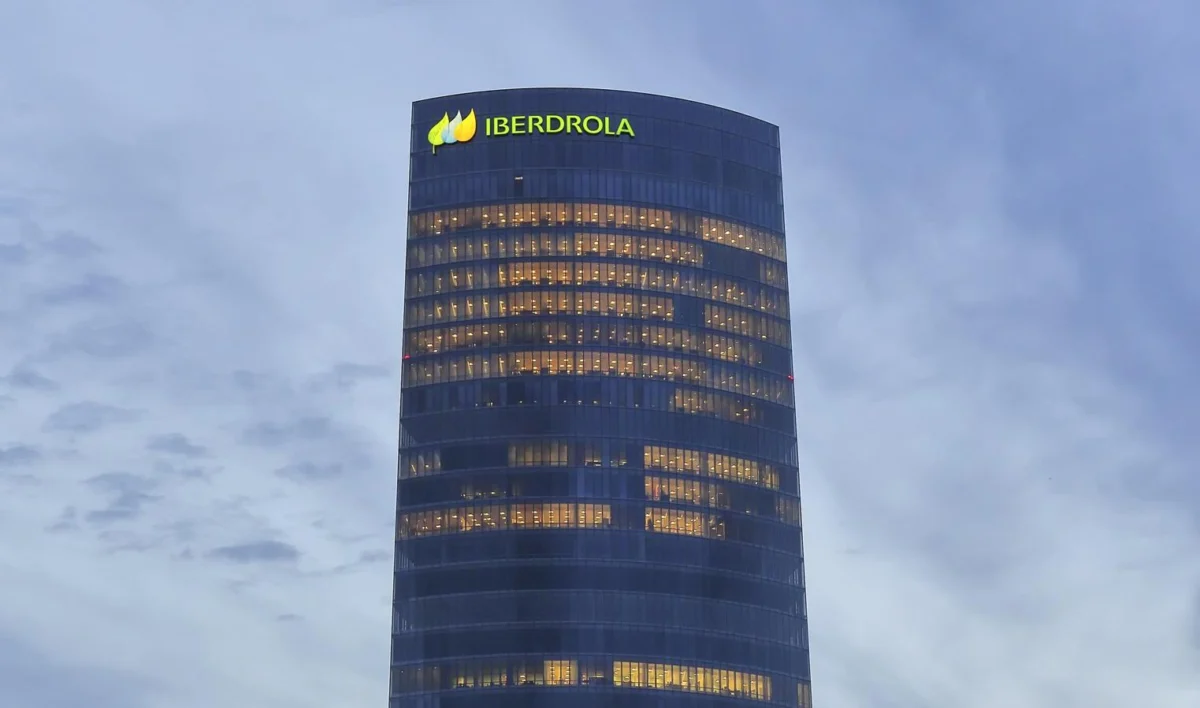
Spanish multinational energy giant Iberdrola has officially re-entered the United States debt market, securing $1.6 billion through a significant green bond issuance. This strategic move, which marks the company’s first direct dollar-denominated issuance in the U.S. since 2009, signals a major shift in the utility’s long-term capital allocation strategy. The proceeds are earmarked for the development and expansion of critical electricity network assets, with a specific focus on transmission infrastructure and renewable energy facilities, reinforcing the company’s commitment to the global energy transition.
The transaction, which closed in late October 2026, was structured in two equal tranches of $800 million. The first tranche consists of a 3-year bond maturing in November 2029, carrying a coupon rate of 5.40%, while the second tranche is a 7-year instrument featuring a 5.85% coupon. Market analysts have noted that the final pricing achieved by Iberdrola was highly competitive, matching the cost of capital the firm could have secured through the established Euromarket, thereby validating the company’s decision to tap into U.S. liquidity.
Strategic Market Re-entry and Financial Diversification
Iberdrola’s return to the U.S. capital markets serves as a milestone in its broader financial diversification strategy. For years, the company has leaned heavily on European credit markets, but the sheer scale of its U.S. investment pipeline—projected at roughly $5 billion annually over the coming years—necessitated a more localized financing approach. By accessing U.S. debt, Iberdrola effectively hedges against currency fluctuations and taps into a deep, diverse investor base specifically interested in ESG-compliant assets.
The demand for the issuance was overwhelming, with the order book exceeding $5 billion, reflecting a subscription rate of more than three times the offered amount. Financial market experts attribute this enthusiasm not only to Iberdrola’s strong credit rating but also to the "green" designation of the bonds. As institutional investors globally continue to shift their portfolios toward sustainable assets, the demand for high-quality, project-backed green debt has consistently outpaced supply, a trend that Iberdrola has successfully capitalized on for nearly two decades.
A Legacy of Sustainable Finance
Iberdrola has long positioned itself as a global pioneer in the sustainable finance sector. Since the issuance of its first green bond, the company has utilized these instruments as a cornerstone of its corporate strategy. The company’s commitment to sustainable finance has evolved from a niche funding mechanism to a core business philosophy.
In 2021, Iberdrola announced a sweeping overhaul of its financial architecture, setting ambitious targets to ensure an increasing percentage of its debt portfolio comprised green and sustainable products. The results of this pivot have been profound. By the end of 2025, the company reported that 99% of its total signed financing was categorized as sustainable. At that time, the group’s total outstanding sustainable financing exceeded €66 billion, a figure that stands as a testament to the scale of its green ambitions.
This latest issuance is not merely an isolated financial event but a continuation of a trajectory that began nearly twenty years ago. The company’s ability to consistently access low-cost capital for clean energy projects has allowed it to maintain one of the most robust renewable energy portfolios in the world.
The Logic Behind the Infrastructure Investment
The funds raised through this $1.6 billion issuance will be deployed to address one of the most pressing challenges in the energy sector: grid modernization. As the United States accelerates its transition to intermittent renewable sources like wind and solar, the existing electricity network faces unprecedented strain.
Iberdrola’s focus on transmission assets is strategic. Without upgraded transmission lines, renewable energy generated in remote, wind-rich, or sun-drenched regions cannot be effectively transported to urban centers where demand is highest. By investing heavily in these network assets, Iberdrola is essentially building the "backbone" of the modern, decarbonized grid.

The decision to allocate these funds specifically in the U.S. reflects the company’s long-term belief in the resilience of the North American energy market. With federal and state-level incentives providing a tailwind for clean energy adoption, Iberdrola’s $5 billion annual investment commitment is designed to capture market share while simultaneously meeting the rigorous ESG requirements demanded by its shareholders and lenders.
Market Implications and Future Outlook
The success of this bond issuance provides a blueprint for other multinational utilities looking to expand their presence in the U.S. market. As interest rates fluctuate and global economic conditions shift, the ability to pivot between regional credit markets is becoming an essential competitive advantage.
For institutional investors, the oversubscription of this issuance suggests that the "green premium"—often referred to as "greenium"—remains a powerful force in the bond market. Investors are increasingly willing to accept slightly lower yields in exchange for the transparency and climate-positive outcomes associated with green bonds. Iberdrola’s ability to attract such significant demand indicates that the market views its U.S. operations as a low-risk, high-impact investment.
Furthermore, the alignment of this issuance with the U.S. regulatory environment, which is currently undergoing a period of significant investment in energy infrastructure, suggests that Iberdrola is well-positioned to benefit from long-term policy support. The transmission projects funded by this debt will likely form the foundation for future renewable capacity additions, creating a virtuous cycle of investment and growth.
A Chronology of Iberdrola’s Financial Evolution
- 2009: Iberdrola executes its last major direct dollar-denominated debt issuance in the United States, focusing on regional infrastructure development.
- 2014: The company accelerates its transition toward a fully renewable generation model, beginning a decade-long push into wind and solar energy production.
- 2021: Iberdrola formalizes its sustainable finance framework, announcing that future debt issuance would be almost exclusively tied to green and sustainable KPIs.
- 2025: The group achieves a milestone where 99% of its total financing is sustainable, with total sustainable debt surpassing €66 billion.
- October 2026: Iberdrola returns to the U.S. debt market with a $1.6 billion dual-tranche green bond issuance, attracting over $5 billion in investor demand.
Expert Analysis: The Role of Utility Companies in the Energy Transition
Energy analysts argue that the responsibility for the energy transition rests heavily on the shoulders of large-scale utility providers like Iberdrola. Unlike smaller renewable developers that may lack the balance sheet to undertake large-scale grid upgrades, major utilities possess the financial depth required to manage the massive capital expenditure necessary for systemic change.

The move to raise $1.6 billion in the U.S. is a clear indication that Iberdrola intends to be a dominant player in the American energy landscape. By focusing on transmission, they are addressing the most significant bottleneck in the industry. As the U.S. grid becomes more decentralized, the role of reliable, experienced grid operators becomes paramount.
Moreover, the transparency provided by the "green bond" framework is critical for investor trust. By strictly earmarking these funds for specific renewable and transmission projects, Iberdrola provides its investors with clear evidence of impact. This level of reporting is increasingly required by regulatory bodies and institutional asset managers alike.
Looking Ahead
As Iberdrola moves forward with its $5 billion annual investment plan, the market will be watching closely to see how the company balances its European and American portfolios. The successful $1.6 billion issuance has provided a much-needed injection of capital that will allow the company to accelerate its current project pipeline.
With global climate goals becoming more urgent, the financial sector’s role in funding the energy transition has never been more important. Iberdrola’s return to the U.S. debt market is not just a successful financial transaction; it is a signal to the broader energy sector that sustainable finance is now the dominant, rather than the alternative, method for funding the infrastructure of the future. As the company continues to execute its strategy, it will likely remain a benchmark for how multinational corporations can effectively integrate ESG goals with robust financial performance.