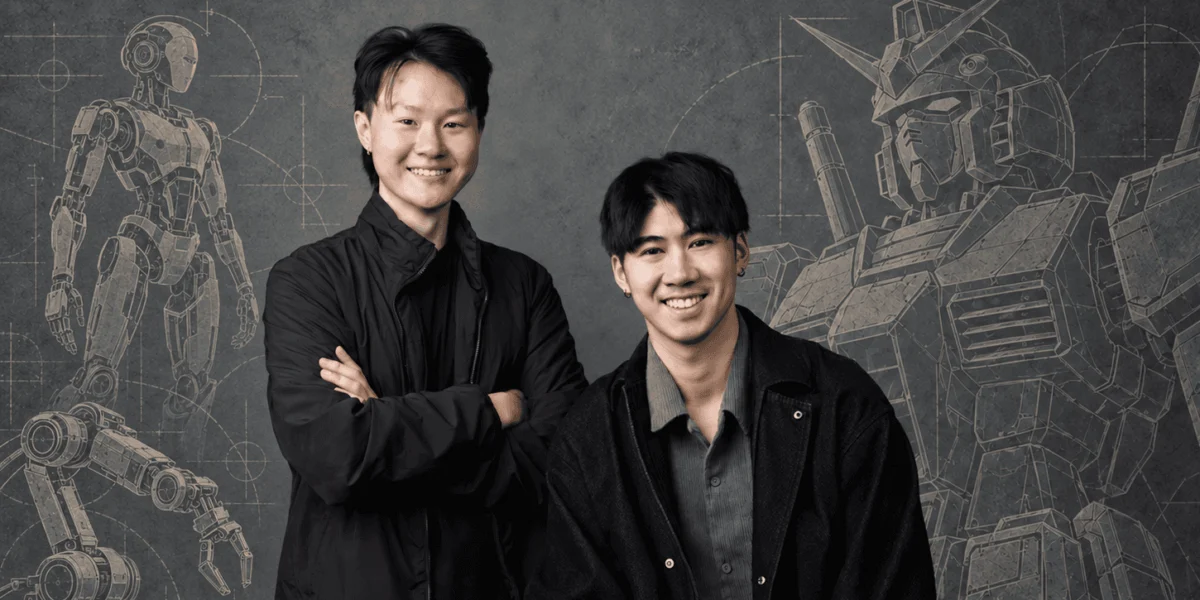
The artificial intelligence landscape is undergoing a profound structural evolution, shifting its primary focus from digital environments to the complexities of the physical world. While large language models and generative AI systems have dominated technological headlines over the past several years, exponential capital expenditure on digital compute and data continues to rise without plateauing. Industry leaders note that the transition of AI into robotics, autonomous systems, and embodied intelligence represents a paradigm shift of an even greater magnitude. However, realizing the promise of physical Artificial General Intelligence (AGI) requires overcoming unprecedented infrastructure hurdles. Enter Mecka AI, a specialized startup co-founded by Josh and Jason, which has officially emerged from stealth with a comprehensive platform designed to provide the critical training data, reinforcement learning pipelines, and deployment frameworks necessary for modern robotics.
The announcement comes alongside a major financial backing syndicate that highlights the strategic importance of Mecka’s mission. The funding round attracted prominent venture capital firms alongside industry giants including NVIDIA, Samsung, Microsoft, and Qualcomm. Furthermore, the capitalization effort drew high-profile individual investors and seasoned operators who have previously scaled some of the defining technology companies of the modern era. Among these strategic backers are Tony Xu, founder and chief executive officer of DoorDash; Frank Slootman, former chief executive officer of ServiceNow and Snowflake; Milan Kovac, former head of the Optimus humanoid robotics program at Tesla; Christopher Payne, former president and chief operating officer of DoorDash; and Jonathan Chadwick, former chief operating officer and chief financial officer of VMware and current board member at Databricks. This cross-sector alignment of hardware, software, and logistics expertise underscores the severe bottleneck that data collection and operational scaling present to the contemporary robotics industry.
The Fundamental Bottlenecks of Physical AI
To contextualize the monumental challenge Mecka AI is attempting to solve, industry analysts point to the fundamental divergence between digital AI and physical AI. When researchers began pretraining foundational language models, they benefited from decades of digitized human thought, historical archives, and textual data already accumulated across the open internet. This ready-made corpus provided a seamless foundation for digital cognition.
In stark contrast, the physical world possesses no comparable, pre-aggregated repository of spatial kinematics, tactile feedback, complex motor skills, and environmental interactions. Robots cannot simply ingest a static database to learn how to navigate a cluttered warehouse, fold laundry, or delicately manipulate objects in a bustling manufacturing plant. That physical experience must be actively captured, structured, and curated before a machine learning model can extract meaningful insights from it.
Furthermore, once a model transitions from pretraining to reinforcement learning and operational deployment, the operational environments diverge sharply. Digital AI primarily operates within clean, standardized, and highly scalable cloud architectures. Physical AI, however, must function within the noisy, unpredictable, and operationally chaotic reality of the physical world. It operates in the field—on factory floors, inside hospital corridors, and along public infrastructure—where variables are infinite and edge cases are guaranteed. Building physical AGI therefore requires the concurrent development of both a sophisticated cognitive architecture—the "brain"—and a robust operational infrastructure—the "body." The brain demands vast streams of uncollected data, while the body requires extensive, coordinated physical labor on the ground.
The Mecka AI Strategy: Scaling the Five Disciplines of Embodied Intelligence
Recognizing these systemic challenges, the Mecka AI team has engineered a vertically integrated platform specifically tailored to assist physical AI laboratories, robotics manufacturers, and enterprise adopters in reaching physical AGI. Delivering on this ambitious mandate requires the simultaneous mastery of multiple operational disciplines at scale.
According to industry insiders familiar with the platform, achieving success in physical AI data orchestration is not merely a matter of executing a single function efficiently. It demands the simultaneous optimization of data volume, data diversity, data quality, rapid delivery velocity, and cost-efficiency. While any emerging startup can easily achieve high quality or low cost at a small, boutique volume, orchestrating all five variables concurrently at enterprise scale represents an extraordinarily difficult engineering feat.
Observers frequently draw parallels to the logistics sector to illustrate the magnitude of this achievement. Initiating a localized food delivery service that transports a single dish from one restaurant to a nearby apartment building is a relatively straightforward logistical undertaking. Scaling that localized operation into a multinational logistics titan like DoorDash, however, requires constructing an intelligent, highly resilient routing and fulfillment machine capable of handling millions of dynamic variables in real time.
Mecka AI’s founders recognized this systemic requirement early in the company’s lifecycle. Rather than focusing on a single, narrow feature, the team rapidly developed foundational capabilities across multiple interdependent domains. This multi-pronged execution strategy has allowed Mecka to secure a distinct competitive advantage, positioning the company as an emerging category leader and winning over several of the world’s leading artificial intelligence laboratories and robotics developers.
Adaptability and the Architecture of Long-Term Moats
A central thesis driving investor confidence in Mecka AI is the platform’s architectural agnosticism. The robotics sector remains in its relative infancy compared to its digital counterpart. Because the industry is evolving at a breakneck pace, the physical form factor of the data being collected—whether visual, tactile, or proprioceptive—is bound to shift. Similarly, the mechanical form factors of the robots themselves are continuously being reinvented, ranging from humanoid bipedal systems to quadrupedal dogs and specialized industrial arms.
What distinguishes Mecka AI from single-purpose data collectors is its foundational design as a scalable operational engine. Regardless of how input modalities change over time, or how hardware designs mutate across generations, the platform is engineered to reliably deliver the optimized outputs required by its enterprise partners. This dynamic mirrors the core business model of leading marketplace platforms, where whether the underlying product being transported is a hot pizza or a sophisticated electronic device, the foundational delivery infrastructure remains consistent, reliable, and delightful for the end consumer.
In enterprise technology, when a specific sector exhibits exceptionally high barriers to scale, it presents an optimal window for disciplined teams to construct durable commercial moats. By positioning itself as the indispensable connective tissue between raw physical reality and advanced machine learning models, Mecka AI has effectively established a tollbooth on the road to embodied artificial intelligence.
Industry Implications and the Road Ahead
The infusion of capital and strategic guidance from veterans of Tesla, ServiceNow, Snowflake, and DoorDash signals a broader maturation phase for the robotics industry. For years, robotics progress was bottlenecked by siloed development efforts, wherein individual hardware manufacturers attempted to build proprietary data collection pipelines from scratch. This fragmented approach proved inefficient, capital-intensive, and slow to generalize across diverse operational environments.
By centralizing and professionalizing the data acquisition, reinforcement learning, and deployment lifecycle, companies like Mecka AI aim to accelerate the commercialization timeline for autonomous systems globally. The involvement of strategic investors such as NVIDIA—the dominant supplier of AI training silicon—and major technology conglomerates like Microsoft, Samsung, and Qualcomm highlights an industry-wide consensus: hardware improvements alone will not yield physical AGI. The ultimate differentiator will be the speed, quality, and scale with which machines can learn from the physical world.
As Josh, Jason, and the rapidly expanding Mecka AI team deploy their newly secured capital, the broader technology sector will be watching closely. The success of this platform could well determine how quickly next-generation humanoid robots and autonomous infrastructure transition from experimental laboratory curiosities into ubiquitous, highly functional participants in the global economy. With seasoned operators guiding its corporate governance and a robust technological framework already in place, Mecka AI is poised to play a foundational role in shaping the physical digital convergence of the coming decade.