El Paso-based WestStar Bank has officially announced a definitive agreement to acquire Albuquerque-headquartered Southwest Capital Bank, a strategic transaction that will substantially expand the Texas financial institution’s footprint across the border into New Mexico. While the specific financial terms of the agreement were withheld from public disclosure by both entities, the structural impact of the merger is significant. The definitive agreement, which was announced on Wednesday, marks a major milestone in regional banking consolidation, transforming WestStar’s modest single-branch presence in New Mexico into a robust seven-branch network.
Upon the expected completion of the transaction in the first quarter of 2027, the newly combined financial institution will command approximately $3.8 billion in total assets. Furthermore, the merged balance sheet will boast roughly $3.3 billion in total deposits and an impressive $2.9 billion in outstanding loans. This substantial scale positions the combined entity as a formidable regional lender capable of competing more effectively with larger national and super-regional institutions operating throughout the Southwest.
Strategic Footprint Expansion and Asset Integration
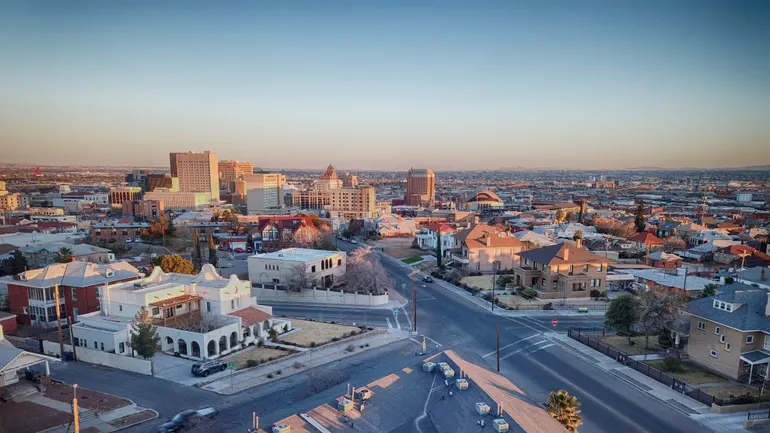
The acquisition represents a calculated geographic expansion for WestStar Bank, which has historically centered its operations around the bustling El Paso, Texas metropolitan market. Prior to this agreement, WestStar maintained only a single physical branch within the state of New Mexico, located in the southern city of Las Cruces.
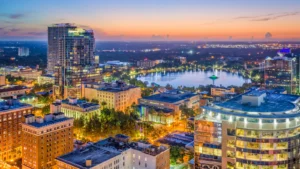
By absorbing Southwest Capital Bank, WestStar instantly secures a major strategic foothold in Albuquerque, New Mexico’s largest economic hub, alongside additional branches situated further north. This geographic diversification is expected to add roughly $500 million to WestStar’s existing asset portfolio while granting its newly acquired customer base access to an enhanced suite of financial products and services.
According to joint statements released by the institutions, Southwest Capital Bank customers will soon benefit from WestStar’s advanced capabilities in commercial banking, sophisticated treasury management solutions, comprehensive wealth management, title services, and state-of-the-art digital banking platforms. The leadership teams have emphasized that a deliberate transition plan will be executed, ensuring that clients and internal team members receive ample advance notification regarding any operational shifts or account changes.
The Collapse of the U.S. Eagle Deal and the Path to WestStar
For Southwest Capital Bank, this newly minted partnership with WestStar provides a secure and stable landing spot following a tumultuous period of strategic uncertainty. The bank had previously pursued a merger with U.S. Eagle Federal Credit Union, a deal that was formally announced in 2024 but ultimately collapsed under the weight of regulatory hurdles and shifting economic conditions.
The breakdown of the U.S. Eagle transaction revealed underlying operational strains at the credit union. In July 2025, Southwest Capital Bank CEO Chez Steel spoke candidly about the situation to the Albuquerque Journal, noting the stark contrast in financial performance between the two entities. "Southwest Capital Bank is very profitable. [U.S. Eagle is] not. They’re having trouble," Steel stated at the time.
Financial reporting from the Credit Union Times later corroborated these challenges, revealing that U.S. Eagle had posted a steep $20.5 million net loss during the second quarter of the previous year. Marsha Majors, who was serving as U.S. Eagle’s CEO during the negotiations, attributed the performance struggles to broader macroeconomic factors. "The business lending portfolio is not performing as we’d hoped it would, as impacted by the economic after-effects of the [COVID-19] pandemic," Majors explained to the publication.
Ultimately, the combination failed to secure the necessary approvals from federal and state banking regulators. By July 2025, the acquisition plans were officially scrapped. Majors subsequently retired in January after a distinguished 40-year career in the financial services industry, paving the way for Michael Moore to assume the role of president and CEO at U.S. Eagle. Left without a merger partner, Southwest Capital Bank leadership swiftly pivoted to evaluate alternative avenues that would safeguard the institution’s long-term viability and protect its client base.
Leadership Continuity and Executive Perspectives
A central tenet of the WestStar and Southwest Capital merger agreement is the preservation of local leadership, institutional knowledge, and community-focused decision-making. Rather than imposing a top-down corporate restructuring from El Paso, WestStar has structured the deal to maintain regional autonomy.
Following the finalization of the transaction in early 2027, Chez Steel will transition into the role of New Mexico president for the combined bank, ensuring continuity for clients and employees alike.
Rick Francis, executive chair of WestStar, emphasized the deep cultural alignment between the two organizations when discussing the rationale behind the merger. In an official corporate statement, Francis pointed out that the institutions share remarkably similar core values and foundational philosophies.
"Both institutions were shaped by generations of bankers, business owners and families who believed their communities deserved a bank that understood them," Francis said. "Just as important, we share a vision for the future and a belief that locally guided community banks continue to play a vital role in helping businesses, families and communities thrive."
Echoing these sentiments, Chez Steel highlighted the importance of finding a corporate partner that honored Southwest Capital’s deep-rooted history in New Mexico.
"As we considered how best to position our clients, team members and communities for the future, it was important to find a partner that respected our history, shared our values and was committed to relationship banking," Steel said on Wednesday. "We found that partner in WestStar."
Broader Economic Implications and the Future of Community Banking
The merger of WestStar Bank and Southwest Capital Bank arrives at a time of ongoing consolidation within the United States banking sector. Community banks across the country face mounting cost pressures driven by rising regulatory compliance expenses, the capital-intensive nature of digital banking transformations, and the constant demand for top-tier cybersecurity infrastructure.
In this environment, institutions frequently turn to mergers and acquisitions to achieve the scale necessary to remain competitive against megabanks while continuing to serve local markets effectively. However, unlike transactions involving large national acquirers that often result in branch closures and the centralization of back-office operations, regional bank combinations of this scale are increasingly designed to preserve local touchpoints.
By maintaining regional leadership structures, WestStar and Southwest Capital are betting that local decision-making remains a powerful competitive advantage, particularly when serving middle-market commercial clients, local real estate developers, and family-owned businesses that value personalized relationship management over automated algorithms.
As the financial institutions work toward the projected closing date in the first quarter of 2027, regulatory applications will be submitted to the relevant state and federal oversight bodies. Given that the transaction expands WestStar’s footprint into complementary geographic markets rather than creating a monopolistic concentration in a single city, industry analysts anticipate a smoother regulatory review process compared to the structural complications that ultimately doomed Southwest Capital’s previous credit union bid.
Ultimately, the transaction promises to reshape the competitive landscape of banking in New Mexico. By uniting Southwest Capital’s entrenched local presence in Albuquerque with WestStar’s robust capital reserves and diversified product offerings, the newly expanded bank is well-positioned to navigate the evolving macroeconomic environment while delivering sustained value to the communities it serves across the Southwest region.