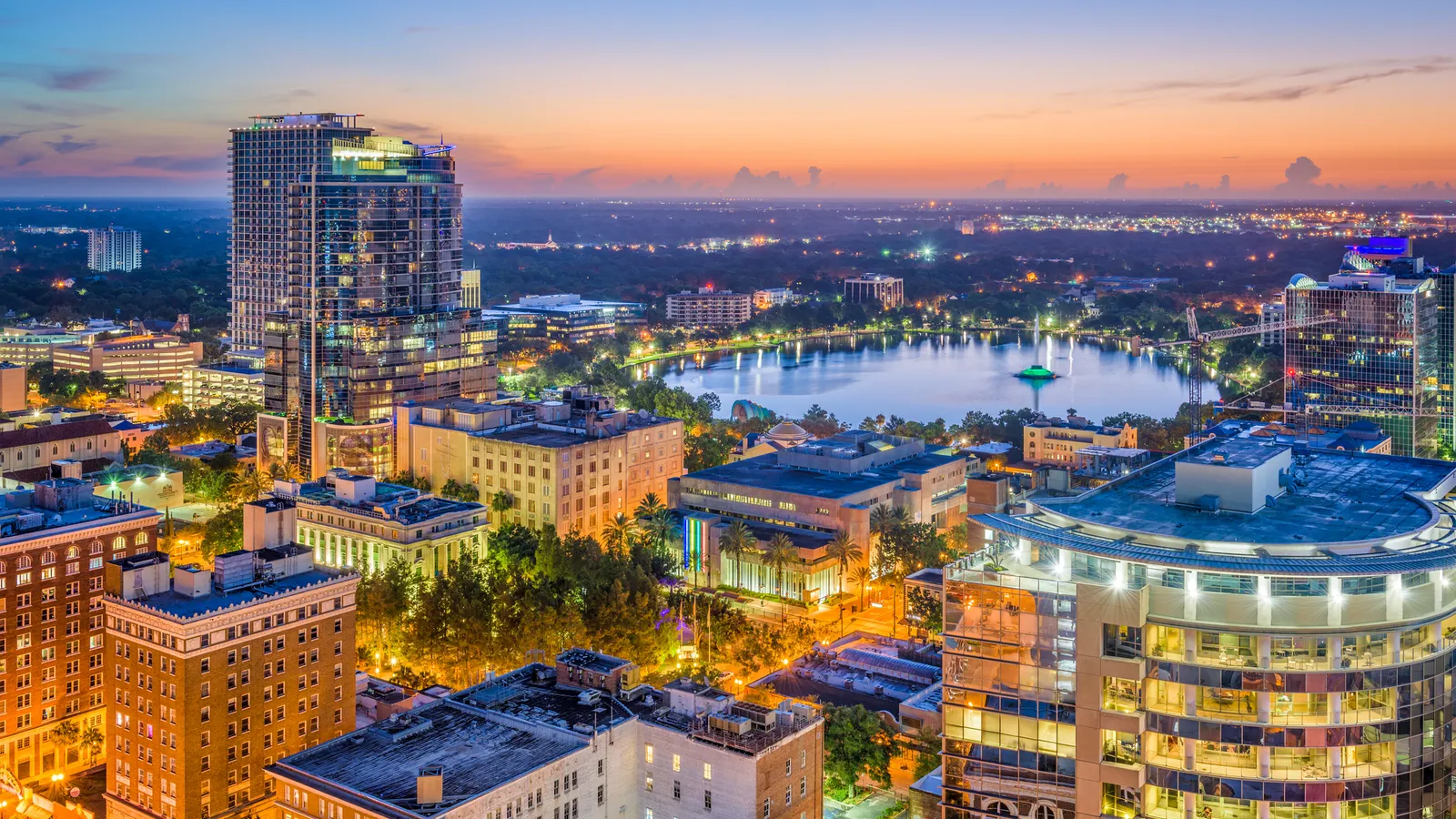
Central Florida’s financial landscape officially shifted on Saturday, September 22, 2026, as Portrait Bank welcomed its very first customers through its doors in Winter Park. The grand opening marks a significant milestone for the region: the establishment of the first de novo bank—a newly chartered institution starting from scratch—in central Florida in nearly a decade.
Led by a seasoned executive team with deep roots in the local market, Portrait Bank enters the arena backed by an impressive $43 million in capital raised entirely from local investors. This strong financial foundation not only sailed past initial regulatory expectations but also underscored a profound regional demand for community-centric banking. As corporate consolidation continues to swallow up independent financial institutions across the United States, Portrait Bank’s debut offers a fascinating case study in how local markets are fighting back to reclaim personalized, relationship-driven financial services.
The Road to the Opening Bell: A Detailed Timeline
The journey to Portrait Bank’s grand opening was a rigorous, multi-year process that tested the resilience of its founders against stringent post-financial crisis regulatory hurdles.
The initiative began to take shape roughly a year prior to the launch, when a dedicated group of central Florida banking veterans—spearheaded by founder and CEO Erik Weiner—formally submitted their applications to both the Florida Office of Financial Regulation (OFR) and the Federal Deposit Insurance Corporation (FDIC). Securing a de novo charter is notoriously difficult, requiring meticulous business planning, extensive risk assessments, and robust capitalization strategies to satisfy federal and state watchdogs.
The perseverance of Weiner and his team paid off in April 2026, when the institution secured its vital conditional approvals from regulators. Following these milestones, the bank steadily cleared the remaining administrative hurdles, culminating in the official granting of its state charter by the OFR in June 2026.
Rather than rushing to open immediately, executive leadership utilized the summer months to lay the groundwork for operations. CFO Jeff Jenkins—a veteran of the regional banking scene and former CFO of Winter Park National Bank, who has now successfully guided four de novo institutions in the area—oversaw the complex onboarding process. Throughout July and August, the bank methodically onboarded its initial roster of clients, ensuring its technological infrastructure, compliance protocols, and customer service teams were fully operational well before the public ribbon-cutting.
Capitalizing on Community Need: The $43 Million Milestone
One of the most remarkable aspects of Portrait Bank’s launch is the sheer volume of capital it managed to secure prior to opening its doors. Federal and state regulators initially stipulated that the bank required roughly $28 million in initial capital to satisfy safety and soundness requirements.
However, local enthusiasm drastically outpaced regulatory baselines. Portrait Bank ultimately closed its capital-raising phase with $43 million secured from 256 individual investors. Crucially, the funding effort was deliberately structured to prevent any single entity from wielding outsized influence over the institution. No single investor contributed more than $1 million, a strategy that CEO Erik Weiner characterized as a "diversified funding effort."
This grassroots financial backing serves as a clear indicator of the local appetite for a new banking alternative. "This really demonstrated how much the community was needing this, how excited they were, how much they rallied behind us," Weiner noted, emphasizing that the bank was designed from the ground up to reflect the economic realities and aspirations of the people living and working in the region. Weiner added that he expects Portrait Bank to "be part of the heartbeat of central Florida and make a very big impact here locally."
The Anatomy of Consolidation: Why Central Florida Needed a De Novo
To fully understand the significance of Portrait Bank’s arrival, one must examine the dramatic structural shifts that have reshaped the central Florida banking market over the past two decades.
According to Weiner, persistent banking consolidation has severely restricted consumer and corporate choice. Back in the year 2000, central Florida boasted approximately 38 locally headquartered banks. Over the subsequent twenty-six years, waves of mergers and acquisitions slashed that number down to roughly half a dozen independent institutions.
Today, the market is heavily dominated by a handful of mega-banks. Weiner points out that just four major financial institutions currently serve a vast majority of the region’s commercial and retail banking needs. This monopolization of market share has created widespread frustration among local businesses and affluent families alike.
"There’s not a lot of choices for clients, and they feel like they’re put into a box," Weiner explained.

In an era defined by automated credit-scoring algorithms and centralized corporate decision-making centers located hundreds or thousands of miles away, community members have experienced a noticeable degradation in service quality. Traditional localized benefits—such as relationship managers who understand the nuances of a local family business, flexible underwriting based on local economic conditions, and rapid decision-making timelines—have largely fallen victim to cost-cutting corporate efficiencies.
"There was less personalized service, less local decision making, and banks were making a smaller impact on the community," Weiner said, reflecting on the consequences of consolidation. "The opportunity here to really make a difference for the business community and families here in central Florida was too much to pass up."
Targeting an Underserved Demographie: Small Businesses and Private Wealth
Portrait Bank is positioning itself to serve a specific, highly lucrative, yet underserved niche within the central Florida economy. The institution’s target demographic primarily encompasses small-to-midsize businesses (SMBs), high-net-worth individuals, and private wealth clients.
These clients often find themselves caught in a frustrating purgatory within the modern banking ecosystem. Mega-banks frequently view them as too small to warrant the bespoke attention reserved for Fortune 500 corporations, yet too complex for standard retail banking products. Conversely, smaller credit unions or strictly localized institutions may lack the sophisticated lending capacity required to finance growing commercial operations.
Portrait Bank aims to bridge this gap by offering a sophisticated suite of commercial lending, treasury management, and private banking services delivered with a high-touch, community-first ethos. The executive leadership team believes their intimate knowledge of the region gives them an unbeatable competitive edge. Weiner, who moved to central Florida at the age of eight from New York and has spent nearly his entire life in the region, argues that out-of-market institutions fundamentally misunderstand the psychological and economic drivers of local enterprises. Alongside Jenkins, the leadership team claims an innate understanding of how central Florida business owners "look at the world."
Economic Tailwinds: Riding a Demographic Boom
Timing is everything in commercial banking, and Portrait Bank is launching into an economic environment characterized by explosive population growth and vibrant commercial activity.
According to data cited by the Orlando Economic Partnership and sourced from the U.S. Census Bureau, the greater Orlando area’s population expanded by an impressive 1.3% in 2025. This growth rate easily outpaces the broader state of Florida’s growth rate of 0.8% and places the region sixth highest among the nation’s 30 most populous metropolitan areas.

This influx of new residents fuels a continuous demand for residential housing, commercial real estate development, consumer services, and small business expansion. As families relocate to central Florida and entrepreneurs scale their ventures to meet the demands of a growing populace, the need for agile, well-capitalized commercial banking partners becomes paramount. By establishing its headquarters in Winter Park—an affluent and economically dynamic enclave just miles from downtown Orlando—Portrait Bank has positioned itself directly in the path of this economic momentum.
Broader Implications for the National De Novo Landscape
Beyond its localized impact, Portrait Bank’s successful launch offers a glimmer of hope for the broader American banking sector.
In the wake of the 2008 financial crisis, stringent regulatory requirements, increased compliance costs, and heightened scrutiny from federal watchdogs made the creation of de novo banks exceedingly rare nationwide. For many years, the industry suffered through a virtual de novo drought, as the barrier to entry became too steep for most entrepreneurial banking teams to clear. A lack of new market entrants left the banking sector vulnerable to over-consolidation, reducing competitive pressures and potentially stifling local economic development.
The successful capitalization and launch of Portrait Bank—surpassing its regulatory capital requirements by $15 million and drawing participation from over 256 local stakeholders—demonstrates that de novo creation is still viable when market demand is sufficiently acute. If Portrait Bank can successfully execute its business model over the coming quarters, it could serve as a blueprint for financial professionals in other high-growth metropolitan areas across the United States seeking to resurrect the lost art of true community banking.
As Portrait Bank opens its doors for its first full week of commercial operations, all eyes in the central Florida business community will be on Weiner, Jenkins, and their team. By restoring local decision-making and prioritizing relationship-driven finance, the bank hopes to prove that community-led institutions are not relics of the past, but vital engines for the future of regional economic growth.