
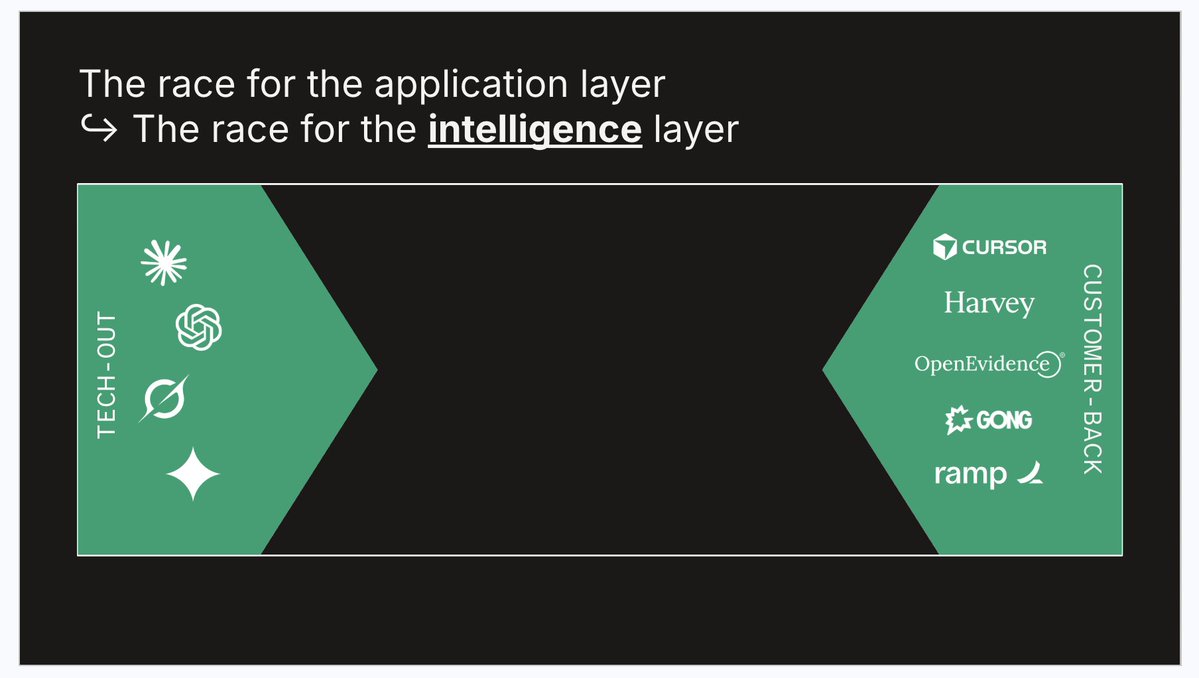
Published August 19, 2026, the artificial intelligence landscape is undergoing a structural paradigm shift. The competitive battleground for tech supremacy has officially expanded far beyond user interfaces, efficient workflows, and go-to-market strategies. Today, the race is a fierce contention for the foundational intelligence layer itself. Industry leaders and enterprise executives are increasingly asking a pivotal question: who should truly own the intelligence that serves as the core of modern commercial operations?
This philosophical and strategic reckoning has gained immense momentum following recent high-profile declarations from prominent technology figures. Palantir CEO Alex Karp famously urged enterprises to "own the means of production," a call to action that challenged companies to take control of their computational destinies rather than relying entirely on external utilities. Shortly thereafter, Microsoft CEO Satya Nadella offered a sharp caution regarding dependency on frontier labs, comparing the procurement of external intelligence to paying a double tax: once with monetary capital, and a second time through the surrender of proprietary institutional knowledge exposed to third-party APIs during the prompt-and-response cycle.

The Shift Toward Vertical Integration
To understand the current enterprise movement, industry analysts note that owning internal intelligence does not equate to a wholesale abandonment of frontier AI laboratories. For broad, generalized workloads, proprietary frontier APIs and generalized cloud agents remain highly effective solutions. However, a growing cohort of agile market leaders is taking a more nuanced approach. Across venture portfolios and enterprise engineering departments, companies are strategically building proprietary AI capabilities for specific product segments, vertically integrating their systems to control and shape model weights directly.
This emerging consensus crystallized during an exclusive gathering hosted by venture capital firm Sequoia, which brought together elite AI founders, researchers, and builders to dissect the practicalities of owning the modern AI stack. The event featured comprehensive operational insights from legal tech pioneer Harvey, alongside technical deep-dives from infrastructure and tooling leaders including Mercor, LangChain, Trajectory, and Fireworks. Through these collaborative discussions, a definitive playbook for enterprise AI ownership began to take shape.
Why Now? The Convergence of Open-Weight Maturity
The urgency driving companies to internalize their AI development stems from two major technological advancements that have unfolded rapidly over recent years. First, the open-weight frontier has evolved at a velocity that far outpaces early industry projections. Historically, organizations attempting to build upon open-source models found themselves trapped on a frustrating treadmill; months of expensive fine-tuning could be rendered entirely obsolete overnight by the sudden release of a superior frontier model.

By 2026, however, that dynamic has fundamentally shifted. Advanced open models—exemplified by high-performing systems like Kimi K3 and GLM 5.2—have narrowed the performance gap, providing an exceptionally strong baseline that closely rivals closed-source alternatives.
Second, the independent post-training ecosystem has matured significantly. Companies can now leverage robust, modular components spanning the entire AI lifecycle—from high-throughput training and low-latency inference to advanced human and synthetic data generation. Supported by rigorous evaluation frameworks, harness engineering, post-training techniques, and online learning loops, open models are no longer a compromise. In many specialized vertical domains, they are outperforming generalized frontier models. What was once a tactical choice made to sacrifice performance for cost or privacy has rapidly evolved into an existential and strategic imperative.
Strategic Drivers: Cost, Speed, Data Sovereignty, and Control
Enterprises evaluating whether to build or rent intelligence must weigh multiple operational factors, as no single strategy fits every workload. Industry strategists have identified four primary catalysts compelling companies to bring AI models in-house:
- Economic Sustainability and COGS: As AI-driven products scale successfully, inference costs scale directly with usage. For high-volume applications, renting intelligence from external providers creates a severe margin constraint. Owning the underlying model provides the most direct and effective mechanism to protect long-term gross margins.
- Latency and Execution Speed: In time-sensitive environments such as real-time code completion (tab autocomplete) or high-frequency cybersecurity threat detection, milliseconds matter. Smaller, highly distilled custom models frequently outperform massive general-purpose models simply due to their superior processing speed and targeted efficiency.
- Proprietary Data Protection: Organizations operating in regulated or highly competitive sectors prefer to keep their proprietary feedback loops, evaluation datasets, customer interactions, and domain-specific knowledge strictly within their corporate firewalls rather than exposing them to external training pipelines.
- Controlling Strategic Destiny: The historical boundary separating the application layer from the intelligence layer is rapidly dissolving. Frontier labs are increasingly moving upward into product delivery, while successful application companies are pushing downward into the training loops that define machine cognition. True product ownership increasingly requires control over both the product interface and the underlying learning loop.
The Zero-to-One Implementation Roadmap
For organizations that have elected to adopt a hybrid strategy of owning targeted portions of their AI infrastructure, execution requires a deliberate, methodical approach. Industry experts recommend a structured, four-phase technical roadmap moving from initial evaluation to continuous production learning.
1. Rigorous Evaluation Frameworks (Evals)
As Gabe Pereyra of Harvey frequently emphasizes, an enterprise cannot effectively train or fine-tune a model without a reliable benchmark. An evaluation framework consists of a standardized collection of tasks designed to measure system competence, complete with inputs, contextual data, and automated or expert-backed graders. Transitioning from subjective "vibe-checks" to rigorous, repeatable evaluations is a mandatory precursor to model ownership. Harvey’s development of its Legal Agent Benchmark—comprising thousands of discrete legal tasks evaluated across extensive expert rubrics—exemplifies how domain-specific evaluation enables objective decision-making.
2. Harness and Context Engineering
Modern AI agents operate via three foundational pillars: the core model, the operational context, and the software harness. As Harrison Chase of LangChain notes, the primary responsibility of the harness is to deliver the correct context to the model at the precise moment it is required. A sophisticated harness governs product logic, tool routing, memory management, and error fallbacks. Furthermore, it ensures system inspectability, allowing engineers to trace execution paths, identify bottlenecks, and maintain consistency across different underlying models.

3. Targeted Post-Training Methodologies
Post-training encompasses a diverse suite of techniques tailored to specific performance deficits. According to Lin Qiao, engineering teams must match the intervention precisely to the problem:
- If a model lacks factual knowledge, retrieval-augmented generation (RAG) is deployed without requiring model training.
- If output formatting or behavioral adherence is flawed, supervised fine-tuning is applied.
- If product "taste" or nuanced alignment requires adjustment, preference tuning is utilized.
- For specialized task proficiency, reinforcement learning (RL) is implemented.
- If latency or cost poses a barrier, model distillation is executed.
4. Continuous Online Production Learning
Even the most advanced models face deployment challenges akin to a brilliant theorist’s first day on the job; they possess high intelligence but lack contextual experience. Agents generate valuable operational experience during everyday execution. By capturing execution trajectories—including prompts, tool calls, user edits, and corrections—using observability tools like LangSmith, organizations can establish a continuous production feedback loop. Failed tasks automatically transition into new evaluation benchmarks, missing data enriches context windows, and suboptimal tool responses directly inform harness improvements.
Broader Implications and Future Outlook
Embracing an intelligence-ownership strategy undoubtedly introduces operational complexity. While relying exclusively on closed-source frontier models offers a high performance floor with minimal friction, it ultimately caps an enterprise’s long-term competitive ceiling. Conversely, building an internal stack—comprising open-source models, custom harnesses, proprietary evaluations, and continuous online learning loops—demands significant engineering investment and accepts a lower initial floor in exchange for an unbounded operational ceiling.

The future of enterprise artificial intelligence will not be dictated by a single monolithic architecture. Frontier laboratories will undoubtedly continue constructing larger, generalized foundational models, and enterprises will continue to utilize them for broad-spectrum tasks. However, in parallel, the market’s most forward-thinking product companies are cultivating specialized, domain-obsessed AI capabilities tightly coupled to their proprietary workflows. In this evolving ecosystem, taking ownership of the intelligence layer empowers organizations to achieve true differentiation, ensuring that individuality and domain expertise remain the ultimate competitive advantages in the digital economy.