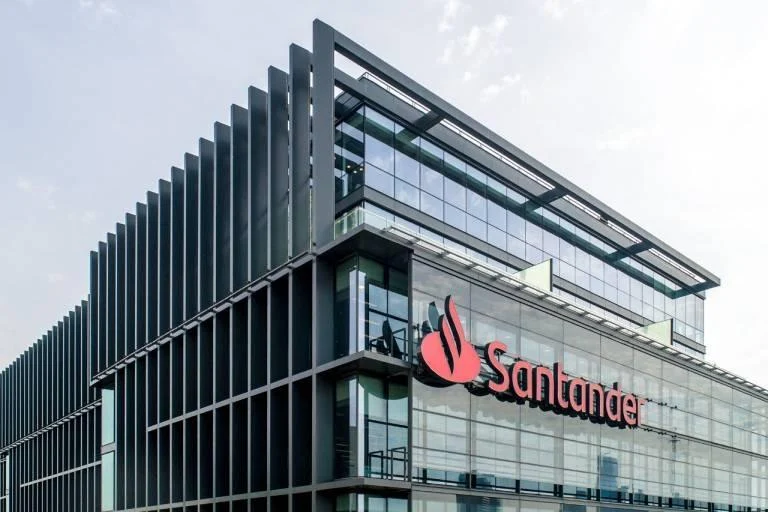
Spanish multinational banking giant Santander Group has officially reached a significant milestone in its environmental, social, and governance (ESG) strategy, announcing that it has mobilized €14 billion in green finance during the first half of 2026. This latest infusion of capital brings the bank’s cumulative green financing total to €188 billion since 2019, effectively placing the organization at over 85% of its ambitious €220 billion target set for completion by 2030.
The announcement underscores a period of sustained momentum for the Madrid-based lender, which has been aggressively pivoting its portfolio to align with the global transition toward a low-carbon economy. By maintaining this pace, Santander is not only validating its internal sustainability frameworks but is also signaling to the broader financial services sector that integrating climate-related objectives into core business operations is a viable and scalable strategy for Tier-1 institutions.
A Chronology of Strategic ESG Commitments
Santander’s path to its current position began in earnest in 2021, when the bank formalized a suite of sustainable finance targets. These commitments were designed to position the bank as a leader in the global energy transition. A key pillar of this strategy was the commitment to mobilize €120 billion in green finance by 2025.
The bank’s operational agility was demonstrated when it reached this initial milestone 18 months ahead of the original schedule. The early achievement of the 2025 goal prompted the bank to recalibrate its long-term strategy, leading to the current roadmap that extends to 2030. Since the inception of these targets, the bank has consistently increased its volume of green activity, reporting a 29% year-over-year increase in 2025, which saw the bank mobilize €34.6 billion—the highest single-year total since the inception of its sustainability reporting.
The progress is measured across a diverse array of financial instruments, including project finance for renewable energy installations, the issuance and underwriting of green bonds, export finance for sustainable infrastructure, and specialized advisory services for corporate clients navigating the complexities of decarbonization.
Data-Driven Growth: Analyzing the 2026 Trajectory
The financial results for the first half of 2026 reveal a bank that has successfully institutionalized sustainable lending. With €14 billion deployed in just six months, the bank remains on a trajectory to potentially beat its 2030 target even earlier than anticipated.
The growth in green financing is closely tied to the global demand for clean energy infrastructure. In 2025 alone, the renewable energy projects that Santander either financed or acted as a lead advisor for accounted for 16.8 gigawatts (GW) of new capacity. This figure is particularly significant when considering the rising cost of capital and the geopolitical volatility that has characterized the energy markets over the past 24 months.
Recent transactions highlight the breadth of the bank’s involvement. In the most recent quarter, Santander acted as a key participant in a €300 million capital raise for Solaria, a prominent clean energy developer. The funds are earmarked for the expansion of a platform that integrates renewable energy production, battery storage technology, and data center infrastructure—a clear reflection of how modern green finance is evolving beyond simple wind and solar projects into complex, interconnected digital and physical systems.
Furthermore, the bank has been actively financing projects in the United States, such as the Foxtail Flats and Four Mile Mesa Solar and Storage initiatives. These projects are representative of the bank’s commitment to large-scale, utility-grade storage, which is critical for solving the intermittency issues associated with renewable power generation.

Regulatory Compliance and the European Green Bond Standard
A pivotal element of Santander’s recent activity has been its early adoption and utilization of the European Green Bond (EuGB) standard. The EuGB is a rigorous regulatory framework designed to provide transparency and prevent "greenwashing" by ensuring that the proceeds of bond issuances are strictly aligned with the EU Taxonomy for sustainable activities.
By integrating these standards into its lending and advisory practices, Santander is positioning itself to be a preferred partner for institutional investors who are increasingly mandated to hold high-quality, verified green assets. This regulatory alignment not only de-risks the bank’s portfolio against future climate-related policy shifts but also enhances its reputation among international stakeholders.
Institutional Perspective and Strategic Rationale
In the official statement accompanying the results, leadership at Santander emphasized the bank’s role as an enabler of the global energy transition. The bank noted that its objective is to serve as a bridge between capital markets and the tangible, ground-level needs of its customers.
"The bank continues to pursue its aim to support customers in their transition by providing finance for activities and initiatives in renewable energy and other solutions that enable them to drive through their plans to transform to a low-carbon economy," the statement read.
Market analysts observe that this approach is dual-purpose: it secures the bank’s long-term viability by reducing its exposure to carbon-intensive assets—which may face future regulatory or economic headwinds—and it creates new revenue streams in the high-growth sector of sustainable infrastructure.

Broader Implications for the Banking Sector
The success of Santander in hitting its 2030 targets ahead of schedule holds broader implications for the global financial sector. As international bodies, such as the Glasgow Financial Alliance for Net Zero (GFANZ), continue to pressure major banks to align their portfolios with the Paris Agreement, the "Santander Model" provides a blueprint for how large, diversified banks can reconcile high-volume lending with strict environmental metrics.
- Scalability: Santander has proven that green finance can be scaled across various geographies, including emerging markets and the highly competitive U.S. renewable sector.
- Standardization: The commitment to the European Green Bond standard demonstrates that transparency is the most effective tool to combat market skepticism regarding ESG claims.
- Transition Financing: By supporting not just pure-play renewables but also infrastructure, battery storage, and advisory services, the bank is acknowledging that the "green" economy requires an entire ecosystem of support, not just single-project financing.
The Road Ahead: Challenges and Opportunities
While the current figures are impressive, the road to 2030 and eventually to a net-zero portfolio by 2050 involves significant challenges. Rising interest rates, supply chain bottlenecks for critical infrastructure components, and the need for significant grid modernization remain hurdles that could affect the velocity of green project deployment.
However, the bank’s ability to maintain a 29% growth rate in 2025 and continue that momentum into 2026 suggests that it has successfully built an internal engine for sustainable finance that can withstand market fluctuations. The integration of artificial intelligence and advanced data analytics, as suggested by the bank’s recent digital acceleration initiatives, is likely playing a role in identifying and de-risking these complex long-term investments.
As Santander moves into the latter half of the decade, the focus will likely shift from merely "mobilizing" capital to measuring the actual, verified climate impact of that capital. The transition from quantity-based metrics (total euros invested) to quality-based metrics (tons of CO2 avoided or equivalent) will be the next major hurdle for the bank and its peers.
In conclusion, Santander’s latest disclosure confirms that it has successfully transitioned from the conceptual stage of its sustainability journey into a phase of high-impact implementation. By surpassing 85% of its 2030 goal four years early, the bank has solidified its position as a central pillar of the European transition, proving that financial stability and climate responsibility can be mutually reinforcing objectives in the modern economic landscape.