
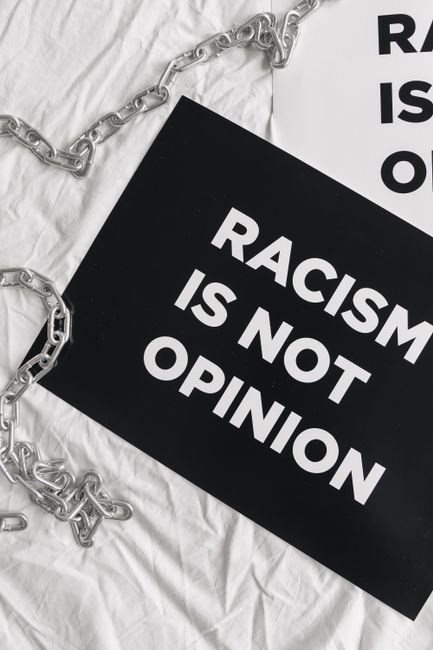
The Evolution of Belief: Understanding Why Opinions Change
The human mind is a dynamic entity, constantly processing new information, re-evaluating existing knowledge, and adapting its internal frameworks. This inherent plasticity is the root cause of why opinions change. It is not a sign of weakness or inconsistency, but rather a testament to intellectual growth and a fundamental aspect of learning. Understanding the mechanisms behind opinion shifts is crucial for navigating personal growth, fostering productive dialogue, and comprehending societal progress. This article delves into the multifaceted reasons behind these transformations, exploring cognitive biases, emotional influences, social pressures, and the sheer power of new evidence to reshape our perspectives.
At its core, opinion change is often driven by the acquisition of new information. This information can arrive in various forms: empirical data, scientific findings, personal experiences, or even compelling narratives. When confronted with evidence that directly contradicts a previously held belief, a cognitive dissonance arises. This psychological discomfort, as theorized by Leon Festinger, motivates individuals to resolve the inconsistency. The resolution can manifest in several ways: rejecting the new information, reinterpreting it to fit the existing belief, or, most significantly, altering the belief itself to align with the new evidence. This process is fundamental to scientific advancement, where established theories are continually challenged and refined by novel discoveries. For instance, the shift from a geocentric to a heliocentric model of the solar system, championed by Copernicus and later solidified by Galileo, was a monumental opinion change driven entirely by observational data and mathematical reasoning that disproved centuries of ingrained belief. Similarly, advancements in medicine, from understanding germ theory to developing vaccines, have fundamentally altered public health opinions and practices, often requiring individuals to abandon deeply held, albeit misinformed, notions about illness and its transmission. The ease and accessibility of information in the digital age have amplified this effect, exposing individuals to a wider array of perspectives and data points than ever before, accelerating the potential for opinion evolution.
Cognitive biases, unconscious mental shortcuts, play a significant role in both the formation and the stubbornness of opinions, but also in their eventual alteration. Confirmation bias, the tendency to seek out, interpret, and recall information that confirms pre-existing beliefs, can act as a powerful inhibitor of change. However, when presented with overwhelming evidence that consistently challenges a deeply entrenched bias, or when the source of the new information is perceived as highly credible, even confirmation bias can be overcome. For example, an individual holding a strong political affiliation might habitually consume news from sources aligned with their party. If consistently exposed to factual reporting from reputable, cross-partisan sources that highlight the flaws in their preferred ideology or the strengths of an opposing one, the cognitive weight of that new information can eventually outweigh the comfort of confirmation. Another relevant bias is the availability heuristic, where we overestimate the importance of information that is readily available in our memory. If our experiences or the narratives we are exposed to repeatedly illustrate a particular outcome, our opinions will reflect that perceived prevalence. Conversely, encountering novel, impactful experiences that contradict this readily available data can trigger a re-evaluation. Consider someone who believes a certain profession is inherently unstable due to anecdotal evidence of friends losing jobs. If they then personally witness or become intimately involved with individuals in that profession who demonstrate remarkable stability and success through deliberate effort and market adaptability, their initial opinion, shaped by limited availability, is likely to shift.
Emotional responses are deeply intertwined with our beliefs and can be powerful drivers of opinion change, both positively and negatively. Fear, anger, joy, and empathy can all color our perception of information and influence our willingness to reconsider our stances. Witnessing or experiencing the negative consequences of a certain behavior or policy can foster a profound shift in opinion. For example, individuals who previously held lenient views on drunk driving might drastically alter their perspective after being personally affected by an accident caused by an intoxicated driver, or even after witnessing the devastating impact on a victim’s family through powerful documentaries or public awareness campaigns. Conversely, positive emotional connections can solidify existing beliefs. However, the power of negative emotional revelation is often a catalyst for radical opinion change. Empathy, in particular, can be a potent agent of transformation. When individuals are able to truly step into the shoes of others and understand their lived experiences, particularly those of marginalized groups, deeply ingrained prejudices and assumptions can begin to crumble. The Civil Rights Movement, for instance, gained momentum as more people, through media coverage and personal testimonies, began to empathize with the injustices faced by African Americans. This emotional resonance fostered a collective shift in public opinion that paved the way for legislative change.
Social influence, the impact of others on our thoughts and behaviors, is another critical factor in opinion change. We are social creatures, and our desire for belonging, acceptance, and social validation often shapes our beliefs. This can manifest in conformity, where we adopt the opinions of a group to avoid ostracism, or in informational influence, where we accept the opinions of others as correct because we believe they possess more knowledge or insight. Peer pressure, particularly during adolescence, can lead to rapid shifts in opinions on everything from fashion to morality. However, as individuals mature, the nature of social influence can evolve. Instead of conforming to peer groups, individuals might begin to adopt the opinions of respected mentors, thought leaders, or experts in a field they admire. The concept of "reference groups" is relevant here; we tend to align our opinions with those of groups we aspire to be a part of or identify with. The rise of social media has amplified social influence exponentially. Online communities can create echo chambers, reinforcing existing beliefs, but they also provide platforms for diverse perspectives to clash, potentially leading to a broadening of horizons and the reconsideration of deeply held views. A politician’s opinion can shift dramatically due to shifts in public sentiment within their constituency, a phenomenon driven by the need to maintain electoral viability, which is inherently a social process.
The credibility and perceived trustworthiness of the source of information are paramount in determining whether new evidence will lead to opinion change. If information comes from a source that is considered biased, unreliable, or lacking expertise, it is more likely to be dismissed. Conversely, information from trusted authorities, experts, or sources with a proven track record of accuracy carries significantly more weight. This is why scientific consensus, built upon the work of numerous credible researchers, is so influential. The public’s trust in scientific institutions has a direct impact on their willingness to adopt opinions based on scientific findings, such as those related to climate change or public health recommendations. Similarly, the endorsement of a product or idea by a celebrity or respected public figure can sway public opinion, capitalizing on the pre-existing trust and admiration individuals have for that person. The erosion of trust in institutions, whether governmental, media, or scientific, can create a fertile ground for misinformation to flourish and hinder genuine opinion evolution, as individuals may become skeptical of all information, regardless of its source or veracity.
Personal experiences, especially those that are impactful and unexpected, can be profound catalysts for opinion change. Direct encounters with situations or individuals that challenge pre-conceived notions can be more persuasive than abstract arguments or statistics. For example, someone who held prejudiced views against a particular ethnic group might experience a significant shift in their opinion after forming a close friendship with a member of that group. The shared experiences, the human connection, and the discrediting of stereotypes through lived reality can be incredibly transformative. Similarly, personal failures or successes can lead to introspection and a re-evaluation of beliefs about ability, effort, and luck. An entrepreneur who initially believed success was purely a matter of luck might, after a series of setbacks that require significant perseverance and strategic adjustment, develop a more nuanced understanding of the role of hard work and adaptability. These "aha!" moments, often born from confronting reality head-on, are powerful engines of personal growth and opinion evolution.
The very act of having one’s opinion challenged, especially in a respectful and intellectually stimulating manner, can initiate the process of change. Engaging in debates, discussions, and critical thinking exercises forces individuals to articulate their reasoning, identify potential weaknesses in their arguments, and consider alternative viewpoints. Even if no immediate change occurs, the seed of doubt or curiosity can be planted, leading to later introspection and re-evaluation. The Socratic method, a form of cooperative argumentative dialogue, is built on this principle, using questioning to stimulate critical thinking and expose logical fallacies, ultimately guiding individuals towards a more informed understanding. The willingness to engage in such dialogues, to listen actively and respond thoughtfully, is a crucial component of an open mind and a prerequisite for meaningful opinion change. Conversely, a defensive or aggressive posture when challenged often indicates a resistance to change, as the individual perceives the challenge as a personal attack rather than an intellectual exploration.
In conclusion, the transformation of opinions is a complex, multi-layered process driven by an intricate interplay of cognitive, emotional, social, and experiential factors. It is not a sign of intellectual vacillation but rather an indicator of a mind that is engaged with the world, open to learning, and capable of growth. Understanding why opinions change allows us to better understand ourselves, our interactions with others, and the dynamic nature of human knowledge and belief systems. It underscores the importance of critical thinking, intellectual humility, and a commitment to seeking out and evaluating information with an open mind, for it is through this continuous process of evolution that we can arrive at more informed, nuanced, and ultimately, more accurate understandings of the world around us. The ability to change one’s mind, when supported by evidence and reasoned consideration, is a hallmark of intellectual maturity and a vital characteristic of a progressing society.
