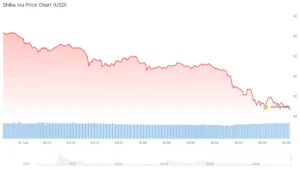
United Airlines Holdings, Inc. shares experienced a modest downturn, shedding 1.62% to close at $118.61, a decline of $1.95 per share, following a pivotal announcement regarding the future of automated digital commerce on its platforms. The carrier officially introduced stringent new policies explicitly prohibiting unauthorized third-party artificial intelligence agents from completing flight purchases on behalf of consumers. Unveiled on November 11, the policy is designed to safeguard sensitive customer data, mitigate mounting account security risks, and preempt potential conflicts with strict federal aviation regulations governing passenger verification and check-in procedures.
The rapid proliferation of autonomous digital assistants—ranging from consumer-facing personal tools to specialized travel-booking aggregators—has forced legacy airlines to reevaluate how external software interacts with proprietary reservation systems. While travelers remain free to utilize AI platforms for preliminary flight comparisons, fare monitoring, and itinerary planning, the final transaction boundary has been firmly closed to unvetted software. This move places United at the forefront of a growing corporate pushback against automated agents that bypass traditional user interfaces, highlighting the broader tension between technological innovation and digital ecosystem security within the global travel sector.
Background Context of the Event
The intersection of artificial intelligence and commercial aviation has evolved rapidly over recent years. Historically, online travel agencies (OTAs) and corporate booking tools relied on structured Application Programming Interfaces (APIs) or Global Distribution Systems (GDS) to facilitate ticket sales. However, the emergence of generative AI and autonomous software agents—such as Meta’s Muse agent, which reportedly surpassed 10 million active users in October—has introduced a disruptive new paradigm. These modern AI agents do not merely query databases; they mimic human user behavior, logging into personal accounts, navigating web interfaces, and executing end-to-end transactions using stored customer credentials.
This shift created an operational blind spot for airlines. When an autonomous agent gains unchecked access to a customer’s MileagePlus account or digital wallet, the potential for unintended actions increases exponentially. AI tools could theoretically modify personal profiles, redeem hard-earned loyalty rewards without explicit real-time confirmation, or expose sensitive financial data to third-party servers. United’s policy change is a direct response to these vulnerabilities, aiming to reestablish a secure perimeter around its digital ecosystem while protecting its customer base from emerging vectors of cyber exploitation.
FAA and DOT Compliance Concerns
Beyond cybersecurity vulnerabilities, United’s decision is deeply rooted in compliance mandates enforced by the Federal Aviation Administration (FAA) and the Department of Transportation (DOT). Federal aviation rules place strict legal responsibilities directly on the shoulders of the individual passenger, particularly concerning pre-flight safety acknowledgments.
A prime example cited by the airline involves mandatory airport check-in and baggage screening protocols. Before a boarding pass can be issued or baggage accepted, passengers are legally required to confirm that their luggage does not contain hazardous materials, restricted items, or dangerous goods, such as explosives or compressed gases. Under traditional booking and check-in workflows, the human passenger must actively review and acknowledge these safety warnings.
Automated third-party AI agents, operating autonomously in the background, risk bypassing these crucial human-in-the-loop checkpoints. If an AI agent completes a check-in or verifies safety compliance without direct, verifiable input from the traveler, the airline could inadvertently find itself in non-compliance with federal safety directives. While United noted that it has not yet faced specific enforcement actions or punitive measures from the FAA or DOT regarding automated bookings, the carrier opted for a proactive compliance posture to preempt regulatory liabilities.
Chronology of Events Leading to the Policy Shift
The implementation of United’s AI booking restrictions follows a calculated sequence of technological milestones and corporate infrastructure developments:

- Early October 2024: Consumer adoption of personal AI assistants, including Meta’s Muse agent, accelerates past 10 million users, signaling mainstream readiness for autonomous task execution.
- November 10: United Airlines officially opens the state-of-the-art Concourse E at Washington Dulles International Airport, featuring 14 new gates, direct AeroTrain access, and a sprawling 40,000-square-foot United Club, bolstering the carrier’s mid-Atlantic operational capacity.
- November 11: United formally announces its comprehensive policy shift, banning unauthorized third-party AI agents from executing flight purchases and account modifications across its digital sales channels.
- Subsequent Market Reaction: United Airlines Holdings, Inc. (UAL) stock pulls back by 1.62%, settling at $118.61 amid broader market digestion of the new digital distribution rules and ongoing fuel cost considerations.
Industry-Wide Implications and Cross-Sector Trends
United is far from alone in wrestling with the challenges posed by autonomous software agents. Across the financial services, retail, and hospitality sectors, major corporations are erecting digital tollbooths to regulate or outright block unsupervised AI applications. Major retail banks and credit card issuers have similarly restricted AI agents from initiating automated fund transfers or modifying account settings without secondary authentication measures, citing rampant concerns over credential stuffing, unauthorized transactions, and liability disputes.
The travel industry, characterized by complex ticketing rules, dynamic pricing models, and stringent identity-verification requirements, is particularly vulnerable to automated scraping and transaction errors. When AI agents attempt to interface with legacy booking engines designed for human users, mismatches in data interpretation can lead to ticketing errors, canceled reservations, and customer service gridlock. By tightening its distribution policies, United is attempting to force AI developers into formalized, secure partnerships rather than allowing unregulated web-scraping and automated form-filling.
Official Responses and Strategic Adaptations
While United has not released exhaustive technical specifications regarding how it intends to algorithmically differentiate between human users and advanced AI agents, the company has outlined a clear framework for enforcement. The airline plans to systematically update its Digital Trust Center, providing consumers with transparent guidance on account protection, authorized digital channels, and the risks associated with sharing credentials with third-party software.
Concurrently, United is revising its overarching ticketing, distribution, and terms-of-service agreements. These updates will empower the airline to legally block malicious or unauthorized bot traffic while preserving access for legitimate distribution partners, corporate travel management systems, and standard consumer browsers.

Despite the immediate regulatory and technological friction surrounding AI, United’s broader corporate strategy remains heavily focused on expanding physical and digital infrastructure. The successful launch of Concourse E at Washington Dulles International Airport underscores the airline’s commitment to scaling its physical operations and enhancing passenger throughput. By pairing physical expansion with rigorous digital security measures, United aims to strike a delicate balance between accommodating modern travel demands and maintaining absolute control over safety and compliance.
Fact-Based Analysis of Financial and Operational Impact
From a financial standpoint, the 1.62% dip in UAL shares reflects the delicate nature of airline stock valuations, which are perpetually sensitive to regulatory news, operational overhead, and technology expenditures. However, financial analysts view the AI booking ban as a prudent, risk-mitigating administrative measure rather than a fundamental threat to the airline’s top-line revenue.
Because consumers retain the full ability to research itineraries, compare ticket prices, and complete transactions directly through United’s official website and mobile application, the restriction is unlikely to depress passenger volume. Instead, it funnels digital traffic back into controlled, secure environments where the airline can accurately capture customer data, upsell ancillary services, and ensure 100% compliance with federal safety protocols.
Looking forward, United Airlines will continue to monitor the rapid evolution of artificial intelligence technologies. As generative models become more sophisticated, the debate surrounding digital agency, data ownership, and regulatory compliance will only intensify. United’s preemptive stance establishes a clear precedent for how legacy network carriers intend to govern the digital frontier, prioritizing institutional security and regulatory adherence over unchecked technological automation.