The sudden resignation of NVIDIA CEO Jensen Huang last Thursday has sent shockwaves through the global technology sector, marking the end of a transformative decade that redefined the architecture of artificial intelligence. While NVIDIA’s most recent quarterly earnings report showcased a resilient financial engine—with revenue climbing to $115.8 billion and a confident projection of $130 billion for the upcoming quarter—the market’s focus has shifted away from the balance sheet and toward the strategic void left by the company’s long-time leader. Since the October peak, NVIDIA shares have seen a contraction of approximately 30%, a decline that financial analysts largely attribute to investor uncertainty regarding the company’s future investment strategy and the continuity of its massive corporate venture arm.
During Huang’s tenure, NVIDIA evolved from a dominant graphics processing unit (GPU) manufacturer into the primary "kingmaker" of the AI startup ecosystem. In 2026 alone, the company participated in 144 funding rounds, tethering its software ecosystem, CUDA, to the next generation of AI development. With roughly $9 billion in pending or rumored deals now potentially subject to internal review or cancellation under interim CEO Colette Kress, the entire AI landscape is bracing for a period of recalibration.
A Chronology of the Transition
The timeline leading to this inflection point began in late October, when NVIDIA’s stock reached its all-time high, driven by insatiable demand for H200 and Blackwell-class hardware. By early November, whispers of internal leadership disputes began to circulate in Silicon Valley. The formal announcement of Huang’s resignation on the third Thursday of the month caught even seasoned industry analysts off guard. Within 24 hours of the announcement, competitors began to mobilize, signaling an aggressive attempt to capture market share that was previously protected by NVIDIA’s formidable venture capital presence.
The Rise of the Challenger: AMD’s Strategic Expansion
The most immediate beneficiary of the current climate is Advanced Micro Devices (AMD). Demonstrating tactical agility, AMD closed its acquisition of the NVentures-backed 3D world modeling startup World Labs mere hours after the news of Huang’s departure broke. This acquisition, the third of its kind for AMD in 2026 following the integrations of Taalas and MEXT.ai, underscores a shift in AMD’s corporate strategy.
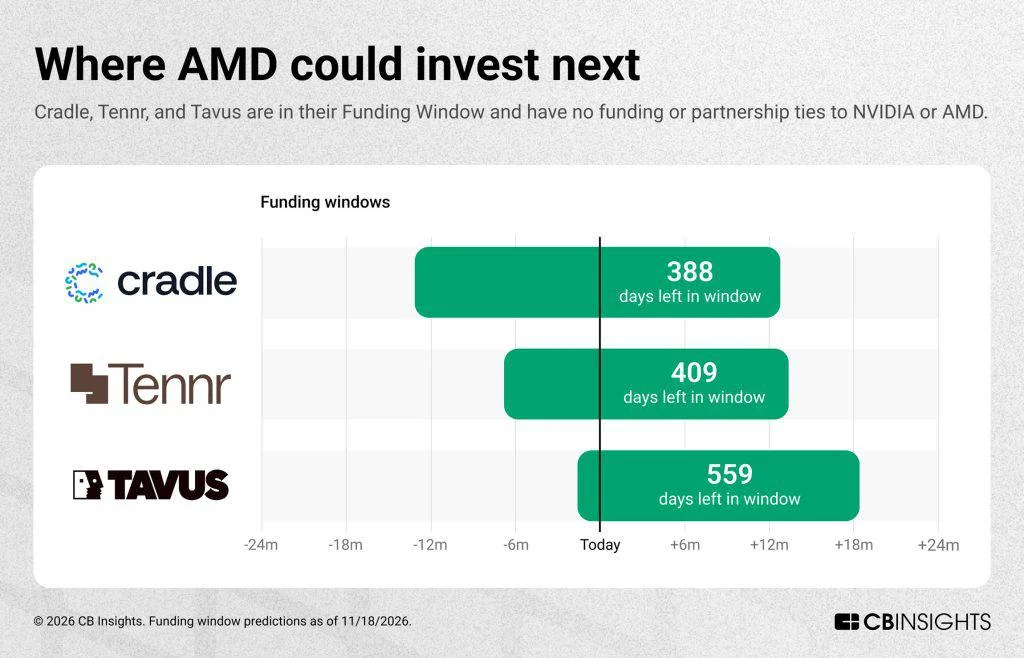
AMD’s competitive advantage lies in its presence on shared cap tables. According to recent market analysis, more than one-third of AMD’s nearly 30 deals this year were co-investments alongside NVIDIA. As NVIDIA signals a potential pullback in venture capital activity, AMD is positioned to become the primary, if not sole, strategic backer for a swath of high-potential startups. Furthermore, AMD is actively targeting the more than 50 specialized AI model developers that have yet to secure funding from either chip giant. By offering these developers preferential access to compute power on cloud platforms optimized for AMD hardware, the company is attempting to erode the "CUDA moat" that has historically kept developers locked into the NVIDIA ecosystem.
Geopolitical Friction: The Impact on Chinese AI Labs
The departure of Huang has inadvertently complicated the position of Chinese AI developers. These firms, already struggling to secure high-end NVIDIA chips due to U.S. export controls, had previously relied on "workaround" arrangements involving overseas data centers. These centers allowed Chinese entities to rent compute power rather than purchase restricted physical hardware.
Following the leadership shift at NVIDIA, the U.S. regulatory environment appears to be hardening. The uncertainty surrounding NVIDIA’s future export compliance strategy has created a vacuum that domestic Chinese chipmakers, such as Huawei and Cambricon, are eager to fill. As international access to advanced compute becomes increasingly expensive and logistically fraught, domestic developers are under immense pressure to pivot toward local hardware, a transition that will likely slow the pace of AI model innovation in the region in the short term.
The Venture Capital Dilemma: Portfolio Startups in Limbo
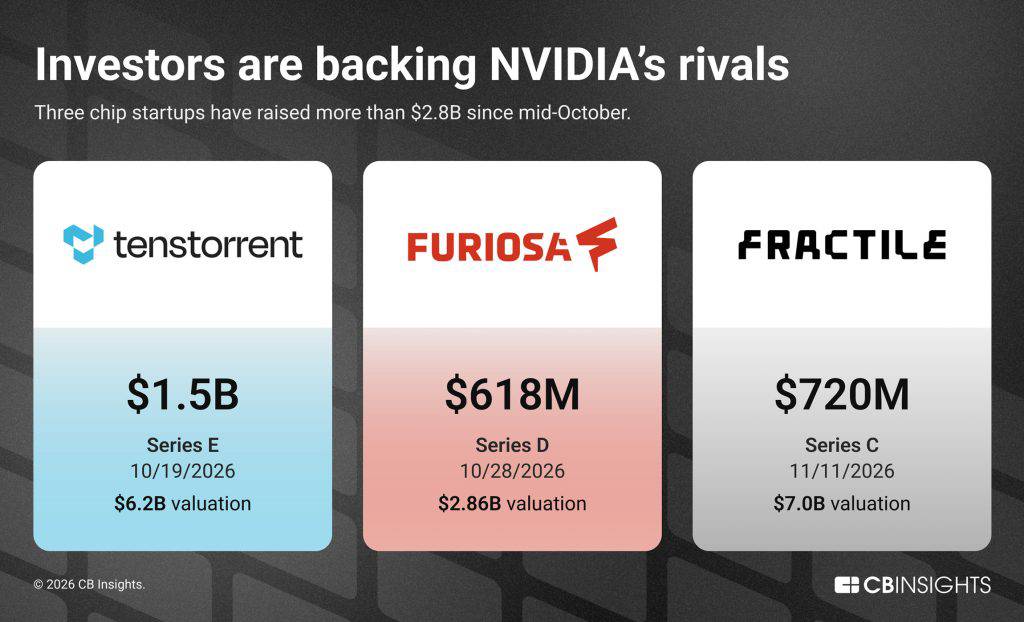
A critical segment of the market facing immediate instability is the portfolio of private companies backed by NVIDIA. Data indicates that 63 private startups currently in their predicted "funding window" are now facing a period of high uncertainty. These companies, which had expected a follow-on investment or strategic support from NVIDIA, are now forced to pitch to the broader venture capital market without the "NVIDIA seal of approval."
Financial analysts suggest that this decoupling could lead to a valuation correction. NVIDIA’s presence on a cap table historically acted as a signal of technical viability and future hardware access. Without that guarantee, these startups may find themselves facing more rigorous due diligence and, potentially, lower valuation rounds. While other investors are capable of stepping in, the loss of the strategic synergy that comes with being an "NVIDIA-backed" firm may prove to be a significant headwind for companies in the capital-intensive AI training space.
The "Neocloud" Vulnerability
Perhaps the most exposed segment of the market consists of "neoclouds"—specialized cloud providers that rent out NVIDIA GPU capacity to AI developers. These firms have seen unprecedented growth, raising $15 billion in equity funding in 2026 alone. However, their business model is built on a high-leverage dependency: they are simultaneously customers, beneficiaries of NVIDIA’s venture backing, and providers of compute that is exclusively tethered to NVIDIA’s architecture.
The current market volatility has highlighted the fragility of this model. If interim CEO Colette Kress opts to prioritize internal profit margins over the aggressive expansion of the startup ecosystem, the capital subsidies that have fueled the neocloud boom could dry up. This shift has already sparked a flight to diversity; firms like TensorWave, which utilize AMD infrastructure, are seeing increased interest from investors looking to hedge against the risks associated with an NVIDIA-exclusive cloud strategy.
The Human Capital Exodus: Opportunities for Alumni
The instability at the top of the organizational chart often triggers a broader realignment of human capital. Startups founded by former NVIDIA employees are reporting a surge in inquiries from current staff members concerned about the long-term culture of the firm. Because these alumni-led startups understand the inner workings of NVIDIA’s hardware and software stack, they are exceptionally well-positioned to recruit top-tier engineering talent. This "brain drain" could prove to be a long-term strategic threat to NVIDIA, as the expertise required to maintain their lead in GPU innovation becomes distributed across a wider ecosystem of smaller, more nimble competitors.
Broader Implications and Future Outlook
The departure of Jensen Huang is not merely a personnel change; it is a signal that the era of hyper-growth fueled by massive, centralized strategic investment may be entering a more fragmented phase. The immediate impact on the market is a redistribution of power, where legacy competitors like AMD gain a foothold, and independent cloud providers are forced to diversify their hardware stacks to survive.
From a macroeconomic perspective, the next six months will be decisive. Investors are waiting for clear signals from NVIDIA’s interim leadership regarding the company’s long-term commitment to its venture portfolio. If the company continues to provide the necessary hardware subsidies and strategic partnership support, the current market anxiety may stabilize. However, if the firm pivots toward a more conservative, profit-centric strategy, the "kingmaker" era will officially come to an end, leaving the door wide open for a new generation of hardware-agnostic AI infrastructure.
For now, the industry is in a state of watchful waiting. The underlying demand for compute remains strong, but the infrastructure of support—both financial and technical—is being rewritten in real-time. As startups, cloud providers, and competitors adjust to the new reality, the primary question remains whether any single entity can replicate the unique combination of software dominance and capital influence that defined the last decade of NVIDIA’s reign. The data suggests that for the time being, the market is diversifying, and the era of monolithic dependency on a single hardware provider is rapidly receding.