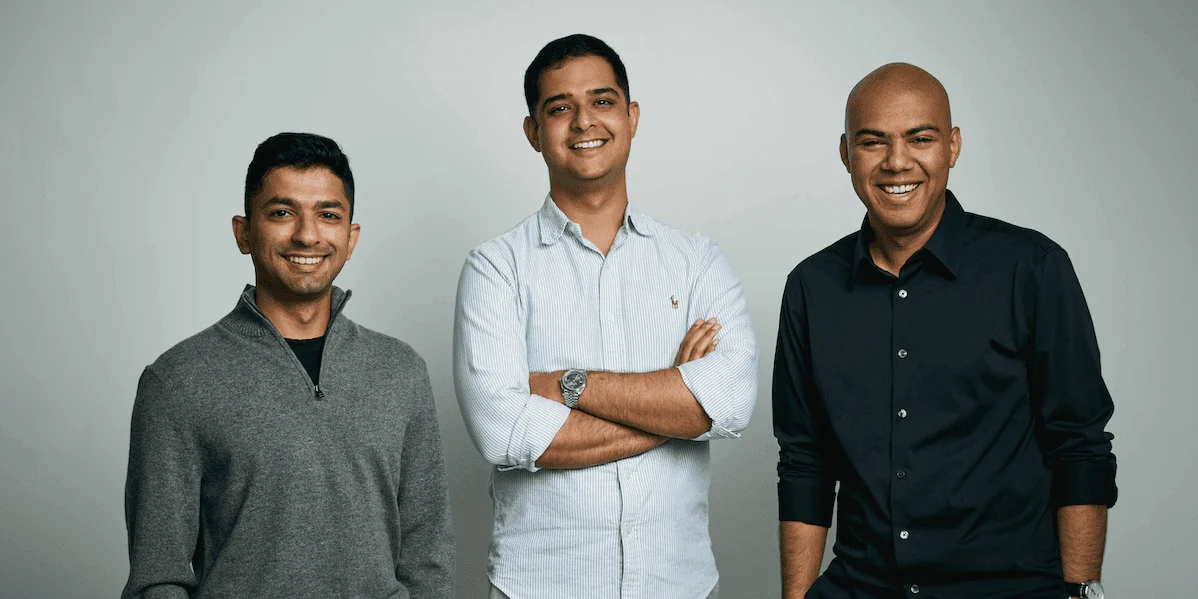
The rapid proliferation of artificial intelligence in software engineering has fundamentally altered the economics of digital development, shifting the primary industry bottleneck from code generation to code validation. As autonomous coding agents and AI-assisted workflows empower engineering teams to output unprecedented volumes of code, traditional continuous integration (CI) pipelines are buckling under the weight of exponential test suite expansion. Addressing this emerging structural crisis in software infrastructure, Blacksmith—a high-performance CI platform founded in 2024 by Aditya Jayaprakash, Aayush Shah, and Aditya Maru—has closed a significant Series C funding round. This capital infusion arrives on the heels of explosive business growth, marked by a surge from 700 to over 10,000 corporate clients and a weekly processing volume that has scaled from 5 million to 90 million CI jobs.
The Paradigm Shift: From Writing Code to Proving It Works
For decades, the fundamental scaling metric of the software industry was human engineering capacity. Developers served as the primary scarce resource, meaning that organizational output was strictly tethered to headcount. To ship more features, companies had to hire more programmers. This linear paradigm has been rendered obsolete by the advent of advanced artificial intelligence systems. Modern software engineers no longer write every line of code manually; instead, they direct fleets of intelligent coding agents that operate in parallel, twenty-four hours a day, with increasing levels of autonomy.
These AI agents do not instantly deliver pristine, production-ready features. Rather, they generate continuous streams of provisional artifacts—including patches, test cases, database migrations, and experimental branches—each of which must be rigorously evaluated against existing test suites before integration. While this automated generation has drastically accelerated the velocity of software development, the foundational architecture responsible for validating this output has remained largely static. The quiet backbone of software engineering, which ensures that code behaves as intended and remains secure, was never designed to process workloads generated at machine speed.
Furthermore, the urgency of robust validation has never been higher. Generative AI models are fully capable of introducing subtle security vulnerabilities into the codebases they assist in writing, and the sheer scale of deployment means that undetected flaws can propagate rapidly through production systems. Consequently, the core constraint of software development has decisively migrated from the creative act of writing code to the rigorous, scalable proof that the code is both functional and secure.
The Anatomy of an Infrastructure Crisis
The strain that autonomous coding agents place on legacy development pipelines is no longer a theoretical concern; it is a documented operational reality. Engineering reports published by leading AI research organizations illuminate the sheer magnitude of the expansion. As internal usage of coding agents scaled at companies like Anthropic, engineering teams observed that the volume of code shipped per quarter increased by approximately eightfold.
This dramatic uptick in code production triggered a cascading effect across downstream development systems. The corresponding test suites required to evaluate these changes grew tenfold within the same timeframe. Most critically, the volume of continuous integration jobs—the automated builds and tests that serve as the final gatekeeper before code reaches production—skyrocketed by an astonishing 25 times over a six-month period.
Industry analysts and infrastructure experts note that while front-runner organizations like Anthropic are currently operating at the leading edge of this curve, the broader enterprise software market is rapidly following the exact same trajectory. Technical advisories distributed throughout the developer ecosystem now explicitly recommend that engineering organizations plan and budget for a twenty-fivefold increase in CI infrastructure load within a two-quarter window. Legacy CI systems, often built on rigid virtualization architectures and unoptimized resource allocation models, are fundamentally unequipped to handle these demand spikes without incurring prohibitive financial costs and debilitating delays.
Blacksmith: Rebuilding the CI Stack from the Bare Metal Up
Recognizing that legacy continuous integration tools would inevitably become obsolete in an AI-native world, the founding team at Blacksmith set out to redesign the underlying infrastructure of software validation. The company’s core technical thesis was straightforward: if the volume of code needing to be tested was destined to increase by orders of magnitude, the underlying compute infrastructure required a fundamental, physics-level re-architecting rather than incremental software patches.
Blacksmith’s initial commercial offering focused on accelerating standard CI execution. By integrating a straightforward, one-line modification into existing repository workflow files, software development teams could seamlessly route their test workloads through Blacksmith’s optimized infrastructure. The results were immediate and quantifiable: client organizations experienced an average doubling of CI job execution speeds alongside a sixty percent reduction in operational costs.
Beneath this deceptively simple user experience lies a deeply complex, vertically integrated technology stack. The platform was engineered from the bare metal up to dynamically absorb massive, unpredictable demand spikes from enterprise customers. By maximizing hardware utilization and eliminating the architectural inefficiencies inherent in traditional cloud-hosted runners, Blacksmith created a system that grows faster, more reliable, and more economically efficient as its operational scale expands.
Hyper-Growth and Market Adoption
The convergence of explosive AI-driven code generation and a high-performance validation solution has fueled exceptional commercial expansion for Blacksmith throughout the past year. The company’s client base has scaled dramatically, expanding from approximately 700 enterprise customers to more than 10,000 organizations globally.
This broadening adoption is directly reflected in transaction volumes and revenue metrics. During the course of 2026, weekly CI jobs processed by the platform surged eighteenfold, climbing from five million to ninety million operations per week. Parallel to this volume growth, Blacksmith’s Annual Recurring Revenue (ARR) has multiplied seventeenfold over the same period, with its largest enterprise clients now committing in excess of one million dollars annually to secure their testing pipelines.
This financial trajectory underscores the critical nature of CI infrastructure in modern enterprise environments. When software delivery pipelines fail or slow down, engineering velocity grinds to a halt, directly impacting product release cycles and corporate revenue generation. By removing the validation bottleneck, Blacksmith positions itself as a mission-critical utility for companies transitioning toward fully automated, agentic software engineering workflows.
Origins and Team Background
The strategic foresight that enabled Blacksmith to anticipate the AI coding bottleneck years before it became mainstream knowledge is rooted in the professional background of its co-founders. Aditya Jayaprakash, Aayush Shah, and Aditya Maru established their collaborative foundation during their undergraduate years at the University of Waterloo, an institution renowned for producing technical talent specializing in distributed systems and systems engineering.
Prior to launching Blacksmith in 2024, the founding trio cultivated a rigorous, execution-focused engineering philosophy at prominent technology enterprises including Cockroach Labs and Faire, where they specialized in building hyper-performant, highly scalable systems capable of handling extreme computational loads without failure.
When the co-founders initiated Blacksmith in 2024, the prevailing industry trend was centered on simple code autocomplete tools and foundational coding assistants. However, the founding team shared a shared conviction that these early utilities were merely the prelude to a much larger structural transformation: the emergence of fully autonomous coding agents that would flood the software ecosystem with unprecedented volumes of testable code. While the broader enterprise market did not fully recognize the severity of the CI crisis until the widespread adoption of autonomous agents, Blacksmith had already spent years building the specialized infrastructure required to support it.
Today, the Blacksmith team maintains a reputation for high talent density and continues to expand its workforce rapidly to meet escalating market demand. Corporate leadership has confirmed that an ambitious product roadmap is currently underway, with several major platform launches scheduled for the coming months to extend the company’s capabilities beyond traditional CI acceleration.
Implications for the Future of Software Engineering
The successful closure of Blacksmith’s Series C funding round highlights a broader financial and technological re-evaluation of the software development lifecycle. As artificial intelligence transforms the manual labor of coding into an automated, supervisory discipline, the supporting cast of developer tools must undergo a parallel metamorphosis.
The implications of this shift extend far beyond developer productivity metrics. In an era where software can be generated almost instantaneously, security auditing, compliance verification, and performance regression testing must operate with equal velocity. If validation infrastructure lags behind generation capacity, enterprises face heightened risks of shipping vulnerable, unstable, or non-compliant applications into production environments.
By securing substantial financial backing and cementing its position as a dominant player in modern CI infrastructure, Blacksmith is poised to play a foundational role in shaping how the software industry handles the transition to agentic engineering. As the global economy prepares to run exponentially more code than it has ever produced in human history, the imperative remains absolute: automated generation must be matched by automated, lightning-fast validation to ensure that the digital infrastructure of tomorrow remains secure, reliable, and scalable.