
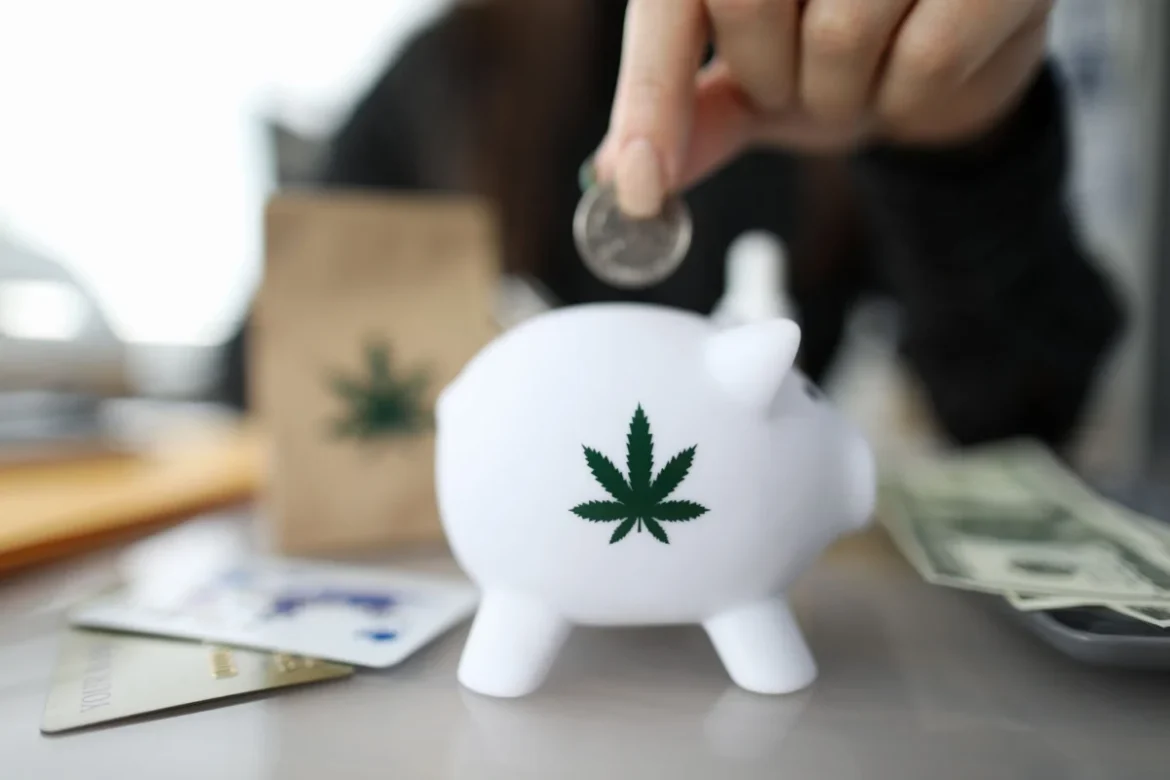
With the overwhelming majority of U.S. states having moved to legalize cannabis for either medical or adult-use purposes, a formidable coalition of 16 governors has issued a formal call to action, urging Congress to pass the SAFE Banking Act. This proposed legislation seeks to bridge the widening gap between state-level legalization and federal financial regulations, effectively allowing legal cannabis enterprises to access the institutional banking system without the lingering threat of federal prosecution.
The letter, addressed to congressional leadership, underscores an urgent public safety and economic necessity: integrating a multi-billion-dollar industry into the regulated banking sector. Supported by the American Bankers Association and a broad spectrum of industry stakeholders, the bill represents a pragmatic, bipartisan attempt to resolve the legal limbo that has plagued the cannabis sector for over a decade.
The Legislative Impasse: A Chronology of the SAFE Banking Act
The struggle to pass the Secure and Fair Enforcement (SAFE) Banking Act is a narrative defined by repeated legislative attempts and evolving political landscapes. The bill was first introduced in the House of Representatives in 2013 and has since undergone numerous iterations, repeatedly passing in the House only to stall in the Senate.
The primary hurdle has consistently been the federal classification of marijuana as a Schedule I controlled substance under the Controlled Substances Act (CSA). Despite this, the legislative momentum has surged as more states legalized the plant. In 2019, the House passed the bill with strong bipartisan support, but the momentum was tempered by a lack of Senate floor time. By 2021 and 2022, the bill—rebranded as the SAFE Plus Act—attempted to bundle banking protections with broader social justice provisions, yet it failed to clear the final hurdles of the legislative process.
The current version, H.R. 9471 and S. 4942, arrives at a time when the cannabis industry is no longer a peripheral economic actor but a primary tax revenue driver for many states. The governors argue that the status quo is untenable, creating a "cash-heavy" environment that acts as a magnet for criminal activity and complicates the oversight duties of state regulators.
Financial Hazards and the Cash-Only Dilemma
The fundamental issue is the "unlawful activity" designation. Under current federal law, financial institutions that accept deposits from cannabis-related businesses risk severe penalties, including the loss of their federal charters or accusations of money laundering. Because banks are wary of these risks, most cannabis businesses are forced to operate primarily in cash.
The implications of a cash-only economy are significant:
- Public Safety: Businesses holding large sums of physical currency are frequent targets for robberies and violent crime, endangering employees and the public.
- Regulatory Obstruction: Tax collection becomes opaque. Governors highlighted that 21 states have collected over $27.6 billion in tax revenues from legal cannabis since 2012. However, state agencies frequently struggle to process these payments or track licensing fees because the funds originate from a federally prohibited industry.
- Operational Inefficiency: Small businesses cannot easily obtain loans, process credit card payments, or utilize payroll services, creating a lopsided playing field where only the largest, most well-capitalized firms can survive the friction of the current system.
A Bipartisan Call for Federalism
The letter from the 16 governors—representing a mix of deep-blue and swing states, including Maryland, Colorado, Connecticut, Delaware, Illinois, Kentucky, Maine, Massachusetts, Michigan, Minnesota, New Mexico, New York, Oregon, Virginia, Washington, and Wisconsin—emphasizes the importance of state sovereignty.
The governors argue that the SAFE Banking Act is not a tool for federal overreach. "It does not require or encourage states to legalize cannabis, nor does it affect states that have chosen to maintain full or partial prohibitions on cannabis," the coalition stated. By framing the bill as a "common-sense" public policy solution rather than a cultural statement on drug policy, the governors are attempting to appeal to fiscally conservative lawmakers who might otherwise be hesitant to support cannabis-related legislation.
This approach aligns with the American Bankers Association’s stance, which has long advocated for the bill on the grounds of "safety and soundness." From the perspective of a bank, the current inability to conduct standard "Know Your Customer" (KYC) and Anti-Money Laundering (AML) checks on these businesses creates a regulatory blind spot. Bringing these businesses into the banking system would, ironically, provide the federal government with more transparency and better tools for monitoring illicit financial flows.
Economic and Societal Implications
The broader economic impact of the proposed legislation extends beyond just the cannabis retailers. The bill aims to provide protections for the ancillary businesses that service the industry, such as law firms, security companies, landlords, and agricultural suppliers. Currently, these companies are often barred from bank services if they are found to have significant ties to the cannabis industry, a reality that stifles broader economic development.
From a tax revenue standpoint, the failure to integrate the industry into the banking system represents a massive administrative burden. State revenue departments are forced to implement complex, high-security protocols to accept physical tax payments, which often involve armored cars and specialized processing facilities. These costs are ultimately borne by the taxpayers.
Furthermore, the legal status of the industry has created a "tax trap" via Internal Revenue Code Section 280E. Because cannabis is federally illegal, these businesses are barred from deducting ordinary business expenses, leading to effective tax rates that can exceed 70% or 80%. While the SAFE Banking Act does not directly repeal 280E, the normalization of banking services would be a foundational step toward broader financial legitimacy.
Official Reactions and Industry Sentiment
The letter has been met with positive reception from industry advocacy groups, such as the U.S. Cannabis Council and the National Cannabis Industry Association. These groups have long argued that the lack of banking access is the single biggest barrier to industry maturation.
Conversely, opposition remains centered on a subset of lawmakers who fear that any form of banking reform is a "slippery slope" toward full federal legalization. Some senators have historically insisted that any banking legislation must be paired with criminal justice reform, such as expungement of past convictions, which has complicated negotiations and resulted in legislative gridlock.
However, the recent involvement of this coalition of 16 governors signals a shift in strategy. By highlighting the logistical and public safety crises, they are forcing a conversation about administrative necessity rather than ideological preference. Whether this approach will be enough to move the needle in a polarized Congress remains to be seen.
The Path Forward: Prospects for Success
As the 119th Congress continues its session, the pressure on lawmakers to address this issue is mounting. With tax revenues from cannabis now a vital component of many state budgets, the legislative "cost of inaction" is rising.
For the financial sector, the passage of the SAFE Banking Act would provide long-sought legal clarity. It would allow banks to transition from a position of forced avoidance to one of risk-based assessment, similar to how they handle other highly regulated industries.
The governors’ letter concludes with a clear warning: the current system is failing. By continuing to ignore the reality of state-legalized cannabis markets, the federal government is leaving a massive, cash-heavy industry operating outside the reach of the financial oversight that is intended to prevent money laundering and organized crime.
As of late 2024, the bill remains a key item on the agenda for banking committees in both chambers. The outcome will likely depend on whether leadership can decouple the practical concerns of financial safety from the broader, more divisive debates surrounding federal drug policy. If successful, the SAFE Banking Act would represent the most significant federal change to cannabis policy in modern American history, providing a blueprint for how the federal government can reconcile its statutes with the evolving reality of state-level governance.
