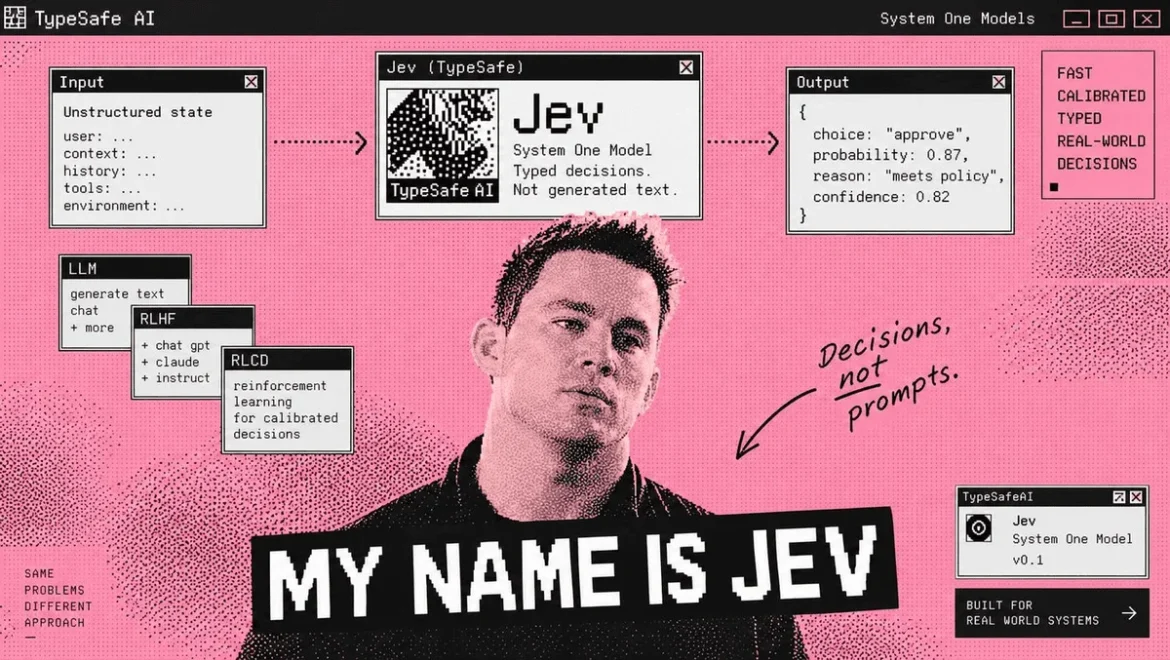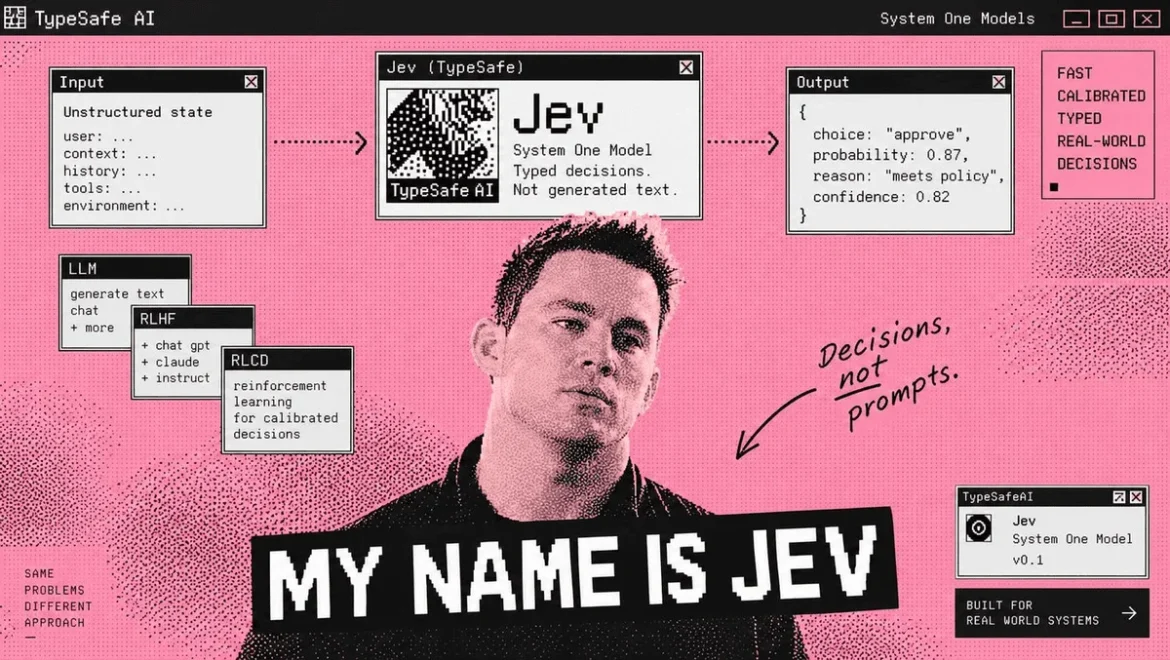
The emergence of Jev, a specialized model developed by TypeSafe AI, has triggered a significant discourse within the machine learning community regarding the evolution of natural language processing (NLP). While social media influencers and tech enthusiasts have framed Jev as a paradigm-shifting invention that renders traditional large language models (LLMs) obsolete, a technical examination reveals a more nuanced reality. Jev represents a strategic architectural shift toward high-efficiency, structured decision-making, rather than a departure from the fundamental principles of artificial intelligence. By prioritizing "System One" thinking—a psychological framework popularized by Daniel Kahneman—Jev aims to solve the latency and cost inefficiencies inherent in deploying massive, general-purpose models for routine classification tasks.
The Architectural Context of Jev
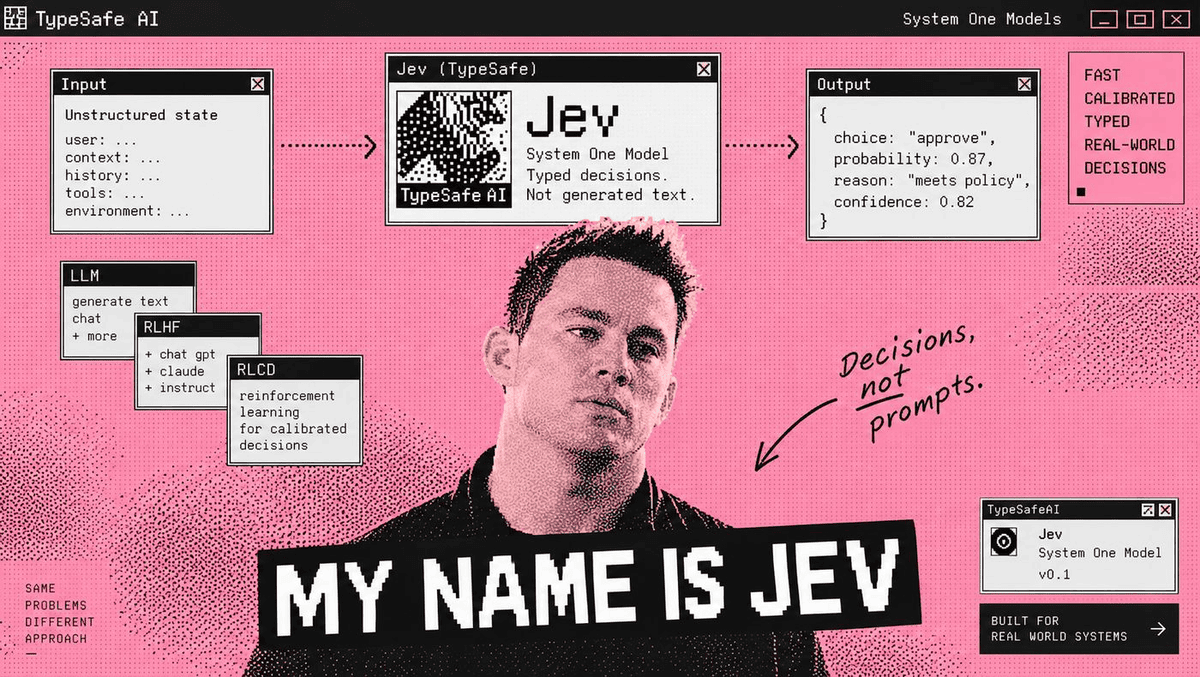
At its core, Jev is designed to function as a specialized engine for classification, scoring, routing, and intent detection. Unlike generative models such as GPT-4 or Claude, which utilize transformer architectures to predict the next token in a sequence to construct long-form prose, Jev is optimized for "structured outputs." When presented with a user input, such as a customer service complaint, the model does not attempt to draft a reply. Instead, it evaluates the input against a predefined schema and returns a probability distribution across a set of fixed choices.
This methodology relies on the concept of System One cognitive processing, which is defined by rapid, instinctive, and automatic responses. In the context of AI, this contrasts with System Two, which involves slow, deliberative, and logical reasoning—the primary domain of modern frontier LLMs. By offloading routine tasks to a model optimized for rapid classification, organizations can theoretically reduce the computational overhead associated with running massive neural networks for simple, repetitive queries.
Chronology and the Evolution of Classification
The problem Jev attempts to solve is not new; it is the culmination of nearly a decade of advancements in NLP. Historically, the evolution of this technology can be tracked through several key phases:
- The Early Era (2010–2018): NLP tasks were largely dominated by supervised learning, requiring massive, labeled datasets to train specific classifiers for individual business needs.
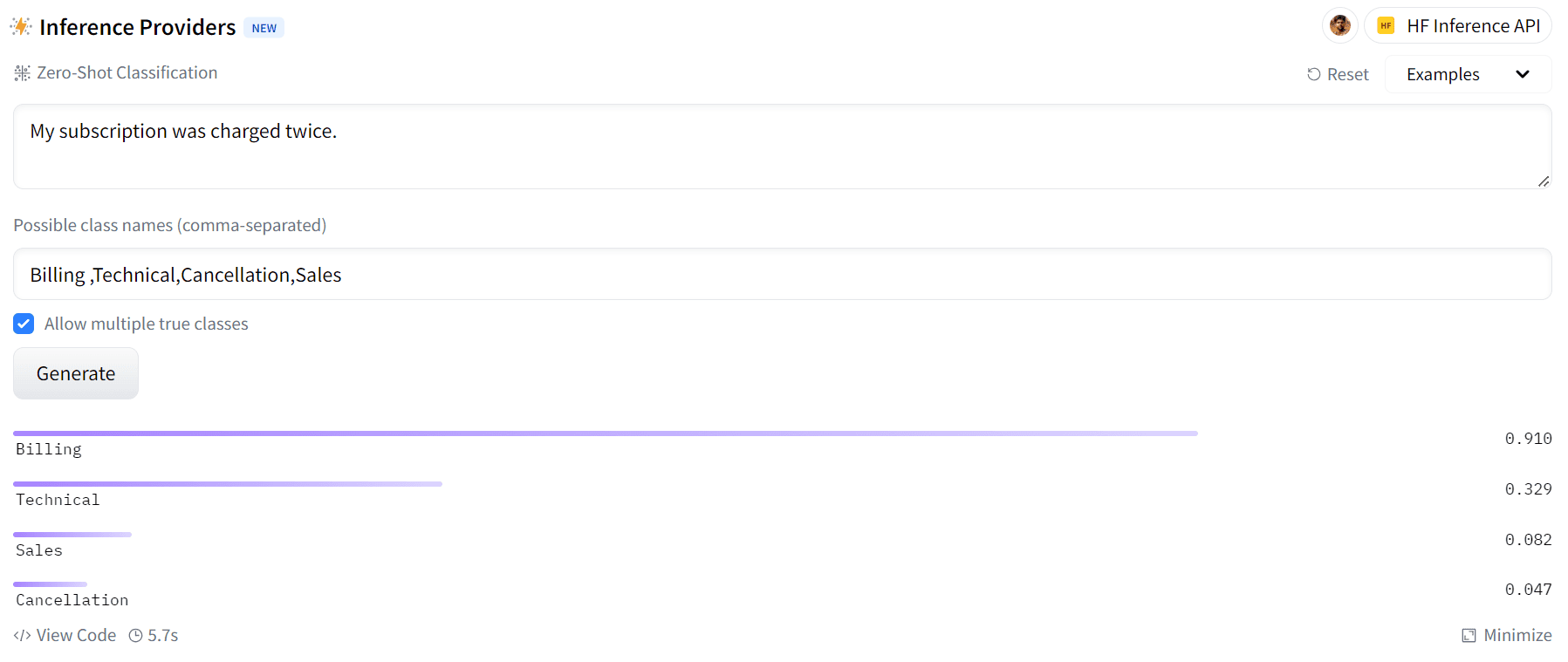
- The Rise of NLI (2019–2020): The advent of Natural Language Inference (NLI) models, such as Facebook’s BART-large-mnli, introduced the concept of zero-shot classification. This allowed developers to classify text without specific training data for every category, provided the labels were semantically meaningful.
- The LLM Surge (2021–2023): With the arrival of GPT-3 and its successors, developers began using general-purpose models for classification via "prompt engineering." While effective, this created an "overkill" scenario where expensive, compute-heavy models were being used for binary or categorical decisions.
- The Specialized Model Phase (2024–Present): Models like Jev represent a move toward "right-sizing" AI. By creating architectures specifically tuned for probabilistic decision-making rather than creative generation, developers are seeking to reclaim efficiency without sacrificing the semantic understanding gained by modern neural architectures.
Data-Driven Analysis: Efficiency vs. Accuracy
The primary value proposition of Jev lies in its efficiency. In a standard enterprise environment, utilizing a 70-billion-parameter model to categorize a support ticket into "Billing" or "Technical" is computationally wasteful. Jev’s architectural footprint is significantly smaller, allowing for parallel inference that reduces latency.
However, the reported performance metrics for Jev remain subject to scrutiny. TypeSafe AI has cited a 68% accuracy rate on internal workflows; yet, in the rigorous world of machine learning benchmarking, internal metrics are often insufficient. External validations, including a small-scale fact-checking test showing 96.3% accuracy, provide a glimpse into potential efficacy, but these studies lack the broad, peer-reviewed scope necessary to declare the model a market leader.
Crucially, the "zero hallucination" claim associated with Jev must be understood within its proper context. Jev is not incapable of being wrong; rather, it is restricted to a schema. Because the output is constrained to a fixed list of options, the model cannot invent facts (hallucinate) outside of its defined categories. It remains entirely possible, however, for the model to assign a high probability to the wrong category—a distinction that is vital for developers designing automated routing systems.

Understanding RLCD: Reinforcement Learning for Calibrated Decisions
One of the most technical aspects of Jev is the implementation of Reinforcement Learning for Calibrated Decisions (RLCD). Traditional models often suffer from "overconfidence," where the mathematical probability assigned to a prediction does not reflect the likelihood of the prediction being correct.
Calibration, in the context of RLCD, forces the model to ensure that its confidence scores are statistically representative. If Jev claims a 60% confidence level, the system should be correct 60% of the time. This is a game-changer for enterprise software. For example, an automated triage system can be programmed to handle queries with a confidence score above 90% autonomously, while routing anything below 70% to a human operator. By optimizing for this alignment between confidence and accuracy, TypeSafe AI is attempting to make AI behavior more predictable and reliable for business integration.
Broader Impact and Industry Implications
The introduction of Jev signals a transition in the AI industry from the "discovery phase" of large models to the "optimization phase" of specialized applications. For the broader industry, the implications are three-fold:
- Cost Rationalization: Enterprises are increasingly under pressure to demonstrate a return on investment (ROI) for AI. Moving routine classification tasks from expensive LLM API calls to smaller, specialized models like Jev offers a clear path toward reducing operational expenditure.
- Architectural Modularization: The success of this approach suggests that the future of AI in the enterprise is not a single, omnipotent model, but a "stack" of models. One might use a frontier model for complex reasoning and a System One model for high-throughput, routine classification.
- Developer Experience: By focusing on structured outputs and probabilistic decision-making, Jev addresses the "brittleness" of LLM-based applications. Developers are currently forced to build complex "guardrails" and "parsers" to force LLMs to output valid data; Jev’s architecture assumes this structure from the ground up, simplifying the integration process.
Final Assessment
To label Jev as "revolutionary" would be to overlook the foundational work of the NLP researchers who pioneered zero-shot classification and NLI techniques over the last decade. However, the model represents a sophisticated synthesis of these concepts. TypeSafe AI has effectively combined specialized architecture, a focus on calibration via RLCD, and a developer-centric approach to build a tool that solves the specific problems of speed and reliability that plague general-purpose LLMs in production environments.
As the industry moves forward, the success of Jev will not be measured by the hype it generates on social media, but by its ability to hold up under independent, large-scale benchmarks. If it can consistently provide low-latency, highly calibrated decisions in complex, real-world workflows, it will serve as a vital case study in the power of specialized, narrow-AI architectures. For now, it remains a promising development that highlights an essential truth in technology: the most effective tools are often those that do one thing, and do it exceptionally well, rather than those that attempt to do everything at once.