

The modern retail investing landscape has undergone a profound transformation over the past decade, shifting from a model dominated by high-fee traditional brokers to a democratized digital ecosystem. Today, everyday investors can buy fractional shares, access institutional-grade exchange-traded funds (ETFs), and execute trades instantly via mobile applications, frequently with zero commission fees. This technological leap has empowered millions of individuals to take complete control of their financial destinies, bypassing traditional intermediaries entirely.
Against this backdrop of ultra-low-cost, DIY investing, digital wealth management platforms face a fundamental strategic question: If retail investors can access the exact same financial instruments independently, why should they pay a management fee for
automated services?
Financial technology firm Betterment is addressing this tension directly by introducing self-directed investing features alongside its flagship automated portfolios. This hybrid model allows users to trade individual stocks and ETFs independently while maintaining access to the platform’s curated portfolios. However, industry analysts and platform executives argue that portfolio selection represents only the initial phase of long-term wealth accumulation. The true value of automated wealth management, they contend, lies not in the initial purchase of assets, but in the continuous, algorithm-driven optimization that occurs over months, years, and decades.
The Evolution of Digital Wealth Management
To understand the current positioning of robo-advisors and automated platforms, it is necessary to examine the evolution of the industry. Automated investing platforms first emerged in the wake of the 2008 financial crisis, promising a low-cost, algorithm-driven alternative to human financial advisors. These early platforms utilized Modern Portfolio Theory (MPT) to build globally diversified, risk-adjusted portfolios primarily composed of low-cost index funds and ETFs.
Over the subsequent fifteen years, these platforms evolved from simple rebalancing tools into sophisticated financial engines capable of executing complex tax strategies, multi-account asset location, and dynamic risk adjustments. As retail trading platforms reduced entry barriers to zero, automated platforms had to pivot from mere asset aggregation to delivering tangible, quantifiable value through automation.
The introduction of self-directed trading features by automated platforms marks a new phase in digital finance. Rather than forcing users to choose between absolute control and algorithmic assistance, platforms are attempting to capture both segments of the modern investor’s mindset: the desire to explore individual equities, paired with the need for a disciplined, hands-off core strategy for long-term savings.
Quantifying the Value of Automated Tax Optimization
One of the primary arguments advanced by automated wealth management providers is their capacity to minimize tax burdens through programmatic oversight. For the average retail investor, executing tax-efficient strategies across multiple account types—such as traditional IRAs, Roth accounts, and taxable brokerages—presents a significant logistical and mathematical challenge.
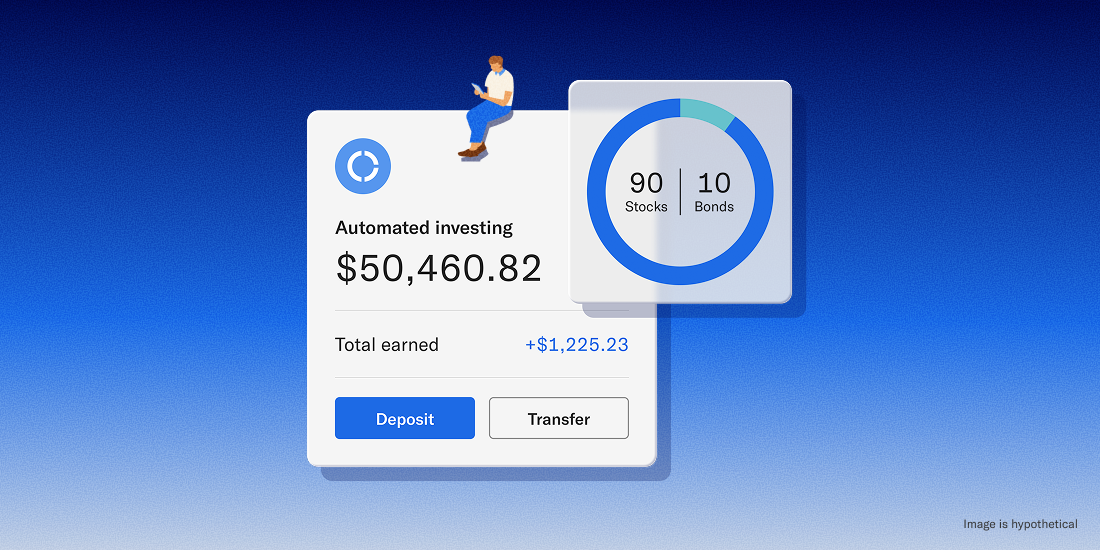
Automated trading algorithms approach this challenge through continuous monitoring and systematic execution. For instance, features like Tax Coordination dynamically allocate specific asset classes to the most tax-advantageous account types based on mathematical modeling. Growth-oriented assets are frequently routed to Roth accounts where future appreciation can be withdrawn tax-free, while income-generating assets may be placed in tax-deferred vehicles.
Similarly, automated tax-loss harvesting (TLH) monitors taxable accounts for market downturns, systematically selling underperforming assets to realize losses that can be used to offset capital gains and ordinary income, all while maintaining the target asset allocation through immediate reinvestment.
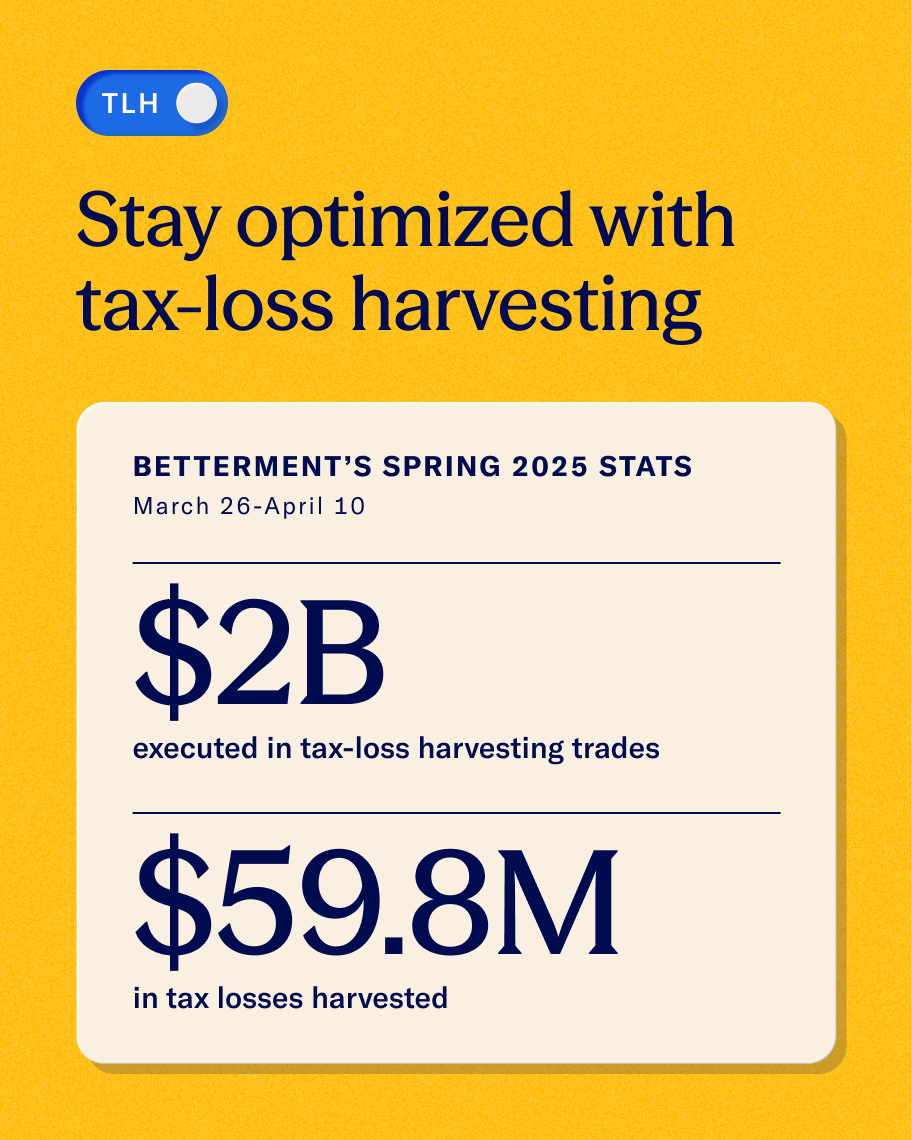
The efficacy of these automated systems is often highlighted during periods of macroeconomic volatility. During the tariff-induced market turbulence of spring 2025, algorithmic tax-loss harvesting systems across the industry deployed rapidly to capture market dips. According to internal platform data, automated harvesting features successfully realized millions of dollars in losses for retail customers during this window, capital that would have otherwise remained unoptimized.
Furthermore, empirical reviews of platform performance indicate that systematic tax optimization frequently offsets the advisory fees charged by the platform. Industry data suggests that a significant majority of long-term users utilizing automated tax-loss harvesting features realize tax savings that equal or exceed the annual management fee, positioning the service as a net-positive financial instrument for the user.
Mitigating Behavioral Biases Through Automation
Beyond taxation, the most persistent obstacle to long-term retail investing success is human behavior. Individual investors routinely fall victim to cognitive biases, including loss aversion, recency bias, and the temptation to time the market. These psychological hurdles frequently lead to sub-optimal outcomes, characterized by buying high during market exuberance and selling low during panics.
Comprehensive industry research underscores the cost of emotional decision-making. Landmark studies by financial research firm Morningstar, including their recurring Mind the Gap analyses, have consistently demonstrated that individual investors frequently underperform the actual funds they hold. This performance deficit—often referred to as the "behavior gap"—is largely attributed to poorly timed cash flows, where investors jump in and out of the market based on short-term sentiment rather than long-term strategy.
Automated wealth platforms combat this behavioral drift through structural mechanisms designed to enforce discipline without requiring active oversight from the user.
Key behavioral mitigation tools include:
Automated Rebalancing: As asset classes grow at differing rates, a portfolio’s risk profile naturally drifts away from the investor’s original target. Automated platforms continuously monitor this drift and rebalance the portfolio back to its target allocations, forcing investors to systematically trim outperforming assets and buy underperforming ones.
Glide Paths: For goal-based accounts, such as retirement or education funds, algorithms automatically adjust the asset allocation over time, gradually reducing equity exposure and increasing fixed-income weightings as the target date approaches. This transition occurs seamlessly without requiring manual intervention or calendar reminders.
Dollar-Cost Averaging and Recurring Deposits: By encouraging and automating recurring deposits, platforms facilitate consistent capital deployment regardless of market conditions. Empirical evaluations of systematic deposit strategies reveal substantial performance premiums over time. Internal metrics from major automated platforms indicate that users utilizing recurring deposit schedules achieve meaningfully higher annualized returns over multi-year horizons compared to those who rely on manual, discretionary contributions.
The Economics of Time and Mental Capital
While financial metrics such as tax alpha and annualized returns dominate discussions of portfolio management, the administrative and psychological toll of self-directed investing represents an equally significant factor for many consumers.
Managing a diversified, tax-efficient portfolio independently requires a substantial investment of time and attention. Academic and industry estimates suggest that manually executing a comprehensive portfolio rebalance across multiple asset classes and accounts can consume hours of labor, involving trade calculations, transaction execution, and compliance tracking.
For working professionals and individuals with competing personal priorities, dedicating leisure time to portfolio administration can contribute significantly to cognitive fatigue. Financial anxiety—exacerbated by a 24-hour news cycle dominated by market volatility and sensationalist economic reporting—further complicates the retail investing experience.
Consumer surveys conducted across the digital wealth management sector indicate that a substantial portion of platform users prefer a hybrid approach. The vast majority of assets are typically allocated to automated, core managed accounts designed to handle long-term wealth accumulation quietly in the background, while smaller, self-directed portions of capital are set aside for individual stock exploration or speculative trading. This dual capability allows investors to satisfy their intellectual curiosity or desire for active participation without jeopardizing their core financial security.
Implications for the Future of Financial Services
The integration of self-directed trading capabilities within automated wealth management platforms represents a mature phase in the democratization of finance. As technology lowers the friction of trade execution to near zero, the competitive advantage for financial platforms is shifting definitively toward software sophistication, algorithmic precision, and holistic user experience.
The core debate facing the retail investor—whether to pay a management fee for automated oversight or manage assets independently—hinges on an individual’s willingness and capacity to replicate complex, continuous processes. While purchasing an individual ETF or stock requires minimal effort, maintaining a globally diversified, tax-coordinated, automatically rebalanced, and tax-loss-harvested portfolio over a multi-decade horizon demands a level of disciplined execution that few individuals can sustain manually.
Ultimately, the nominal management fees charged by automated platforms—frequently measured in basis points—are positioned not as a cost for selecting funds, but as a subscription for ongoing behavioral discipline, risk mitigation, and algorithmic optimization. As advanced features such as direct indexing and fully paid securities lending become standard offerings in automated portfolios, the division between self-directed autonomy and institutional-grade wealth management will continue to blur, offering investors unprecedented flexibility within a structured framework.
