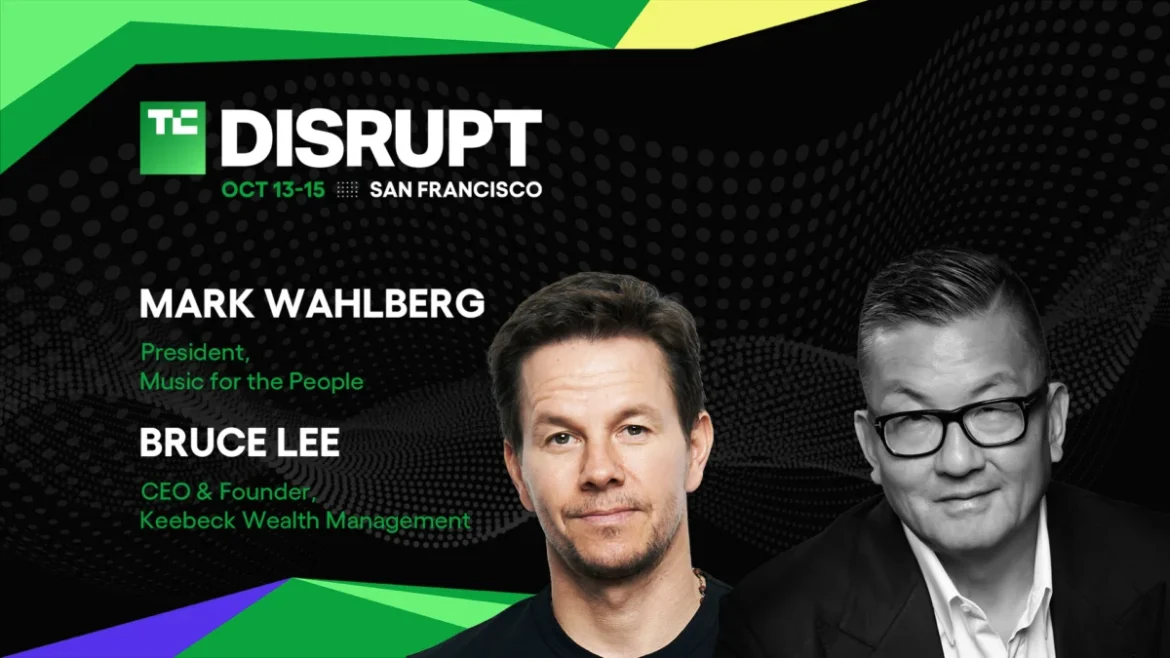
Mark Wahlberg, one of Hollywood’s most recognizable A-list figures, is set to take the main stage at TechCrunch Disrupt 2026 to discuss his ongoing evolution from blockbuster actor and producer to sophisticated investor and entrepreneur. Over a career spanning nearly three decades, Wahlberg has established a dominant presence in the entertainment industry, earning two Academy Award nominations, a Golden Globe nod for The Fighter, and multiple Emmy nominations as a producer for critically acclaimed television projects like HBO’s Entourage. Currently, he stars in the manhunt thriller By Any Means, which centers on the 1966 Mississippi civil rights killings. However, his professional trajectory increasingly reflects a heavy commitment to the business and venture capital ecosystems.
At the upcoming flagship technology conference, Wahlberg will sit down for a featured fireside chat with Bruce K. Lee, founder and chief executive officer of Keebeck Wealth Management. The session will offer attendees an unvarnished look at how the actor has leveraged cultural intelligence, sheer entrepreneurial instinct, and institutional-level financial discipline to break into competitive high-finance circles, with an accelerating emphasis on healthcare and wellness startups.
From Box Office Success to Diversified Enterprise
Wahlberg’s journey into the business world extends far beyond his foundational success on the silver screen. Over the past two decades, he has systematically built a diverse multi-industry portfolio encompassing a production company, a restaurant chain, apparel ventures, fitness brands, and a steady stream of early-stage angel investments. Additionally, his philanthropic footprint includes the Mark Wahlberg Youth Foundation, which has supported inner-city children and teenagers for 25 years.

This diversification reflects a broader macro trend among top-tier celebrities and athletes who are moving away from traditional passive endorsement deals and choosing instead to build, fund, and scale operational businesses. During his discussion with Lee at TechCrunch Disrupt 2026, Wahlberg is expected to dissect the exact mechanics of this transition, addressing the common pitfalls that high-profile figures encounter when entering the venture capital landscape, and detailing the critical process of unlearning legacy instincts to adopt formal institutional investment strategies.
The Evolution of Celebrity Venture Capital
The intersection of celebrity influence and venture capital has matured significantly over the past decade. Historically, high-net-worth entertainers relied on traditional wealth management firms focused primarily on public equities, real estate, and conservative fixed-income assets. Today, however, cultural icons increasingly operate as institutional venture partners, leveraging their massive audience reach and personal brand equity—often referred to in financial circles as "deal flow access"—to secure allocations in competitive early-stage rounds.
Wahlberg’s partnership with Keebeck Wealth Management represents a structured approach to this modern phenomenon. By pairing his instinct for consumer trends, pop culture, and market demand with Lee’s sophisticated financial architecture, Wahlberg has successfully navigated complex asset classes. Analysts note that this hybrid model allows cultural leaders to transcend simple brand ambassadorships, transforming them into active market participants capable of driving genuine enterprise value, particularly within high-growth sectors such as health, wellness, and medical technology.
TechCrunch Disrupt 2026: Event Context and Logistics
TechCrunch Disrupt 2026 is scheduled to take place from October 13 to October 15, drawing an expected crowd of more than 10,000 technology leaders, founders, investors, and innovators to San Francisco’s Moscone West convention center. As one of the global technology sector’s most anticipated annual gatherings, the conference serves as a primary launchpad for early-stage startups and a critical networking hub for the venture capital community.

The three-day event will feature over 200 distinct educational sessions, interactive workshops, and keynote panels spread across multiple specialized stages, including the main stage, the builders stage, and the AI stage. More than 250 industry leaders are slated to speak, covering the macroeconomic factors, regulatory shifts, and technological breakthroughs currently shaping the global innovation economy.
Organizers have emphasized that the inclusion of figures like Wahlberg underscores the blurring lines between traditional entertainment, consumer lifestyle branding, and deep-tech innovation. By examining how creative talent can successfully integrate into the startup ecosystem, the conference aims to provide actionable insights for founders seeking to scale operations and optimize capital acquisition strategies.
Broader Industry Implications
The conversation between Wahlberg and Lee carries significant implications for the broader startup and venture capital ecosystems. As liquidity conditions fluctuate and institutional investors exercise heightened scrutiny over early-stage valuations, founders are increasingly forced to look beyond traditional venture capital firms for strategic value-add partners. Celebrities and cultural influencers who possess rigorous investment frameworks can offer portfolio companies unprecedented consumer reach and market visibility.
At the same time, industry watchdogs point out that the integration of high-profile investors requires strict governance and disciplined portfolio management to avoid conflicts of interest or superficial hype cycles. Wahlberg’s candidness regarding his own learning curve—specifically the necessity of transitioning from gut-level entrepreneurial choices to rigorous institutional underwriting—offers a valuable case study for other public figures attempting to navigate the high-stakes world of venture capital.

Registration and Attendance Information
As the event approaches, conference organizers have noted strong demand for passes, driven by a packed agenda highlighting artificial intelligence, biotechnology, sustainable tech, and venture funding dynamics. Ticket pricing structures include tiered deadlines, with rates subject to increases following final daily cutoffs. Attendees seeking to secure access to the main stage sessions, networking floors, and exhibitor showcases can register directly through the official TechCrunch Disrupt portal.