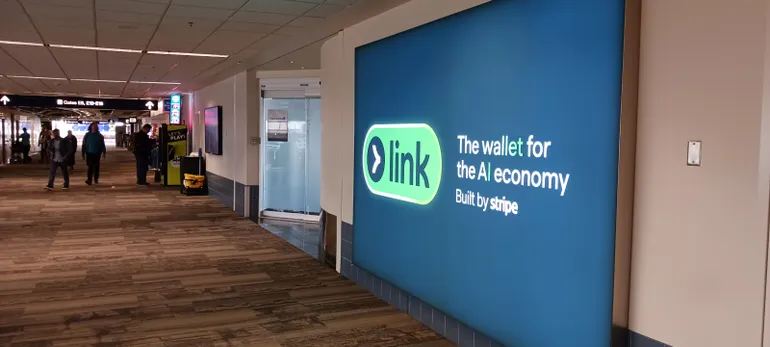
Stripe is aggressively pivoting its digital wallet infrastructure to capture the emerging market of agentic commerce, forging strategic alliances with several major artificial intelligence developers to empower autonomous software bots to execute financial transactions on behalf of human users. As artificial intelligence evolves from a conversational novelty into an active economic participant, processing payments securely through automated personal assistants has become a critical battleground for fintech heavyweights.
The payment processing giant’s recent maneuvers signal a definitive shift in how digital commerce will be conducted over the coming decade. By embedding its proprietary Link wallet into various prominent AI ecosystems, Stripe is working to ensure that when an AI bot decides to purchase goods or services, the underlying rails of that transaction run directly through Stripe’s proprietary network.
Meta Platforms Integration and the Expanding AI Ecosystem
The most prominent recent development in this strategy arrived when Meta Platforms integrated Stripe’s Link wallet into Muse, its newly unveiled personal AI agent. According to a September 8 press release from the parent company of Instagram and Facebook, this integration equips the personal assistant with the direct technical capability to complete secure payment transactions on behalf of consumers seamlessly.
This major partnership with Meta followed a rapid succession of similar integrations announced the previous month. Stripe secured deals to bring Link to xAI’s Grok bot—developed by Elon Musk’s SpaceX—as well as to Instinct, a phone-texting-based AI assistant created by Spear Street Technology. Furthermore, industry observers note that Stripe’s payment architecture has increasingly found its way into popular open-source and proprietary agent frameworks, including OpenClaw, Anthropic’s Claude, OpenAI’s ChatGPT, Google’s Gemini, and Microsoft’s Copilot.
Fintech analysts point out that these integrations solve a foundational problem for Stripe. Traditionally operating as a business-to-business (B2B) backend infrastructure provider, Stripe has historically lacked the direct, two-sided consumer relationship enjoyed by legacy competitors like PayPal. Gaining a deep foothold in consumer-facing AI agents effectively bridges this gap, allowing Stripe to secure both ends of the transaction lifecycle.
Chronology of Stripe’s Agentic Commerce Push
The foundation for Stripe’s current push into autonomous agent payments was formally laid earlier this year. In April, during its annual flagship conference for developers and customers, the company officially debuted specialized payment solutions tailored specifically for AI agents.
Following that debut, the timeline of adoption accelerated rapidly through the summer and early autumn:
- April: Stripe formally introduces payment frameworks optimized for AI agents at its developer conference.
- August: Link integrations are officially announced for xAI’s Grok bot and Spear Street Technology’s Instinct assistant.
- September 8: Meta Platforms formally releases Muse, featuring native integration of Stripe’s Link wallet for autonomous consumer purchases.
- September 15: Reports emerge detailing Instinct’s massive funding talks, which aim for a $10 billion valuation, underscoring the sky-high market enthusiasm surrounding text-based AI assistants.
This swift deployment timeline highlights the urgency with which infrastructure providers are moving to establish first-mover advantages in the agentic economy. As software agents transition from retrieving information to executing financial commitments, the race to become the default payment rail has intensified dramatically.
Data, Metrics, and the Scale of Link
Stripe’s ability to attract major AI developers relies heavily on the existing scale of its Link product. Launched five years ago, Link functions primarily as a "card on file" solution designed to streamline online checkout experiences. It competes directly with other autofill and digital wallet tools, such as Apple Pay, Google Chrome’s autofill features, and Paze, the digital wallet backed by Early Warning Services.
According to figures published by Stripe, Link has amassed a staggering 300 million global users over its five-year history. The wallet is currently integrated into the checkout flows of approximately 1 million merchants worldwide. By pre-populating payment credentials, shipping addresses, and contact details, Link significantly accelerates checkout speeds, which in turn measurably improves merchant conversion rates and payment authorization success.
However, external verification of these user acquisition metrics remains limited. Stripe spokespeople have declined to provide granular geographic breakdowns of where these 300 million Link users are located or the specific customer acquisition strategies that drove such rapid growth. Nonetheless, the sheer scale of the merchant network makes Link an attractive plug-and-play option for AI developers seeking immediate commercial utility without having to build custom merchant agreements one by one.
Security, Privacy, and Consumer Protections
As autonomous bots begin handling sensitive financial tasks, security and privacy have emerged as paramount concerns for both regulators and consumers. To mitigate these risks, Stripe and its partners have structured agentic wallets with strict isolation layers designed to keep sensitive credit card numbers entirely hidden from the artificial intelligence software itself.
In the case of Meta’s Muse, the AI agent never gains direct access to the user’s real payment credentials. Instead, the Link wallet generates a secure, one-time-use virtual card for each distinct purchase. "The agent never sees your real card," noted Simon Taylor, a fintech blogger and head of market development for the Stripe-backed blockchain venture Tempo, in a commentary highlighting the technical architecture of these integrations.
Moreover, Meta’s implementation of Link extends consumer protections directly into the AI shopping experience. According to official corporate disclosures, purchases made via the Muse agent carry Link’s standard free coverage policies. These safeguards include protections against damaged or lost items, price drops following a purchase, no-fee returns, and guaranteed return policies on eligible transactions.
Industry analysts suggest that Meta plans to monetize the Muse agent through dual revenue streams: charging merchants a percentage-based fee for successfully delivering a verified sale, and taking a cut of any financial savings the bot secures for the consumer. Such savings could include automatically locating promotional discount codes or identifying and canceling outdated, forgotten recurring subscription charges.
Strategic Implications and the Competitive Landscape
The push toward agentic commerce represents an existential shift for the broader payments industry. Richard Crone, CEO of Crone Consulting LLC, a San Carlos, California-based payments advisory firm, emphasizes that the relationship between consumer wallets and software agents is converging rapidly. "Essentially, the way to think about this is that the agent will be the wallet or the wallet will be the agent," Crone remarked.
This convergence creates a high-stakes competitive environment. Historically, companies like PayPal held a distinct structural advantage due to their classic two-sided network model, featuring millions of active consumers on one side and vast merchant acceptance networks on the other. PayPal has similarly established integration ties with the major large language models (LLMs) underpinning modern AI tools, including OpenAI’s ChatGPT and Google’s Gemini. Furthermore, PayPal boasts a diverse array of funding sources—including traditional debit and credit options, reloadable prepaid cards, Venmo balances, buy now, pay later (BNPL) loans, and stablecoins.
For an individual human consumer, managing nine distinct payment options at checkout can be overwhelming. However, an AI agent is uniquely positioned to evaluate all available payment rails instantaneously, calculating which method offers the best rewards, lowest fees, or optimal financing terms for a given purchase. "You have to have access to that agentic consideration as part of agentic shopping," Crone explained. "That can be existential to Stripe if they don’t have a consumer-facing digital wallet and a merchant acceptance network."
The urgency of securing a robust consumer-facing footprint has driven aggressive corporate maneuvers across the financial technology sector. Analysts note that Stripe’s intense focus on expanding Link’s reach within AI agents is part of a broader, vital effort to establish consumer-side equity that rivals long-established ecosystems like Apple Pay and Google Wallet.
Looking Ahead: The Future of Autonomous Spending
As artificial intelligence agents become increasingly autonomous—moving from simple recommendation engines to fully empowered financial proxies—the definition of e-commerce is undergoing a fundamental rewiring. Consumers are expected to delegate routine purchasing decisions, subscription management, and comparison shopping entirely to software assistants.
For Stripe, the strategy is clear: by positioning Link as the universal default wallet embedded within the world’s leading AI models, the company aims to become the invisible financial plumbing running underneath nearly every automated transaction. Whether navigating text-based assistants like Instinct, exploring multi-modal platforms like Gemini and Copilot, or shopping through social media agents like Muse, Stripe is betting heavily that its infrastructure will remain indispensable to the future of global commerce.