Shield AI is aggressively pivoting from its origins as a niche software developer into a vertically integrated defense juggernaut, signaling a major shift in how the next generation of military hardware will be built and deployed. On November 5, the San Diego-based firm announced a definitive agreement to acquire radar technology specialist Echodyne in a deal valued at up to $5.3 billion. This monumental acquisition, coupled with a $2.5 billion financing round that includes a $1 billion Series H at a $28.8 billion valuation, underscores a clear strategic intent: Shield AI no longer intends to merely provide the “brains” for aircraft; it intends to own the entire aircraft, the autonomy systems governing them, and the critical sensor suites that allow them to function in contested environments.
The strategic rationale behind this expansion is rooted in the company’s flagship product, Hivemind. Originally developed as an AI-pilot software suite capable of operating drones and fighter jets without the need for GPS, external communications, or human intervention, Hivemind has become the bedrock of the company’s valuation. By integrating its software with its own hardware—most notably the V-BAT drone and the upcoming X-BAT, a vertical take-off and landing autonomous fighter jet—Shield AI is aiming to solve the integration friction that has historically plagued the defense sector.
A Chronology of Strategic Growth
Shield AI’s ascent has been defined by a methodical, acquisition-heavy growth strategy. Since 2021, the company has completed or entered into agreements for five major acquisitions. This pattern of growth reflects a deliberate effort to internalize supply chains and technical capabilities that were previously outsourced to third-party vendors.
The initial phase of Shield AI’s M&A activity focused on acquiring "bolt-on" technologies—smaller firms with functional, combat-ready products that required the scale and capital that Shield AI could provide. This approach allowed the company to rapidly expand its intellectual property portfolio without the lengthy gestation periods typically required for internal R&D.
The acquisition of Echodyne represents a fundamental inflection point in this strategy. Unlike previous, smaller purchases, Echodyne provides immediate scale, significant revenue streams, and, crucially, a manufacturing footprint. With a new state-of-the-art facility in Washington state capable of producing approximately 30,000 radars annually, Shield AI is effectively securing its supply chain for one of the most vital components of modern autonomous flight: high-fidelity, compact radar. By bringing this manufacturing capability in-house, Shield AI gains absolute control over the integration of its sensors with its flight software, potentially offering a level of performance that competing firms—who must rely on fragmented partnerships—cannot match.
Market Dynamics and the Competitive Landscape
Shield AI’s rapid valuation growth, which has more than doubled since March, is set against a backdrop of intensifying competition in the autonomous defense sector. While Shield AI reported an estimated $400 million in 2025 revenue—a robust 49% year-over-year increase—the company faces pressure from agile international rivals. Germany’s Quantum Systems, for example, has seen its revenue surge by 195% during the same period, driven largely by high-intensity deployments in Ukraine and expanding European defense contracts.
The urgency for Shield AI to scale is further evidenced by its hiring patterns. Data from industry tracking firms indicates a heavy recruitment push across specialized disciplines including weapons integration, aerospace engineering, and advanced manufacturing. This human capital investment suggests that Shield AI is transitioning from a software-first organization to a systems-integration powerhouse. The firm is essentially attempting to close the gap between its software dominance and the manufacturing velocity required to meet the demands of modern, high-attrition warfare.
Analyzing the Strategic Pivot
The decision to move into hardware ownership is not without risk, but it is supported by strong industrial logic. In the defense sector, the "black box" problem—where disparate software and hardware systems fail to communicate efficiently—is a frequent cause of delays and failures. By owning both the Hivemind software and the hardware platforms like the X-BAT, Shield AI can iterate at the speed of software. This is a significant competitive advantage over traditional defense contractors, who often struggle to update legacy systems due to bureaucratic inertia and complex, multi-vendor supply chains.
The role of partnerships remains a critical, albeit evolving, part of the company’s ecosystem. While Shield AI is moving to internalize core technologies, it continues to collaborate with industry giants such as RTX for electronic warfare systems and Honeywell Aerospace for navigation technologies. The company’s strategy appears to be one of "selective vertical integration": it will acquire companies that provide a unique, defensible technological edge or those that provide essential hardware components where integration speed is paramount, while maintaining collaborative relationships for broader, more commoditized sub-systems.
The Road Ahead: Potential Targets and Future Acquisitions
Industry analysts suggest that the company’s M&A activity is far from complete. CEO Gary Steele has publicly hinted at further acquisitions, a sentiment that aligns with the capital influx provided by the latest funding round. Future acquisition targets are likely to be evaluated based on their ability to enhance the X-BAT’s capabilities or streamline the production of autonomous swarms.
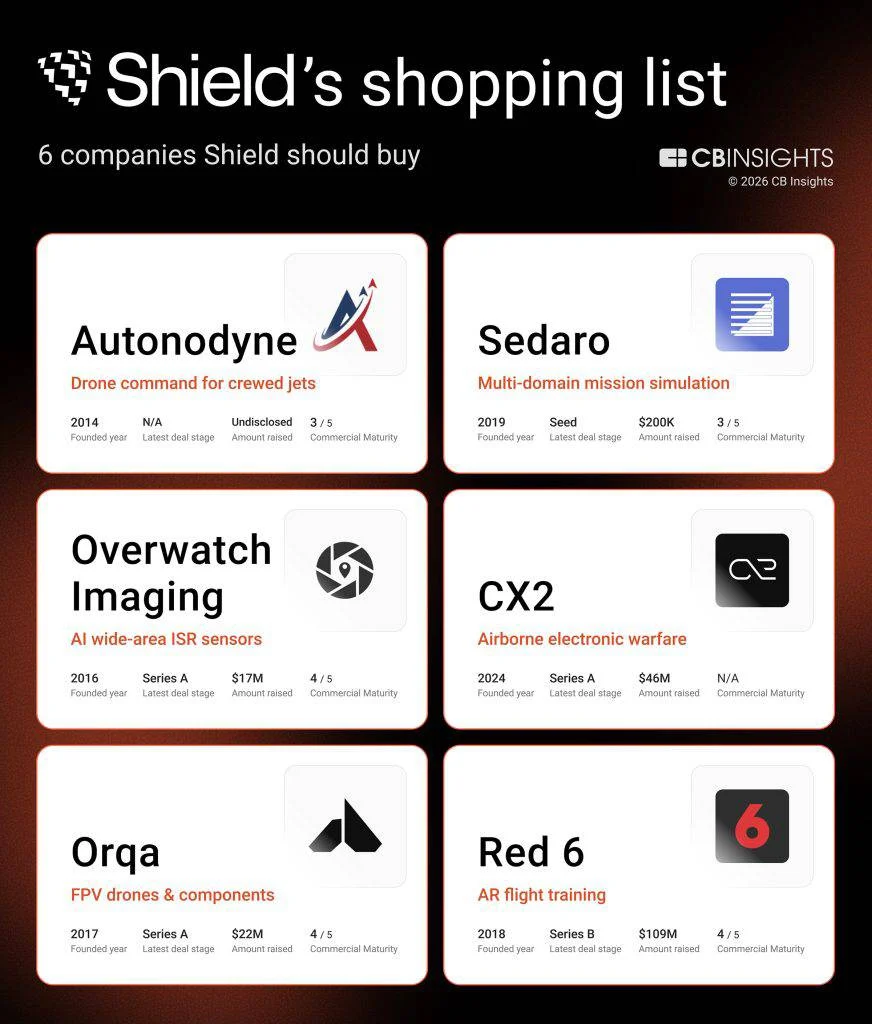
Based on current industry trends and Shield AI’s technological roadmap, key areas for potential acquisition include:
- Advanced Electronic Warfare (EW) Specialists: As the X-BAT and other autonomous platforms move into increasingly contested airspace, the ability to jam or bypass enemy signals is paramount. Internalizing EW capabilities would allow Shield AI to embed these defenses directly into the airframe design.
- Synthetic Data and Training Environments: AI-pilots require massive amounts of data to learn in diverse environments. Acquiring a firm that specializes in high-fidelity simulation and synthetic data generation would provide a massive training advantage, allowing the Hivemind software to "experience" thousands of hours of flight in varied scenarios before the physical aircraft ever leaves the ground.
- Autonomous Munitions and Kinetic Integration: To be a true end-to-end provider, Shield AI must eventually master the delivery of kinetic effects. Firms specializing in precision-guided sub-munitions or swarm-compatible ordnance are logical targets to complete the weaponization of the company’s autonomous platforms.
- Edge Computing and Processing Hardware: The latency requirements of autonomous combat require immense processing power at the edge. Acquiring developers of specialized, radiation-hardened, or high-efficiency flight computers would ensure that the Hivemind software has the hardware performance necessary to execute complex maneuvers in real-time.
Implications for the Defense Industry
The transformation of Shield AI signals a broader shift in the defense industry toward the "Silicon Valley model" of military procurement. By focusing on software-defined hardware, the company is challenging the long-standing dominance of legacy contractors who have historically favored long, multi-decade development cycles.
If Shield AI succeeds in scaling its production of the X-BAT while maintaining the high performance of its Hivemind software, it could redefine the cost-benefit analysis of military aviation. A fleet of autonomous, low-cost, yet highly intelligent aircraft represents a paradigm shift from the current model of relying on a smaller number of extremely expensive, human-piloted platforms.
The implications for international security are equally profound. The ability to deploy highly autonomous, integrated systems at scale changes the strategic calculus for state actors. As Shield AI continues its buying spree, it is not just building a company; it is building the infrastructure for the future of robotic warfare. The success of this strategy will depend on the firm’s ability to maintain its technical agility while managing the significant operational and regulatory burdens that come with being a major defense contractor. With a war chest of over $2.5 billion and a clear, aggressive mandate from its leadership, Shield AI is positioned to remain at the center of the defense conversation for the foreseeable future.