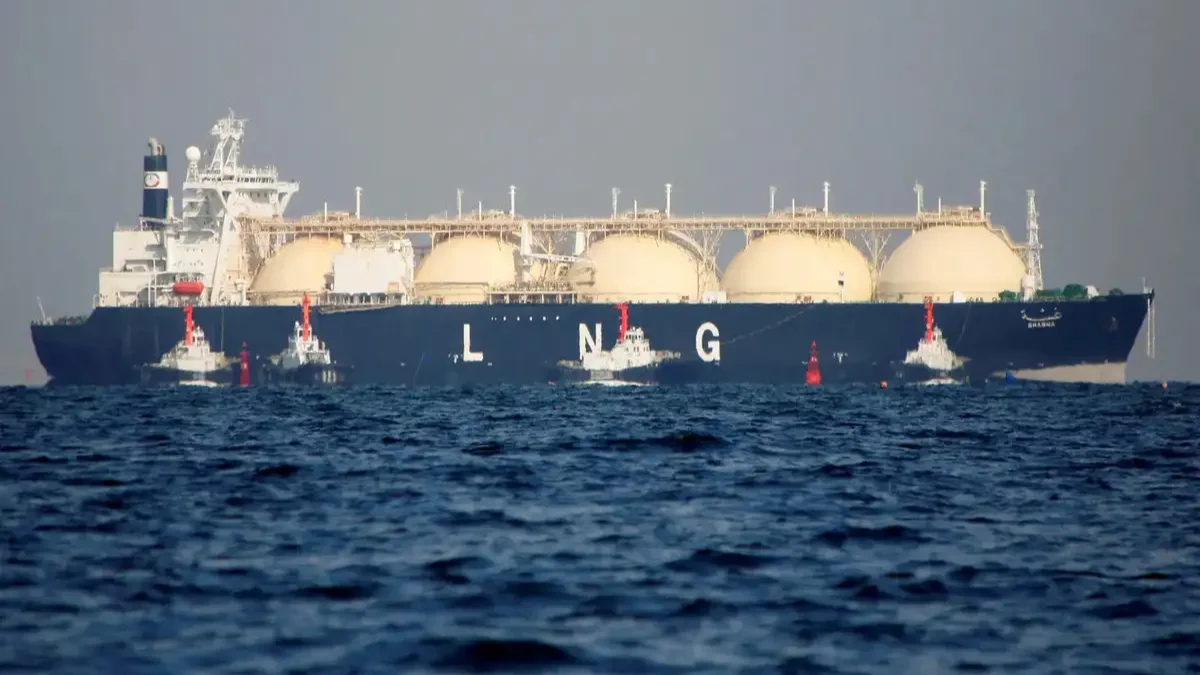
The global energy landscape continues to shift as the Russian Federation successfully navigated stringent international trade barriers to deliver its second shipment of liquefied natural gas (LNG) from the Portovaya plant to Chinese markets. This delivery, completed in mid-April 2026, signals a persistent effort by Moscow to maintain its energy export revenues despite an escalating sanctions regime led by the United States and its Western allies. The shipment, managed by the state-owned energy giant Gazprom, originated from the specialized Portovaya LNG facility located on the Baltic Sea coast and was received at the Beihai LNG terminal in southern China, marking a significant milestone in Russia’s strategic pivot toward Asian energy consumers.
The cargo was transported by the specialized gas tanker Valera, a vessel formerly known as the Velikiy Novgorod. According to maritime tracking data and port records, the Valera commenced loading its cryogenic cargo at the Portovaya facility on January 25, 2026. After a voyage spanning several months and navigating complex international waters, the vessel successfully docked and offloaded its cargo at the Beihai terminal on Wednesday. This successful transit represents the second such delivery since a forced hiatus in exports began following the implementation of secondary sanctions in early 2025. The first post-sanction shipment from the facility was recorded in December 2025, suggesting that Russian logistics are adapting to the restrictive environment.
Technical Profile of the Portovaya LNG Facility
The Portovaya LNG plant, though smaller in scale compared to Russia’s massive Yamal or Sakhalin projects, occupies a position of high strategic importance. Located near the Russian border with Finland and situated close to the starting point of the now-disabled Nord Stream pipeline system, the facility began its commercial operations in September 2022. It was originally designed to process gas that could no longer be sent through the pipelines to Germany due to the geopolitical fallout of the Russia-Ukraine conflict.
The plant has an annual production capacity of approximately 1.5 million tons of LNG. It utilizes a liquefaction process to convert natural gas into a liquid state at -162 degrees Celsius, allowing for transport via sea when pipeline infrastructure is unavailable or politically unviable. Before the 2025 sanctions, the plant was a model of consistency, typically dispatching two full cargoes per month during the peak winter demand season. These shipments were primarily directed toward European and Mediterranean hubs, providing a steady stream of hard currency for Gazprom.
The Sanctions Regime of 2025 and Its Objectives
The operational rhythm of the Portovaya plant was severely disrupted in January 2025, when the United States Department of the Treasury’s Office of Foreign Assets Control (OFAC) introduced a new tier of sanctions specifically targeting Russia’s LNG production and export infrastructure. Unlike earlier rounds of sanctions that focused primarily on oil price caps and individual oligarchs, the 2025 measures were designed to "freeze" Russia’s future energy growth.
The primary objectives of these sanctions were three-fold:
- Revenue Curtailment: To limit the Kremlin’s ability to fund its ongoing military operations in Ukraine by choking off profits from high-value LNG exports.
- Technological Isolation: To prevent Russia from accessing Western liquefaction technology, turbines, and specialized spare parts necessary to maintain and expand LNG facilities.
- Logistical Obstruction: To target the "shadow fleet" of tankers and the insurance providers that facilitate the movement of Russian gas to international markets.
Following these measures, the Portovaya facility saw a precipitous drop in export activity. For much of 2025, the plant’s output was restricted to domestic use or highly localized transfers, with only a few international cargoes managing to clear the logistical and financial hurdles imposed by Western banks and maritime authorities.
Chronology of Russia’s LNG Export Evolution (2022–2026)
To understand the significance of the Valera’s arrival in China, one must look at the timeline of Russia’s Baltic LNG strategy:
- September 2022: The Portovaya LNG plant begins operations, initially serving the Greek and Turkish markets.
- 2023 – Early 2024: The facility expands its reach to Spain and Italy, capitalizing on Europe’s lingering need for diversified gas sources despite the broader push to decouple from Russian energy.
- January 2025: The U.S. imposes comprehensive sanctions on Russian LNG projects, including Portovaya and the massive Arctic LNG-2 project. Export volumes from Portovaya drop by over 60%.
- March 2025 – November 2025: Portovaya shifts its focus toward Kaliningrad, sending approximately one cargo per month to the Russian exclave to ensure regional energy security.
- December 2025: Russia successfully completes its first post-sanction LNG delivery to an Asian buyer, signaling a breakthrough in the sanctions-evasion or adaptation strategy.
- January 25, 2026: The tanker Valera loads the second post-sanction cargo.
- April 15, 2026: The Valera arrives at the Beihai LNG terminal in China, completing a high-stakes maritime delivery.
Strategic Pivot: The Growing Importance of the Chinese Market
The delivery to the Beihai LNG terminal highlights a definitive shift in Russia’s trade patterns. As European markets have become increasingly hostile and legally complex for Russian state entities, China has emerged as the primary "sink" for redirected energy volumes. The Beihai terminal, located in the Guangxi Zhuang Autonomous Region, is a critical piece of infrastructure for China’s southern industrial belt.
Interestingly, Portovaya is not the only Russian project feeding this specific terminal. Reports indicate that the Arctic LNG-2 project—Russia’s flagship LNG endeavor which has been even more heavily targeted by sanctions—has also managed to funnel volumes to Beihai. This suggests a coordinated effort by Chinese energy importers to provide a reliable destination for Russian gas, likely at a negotiated discount that reflects the "sanctions risk" associated with the cargo.
From a geopolitical perspective, these shipments reinforce the "no limits" partnership between Moscow and Beijing. While China has been careful to avoid direct violations of sanctions that could trigger secondary measures against its own banks, it has continued to expand its energy cooperation with Russia under the guise of national energy security.
Logistics and the Renaming of Vessels
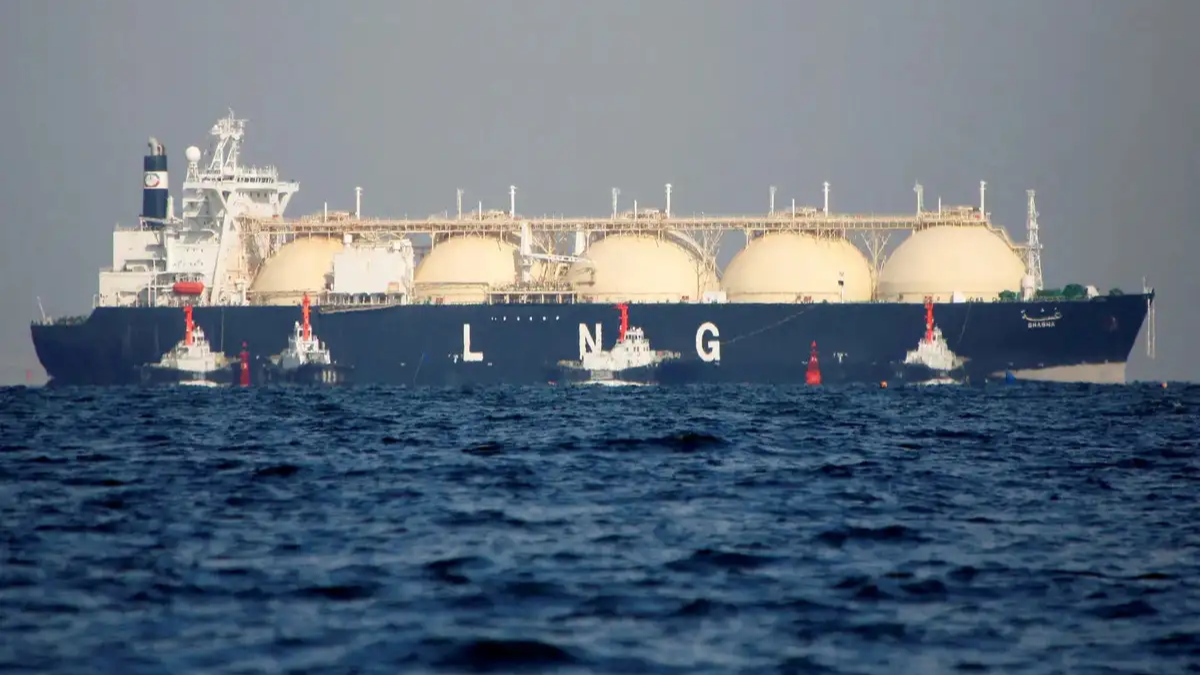
The use of the tanker Valera provides an insightful case study into the tactical maneuvers Russia employs to circumvent international pressure. Formerly known as the Velikiy Novgorod, the vessel was renamed—a common practice in the maritime industry used to obscure a ship’s history and complicate the tracking efforts of monitoring agencies.
The Valera is an ice-class carrier, capable of navigating the challenging conditions of the Baltic Sea in winter. Its ability to complete the long-haul journey to China without significant interference suggests that Russia has secured alternative insurance and reinsurance or is utilizing "sovereign guarantees" that bypass the traditional Western-dominated maritime insurance markets (such as the International Group of P&I Clubs).
Impact on Domestic Energy Security: The Kaliningrad Connection
While the international shipments garner the most headlines, the Portovaya plant plays a vital role in Russia’s domestic stability. Since the imposition of sanctions, a significant portion of the plant’s output has been diverted to Kaliningrad. This Russian exclave, wedged between Poland and Lithuania, is highly vulnerable to energy isolation.
By maintaining a steady flow of at least one cargo per month to Kaliningrad, the Portovaya facility ensures that the region remains powered and heated without relying on pipelines that cross "unfriendly" NATO territory. This domestic requirement acts as a floor for the plant’s production, ensuring that the facility remains operational even when international buyers are scarce.
Fact-Based Analysis of Implications
The successful delivery of the second cargo to China carries several implications for the global energy market and the future of international sanctions:
1. Diminishing Returns of Energy Sanctions:
The resumption of exports suggests that while sanctions can significantly slow down Russian energy trade and increase the cost of doing business, they have not yet proven capable of a total halt. Russia’s ability to find buyers in Asia and its success in rebranding and redeploying its fleet indicate a high level of resilience.
2. Increased Costs and Lowered Margins:
Although the gas is reaching the market, the economics have changed. The longer routes to Asia, combined with the costs associated with "shadow" logistics and the likely discounts demanded by Chinese buyers, mean that Gazprom’s profit margins on these cargoes are substantially lower than they were during the 2022–2023 period.
3. Fragmented Global LNG Market:
We are witnessing the emergence of a two-tier global LNG market. One tier consists of "transparent" gas from the U.S., Qatar, and Australia, traded at standard market prices. The second tier consists of "sanctioned" or "gray" gas from Russia and Iran, which flows through opaque channels to specific destinations like China and India.
4. Environmental and Safety Concerns:
The use of older vessels or those operating outside of standard international insurance frameworks raises concerns regarding maritime safety and environmental protection. Should a vessel like the Valera encounter mechanical failure or a spill, the lack of traditional insurance coverage could lead to complex legal and environmental crises.
Future Outlook
As the April 2026 delivery is processed, the focus of international monitors will shift to the frequency of these shipments. If Gazprom can return to a schedule of one or two international cargoes per month, it will demonstrate that the Portovaya plant has effectively "normalized" its operations under the new sanctions reality.
However, uncertainty remains. The U.S. government has signaled that it is monitoring the "shadow fleet" closely, and further designations of specific vessels and shipping companies are expected. Additionally, the expiry of various waivers and the evolving nature of the Russia-Ukraine conflict will continue to dictate the boundaries of what is possible in the Russo-Sino energy trade. For now, the arrival of the Valera in Beihai serves as a stark reminder that in the global quest for energy, economic necessity often finds a way around political barriers.