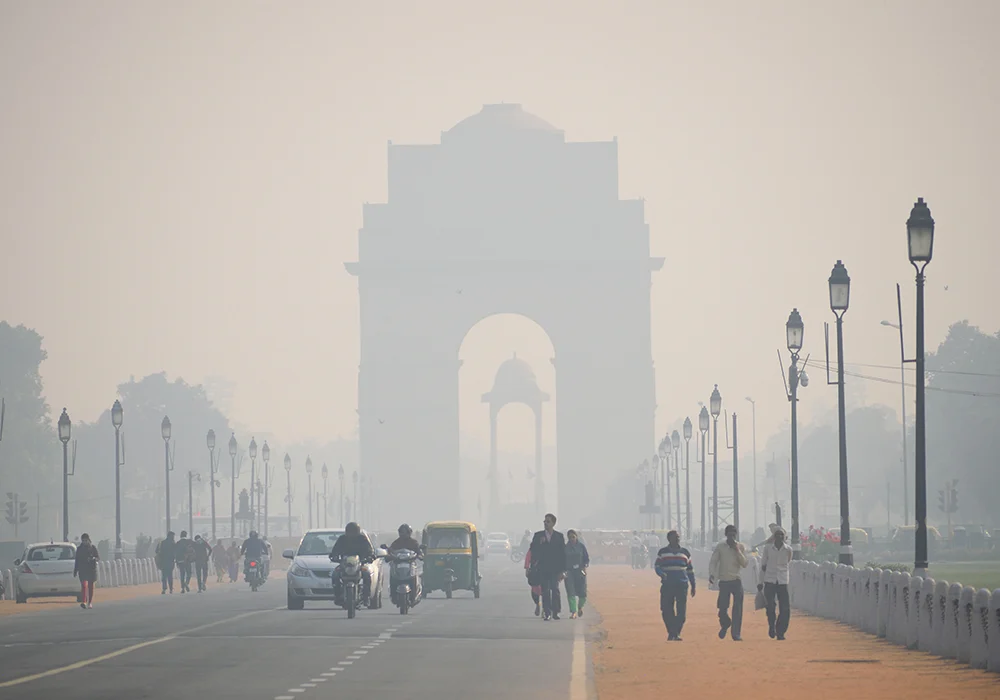
The intersection of global environmental policy and human survival took center stage as the World Health Organization (WHO) launched a concerted campaign at the ongoing COP31 climate summit in Antalya, Turkey. Delegates and international health leaders gathered to demand that public health considerations be permanently anchored at the core of global climate action. As planetary boundaries are increasingly pushed to their limits, the international community faces a stark reality: climate change is no longer solely an environmental or economic crisis; it is an unprecedented global health emergency claiming millions of lives annually.
Throughout the opening days of the summit, high-profile UN officials, international urban planners, and medical professionals reiterated that the human toll of ecological degradation requires an immediate, paradigm-shifting response. With rising global temperatures, expanding deserts, and increasingly toxic urban atmospheres, world leaders are being urged to pivot away from treating health as an afterthought of climate policy and instead treat it as the ultimate metric of the transition’s success.
The Evolution of Health at Climate Summits: A Brief Chronology
The integration of health into United Nations Framework Convention on Climate Change (UNFCCC) proceedings has been a gradual, hard-fought evolution. For decades, climate summits—popularly known as COPs—focused primarily on parts-per-million of carbon in the atmosphere, national emissions targets, and complex financial mechanisms for industrial transition. Human bodies and public healthcare infrastructure were largely relegated to secondary discussions.
A major turning point occurred at COP28 in Dubai in 2023, which hosted the first-ever dedicated Health Day at a UN climate conference. That landmark event catalyzed global recognition that rising temperatures and expanding carbon footprints directly correlate with surging emergency room admissions, vector-borne diseases, and premature mortality.
Following the momentum built in Dubai, subsequent intermediate conferences laid the groundwork for a more formalized health framework. However, it is at COP31 in Antalya where institutional actors are pushing past symbolic roundtables. WHO Director-General Tedros Adhanom Ghebreyesus and UN Climate Change Executive Secretary Simon Stiell have utilized the platform to demand binding language within the final negotiated texts, seeking to mandate health as a core eligibility criterion for international climate finance allocations.
The Dual Crisis: Air Pollution and the Fossil Fuel Epidemic
The immediate threat of climate change is inextricably linked to the very energy systems that power modern industrial civilization. Air pollution—predominantly driven by the combustion of fossil fuels—remains one of the single greatest public health hazards of the modern era.
According to WHO data, ambient air pollution claims approximately seven million lives worldwide every year. At the heart of this crisis is fine particulate matter, commonly known as PM2.5. Accounting for more than 90% of global premature deaths caused by air pollution, these microscopic particles measure 2.5 microns or less in diameter. Because of their minuscule size, they bypass natural human respiratory filters, penetrating deep into the lungs and entering the bloodstream. Prolonged exposure to PM2.5 is scientifically proven to trigger, exacerbate, and accelerate chronic respiratory conditions, cardiovascular diseases, strokes, and lung cancer.
This toxic burden originates from a myriad of sources, including unmitigated vehicle exhausts, coal-fired power plants, heavy industrial manufacturing processes, and increasingly, the choking smoke billowing from catastrophic, climate-fueled wildfires.
During the COP31 roundtable discussions, Dr. Tedros underscored the lethal cost of reliance on fossil fuels, noting that the status quo is fundamentally incompatible with human well-being. This perspective was reinforced by former U.S. climate envoy John Kerry, who delivered a sobering assessment to delegates in Antalya. Kerry revealed that global society burned more fossil fuels over the preceding year than during any other period in human history, putting the planet firmly on a trajectory toward a catastrophic 2.8 degrees Celsius of warming above pre-industrial levels. With the iconic 1.5 degrees Celsius target of the 2015 Paris Agreement rapidly slipping out of reach, experts warn that the window to prevent runaway health catastrophes is closing.
Extreme Heat and the Collapsing Urban Frontline
While mitigation policies target the upstream drivers of climate change, downstream consequences are already devastating populations worldwide. Chief among these immediate threats is extreme heat.
The Lancet Countdown report released ahead of the summit highlighted that extreme heat was linked to a staggering 710,000 deaths globally in a single recent year, with more than 70% of those fatalities directly attributable to anthropogenic, human-caused climate change. Heat stress acts as a systemic multiplier of underlying pathologies, capable of triggering heat stroke, accelerating cardiovascular failure, and worsening chronic conditions such as diabetes, asthma, and advanced kidney disease.
Cities, housing the vast majority of the global population, are serving as the primary shock absorbers for these compounding crises. David Miller, managing director of C40 Cities and former mayor of Toronto, emphasized the immense pressure urban centers are currently under.
"Climate is a public health issue, and cities are dealing with the consequences now," Miller stated during the summit. He noted that urban environments face the brunt of urban heat island effects, localized flooding, and deteriorating air quality, leaving municipal governments with little choice but to adapt rapidly. However, Miller cautioned that adaptation alone is insufficient: "We have to cope with the consequences of climate change, like extreme heat; bigger, hotter and more destructive wildfires; and extremes of flooding—there is no choice. But prevention—stopping further breakdown and trying to reverse the overshoot—is the most critical thing we can do to save lives and prevent significantly more serious problems."
The Economic and Human Case for Investment
To galvanize skeptical finance ministers and national governments, public health advocates are increasingly framing health-centric climate policies through an economic lens. A landmark analysis published by the WHO demonstrates that investing in targeted climate-health initiatives is not only a moral imperative but an extraordinary economic opportunity.
The research evaluated six priority climate-health actions and found they could collectively save approximately 1.6 million lives each year. Furthermore, the financial return on investment is striking: five of these targeted measures would yield an estimated return of roughly $24 for every single dollar invested.
These high-yield interventions are divided between mitigation and adaptation strategies:
- Cleaner household fuels and efficient fossil-fuel pricing: These upstream policies reduce air pollution at its source while curbing carbon emissions, accounting for the vast majority—about 1.2 million—of the potential annual lives saved.
- Heat-health warning systems: Advanced meteorological and public health warning networks provide vulnerable populations with critical lead time during heatwaves.
- Climate-resilient water and sanitation services: Protecting essential infrastructure from extreme weather events prevents the resurgence and spread of waterborne diseases.
Despite the proven financial and human benefits, health initiatives have historically received only a marginal fraction of global climate adaptation and mitigation funds. The WHO’s current diplomatic push at COP31 aims to correct this imbalance by establishing dedicated financing channels that treat healthcare systems as vital climate defense infrastructure.
Current Progress in the COP31 Draft Agreement
As negotiations in Antalya enter their critical final phases, the influence of the public health coalition is visibly manifesting in official documentation. The November 16 draft of the COP31 overall agreement includes substantive references to the health impacts of a warming planet.
The temporary text explicitly addresses downstream adaptation and resilience challenges, noting climate-sensitive diseases such as malaria, dengue, and cholera, alongside heat stress, maternal health crises, food and nutrition insecurity, and structural damage to hospitals and healthcare facilities during extreme weather events. Furthermore, the draft incorporates language regarding the importance of clean cooking technologies to improve indoor air quality, and champions the concept of improved public health outcomes achieved through integrated climate and clean-air action.
Implications for the Future of Global Governance
The integration of public health metrics into the COP31 framework represents a fundamental evolution in how humanity evaluates climate policy. By shifting the narrative from abstract ecological metrics—such as gigatons of carbon and parts-per-million thresholds—to tangible human outcomes like avoided premature deaths, reduced hospital admissions, and protected urban populations, international organizations are fundamentally altering the political calculus of climate action.
As the summit proceeds toward its conclusion, the ultimate test will be whether participating nations translate these rhetorical acknowledgements into binding financial commitments and enforceable policy changes. Without a rapid transition away from the fossil fuel systems poisoning global air and destabilizing planetary thermal equilibrium, the health crisis of pandemic proportions described by UN officials threatens to overwhelm the global medical systems designed to treat its symptoms. For the delegates in Antalya, the message from the medical community is unambiguous: protecting the climate is, first and foremost, an act of preserving human life.