
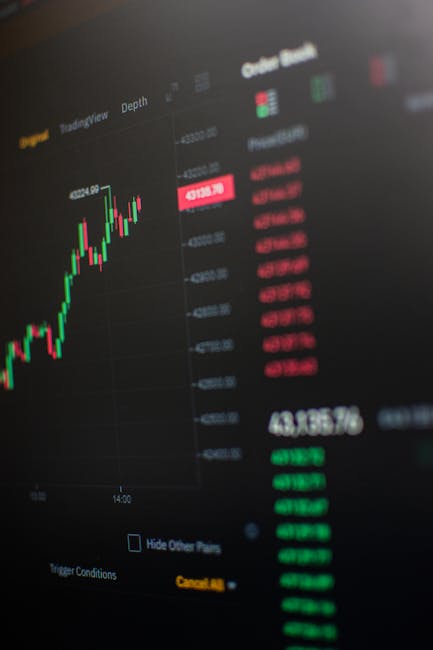
Perpetual Futures Trading Volume Surges: Understanding the Driving Forces and Implications
The landscape of cryptocurrency derivatives has been dramatically reshaped by the meteoric rise of perpetual futures trading volume. These innovative financial instruments, distinct from traditional futures contracts in their lack of an expiry date, have become a cornerstone of the digital asset trading ecosystem. This article will delve into the multifaceted reasons behind the sustained surge in perpetual futures trading volume, explore the key characteristics that make them so appealing to traders, and examine the broader implications of this trend for market participants and the wider cryptocurrency space.
One of the primary catalysts for the escalating volume in perpetual futures is their accessibility and user-friendliness, particularly for retail traders. Unlike traditional futures, which often have complex margin requirements and settlement dates, perpetual futures are designed for ease of entry. The absence of an expiry date eliminates the need for traders to constantly roll over positions, simplifying the trading process significantly. This simplification lowers the barrier to entry, attracting a wider demographic of traders eager to participate in the volatile crypto market with leverage. Furthermore, the user interfaces of many perpetual futures exchanges are intuitive and akin to spot trading platforms, further reducing the learning curve for newcomers. This seamless transition from spot to futures trading has undoubtedly contributed to the massive influx of capital and trading activity.
The inherent leverage offered by perpetual futures is another paramount driver of their booming volume. Leverage allows traders to control a larger position size with a smaller amount of capital, magnifying both potential profits and losses. In the highly speculative and volatile cryptocurrency market, the allure of amplified returns through leverage is undeniable. Traders can express directional views on cryptocurrencies with greater capital efficiency, making quick profits from even modest price movements. This leverage mechanism is particularly attractive to sophisticated traders and institutions seeking to maximize their capital deployment. The ability to go long or short with significant leverage provides a powerful tool for both speculative trading and hedging strategies, further fueling the demand for perpetual futures.
The development of sophisticated trading strategies, enabled by perpetual futures, also plays a crucial role in the volume surge. Traders can now implement complex strategies such as arbitrage, market making, and algorithmic trading with greater ease and effectiveness. The perpetual nature of the contracts allows for continuous execution of these strategies without the constraints of expiry dates. For instance, arbitrageurs can exploit price discrepancies between spot markets and perpetual futures markets, or between different perpetual futures exchanges, with reduced operational overhead. Market makers benefit from the constant liquidity and the ability to earn funding rates, contributing to deeper order books and tighter spreads. Algorithmic traders can deploy high-frequency trading strategies, capitalizing on micro-movements in the market. The ability to fine-tune these strategies and the continuous nature of the contracts have led to a sustained increase in trading activity.
The introduction of a wide array of underlying assets has also been instrumental in driving perpetual futures volume. Initially dominated by Bitcoin and Ethereum, the market has expanded to include perpetual futures contracts for a vast spectrum of altcoins, stablecoins, and even tokenized real-world assets. This diversification allows traders to speculate on a broader range of cryptocurrencies, catering to diverse investment strategies and risk appetites. As more projects launch and gain traction, their inclusion in perpetual futures markets provides traders with accessible avenues to gain exposure and trade them with leverage. This expansion of the underlying asset universe not only broadens the appeal of perpetual futures but also creates new trading opportunities and amplifies overall market participation.
The efficiency of the funding rate mechanism is a critical component of perpetual futures that distinguishes them from traditional futures and contributes significantly to their trading volume. In the absence of a delivery date, perpetual futures contracts maintain their peg to the underlying spot price through a funding rate system. When the perpetual futures price is trading above the spot price (a state known as contango), longs pay shorts a funding fee. Conversely, when the perpetual futures price is trading below the spot price (a state known as backwardation), shorts pay longs. This mechanism incentivizes traders to keep the perpetual futures price aligned with the spot price. For traders, the funding rate offers an additional revenue stream or a cost of holding a position, creating further trading opportunities and contributing to the overall volume as traders actively manage their positions to capitalize on or minimize these rates.
The growing institutional adoption of cryptocurrency and derivatives has been a significant tailwind for perpetual futures trading volume. As more traditional financial institutions, hedge funds, and asset managers allocate capital to the digital asset space, they seek sophisticated instruments for trading and hedging. Perpetual futures, with their leverage and flexibility, have become a favored tool for these sophisticated players. Institutions can use them to gain exposure to specific cryptocurrencies, hedge existing spot holdings, or execute complex trading strategies. The involvement of institutional capital brings significant liquidity and trading volume, further legitimizing the market and attracting more participants. Their participation often signifies a shift from retail-driven markets to more mature and institutionalized trading environments.
The 24/7 nature of the cryptocurrency market, coupled with the perpetual contract structure, creates a constant demand for trading activity. Unlike traditional stock markets that close at the end of the trading day, cryptocurrency markets operate continuously. Perpetual futures, with no expiry, align perfectly with this round-the-clock trading environment. Traders can react to global news, market events, and price fluctuations at any time, day or night. This continuous trading opportunity ensures a constant flow of orders and executions, contributing to the persistently high trading volumes observed in perpetual futures markets.
The innovation and competition among cryptocurrency exchanges offering perpetual futures have also played a vital role. Exchanges are continuously introducing new features, improving their platforms, and offering competitive fee structures to attract and retain traders. This innovation includes faster execution speeds, more advanced order types, robust risk management systems, and enhanced charting tools. The competitive environment drives down trading fees and improves the overall trading experience, making perpetual futures a more attractive proposition for traders. Furthermore, the introduction of perpetual futures on decentralized exchanges (DEXs) has further broadened access and appeal, catering to users who prefer self-custody and censorship-resistant trading.
The development of robust risk management tools and methodologies has been essential in supporting the growth of perpetual futures trading volume. While leverage amplifies potential gains, it also significantly increases risk. Exchanges have invested heavily in sophisticated risk management systems, including liquidation engines, circuit breakers, and insurance funds, to mitigate systemic risks and protect traders. The presence of these tools provides traders with a greater sense of security and confidence, encouraging them to engage with higher-risk, higher-reward strategies. Traders themselves are also becoming more adept at employing risk management techniques, such as stop-loss orders and position sizing, to navigate the inherent volatility.
The psychological and behavioral aspects of trading also contribute to the sustained volume. The allure of quick profits, the thrill of high-leverage trading, and the constant stream of market news and social media buzz can create a feedback loop that encourages continuous trading activity. FOMO (Fear Of Missing Out) and the desire to capitalize on perceived opportunities can lead to impulsive trading decisions, further inflating volume. While this can be a double-edged sword, leading to increased volatility and potential losses for some, it undeniably contributes to the overall trading figures. The constant engagement with the market, driven by a mix of rational strategy and emotional impulses, is a hallmark of the perpetual futures trading environment.
The implications of this surge in perpetual futures trading volume are far-reaching. Firstly, it has cemented perpetual futures as a dominant force in cryptocurrency derivatives, often surpassing spot trading volume for major cryptocurrencies. This dominance signifies a maturation of the crypto market, with derivatives playing an increasingly significant role in price discovery and liquidity provision. Secondly, the increased leverage and trading activity can contribute to higher market volatility. While this presents opportunities for traders, it also necessitates a greater emphasis on risk management for all market participants. Thirdly, the growth of perpetual futures has spurred further innovation in trading technology and financial product development within the crypto space.
The regulatory landscape surrounding perpetual futures is also evolving. As the market grows, regulators worldwide are paying closer attention, with varying approaches to oversight and consumer protection. The future regulatory environment will undoubtedly shape the continued evolution of perpetual futures trading volume. Clarity and appropriate regulation can foster greater institutional trust and long-term sustainability, while overly restrictive measures could stifle innovation and drive activity to less regulated jurisdictions.
In conclusion, the surge in perpetual futures trading volume is a complex phenomenon driven by a confluence of factors. Accessibility, leverage, strategic trading capabilities, asset diversification, the funding rate mechanism, institutional adoption, the 24/7 market, exchange innovation, risk management advancements, and behavioral economics all contribute to this trend. As perpetual futures continue to evolve and mature, they will undoubtedly remain a pivotal component of the global cryptocurrency trading ecosystem, shaping market dynamics and offering new avenues for speculation and investment. Understanding these driving forces and their implications is crucial for anyone looking to navigate or capitalize on the dynamic world of digital asset derivatives.
