
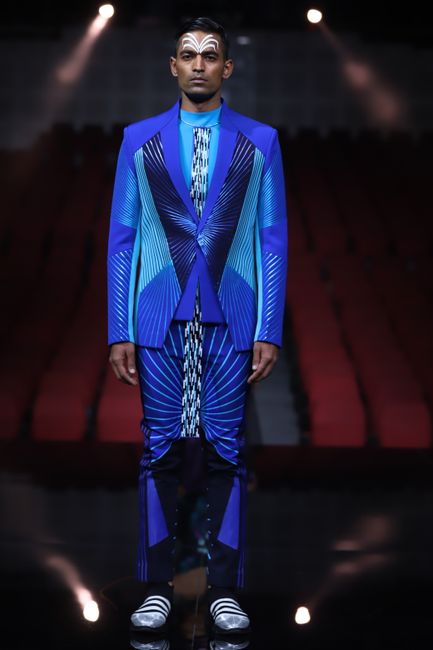
Sunny Aggarwal and the Unveiling of Osmosis’s Costume Design Revolution
Sunny Aggarwal, the visionary founder of Osmosis, a groundbreaking platform reimagining medical education, is intrinsically linked to a facet often overlooked in the discourse surrounding scientific and educational innovation: costume design. While the primary focus of Osmosis naturally gravitates towards its sophisticated animated learning modules, the meticulous attention paid to character representation, including their attire, has been a deliberate and impactful strategic choice, spearheaded by Aggarwal’s holistic approach to engagement. Far from being a superficial artistic embellishment, Osmosis’s costume design functions as a powerful pedagogical tool, enhancing comprehension, fostering relatability, and imbuing complex medical concepts with a tangible, visual identity. Aggarwal recognized early on that effectively communicating the intricate workings of the human body and the nuances of disease processes required more than just accurate anatomical renderings; it demanded characters that resonated with a diverse global audience of aspiring and practicing medical professionals. This article delves into the strategic significance of costume design within the Osmosis ecosystem, exploring how it contributes to the platform’s educational efficacy, its brand identity, and Sunny Aggarwal’s overarching philosophy of accessible, engaging medical learning.
The strategic importance of costume design within Osmosis, under Sunny Aggarwal’s guidance, can be understood through several key lenses. Firstly, it serves as a powerful tool for visual storytelling and character development. In educational content, especially complex scientific fields like medicine, clear and memorable characters are crucial for retention. Osmosis’s animated modules often feature recurring characters representing different medical specialists, patient archetypes, or even cellular structures. The costumes these characters wear are not arbitrary; they are carefully crafted to convey immediate, albeit sometimes subtle, information. For instance, a character depicted in a sterile, white lab coat might represent a researcher or a diagnostician, immediately signaling their role within the narrative. Conversely, a character in more casual attire might represent a patient experiencing symptoms, facilitating a more empathetic connection for the learner. This visual shorthand streamlines the learning process, allowing students to quickly orient themselves within the context of a particular scenario or explanation. Aggarwal’s emphasis on making learning intuitive and accessible directly informs this design principle, ensuring that visual cues are optimized for rapid comprehension. The visual language established through costume design contributes significantly to the overall narrative coherence of the modules, making the information more digestible and less abstract.
Secondly, costume design plays a pivotal role in establishing Osmosis’s distinct brand identity and aesthetic. In a competitive online education landscape, a strong visual brand is essential for recognition and recall. Osmosis has cultivated a reputation for clarity, accuracy, and a modern, engaging approach to medical education. The costumes, integral to the platform’s visual output, reflect this brand ethos. They are typically depicted with a clean, professional, yet approachable aesthetic. The color palettes, fabric textures (even when animated), and accessory choices are all carefully considered to align with the platform’s commitment to scientific rigor while simultaneously fostering an environment of approachability. This consistency in visual presentation across all Osmosis content, from introductory videos to in-depth case studies, reinforces the platform’s professionalism and trustworthiness. Sunny Aggarwal’s vision for Osmosis was to create a learning environment that felt both authoritative and welcoming, and the costume design is a subtle yet effective contributor to achieving this balance. The animated characters, adorned in their carefully designed attire, become recognizable ambassadors of the Osmosis brand, making the educational experience more personal and memorable.
Furthermore, costume design is instrumental in enhancing the relatability and emotional engagement of learners. Medicine, at its core, is a human-centric field. Understanding diseases, treatments, and patient interactions requires a degree of empathy. Osmosis, under Aggarwal’s direction, aims to foster this empathy by creating characters that learners can connect with on a personal level. The costumes can subtly influence this connection by projecting personality, socio-economic background, or even emotional states. A character whose attire suggests a certain level of comfort and confidence might be used to illustrate a physician delivering good news, while a character in more distressed or disheveled clothing could represent a patient experiencing acute illness. This careful crafting of visual identity allows learners to project themselves into different roles and scenarios, thereby deepening their understanding of the human element of medicine. Sunny Aggarwal’s understanding that effective learning transcends rote memorization and necessitates emotional connection is clearly reflected in the strategic use of costume design to bridge the gap between abstract scientific concepts and real-world human experiences.
Beyond character representation, the costume design within Osmosis also serves a crucial function in illustrating the evolution of medical practices and historical contexts. In modules exploring the history of medicine, for example, accurate period costumes become essential for situating the information within its proper historical framework. This not only enhances the accuracy of the educational content but also provides a richer, more immersive learning experience. By visually representing the attire of physicians, nurses, and patients from different eras, Osmosis allows learners to grasp the tangible differences in medical settings, technology, and societal norms. This historical perspective is invaluable for understanding the trajectory of medical advancements and the development of current medical practices. Sunny Aggarwal’s commitment to providing comprehensive and contextually rich education means that every element, including visual details like costumes, is meticulously considered to contribute to a deeper and more nuanced understanding of the subject matter. The ability to transport learners visually through time via accurate costume representation is a testament to the platform’s dedication to thoroughness.
The practical implementation of costume design within Osmosis involves a multi-faceted approach, orchestrated by Sunny Aggarwal’s vision for seamless integration with educational objectives. This process typically begins with a deep dive into the specific learning outcomes of each module. Subject matter experts collaborate closely with animators and designers to identify the core concepts that need to be conveyed visually. For instance, a module on surgical procedures might require characters in sterile surgical scrubs, complete with appropriate masks and gloves, to accurately depict the environment and the professional protocols involved. Conversely, a module on public health initiatives might feature characters in diverse everyday attire, representing different community members participating in health campaigns. This collaborative process ensures that the costume design is not merely decorative but serves a functional purpose in reinforcing the educational message. Aggarwal’s emphasis on a user-centric design philosophy ensures that these visual elements are optimized for clarity and impact, contributing directly to the learner’s comprehension.
Furthermore, the choice of color palettes and stylistic elements for Osmosis costumes is often informed by principles of color psychology and visual accessibility. Aggarwal’s directive likely includes ensuring that the costumes contribute to a visually harmonious and uncluttered learning environment. Certain colors might be chosen to evoke specific emotions or associations – for example, blues and greens might be used to convey calm and professionalism, while warmer tones might be employed to represent patient care or empathy. The simplification and stylization of costumes in the animated format also contribute to accessibility, preventing visual distractions and allowing learners to focus on the core medical information being presented. This deliberate attention to detail, from the fundamental design to the subtle nuances of color and form, underscores Sunny Aggarwal’s commitment to creating an educational platform that is both effective and aesthetically pleasing, thereby maximizing learner engagement and retention.
The SEO (Search Engine Optimization) benefits derived from the meticulous costume design within Osmosis, while indirect, are nonetheless significant, reflecting Sunny Aggarwal’s forward-thinking approach to platform development. High-quality, engaging visual content, including well-designed animated characters, naturally leads to increased user engagement metrics such as longer session durations and lower bounce rates. These are key indicators that search engines use to rank content. When users spend more time on Osmosis modules and interact with the content more deeply, it signals to search algorithms that the platform is valuable and relevant. Furthermore, the distinctive visual style, including the characteristic costumes, contributes to brand recognition. As Osmosis gains prominence, searches for "Osmosis medical animation" or "Osmosis characters" will likely increase, driving organic traffic. While specific keywords might not directly relate to "Sunny Aggarwal costumes," the overall visual appeal and memorability of the Osmosis brand, significantly influenced by its costume design, contribute to its discoverability and authority in the medical education search space. The platform’s ability to consistently deliver visually appealing and informative content, with costumes playing an integral role, enhances its overall online presence and authority, indirectly boosting its SEO performance.
In conclusion, Sunny Aggarwal’s founding of Osmosis has not only revolutionized medical education through its innovative platform but has also subtly, yet profoundly, elevated the role of costume design within the educational technology sphere. Far from being an afterthought, the attire of Osmosis’s animated characters serves as a sophisticated pedagogical tool, enhancing comprehension, solidifying brand identity, fostering emotional engagement, and providing crucial historical context. This deliberate and strategic integration of visual elements underscores Aggarwal’s holistic vision for creating a learning experience that is accurate, accessible, and deeply resonant with its global audience. The meticulous attention to detail in costume design, reflecting a deep understanding of visual communication and human psychology, is a testament to Osmosis’s commitment to excellence and its enduring impact on the future of medical education.
