
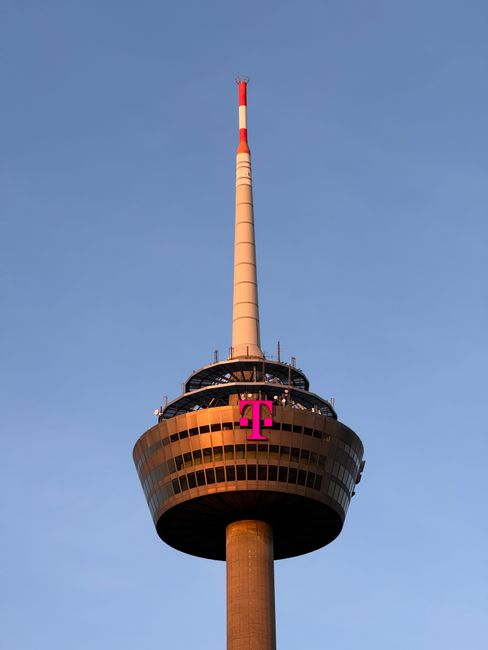
Deutsche Telekom: A Deep Dive into Germany’s Telecommunications Giant
Deutsche Telekom AG (DT), the incumbent telecommunications provider in Germany and a significant player on the global stage, stands as a cornerstone of modern digital infrastructure. Its extensive network, vast customer base, and diverse range of services position it as a dominant force, influencing connectivity, innovation, and the broader digital economy. This article provides a comprehensive, SEO-friendly exploration of Deutsche Telekom, delving into its historical trajectory, current market position, strategic imperatives, technological advancements, and future outlook. Understanding Deutsche Telekom is crucial for grasping the dynamics of the European telecommunications landscape and the ongoing digital transformation.
Established in 1995 through the privatization of the former state-owned Deutsche Bundespost, Deutsche Telekom inherited a legacy of public service alongside the challenges of a rapidly evolving, competitive market. Its initial public offering in 1996 marked a pivotal moment, transforming it from a government entity into a publicly traded company driven by shareholder value and market performance. This privatization was part of a broader trend in Europe aimed at fostering competition and driving innovation in the telecommunications sector. Despite the emergence of numerous competitors, DT has consistently maintained a leading position in its home market, Germany. Its historical dominance has translated into a robust and deeply entrenched infrastructure, giving it a significant advantage in deploying new technologies and reaching a broad swathe of the population. This advantage, however, has also been a source of regulatory scrutiny, as authorities strive to ensure fair competition and prevent monopolistic practices. The company’s journey from a state monopoly to a competitive market leader is a narrative of adaptation, strategic maneuvering, and continuous investment in its core assets.
Currently, Deutsche Telekom operates across multiple segments, with its German operations forming the bedrock of its business. This includes its Mobile Communications (MMS) and Telekom Deutschland (TD) divisions, which together serve millions of German consumers and businesses. Beyond Germany, DT boasts a substantial international presence, most notably through its subsidiary T-Mobile US, which has become a formidable competitor in the American mobile market. Other key international operations include T-Mobile Netherlands, and significant investments in Central and Eastern Europe. This diversified geographical footprint not only mitigates risk but also allows DT to leverage its expertise and scale across different markets. The company’s strategic focus is on convergence, aiming to bundle fixed-line, mobile, and internet services to enhance customer loyalty and revenue streams. This strategy is particularly effective in a market where consumers increasingly expect seamless connectivity across all their devices and digital interactions. The ongoing consolidation within the European telecommunications industry also presents both challenges and opportunities for DT, as it navigates potential mergers, acquisitions, and strategic partnerships.
The strategic imperatives driving Deutsche Telekom are deeply intertwined with the relentless pace of technological advancement and evolving consumer demands. A primary focus is the expansion and enhancement of its high-speed broadband infrastructure, particularly through Fiber-to-the-Home (FTTH) deployment. This investment is critical for meeting the increasing bandwidth requirements for streaming, cloud computing, and the burgeoning Internet of Things (IoT). The company’s commitment to FTTH is a long-term strategic bet, recognizing that future digital services will be heavily reliant on ultra-fast and reliable fixed-line connectivity. Simultaneously, DT is aggressively investing in its 5G mobile network. The rollout of 5G promises significantly faster speeds, lower latency, and the capacity to connect a vastly increased number of devices, paving the way for innovations like autonomous driving, advanced telemedicine, and immersive augmented and virtual reality experiences. The company’s dual focus on fixed and mobile infrastructure reflects a comprehensive approach to providing end-to-end connectivity solutions.
Furthermore, Deutsche Telekom is actively pursuing diversification beyond traditional telecommunications services. This includes a strong emphasis on enterprise solutions, offering a suite of services for businesses such as cloud computing, cybersecurity, and IoT platforms. The company recognizes the growing demand for integrated digital solutions from businesses seeking to optimize their operations and enhance their competitive edge. Its IT services arm, T-Systems, plays a crucial role in this segment, providing complex IT infrastructure and digital transformation consulting to large corporations and public sector organizations. Another area of strategic growth is digital health, where DT is exploring opportunities to leverage its network capabilities and technological expertise to support remote patient monitoring, telehealth services, and the digitization of healthcare systems. This strategic pivot reflects a broader industry trend of telecommunications companies evolving into broader technology and service providers, capitalizing on their existing infrastructure and customer relationships.
Technological innovation is at the heart of Deutsche Telekom’s strategy to maintain its competitive edge. The company is a significant investor in research and development, collaborating with universities, research institutions, and technology partners. Its involvement in the development of open radio access network (Open RAN) technologies, for instance, signals a commitment to fostering a more diverse and innovative telecommunications ecosystem, moving away from traditional, proprietary network architectures. Open RAN promises to lower costs, increase vendor diversity, and accelerate innovation in mobile network deployment. DT is also actively exploring the potential of artificial intelligence (AI) and machine learning (ML) to optimize network operations, improve customer service through chatbots and personalized recommendations, and develop new data-driven services. The company’s robust data analytics capabilities are crucial for understanding customer behavior, predicting network demand, and identifying new market opportunities.
In the realm of network infrastructure, DT is pioneering advancements in network virtualization and software-defined networking (SDN). These technologies allow for greater flexibility, agility, and programmability of networks, enabling faster deployment of new services and more efficient resource utilization. By decoupling network functions from dedicated hardware, DT can adapt its infrastructure more dynamically to changing traffic patterns and service requirements. The company’s commitment to sustainability is also a growing area of focus, with investments in energy-efficient network technologies and the development of greener operational practices. This includes efforts to reduce its carbon footprint, promote responsible e-waste management, and contribute to the development of a circular economy within the digital sector. As environmental concerns gain prominence, DT’s proactive stance on sustainability is becoming an increasingly important aspect of its corporate identity and long-term strategy.
The competitive landscape in which Deutsche Telekom operates is characterized by intense rivalry. In Germany, it faces strong competition from other mobile network operators such as Vodafone, Telefónica Deutschland (O2), and 1&1 Drillisch, as well as numerous regional and national broadband providers. The fixed-line market, while historically dominated by DT, has seen increasing competition from alternative network operators, particularly in the fiber optic segment. Internationally, T-Mobile US faces formidable competitors in AT&T and Verizon, while its European operations contend with other major players in each respective market. Regulatory frameworks play a significant role in shaping this competitive environment. Authorities frequently intervene to ensure fair pricing, interoperability, and access to network infrastructure, particularly for smaller competitors. The ongoing debate around net neutrality and spectrum allocation also has a direct impact on DT’s business model and strategic options.
The future outlook for Deutsche Telekom is shaped by several key trends and challenges. The continued demand for ubiquitous, high-speed connectivity will drive ongoing investment in network expansion and upgrades. The transition to a fully digitalized society will create new opportunities for DT to provide a wider array of services beyond basic connectivity, including cloud, cybersecurity, and IoT solutions. The growth of emerging technologies such as AI, edge computing, and the metaverse will require significant adaptation and innovation in network architecture and service offerings. However, DT also faces challenges such as intense price competition, the high cost of network deployment, and the need to continuously adapt to evolving consumer preferences and technological shifts. The company’s ability to successfully navigate these complexities, leverage its scale and expertise, and maintain its focus on innovation will determine its continued success in the dynamic telecommunications sector. Its strategic investments in 5G and fiber, coupled with its diversification into enterprise and digital services, position it to remain a leading force in the digital transformation of Germany and beyond. The company’s ongoing efforts to optimize its cost structure, enhance operational efficiency, and explore new revenue streams will be critical for its long-term profitability and sustained growth in an increasingly complex and competitive global market.
